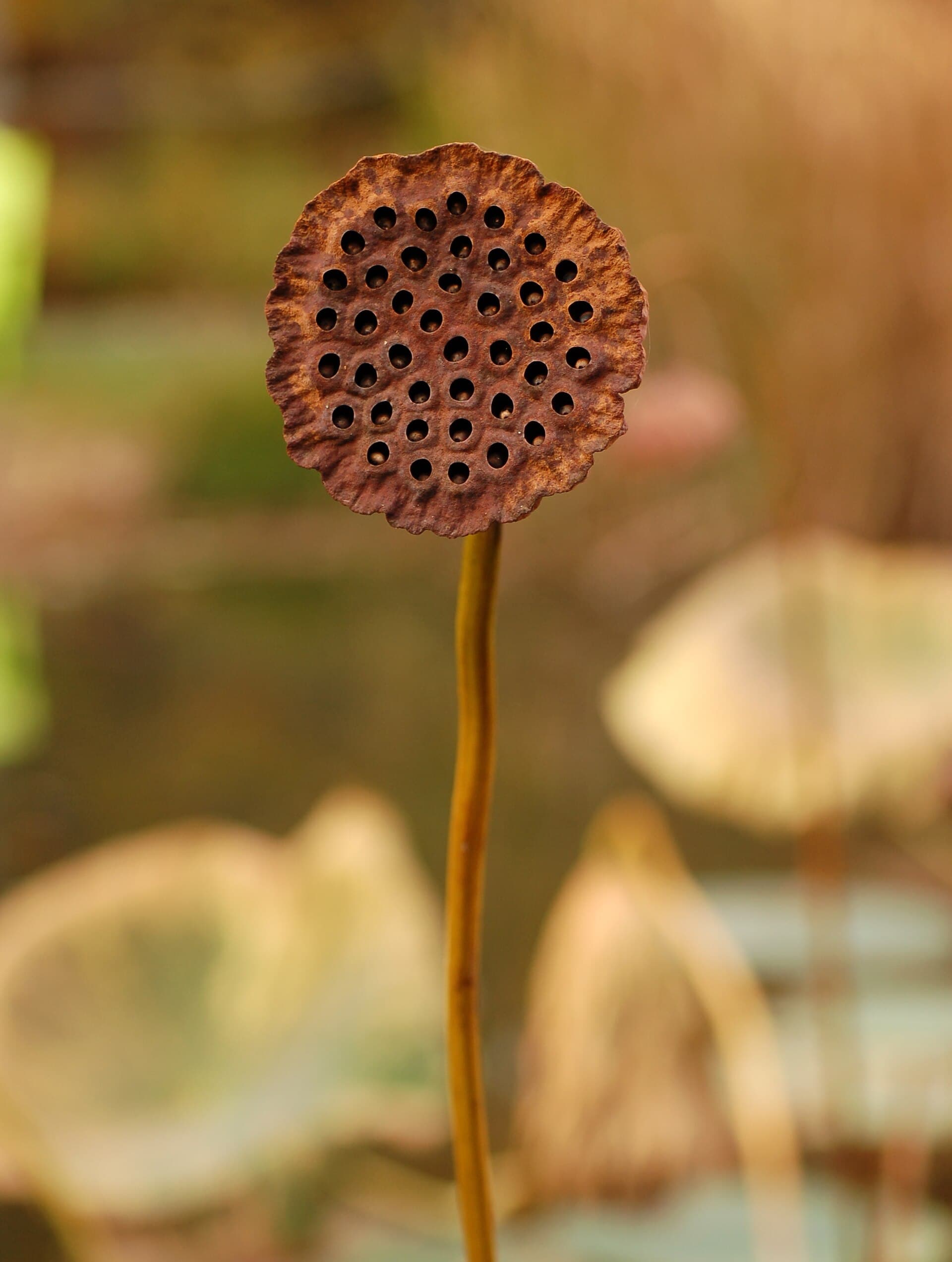
Photo: Photo by and (c)2008 Derek Ramsey (Ram-Man). Co-attribution must be given to the Chanticleer Garden. · CC BY-SA 3.0 · Wikimedia Commons
Lotus Pod
The lotus pod is the woody seed head of the sacred lotus, a sculptural, honeycombed disc that brings bold, architectural texture to modern and dried design. Fresh pods read cool green and gradually cure to a rich woody brown that lasts indefinitely once dried. Florists use them as arresting focal accents in installations, autumn arrangements and editorial work, where their graphic form contrasts beautifully with softer blooms. Long-lasting and endlessly reusable, they are a staple of the dried and textural palette.
| Family | Nelumbonaceae |
|---|---|
| Origin | Asia (widely cultivated) |
| Peak season | August, September, October |
| Availability | January, February, March, April, May, June, July, August, September, October, November, December |
| Stem length | 30–90 cm |
| Vase life | 7–14 days |
| Colors | green, brown |
| Price tier | mid |
Fresh green pods should be recut and conditioned in cool, clean water, where they hold a week or more as a sculptural focal element. To dry, simply leave the pods in a warm, airy place until they turn woody brown; they need no water and last indefinitely. Dried pods can be wired or mounted on stronger stems for large installations. Keep dried pods out of damp to prevent mould on the spongy seed head.
- •Recut fresh pods and use cool water
- •Air-dry to a woody brown finish
- •Wire dried pods for extra support
- •Keep dried pods away from damp
- •Combine with textural, tropical material
 Bouquet Builder — by Lacy Bird
Design the bouquet. See it as a photo.
Botanical reference
- Common name
- Bean of India
- Also known as
- lotus seed head, lotus seed pod, Nelumbium album, Nelumbium asiaticum, Nelumbium caspicum, Nelumbium caspium, Nelumbium discolor, Nelumbium indicum, Nelumbium javanicum, Nelumbium marginatum, Nelumbium nelumbo, Nelumbium nuciferum
- Distribution
- Amur, Assam, Australasian, Bangladesh, Cambodia, China North-Central, China South-Central, China Southeast, East Himalaya, Hainan
- Uses
- fodder, ornamental plant, medicinal plant, vegetable
Open-data sources: GBIF, Wikidata (CC0/CC BY)
Frequently asked questions
When is Lotus Pod in season?
Lotus Pod peaks in August, September, October, and florists can usually source it January, February, March, April, May, June, July, August, September, October, November, December. Availability shifts by region and greenhouse supply.
How long does Lotus Pod last in a vase?
Expect 7–14 days with proper conditioning — a clean vase, fresh water every couple of days, flower food, and a cool spot away from ripening fruit and direct heat.
What can I use instead of Lotus Pod?
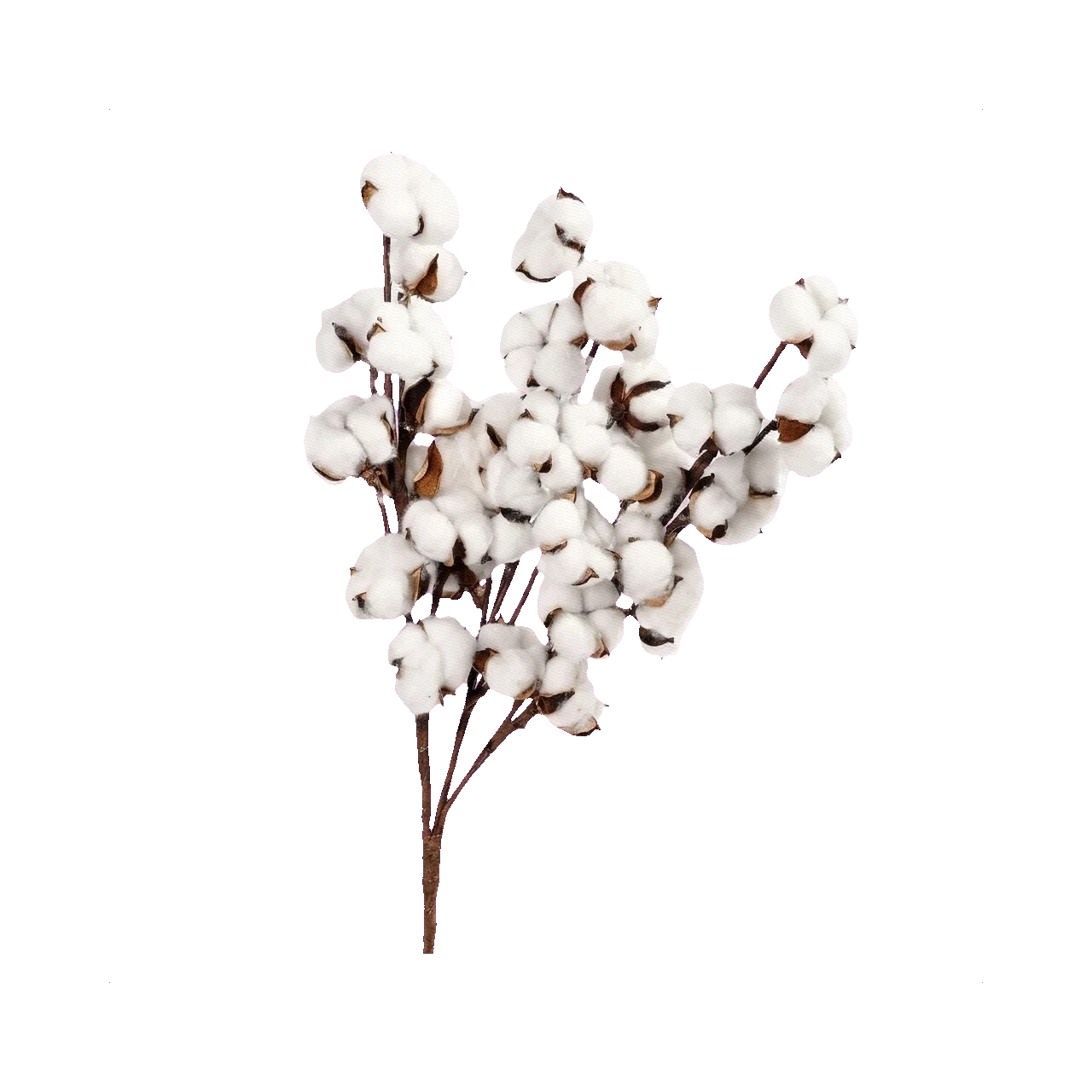
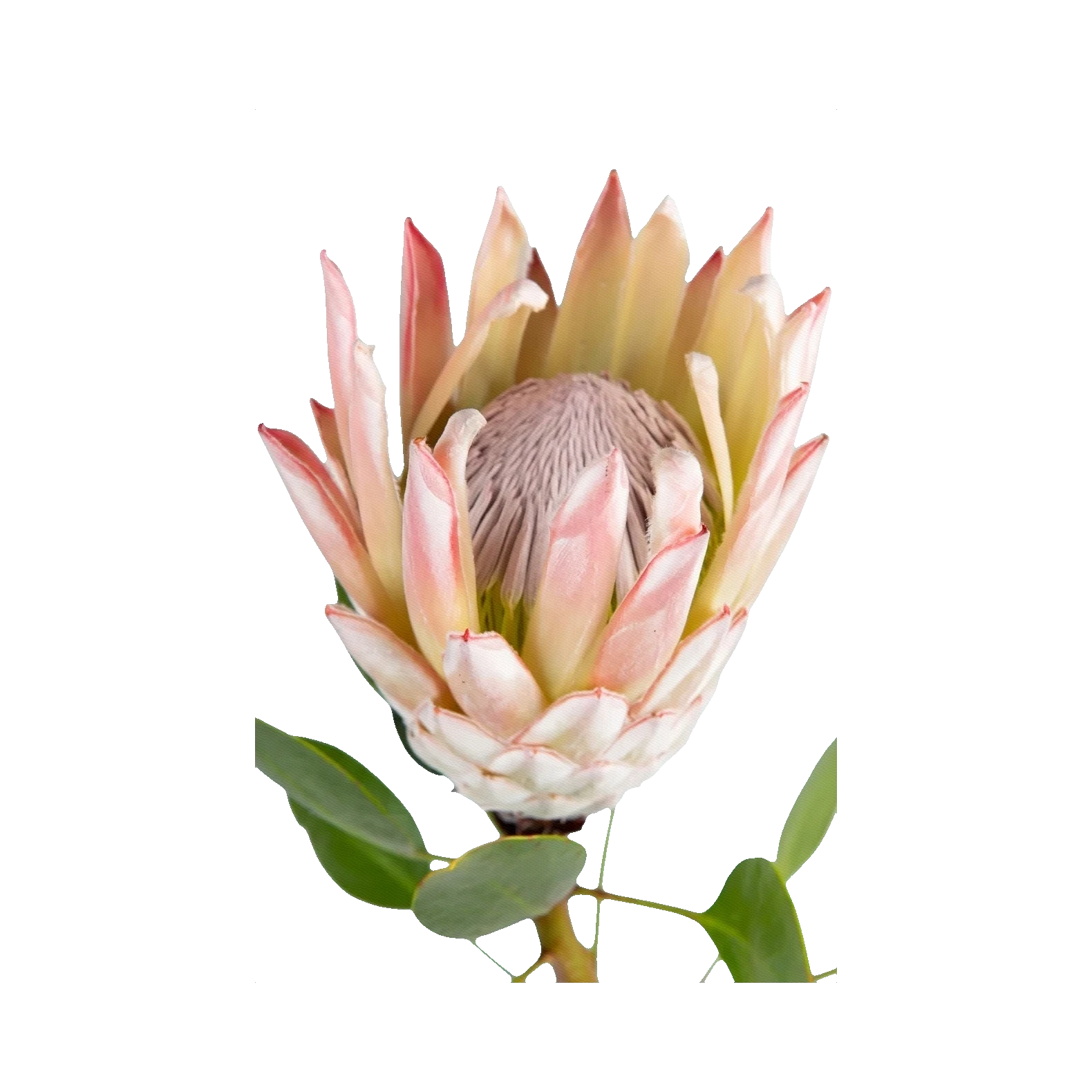
Good substitutes for Lotus Pod include Cotton, Protea, Leucadendron. Match on look, colour and season — our substitute finder ranks the closest alternatives.
What does Lotus Pod symbolise?
Lotus Pod is associated with purity, rebirth, enlightenment, resilience.
How do you care for cut Lotus Pod?
Recut fresh pods and use cool water
Related flowers

Free to quote and cite with attribution and a link back, for non-commercial and editorial use (blogs, journalism, classrooms, research).
Lacy Bird Flower Encyclopedia — “Lotus Pod”. https://lacybird.com/flowers/lotus-pod/<a href="https://lacybird.com/flowers/lotus-pod/">Lacy Bird Flower Encyclopedia — Lotus Pod</a>