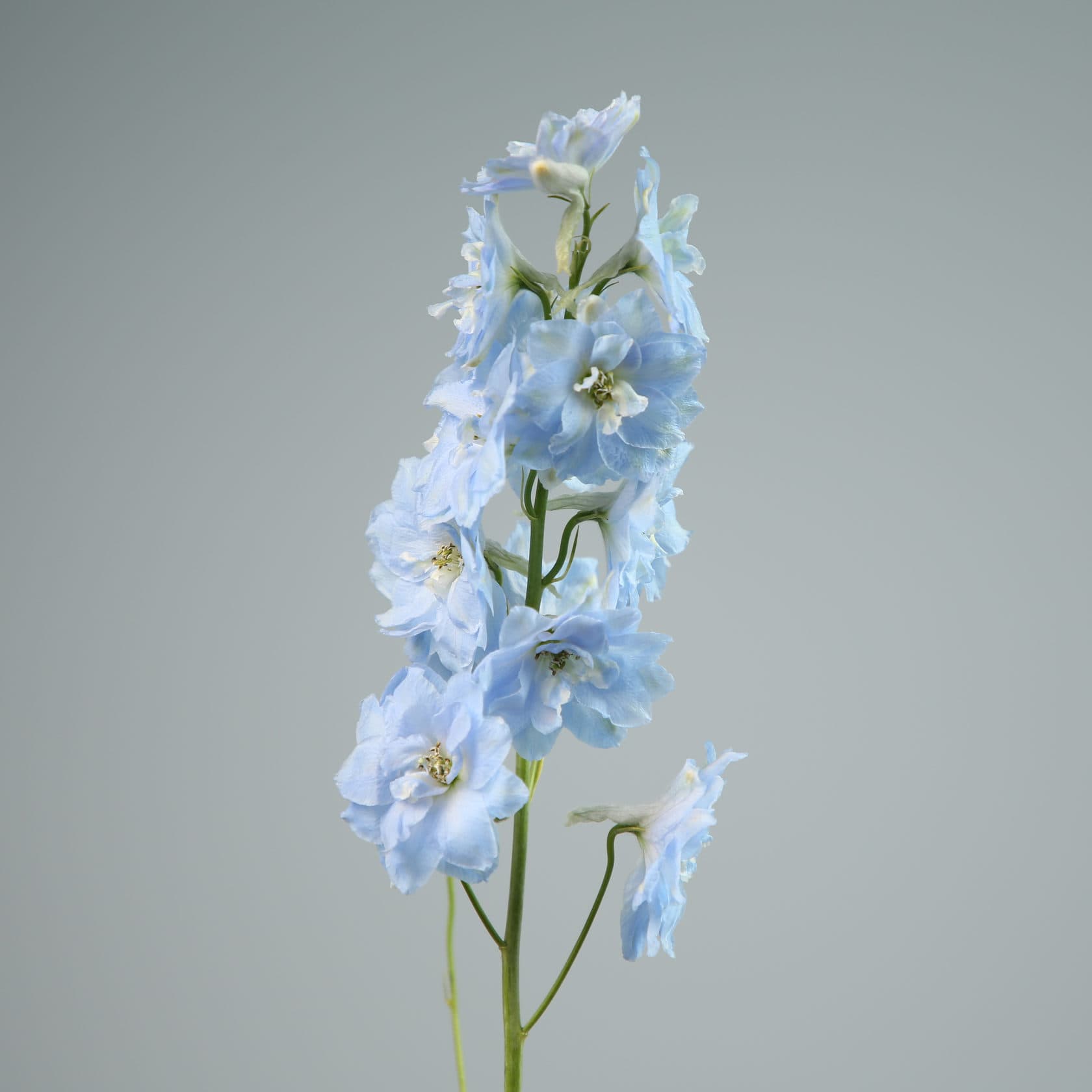
Monkshood
Aconitum, known as monkshood, produces stately spires of hooded, helmet-shaped blooms in rich blues, purples and cool whites. Florists reach for it as a moody line flower that adds depth, height and an old-world garden character to autumn arrangements and editorial work. Every part of the plant is highly toxic, so it must be handled with gloves and kept well away from children, pets and food. Its deep sapphire tones are hard to find in other flowers, making it a treasured accent for dramatic, jewel-toned palettes.
| Family | Ranunculaceae |
|---|---|
| Origin | Mountains of Europe and Asia |
| Peak season | August, September |
| Availability | July, August, September, October |
| Stem length | 60–120 cm |
| Vase life | 6–10 days |
| Colors | blue, purple, white, bicolor |
| Price tier | mid |
Wear gloves whenever handling it, as every part of monkshood is highly poisonous; wash hands and tools afterward and never let the sap contact broken skin. Cut stems on an angle and condition in deep, cool water with flower food for several hours before arranging. Strip the lower leaves, keep it cool, and always keep it well away from food-prep areas, children and pets.
- •Always wear gloves when handling
- •Wash hands and tools after use
- •Keep away from children, pets and food
- •Cut stems at an angle and condition in deep water
- •Strip lower leaves below the waterline
- •Keep cool and out of direct sun