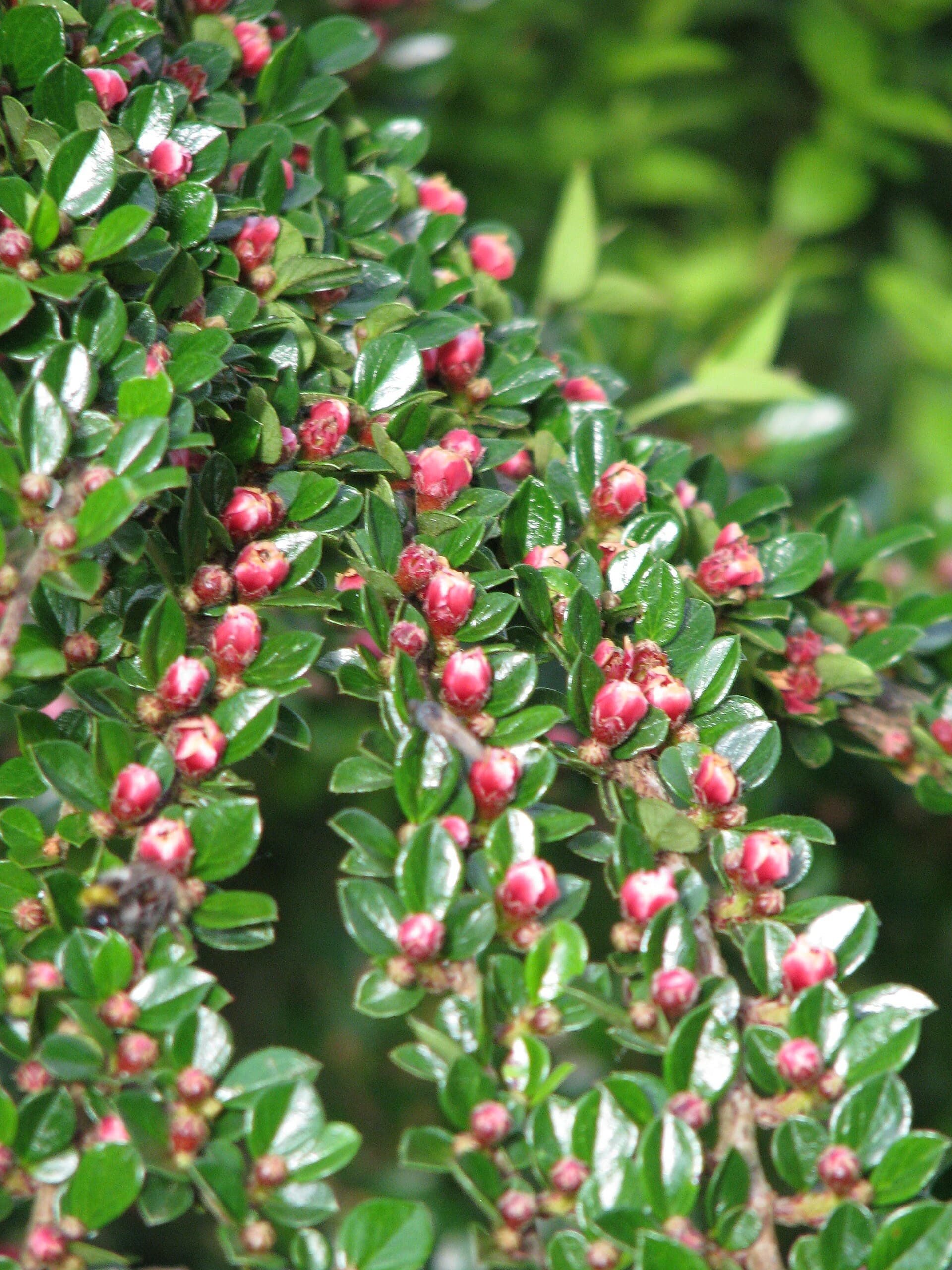
Photo: peganum from Henfield, England · CC BY-SA 2.0 · Wikimedia Commons
Cotoneaster
Cotoneaster is a deciduous to semi-evergreen shrub whose arching, herringbone branches carry glossy leaves and clusters of bright red berries. Cut in autumn it brings warm seasonal colour and natural, wild movement to arrangements, wreaths and rustic table designs. As the leaves turn, the same branch offers russet foliage alongside its jewel-like fruit, giving florists two textures on one stem. It is an inexpensive, hard-wearing choice for autumn and festive work.
| Family | Rosaceae |
|---|---|
| Origin | China and the Himalayas |
| Peak season | September, October, November |
| Availability | August, September, October, November, December |
| Stem length | 30–70 cm |
| Vase life | 7–14 days |
| Colors | green, red, orange |
| Price tier | budget |
Cut the woody stems at a sharp angle and, for very hard wood, split the base to help uptake. Strip leaves and any berries that would sit in the water. Give a long cool drink before designing; the berries hold well but drop if the branch dries out, so keep it hydrated and cool.
- •Cut and split woody stem ends
- •Strip lower foliage and berries
- •Hydrate deeply before arranging
- •Keep cool to hold berries
- •Avoid knocking ripe berries
- •Top up water frequently
Frequently asked questions
When is Cotoneaster in season?
Cotoneaster peaks in September, October, November, and florists can usually source it August, September, October, November, December. Availability shifts by region and greenhouse supply.
How long does Cotoneaster last in a vase?
Expect 7–14 days with proper conditioning — a clean vase, fresh water every couple of days, flower food, and a cool spot away from ripening fruit and direct heat.
What can I use instead of Cotoneaster?
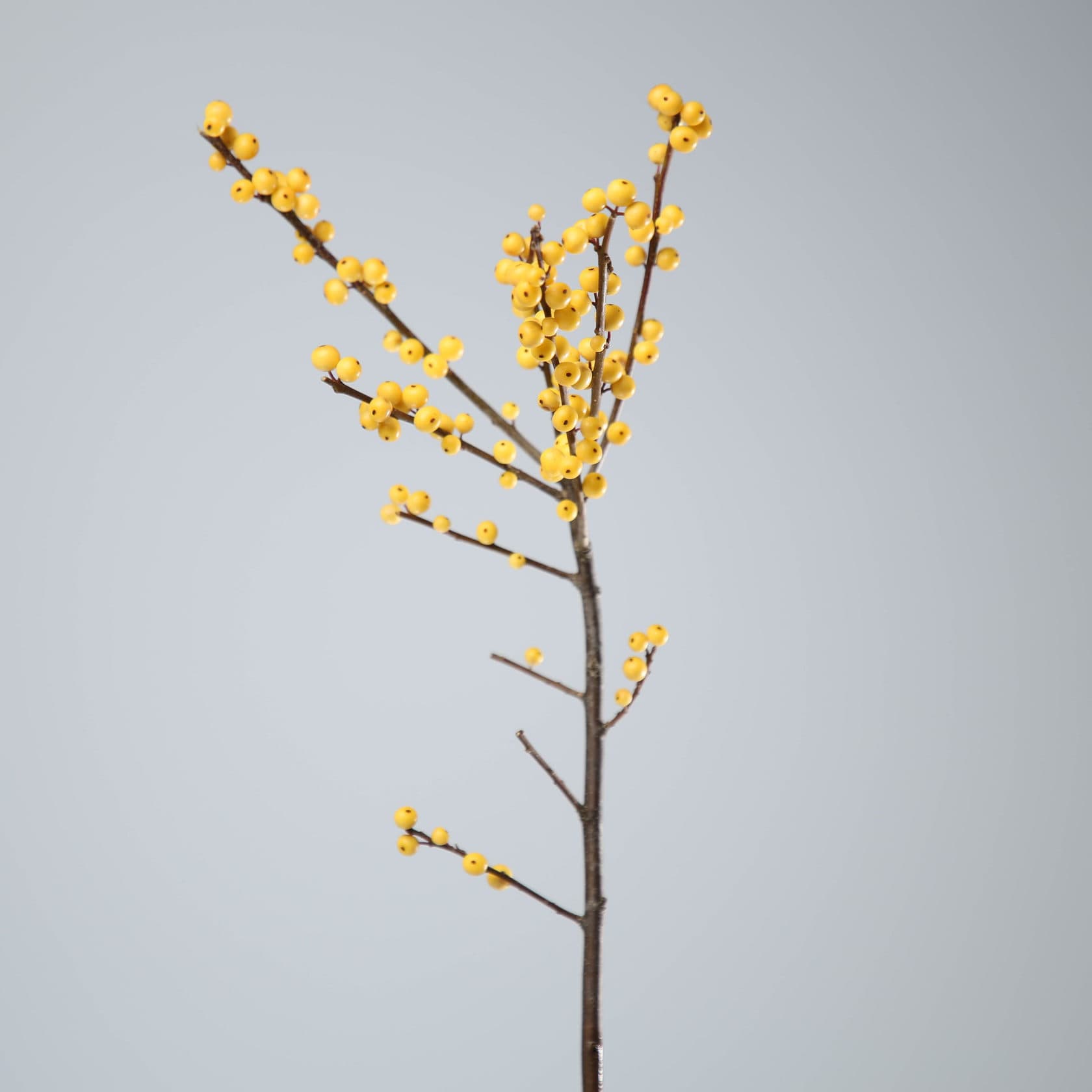
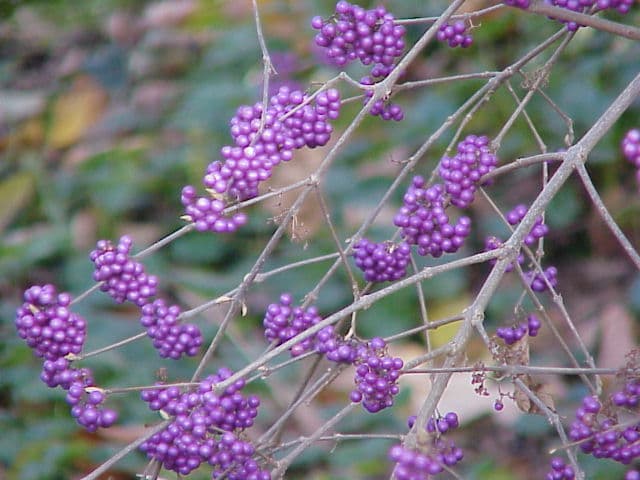
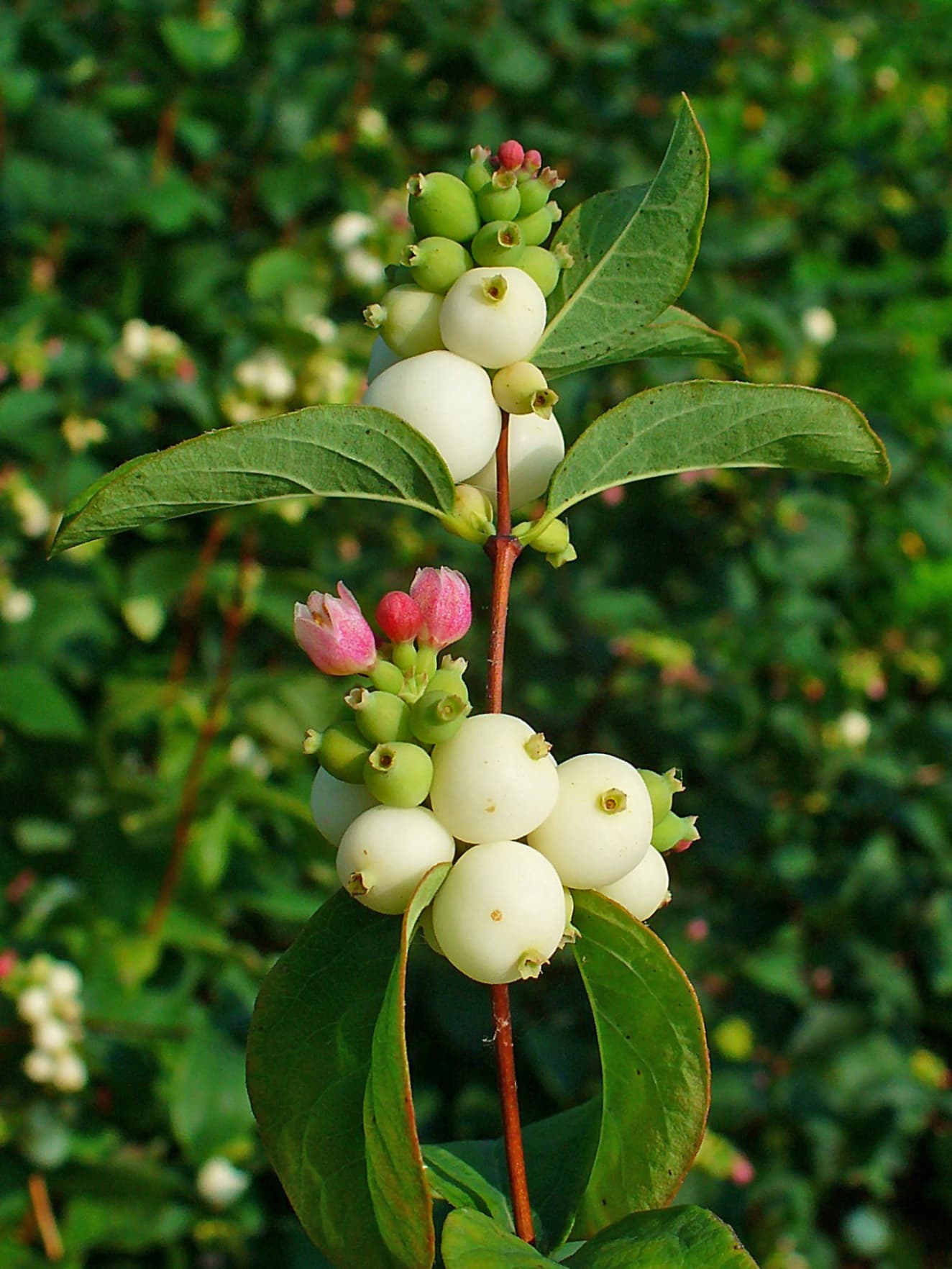
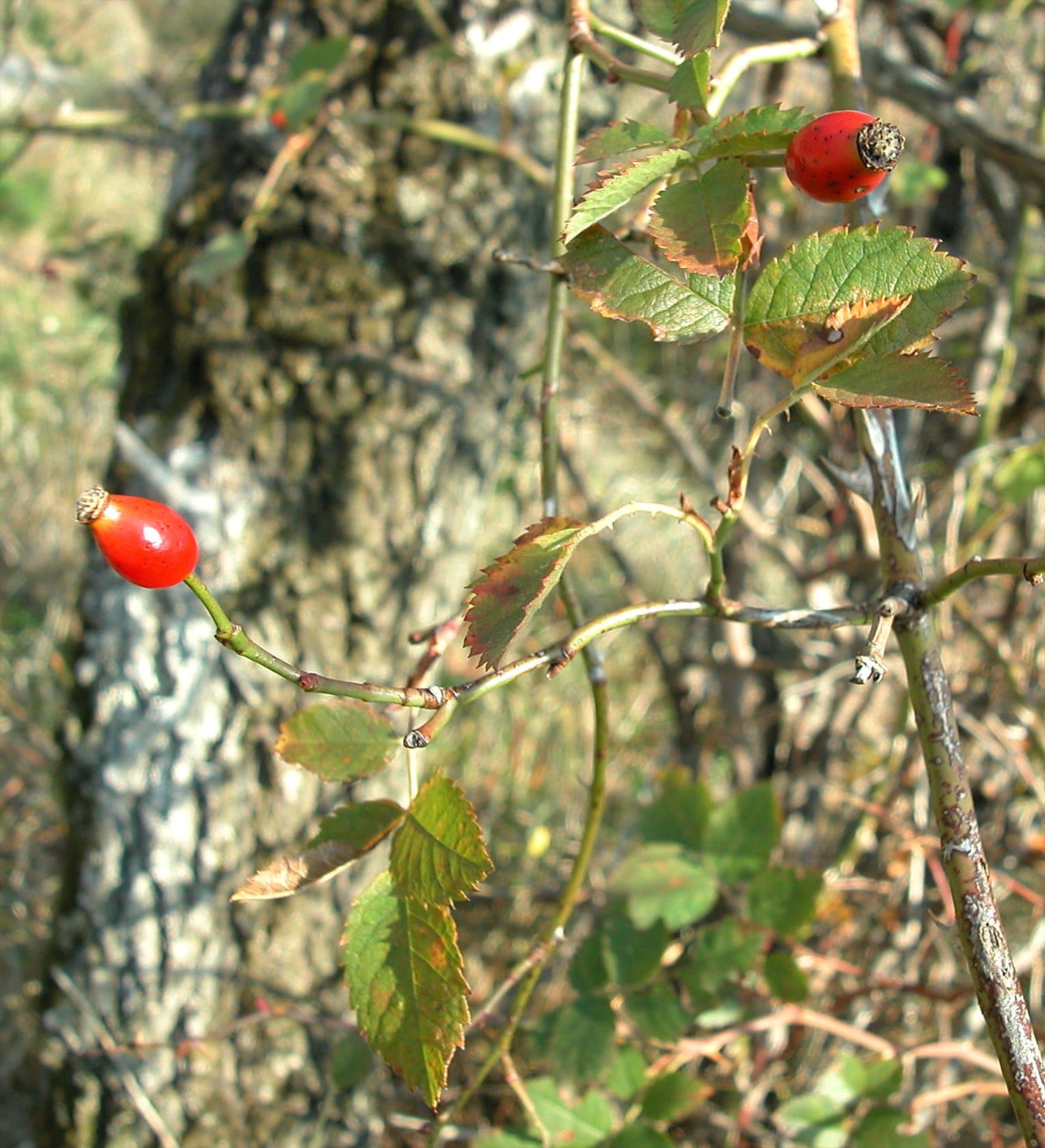
Good substitutes for Cotoneaster include Ilex (winter berry), Beautyberry, Snowberry, Rosehip. Match on look, colour and season — our substitute finder ranks the closest alternatives.
What does Cotoneaster symbolise?
Cotoneaster is associated with abundance, autumn, warmth, protection.
How do you care for cut Cotoneaster?
Cut and split woody stem ends