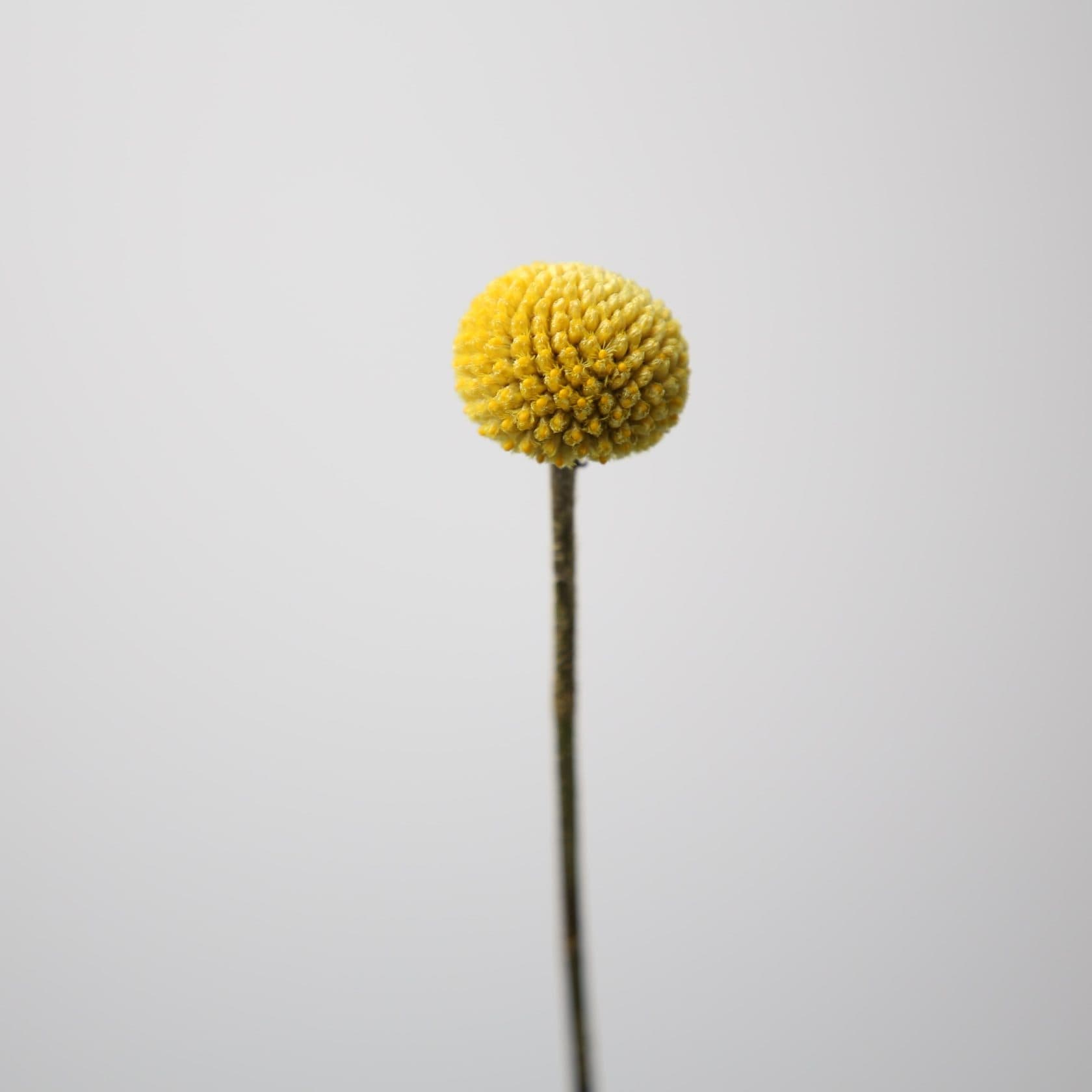
Teasel
Teasel is a tall wild biennial whose egg-shaped, densely spined seed heads sit atop rigid, prickly stems. Instantly recognisable for their bristling texture, the heads shift from green in summer to a warm architectural brown as they dry. Florists reach for teasel to add height, structure and a spiky, foraged edge to rustic and contemporary dried work. It is inexpensive, robust and lasts for months, though its sharp spines call for careful handling.
| Family | Caprifoliaceae |
|---|---|
| Origin | Europe, North Africa and Western Asia |
| Peak season | August, September |
| Availability | July, August, September, October, November, December |
| Stem length | 50–100 cm |
| Vase life | 14–60 days |
| Colors | brown, green |
| Price tier | budget |
Wear gloves, as the stems and seed heads are covered in fine, sharp spines. Green fresh teasel takes water briefly, but it is most often dried: hang the tall stems upside down in a dry, airy place where the heads harden to a warm brown. Once dried it needs no water and lasts for months as a rigid, spiky accent.
- •Wear gloves when handling the spiny stems
- •Recut and give a short cool drink when fresh
- •Hang upside down to dry to a lasting brown
- •Keep dried heads away from damp
- •Position carefully so spines do not catch other stems