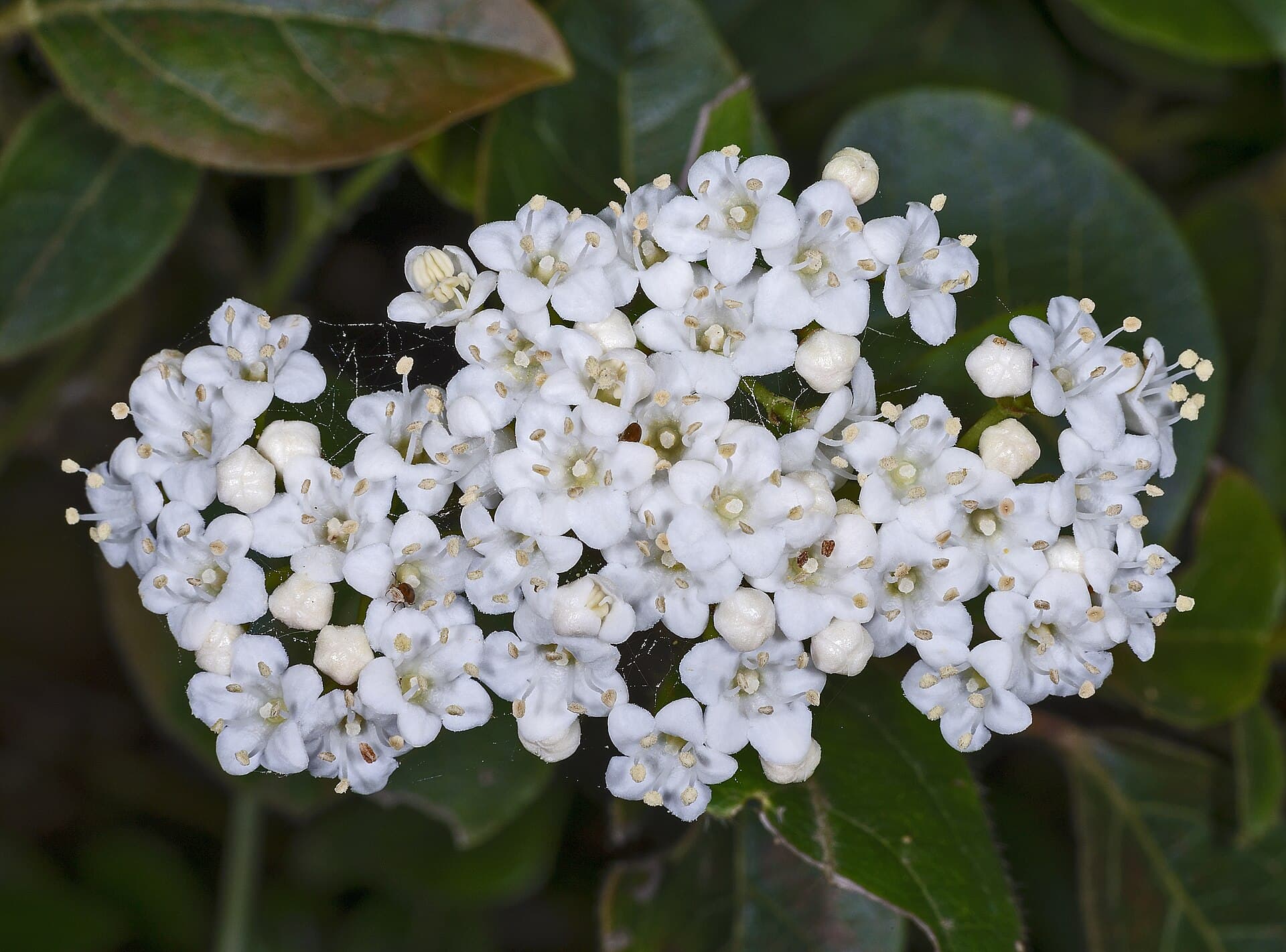
Photo: Didier Descouens · CC BY-SA 4.0 · Wikimedia Commons
Viburnum Tinus
Viburnum tinus, or laurustinus, is the winter-berrying viburnum, carrying tight clusters of extraordinary metallic blue-black berries against dark evergreen leaves. Where the flowering viburnum belongs to spring, this is its cool-season counterpart, offering one of the very few naturally blue-toned fruits in the florist's palette. That rare iridescent colour makes it a quiet luxury in winter and editorial designs. Hardy and easy to condition, it delivers rich, jewel-like texture through the coldest months.
| Family | Adoxaceae |
|---|---|
| Origin | Mediterranean region |
| Peak season | December, January |
| Availability | November, December, January, February |
| Stem length | 30–70 cm |
| Vase life | 7–10 days |
| Colors | blue, black |
| Price tier | mid |
Cut the woody stem on a diagonal and split the base, then strip the evergreen lower leaves from the waterline. Condition in cool water for several hours; the metallic blue-black berries hold well against the glossy foliage. Keep cool to maintain the distinctive iridescent berry sheen.
- •Re-cut and split the woody base before conditioning
- •Strip lower evergreen leaves below the waterline
- •Keep cool to preserve the metallic berry colour
- •Choose stems with berries just colouring for longest life
- •Berries are mildly toxic if eaten; keep away from children and pets
Frequently asked questions
When is Viburnum Tinus in season?
Viburnum Tinus peaks in December, January, and florists can usually source it November, December, January, February. Availability shifts by region and greenhouse supply.
How long does Viburnum Tinus last in a vase?
Expect 7–10 days with proper conditioning — a clean vase, fresh water every couple of days, flower food, and a cool spot away from ripening fruit and direct heat.
What can I use instead of Viburnum Tinus?
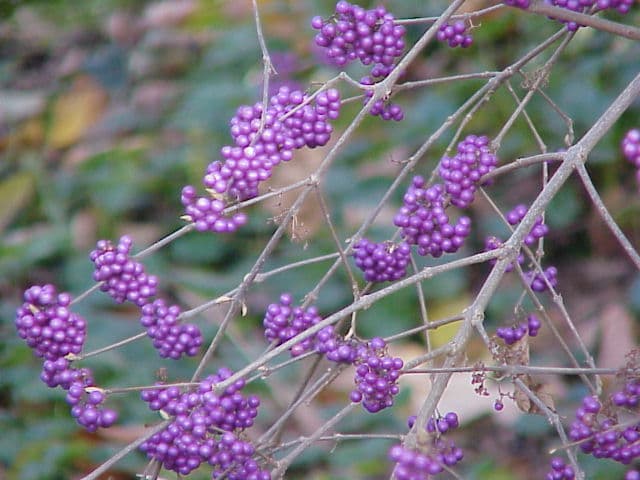
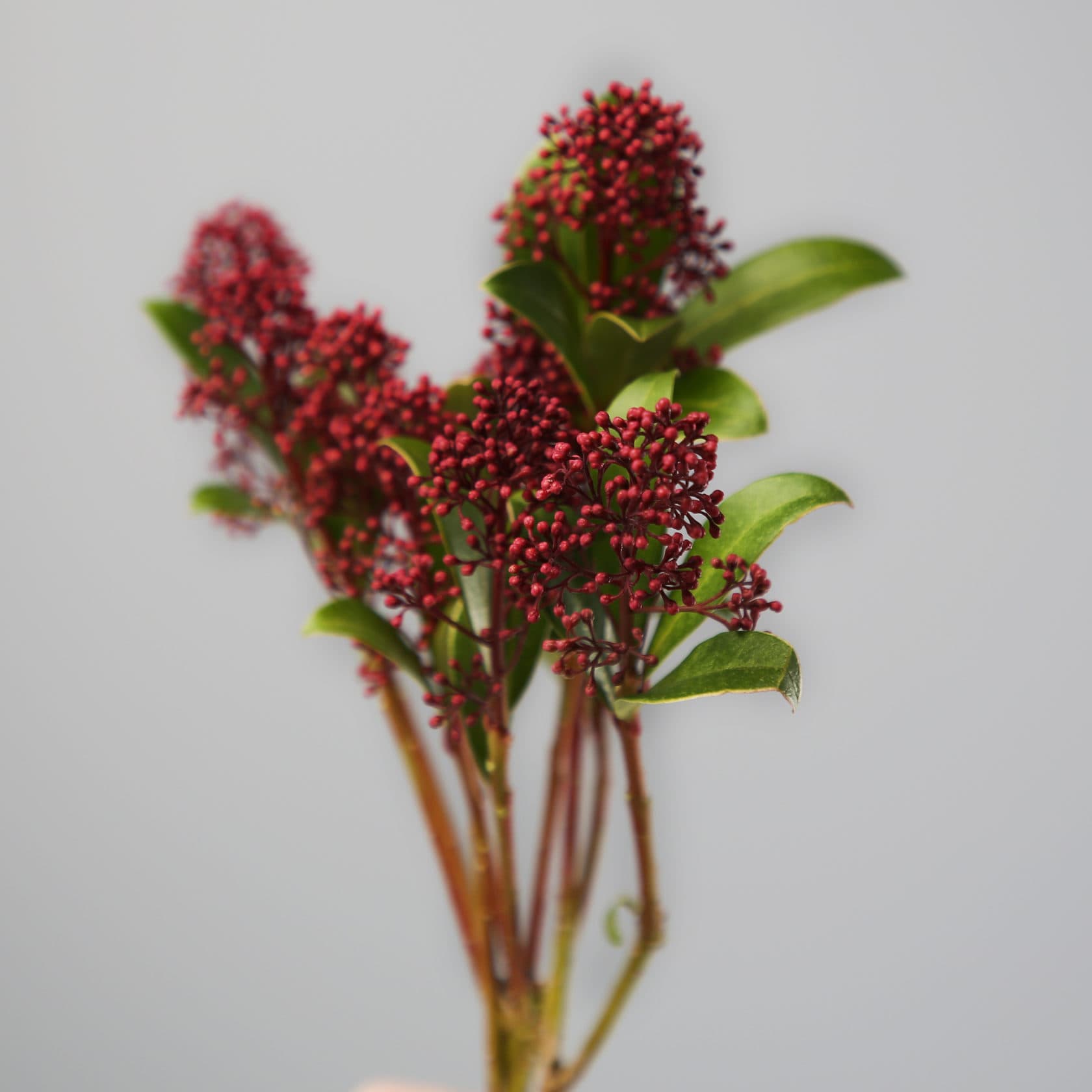
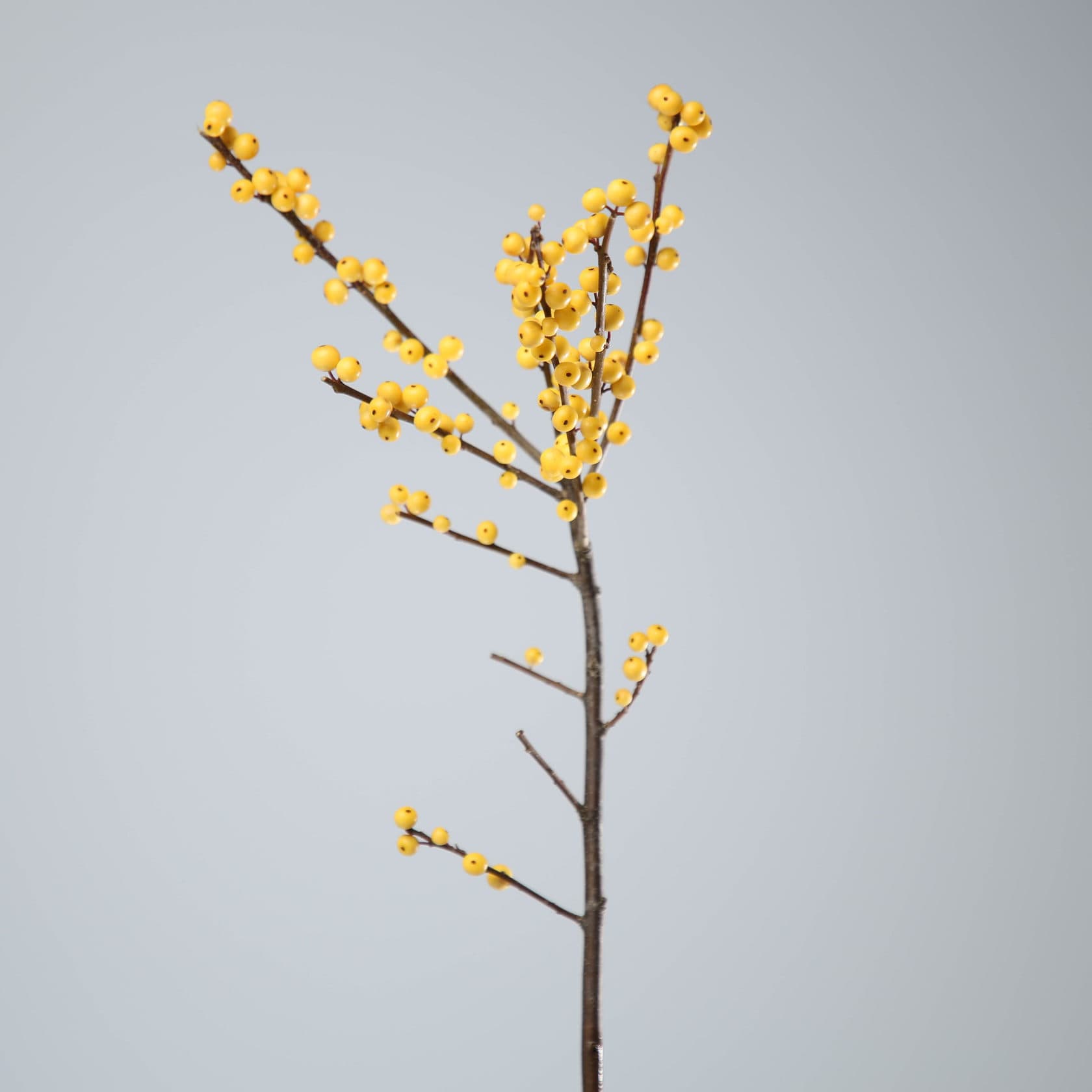
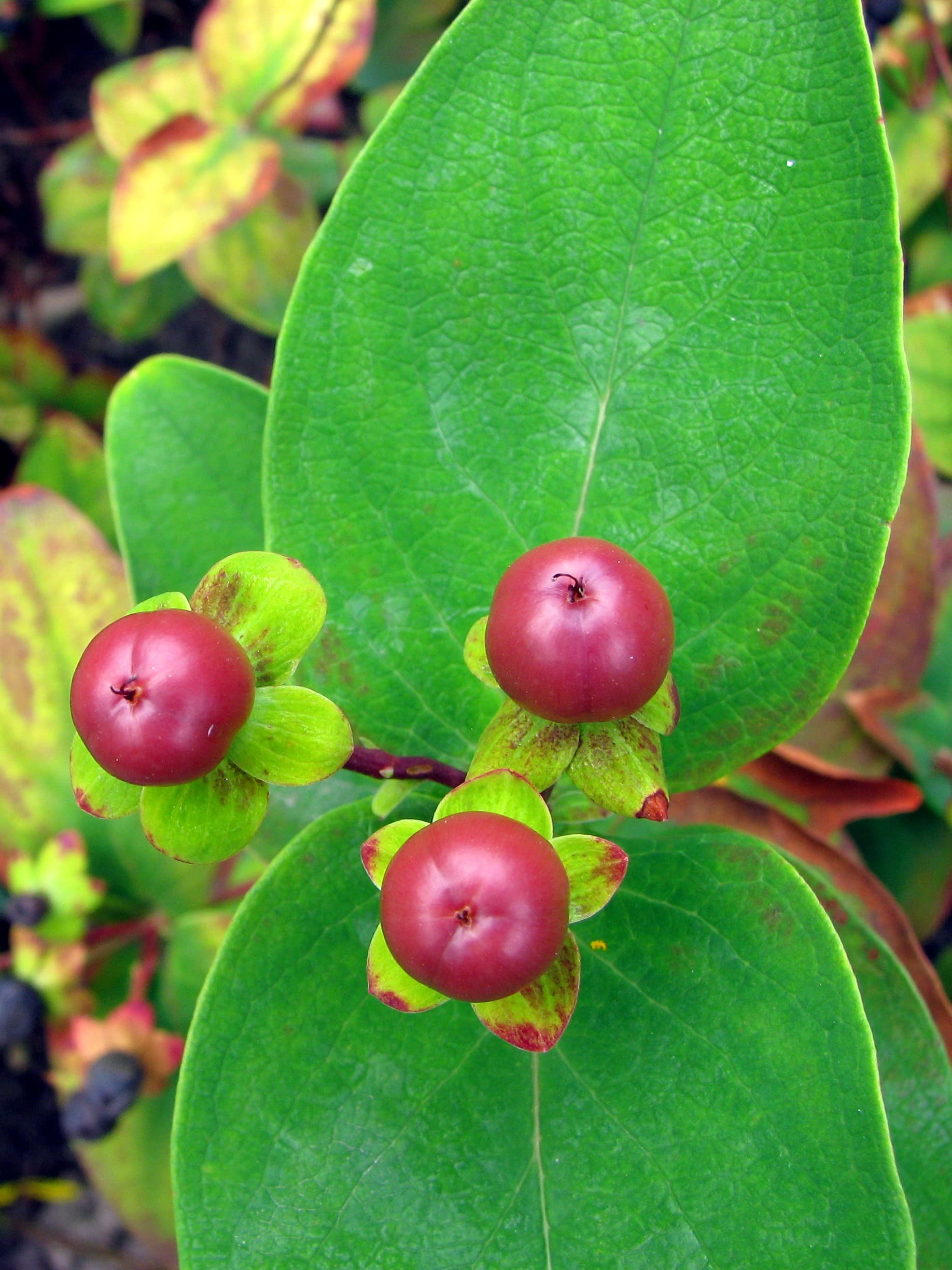
Good substitutes for Viburnum Tinus include Beautyberry, Skimmia, Ilex (winter berry), Hypericum Berry. Match on look, colour and season — our substitute finder ranks the closest alternatives.
What does Viburnum Tinus symbolise?
Viburnum Tinus is associated with endurance, winter, constancy, protection.
How do you care for cut Viburnum Tinus?
Re-cut and split the woody base before conditioning