
Rudbeckia
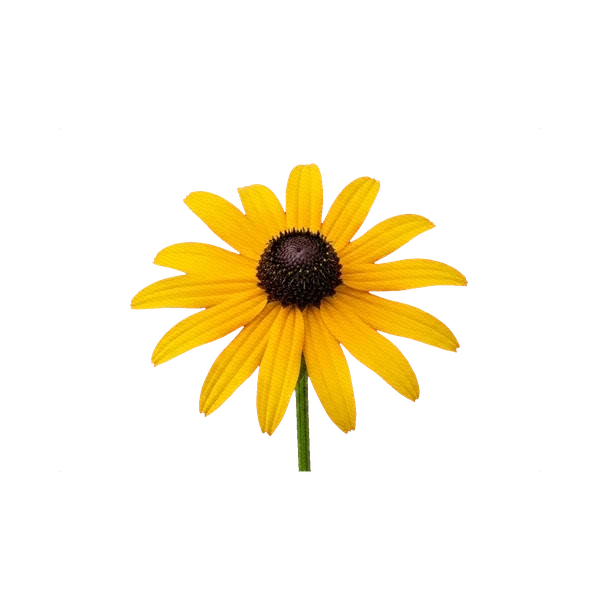
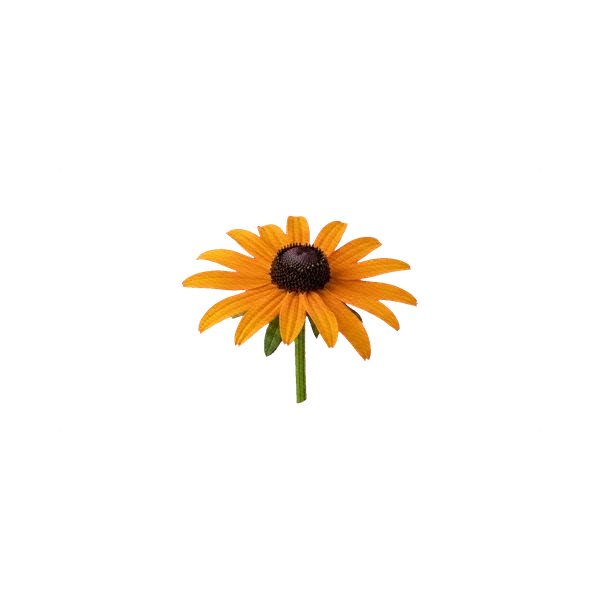
Rudbeckia is the golden daisy of high summer and early autumn, instantly recognisable by its warm yellow-to-bronze rays circling a dark, domed cone. Florists prize it as a cheerful, sturdy focal that carries meadow and prairie-style designs without fuss. Its colour range spans clear yellow through mahogany and rust, making it a natural fit for late-season and rustic palettes. Reliable, inexpensive and long-lasting, it bridges the gap between sunflowers and the finer autumn daisies.
| Family | Asteraceae |
|---|---|
| Origin | North America (eastern and central United States) |
| Peak season | July, August, September |
| Availability | June, July, August, September, October |
| Stem length | 40–70 cm |
| Vase life | 6–10 days |
| Colors | yellow, orange, bronze, brown, red |
| Price tier | budget |
Cut stems on a sharp angle and place immediately into clean, cool water with flower food. Strip all foliage that would sit below the waterline, as rudbeckia leaves foul water quickly. Give the stems a deep drink in a cool room for a few hours before arranging, and refresh the water every two days to extend the display.
- •Remove all submerged foliage before arranging
- •Use clean vases and flower food
- •Change water every two days
- •Keep away from ripening fruit and heat
- •Recut stems when refreshing water
2 named black-eyed susan cultivars from the Lacy Bird master catalogue — each a distinct commercial variety.
Entries marked ✦ come from the Acanta master catalogue — the shared database of cut flowers, forms, colours and named varieties that florists and studios build on. The rest are our editorial genus reference. What is Acanta →
 Bouquet Builder — by Lacy Bird
Design the bouquet. See it as a photo.
Botanical reference
- Common name
- Black-Eyed-Susan
- Also known as
- black-eyed Susan, coneflower, gloriosa daisy, Centrocarpha gracilis, Centrocarpha hirta, Coreopsis hirta, Helianthus hirtus, Peramibus hirtus, Rudbeckia amplectens, Rudbeckia brittonii, Rudbeckia discolor, Rudbeckia gracilis
- Distribution
- Alabama, Alaska, Alberta, Arkansas, British Columbia, California, Colorado, Connecticut, Delaware, District of Columbia
Open-data sources: GBIF, Wikidata (CC0/CC BY)
Frequently asked questions
When is Rudbeckia in season?
Rudbeckia peaks in July, August, September, and florists can usually source it June, July, August, September, October. Availability shifts by region and greenhouse supply.
How long does Rudbeckia last in a vase?
Expect 6–10 days with proper conditioning — a clean vase, fresh water every couple of days, flower food, and a cool spot away from ripening fruit and direct heat.
What can I use instead of Rudbeckia?
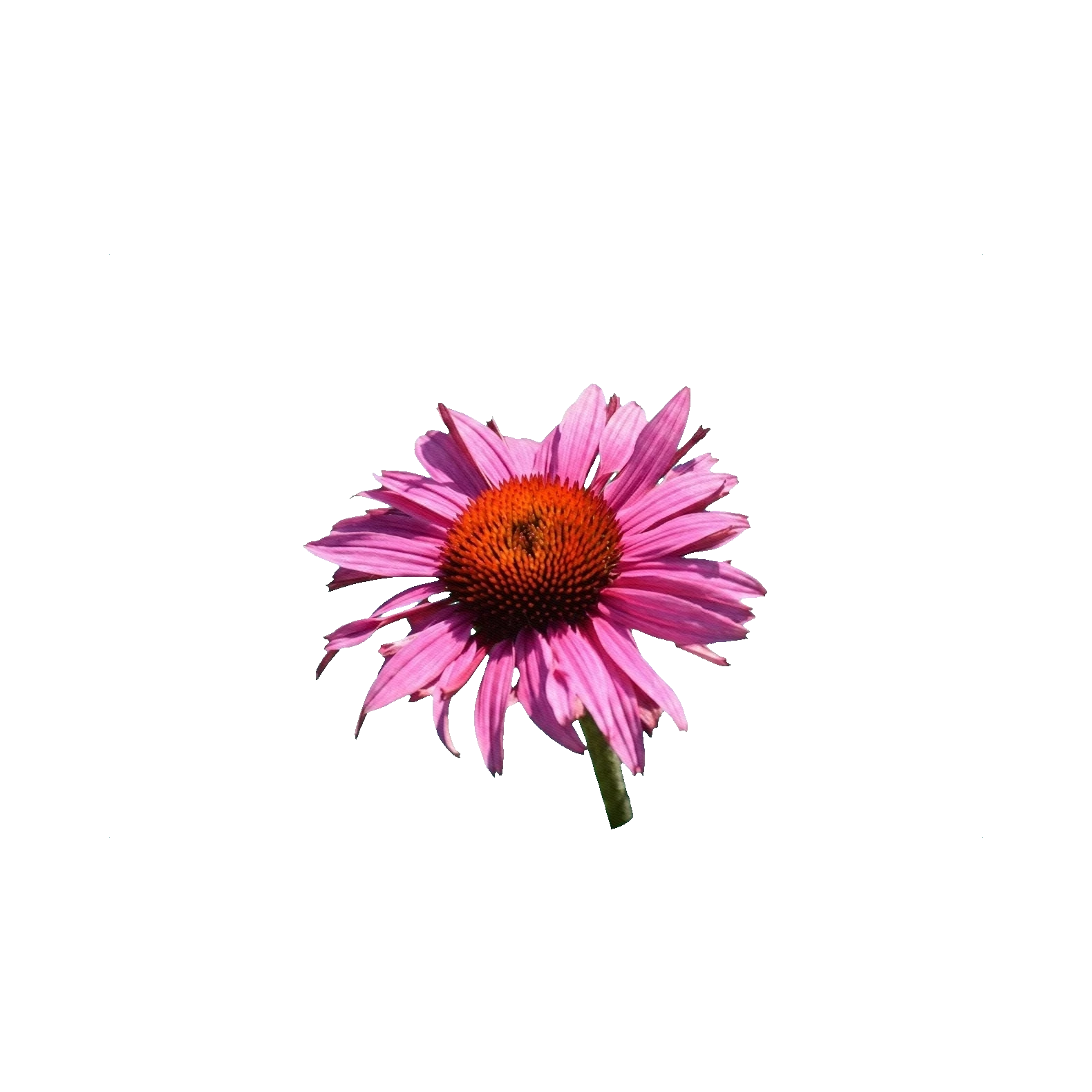
Good substitutes for Rudbeckia include Echinacea, Sunflower, Gerbera, Marigold. Match on look, colour and season — our substitute finder ranks the closest alternatives.
What does Rudbeckia symbolise?
Rudbeckia is associated with encouragement, warmth, justice, motivation.
How do you care for cut Rudbeckia?
Remove all submerged foliage before arranging
Related flowers


Free to quote and cite with attribution and a link back, for non-commercial and editorial use (blogs, journalism, classrooms, research).
Lacy Bird Flower Encyclopedia — “Rudbeckia”. https://lacybird.com/flowers/rudbeckia/<a href="https://lacybird.com/flowers/rudbeckia/">Lacy Bird Flower Encyclopedia — Rudbeckia</a>