Photo: Relativity · CC BY-SA 4.0 · Wikimedia Commons
Costus
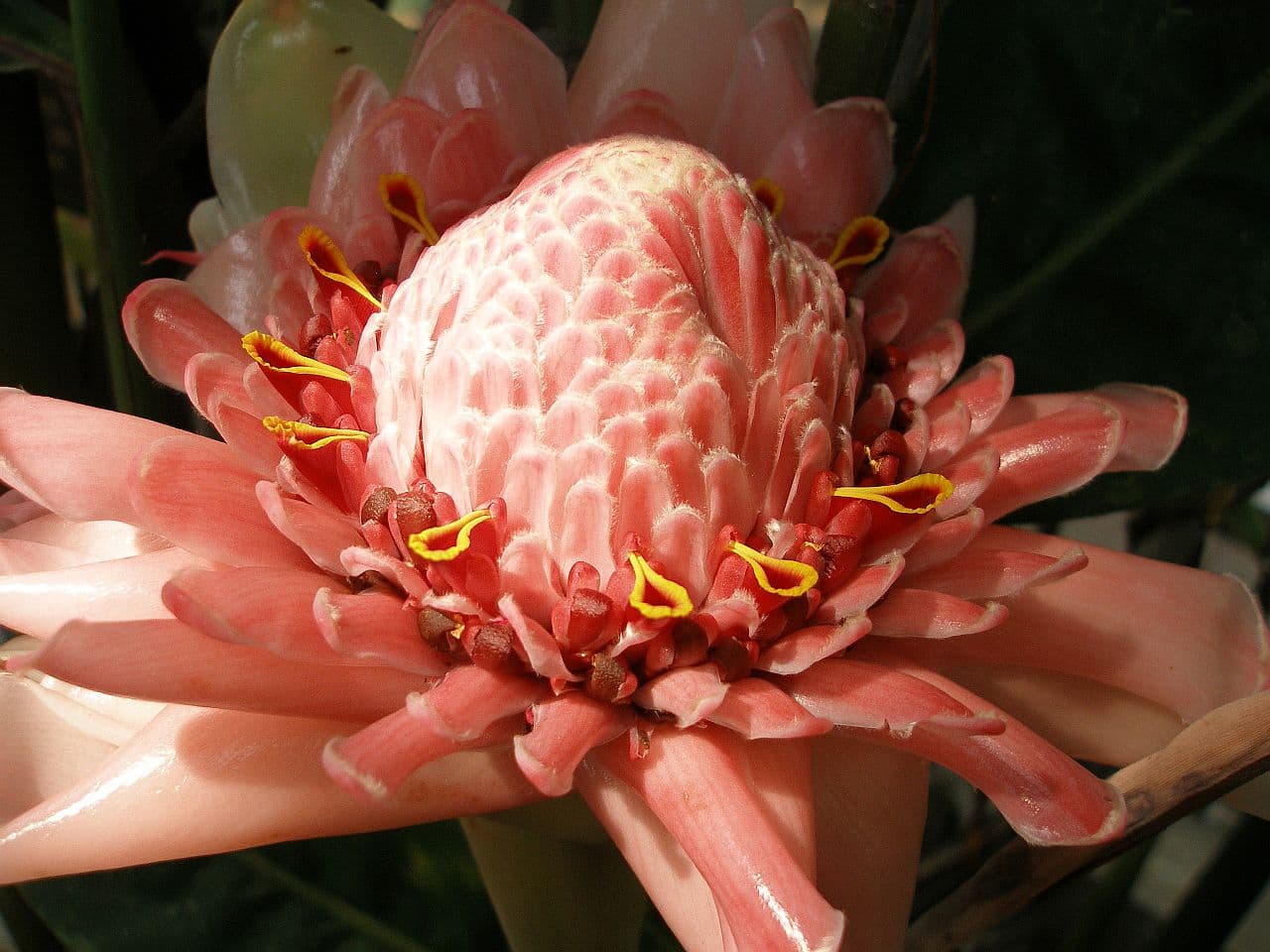
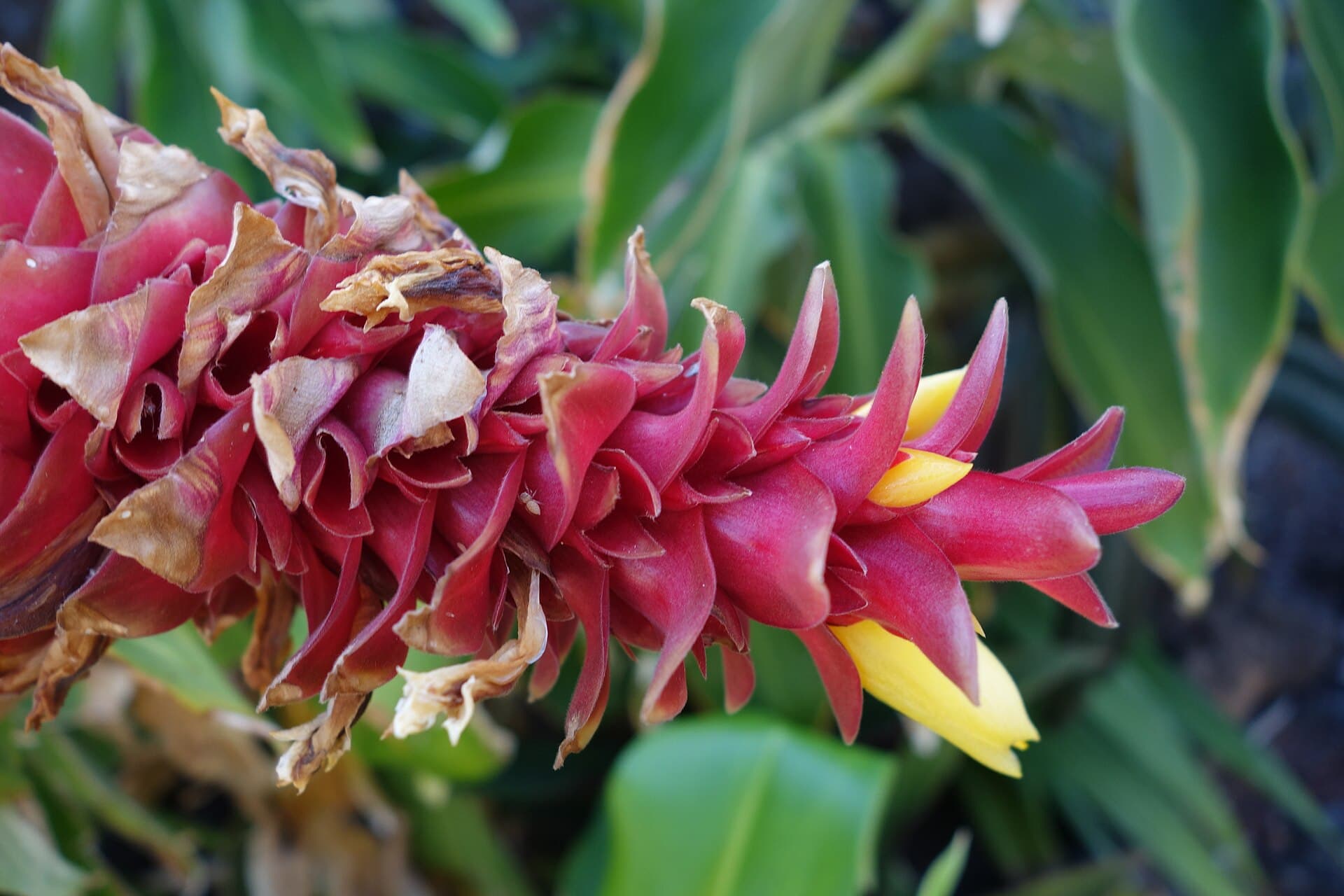
Costus, the spiral ginger, forms a striking cone of waxy crimson bracts arranged in an overlapping spiral, from which small tubular yellow flowers peek. A member of the spiral-ginger family Costaceae and native to Central America, it delivers the same tropical drama as true ginger with a distinctive geometric twist. Florists use it as a sculptural focal in tropical event work, tall arrangements and installations, where its bold red tower holds attention. Sturdy and long-lasting, it is an easygoing exotic that keeps its colour for well over a week.
| Family | Costaceae |
|---|---|
| Origin | Costa Rica and tropical Central America |
| Peak season | June, July, August, September, October |
| Availability | January, February, March, April, May, June, July, August, September, October, November, December |
| Stem length | 40–80 cm |
| Vase life | 10–18 days |
| Colors | red, yellow, orange |
| Price tier | mid |
Recut the sturdy stem on a slant and stand it in deep, clean water; the waxy red cone is long-lasting and drinks steadily. The showy part is a tight spiral of overlapping bracts, with small yellow true flowers emerging between them — remove spent flowers as they fade. Keep above 12C, as this tropical ginger relative blackens if chilled. Mist the cone to keep it glossy and refresh the water regularly.
- •Recut on a slant and use deep water
- •Keep storage above 12C — chilling blackens bracts
- •Remove spent yellow flowers as they fade
- •Mist the cone to keep it glossy
- •Refresh water every three to four days
- •Use as a bold tropical focal
Frequently asked questions
When is Costus in season?
Costus peaks in June, July, August, September, October, and florists can usually source it January, February, March, April, May, June, July, August, September, October, November, December. Availability shifts by region and greenhouse supply.
How long does Costus last in a vase?
Expect 10–18 days with proper conditioning — a clean vase, fresh water every couple of days, flower food, and a cool spot away from ripening fruit and direct heat.
What can I use instead of Costus?
Good substitutes for Costus include Heliconia, Torch Ginger, Anthurium. Match on look, colour and season — our substitute finder ranks the closest alternatives.
What does Costus symbolise?
Costus is associated with vitality, resilience, warmth, boldness.
How do you care for cut Costus?
Recut on a slant and use deep water