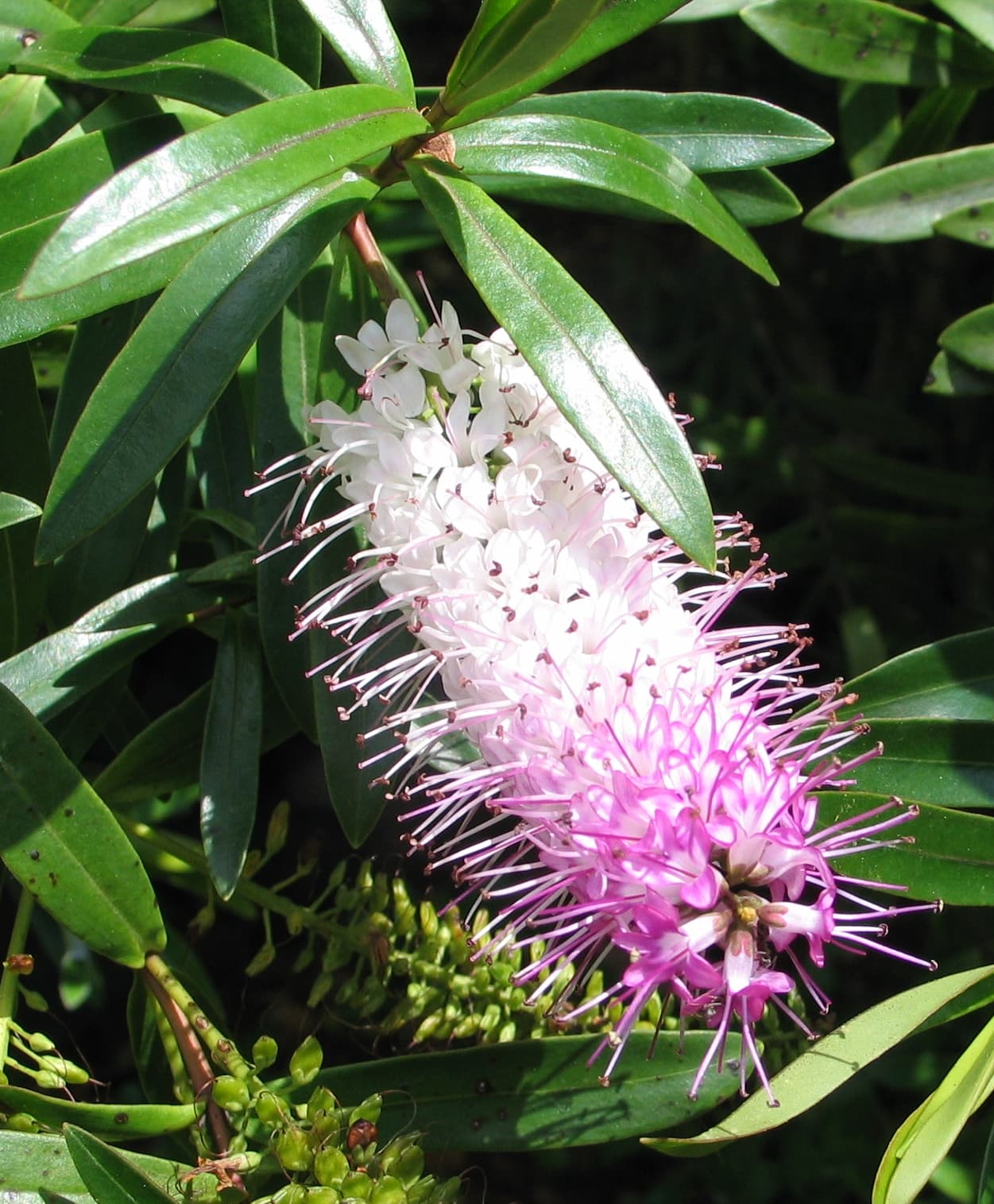
Photo: User:ShineB · CC BY-SA 3.0 · Wikimedia Commons
Hebe
Hebe is a compact evergreen shrub, once classed within Veronica, prized for its tidy rosettes of small, symmetrical leaves. Green and variegated forms alike bring a clean, structured texture to bouquets and buttonholes, while flowering stems add slender spikes of purple or white. Its uniform, architectural growth makes it an easy, reliable filler that holds shape without dominating a design. Florists reach for hebe when they want neat, modern greenery with year-round availability.
| Family | Plantaginaceae |
|---|---|
| Origin | New Zealand |
| Peak season | June, July, August, September |
| Availability | January, February, March, April, May, June, July, August, September, October, November, December |
| Stem length | 25–50 cm |
| Vase life | 7–12 days |
| Colors | green, purple, variegated |
| Price tier | mid |
Recut stems cleanly and remove lower leaves that would foul the water. Condition in cool, fresh water for several hours before arranging so the neat foliage firms up. Some cultivars carry small purple or white flower spikes; keep these cool to slow their opening and extend display.
- •Recut stems on arrival
- •Strip submerged foliage
- •Use clean, cool water
- •Keep out of direct heat
- •Refresh water regularly
- •Handle variegated types gently to avoid marking
Frequently asked questions
When is Hebe in season?
Hebe peaks in June, July, August, September, and florists can usually source it January, February, March, April, May, June, July, August, September, October, November, December. Availability shifts by region and greenhouse supply.
How long does Hebe last in a vase?
Expect 7–12 days with proper conditioning — a clean vase, fresh water every couple of days, flower food, and a cool spot away from ripening fruit and direct heat.
What can I use instead of Hebe?
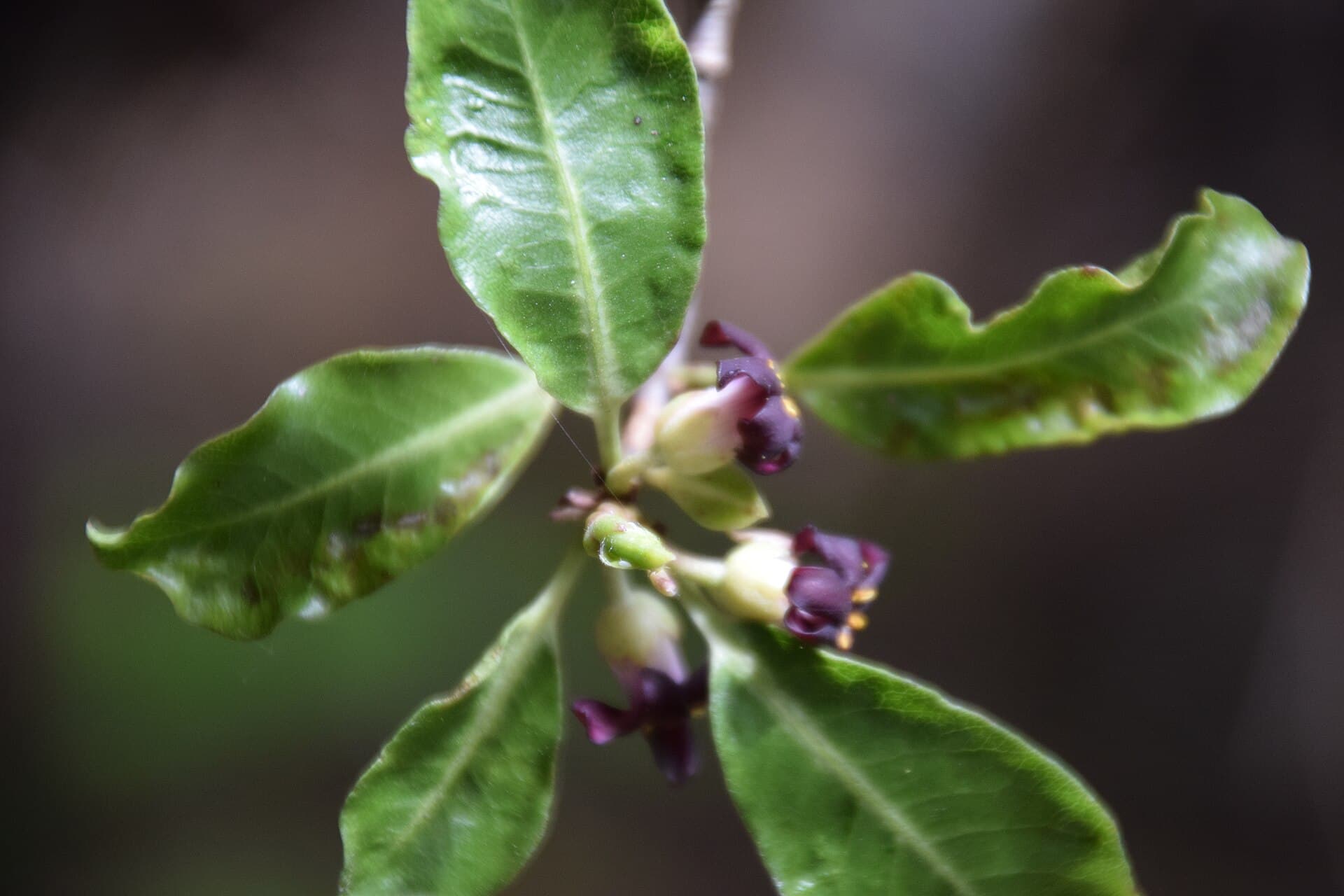
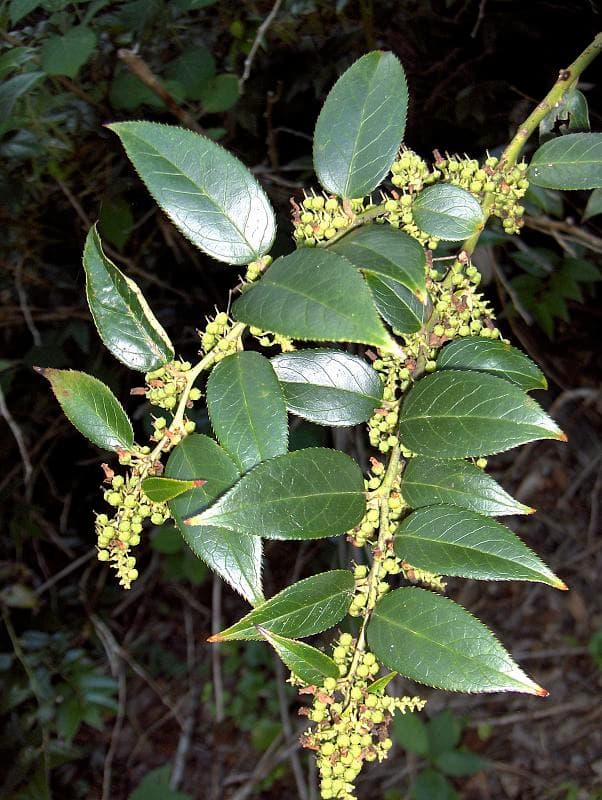
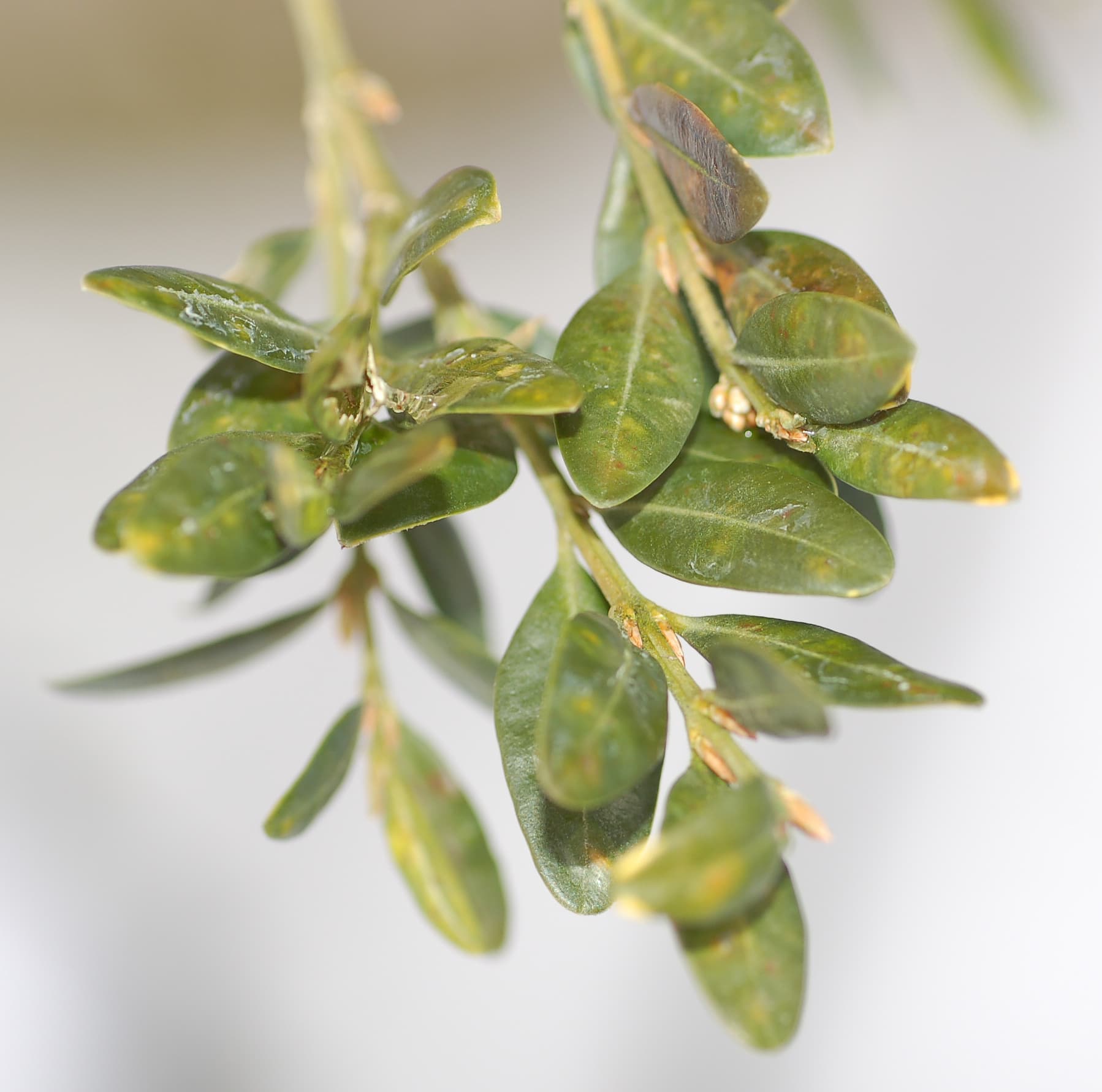
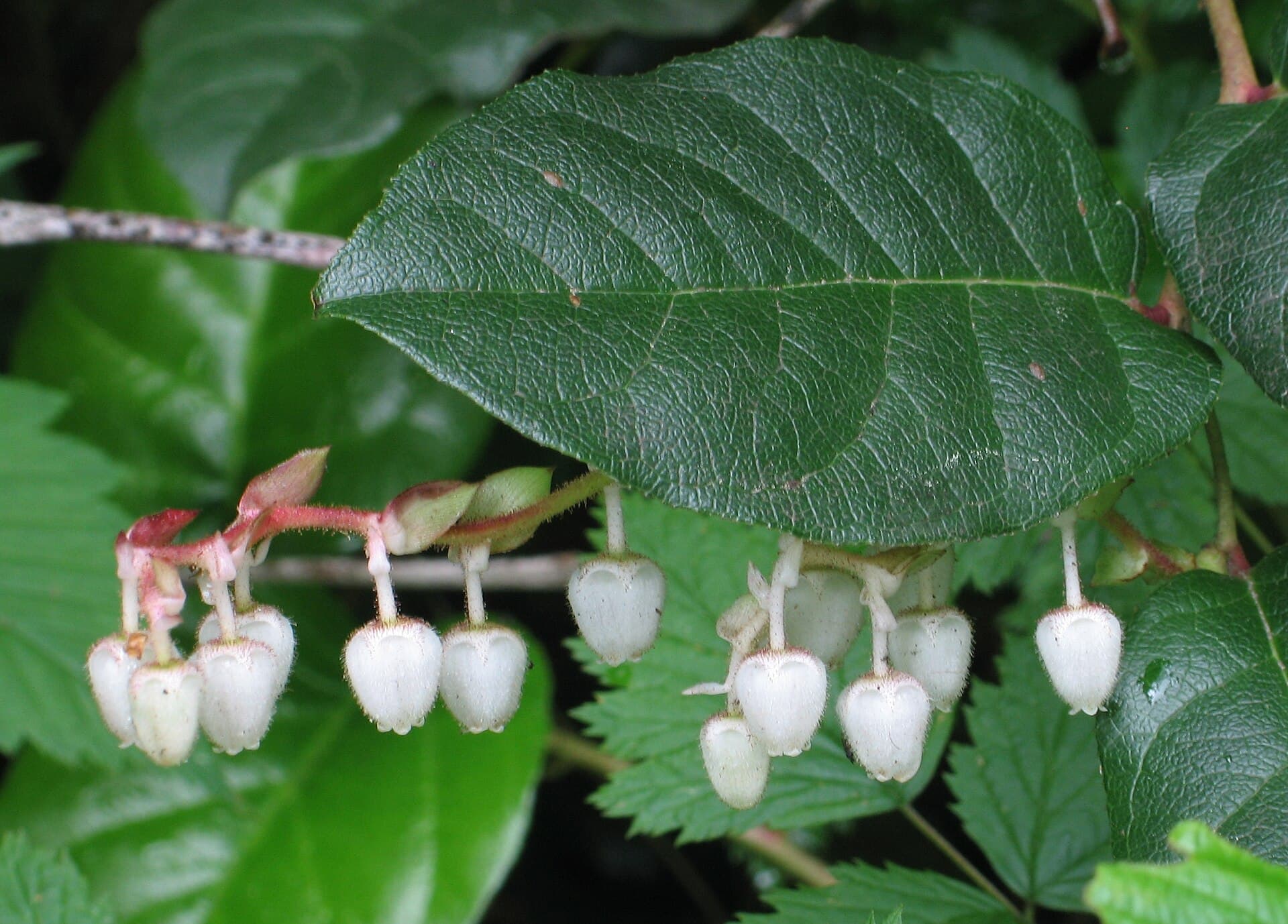
Good substitutes for Hebe include Pittosporum, Leucothoe, Boxwood, Salal. Match on look, colour and season — our substitute finder ranks the closest alternatives.
What does Hebe symbolise?
Hebe is associated with fidelity, constancy, youth, resilience.
How do you care for cut Hebe?
Recut stems on arrival