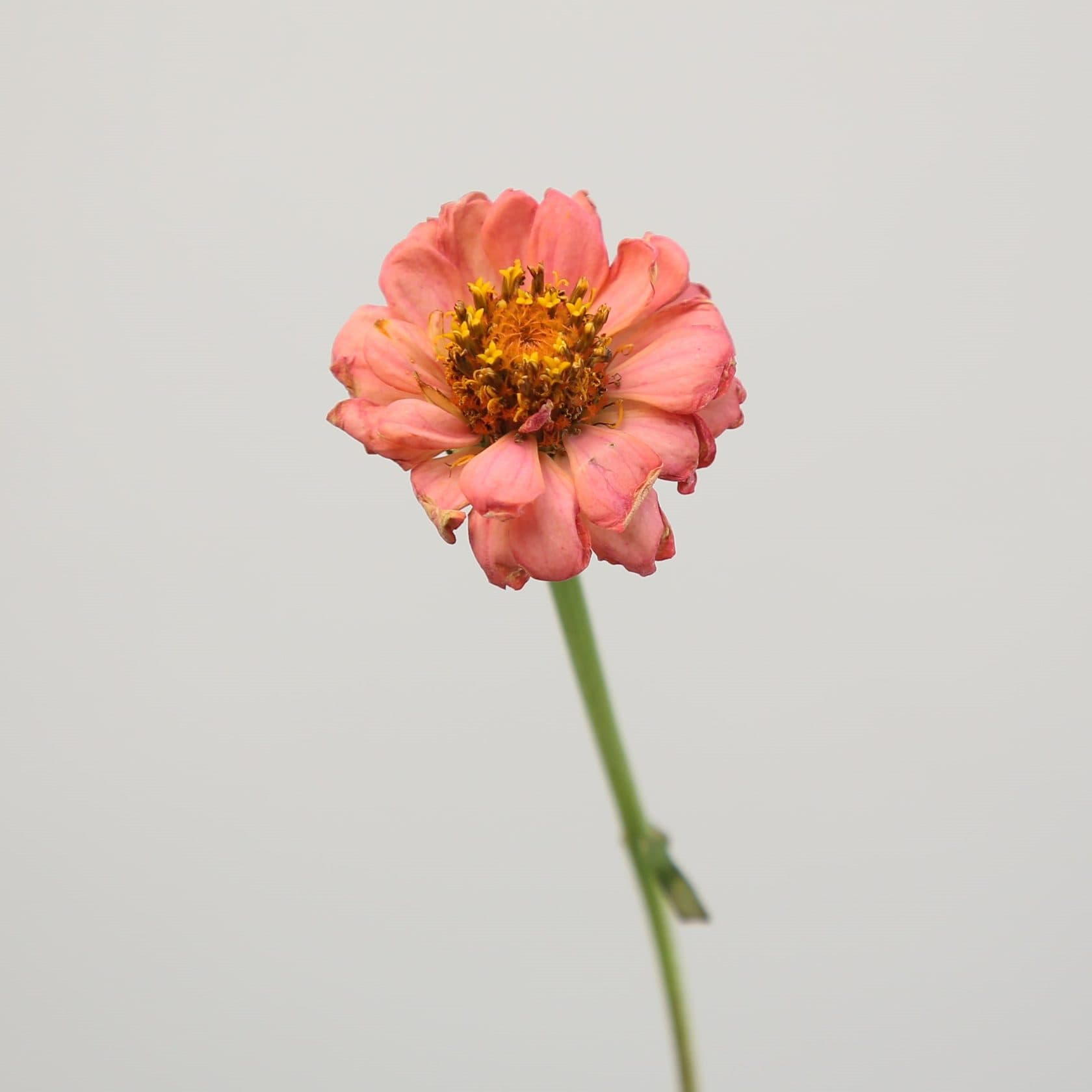
Photo: Betty Cai · CC BY-SA 4.0 · Wikimedia Commons
Calendula
Calendula, or pot marigold, offers rounded daisy heads in glowing shades of orange, apricot and yellow, often doubled into densely petalled rosettes. A cool-season cottage flower, it appears earlier than most summer daisies and returns in a flush during mild autumns. Florists value its clear, edible-bright colour and old-fashioned charm in rustic and garden-style work. Humble and inexpensive, it carries a nostalgic, kitchen-garden warmth that pairs beautifully with herbs and grasses.
| Family | Asteraceae |
|---|---|
| Origin | Southern Europe and the Mediterranean |
| Peak season | May, June |
| Availability | April, May, June, September, October |
| Stem length | 30–50 cm |
| Vase life | 6–8 days |
| Colors | orange, yellow, apricot, cream |
| Price tier | budget |
Cut stems on an angle and remove the aromatic lower leaves, which spoil water quickly and give off a strong scent. Condition in cool, clean water with flower food before arranging. Calendula prefers cooler temperatures, so keep it out of warm rooms and refresh the water often to prevent the soft stems from going slimy.
- •Strip the pungent lower foliage
- •Keep in a cool location
- •Use flower food and clean vases
- •Change water frequently
- •Recut stems every couple of days
 Bouquet Builder — by Lacy Bird
Design the bouquet. See it as a photo.
Botanical reference
- Common name
- Pot Marigold
- Also known as
- pot marigold, English marigold, common marigold, Calendula arvensis hydruntina, Calendula aurantiaca, Calendula eriocarpa, Calendula hydruntina, Calendula officinalis hydruntina, Calendula officinalis isabellina, Calendula officinalis ligulata, Calendula officinalis lingulata, Calendula officinalis officinalis
- Distribution
- Afghanistan, Albania, Azerbaijan, Bolivia, Bulgaria, China, Cook Is., Europe, Haryana, India
- Uses
- medicinal plant
Open-data sources: GBIF, Wikidata (CC0/CC BY)
Frequently asked questions
When is Calendula in season?
Calendula peaks in May, June, and florists can usually source it April, May, June, September, October. Availability shifts by region and greenhouse supply.
How long does Calendula last in a vase?
Expect 6–8 days with proper conditioning — a clean vase, fresh water every couple of days, flower food, and a cool spot away from ripening fruit and direct heat.
What can I use instead of Calendula?
Good substitutes for Calendula include Marigold, Zinnia, Gerbera, Ranunculus. Match on look, colour and season — our substitute finder ranks the closest alternatives.
What does Calendula symbolise?
Calendula is associated with joy, warmth, grief, constancy.
How do you care for cut Calendula?
Strip the pungent lower foliage
Related flowers


Free to quote and cite with attribution and a link back, for non-commercial and editorial use (blogs, journalism, classrooms, research).
Lacy Bird Flower Encyclopedia — “Calendula”. https://lacybird.com/flowers/calendula/<a href="https://lacybird.com/flowers/calendula/">Lacy Bird Flower Encyclopedia — Calendula</a>