Flower Wrapping Paper: Types, Sizes, and What Florists Actually Use
Kraft, Korean matte film, tissue, cellophane — what each wrapping paper does, standard sheet sizes, how many sheets per bouquet, and when to skip paper entirely.
Paper is the first thing a recipient touches and the first thing they throw away — which is exactly why it repays attention. The wrap sets the register of the gift a full second before the flowers do. Here is what each material actually does, what the standard sizes are, and how we decide in the studio. (For the folding technique itself, see how to wrap a bouquet.)
The four papers that matter
Kraft. Brown, cheap, honest. Kraft says market stall, garden, Saturday morning. It suits sunflowers, wildflower mixes, herbs and anything that would look overdressed in film. Two limitations: it wrinkles permanently at the first drop of water, and it muddies pastel palettes — blush peonies deserve better than cardboard brown.
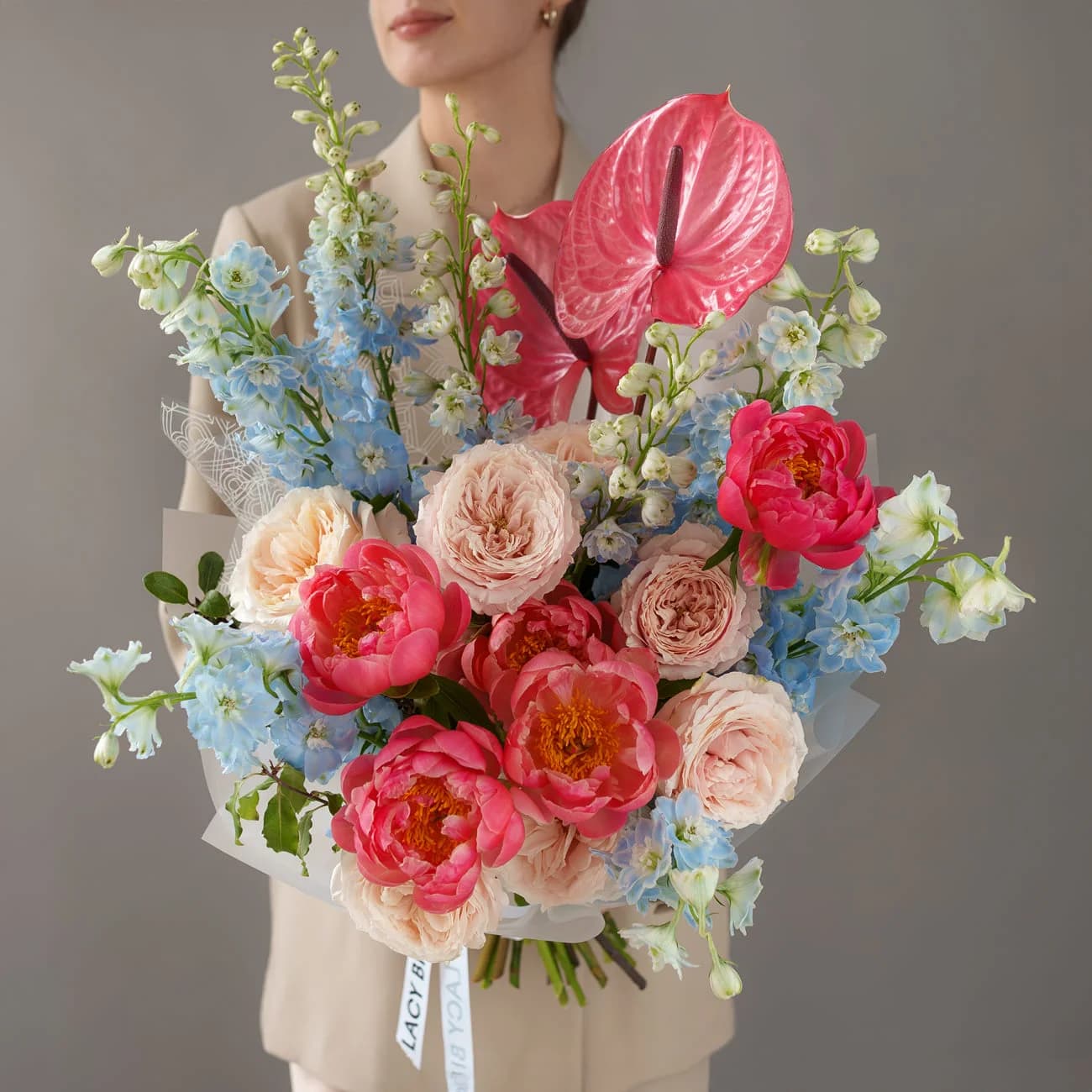
Korean matte film. The default of modern studio floristry — a synthetic sheet with a fabric hand, matte surface and full water resistance, in every colour a palette could need. Sheets run about 58×58 cm. It pleats and holds a crisp edge, which is why the tall sculpted collars you see in contemporary bouquets are almost always this material. If a studio owns one paper, it owns this.
Tissue. The soft voice. Tissue goes inside — a cloud between flowers and structural wrap that stops petals bruising against creases. Alone it collapses in the first breeze, so treat it as lining, not architecture.
Cellophane. Thirty years ago it was the outer wrap; today a visible cellophane cone reads supermarket. But it never lost its real job: wrapped around the stem ends with a splash of water and tied off, it keeps a hand-tied bouquet drinking for hours in transit — invisible inside the finished wrap.
Sizes, quantities, cost
The arithmetic of a wrap, for anyone buying paper for the first time:
- Sheet size: ~58×58 cm is the industry standard for film and speciality papers; kraft comes on 50-70 cm rolls.
- Sheets per bouquet: 3-5. One folded into the inner collar, the rest stepped around the outside in offset layers, each catching the light at a slightly different angle.
- Cost per bouquet: roughly $1-3 of paper at retail pack prices — the cheapest upgrade in floristry. A $40 bouquet wrapped with intent looks $60; the reverse is also true.
One rule saves every beginner: step the layers, don't stack them. Each sheet rotates 30-45 degrees from the last, corners up, so the finish reads as petals of paper rather than a parcel.
Matching paper to flowers
The bouquet is a sentence and the paper is punctuation. In practice:
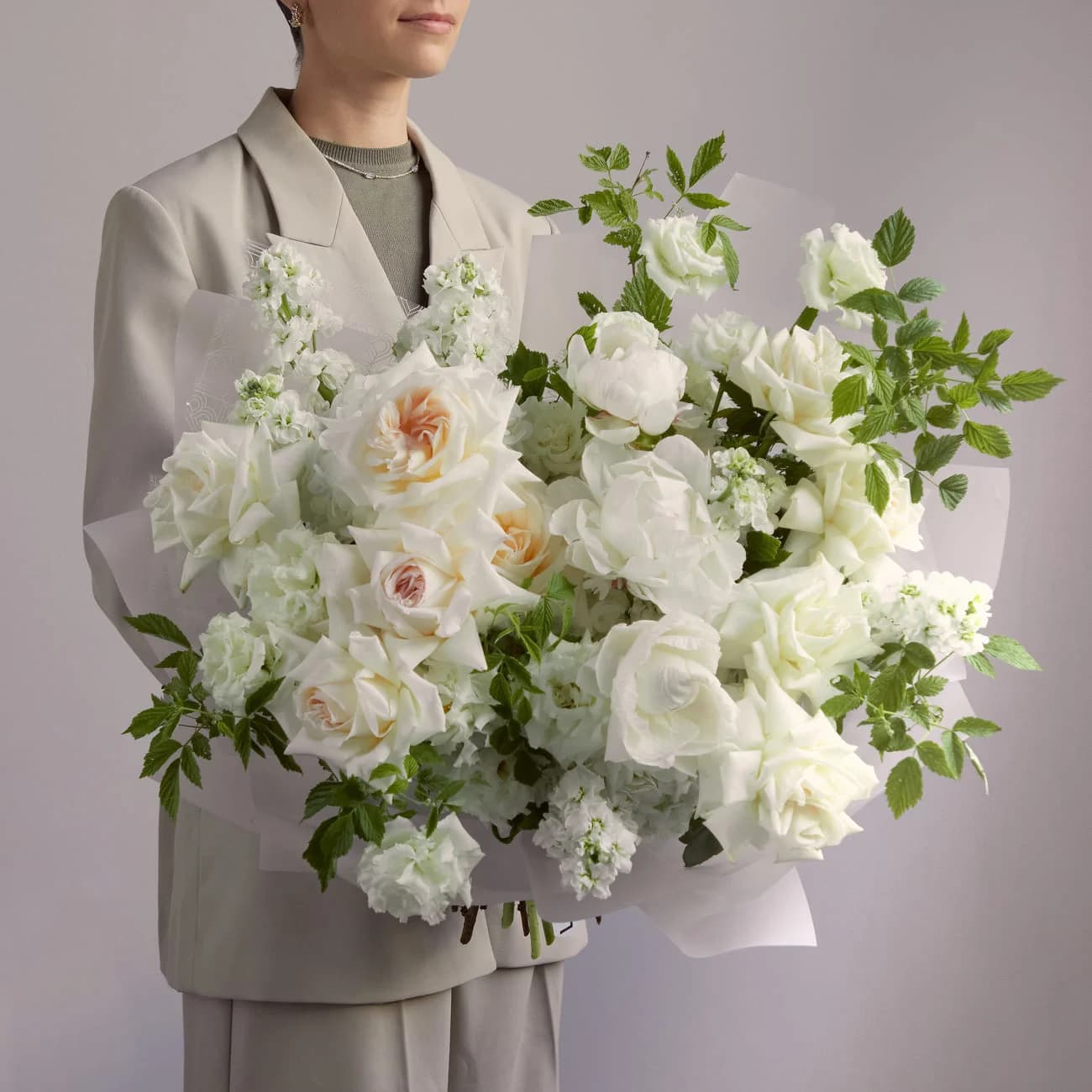
- Statement flowers, quiet wrap. Garden roses, peonies, anything ruffled and expensive — give them a single-tone matte wrap in a colour pulled from the palette, half a shade lighter or darker.
- Simple flowers, expressive wrap. A mono-bouquet of carnations or tulips can carry a bold contrast wrap or a double-colour fold; the paper supplies the drama the botany keeps plain.
- Never two statements. Printed paper over a ten-variety mix is noise over noise.
When to skip paper entirely
The strongest trend of the last few years is the un-wrapped bouquet: composed straight into a vessel — a jug, an enamel can, a low bowl — and delivered with water already in it. No unwrapping ritual, no crumpled paper on the counter, no scramble for a vase. We run a whole line of these on enamel cans, and they outsell wrapped equivalents for home deliveries precisely because they arrive finished.
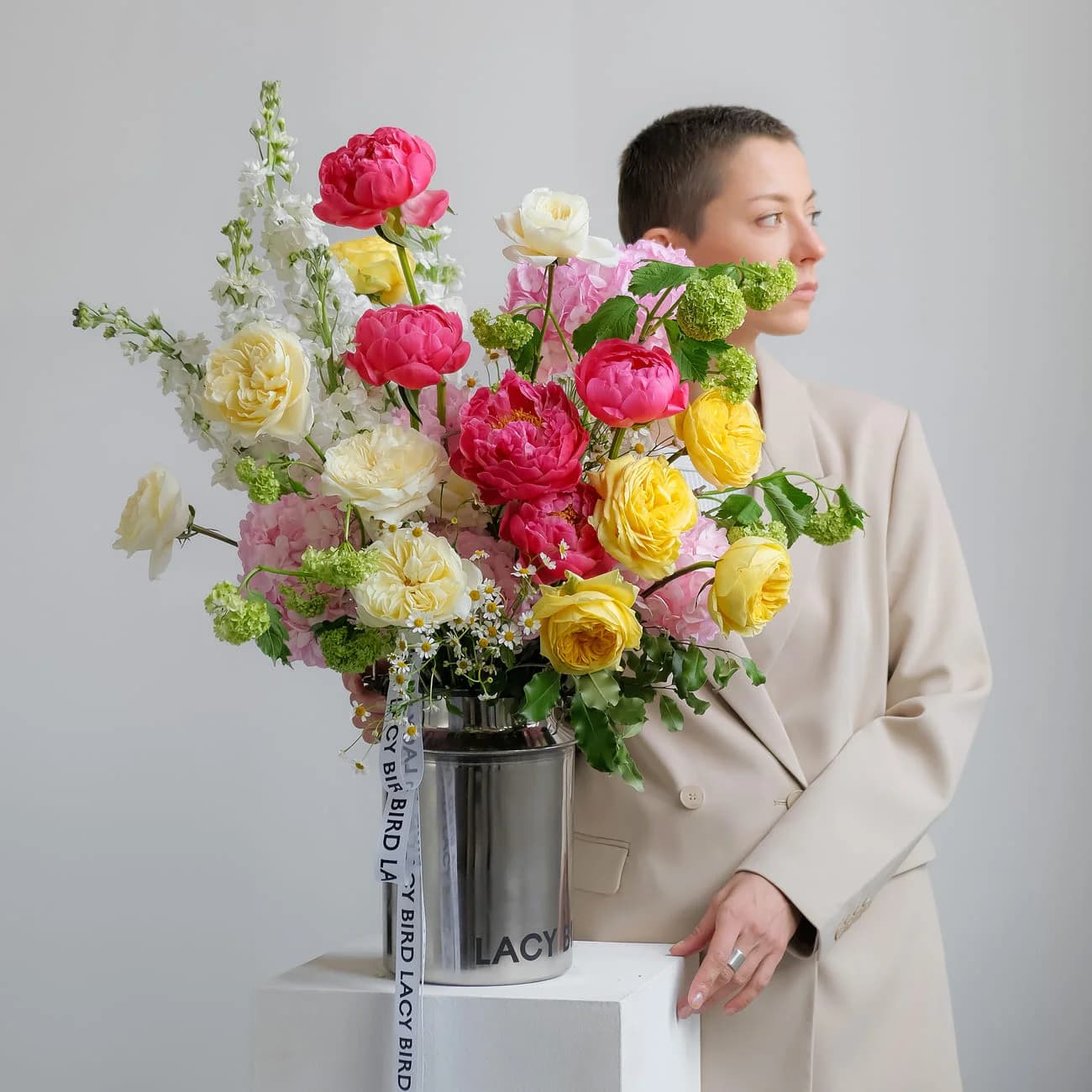
Paper still wins for the handover moment — a bouquet passed from hand to hand at a door or a graduation wants the rustle and the reveal. Vessels win for the table the flowers will actually live on.
Sustainability, briefly and honestly
Kraft and tissue are recyclable and compost cleanly. Korean matte film is plastic — most of it polypropylene — and is not; that is the honest trade for its waterproofing and finish. A defensible middle path: film only where it touches water, paper everywhere the eye lands, and no more sheets than the wrap needs. Some studios now offer a "naked, tied with raffia" option at a small discount; recipients who keep vases at home love it, and nothing goes in the bin at all.
Choose the paper the way you choose the flowers: for the person, not the shelf. A kraft-wrapped armful says something a satin-film cone never will — and the reverse is just as true.