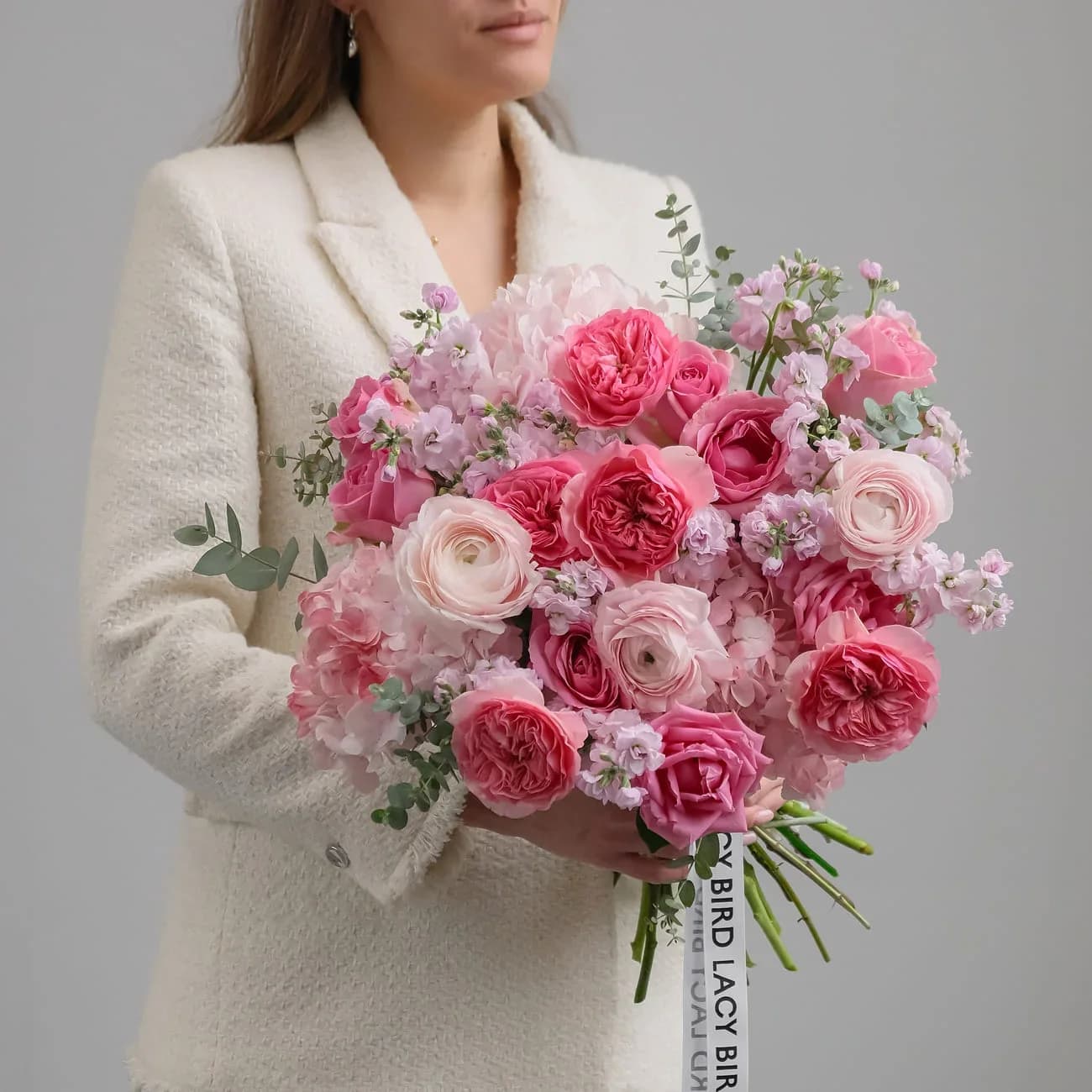
How to Wrap a Bouquet — a florist's guide
The wrapping styles working florists actually use — kraft, tissue, silk ribbon, linen — with step-by-step instructions for each and pointers on which suits which occasion.
The wrap is the last thing your recipient sees before the flowers themselves. A beautiful bouquet with a shoddy wrap reads as retail; the same bouquet with a considered wrap reads as luxury.
This guide covers the five wrapping styles working florist studios use, with step-by-step instructions for each and pointers on which suits which occasion. (Choosing the material itself — kraft, Korean film, tissue, sheet sizes and quantities — has its own guide: flower wrapping paper.)
TL;DR. Five wrap styles: kraft paper for rustic/casual, tissue paper for delicate presentations, silk ribbon for bridal and luxury, linen or muslin for garden-style, and cellophane for delivery only. Each suits different occasions and price points.
When to wrap
Wrap the bouquet after the spiral is built and taped, before presentation or delivery.
Wrap timing:
- Retail sale: at the counter, in front of the customer
- Delivery: 30 minutes before departure
- Bridal: the morning of the wedding, after final refresh
- Gift: at the moment of gifting or the hour before
Do not wrap flowers that will sit in water — wraps are for transport and presentation only.
Style 1 — Kraft paper (rustic, casual, gift)
Kraft paper is the modern florist default for gift bouquets and casual delivery. Costs almost nothing; reads elegant.
Method:
- Cut kraft paper to 1.5× the bouquet width and 60-80 cm tall
- Fold the sheet in half diagonally
- Place bouquet at the diagonal fold, stems below
- Wrap one side of paper across the bouquet
- Wrap the other side over the first
- Tie with jute string or thin ribbon 5 cm below flower heads
- Fold or trim excess paper at the base
Best for: casual weddings, rustic gifts, farmer's market sales, subscription boxes.
Cost: $0.50-2 per bouquet in materials.
Style 2 — Tissue paper (delicate, romantic, luxury)
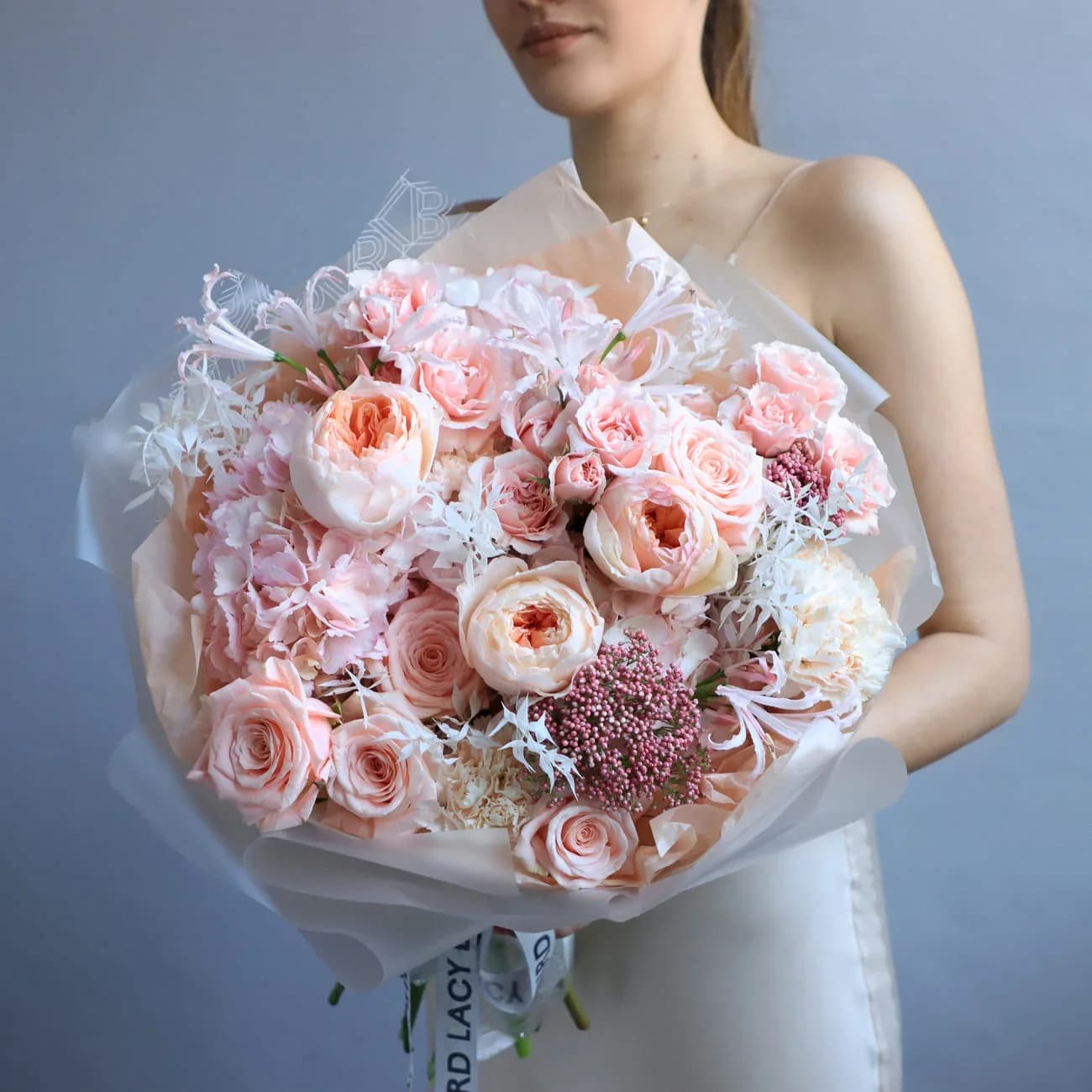
Tissue paper has been the florist standard for a century. Layers beautifully; photographs delicately.
Method:
- Take 3-5 sheets of tissue in complementary colors
- Layer them slightly offset for an accordion effect
- Fold layered stack in half
- Place bouquet inside the fold
- Wrap tissue around the bouquet stems
- Tie with silk ribbon at the stem area
- Puff the tissue upward around the flowers
Best for: romantic gifts, luxury retail, wedding delivery, mother's day.
Cost: $1-3 per bouquet in materials.
Color combinations that work:
- Ivory + peach + blush for spring
- Kraft + white + peach for autumn
- Grey + white + navy for modern minimalist
- Champagne + gold + cream for luxury
Style 3 — Silk ribbon (bridal, luxury)
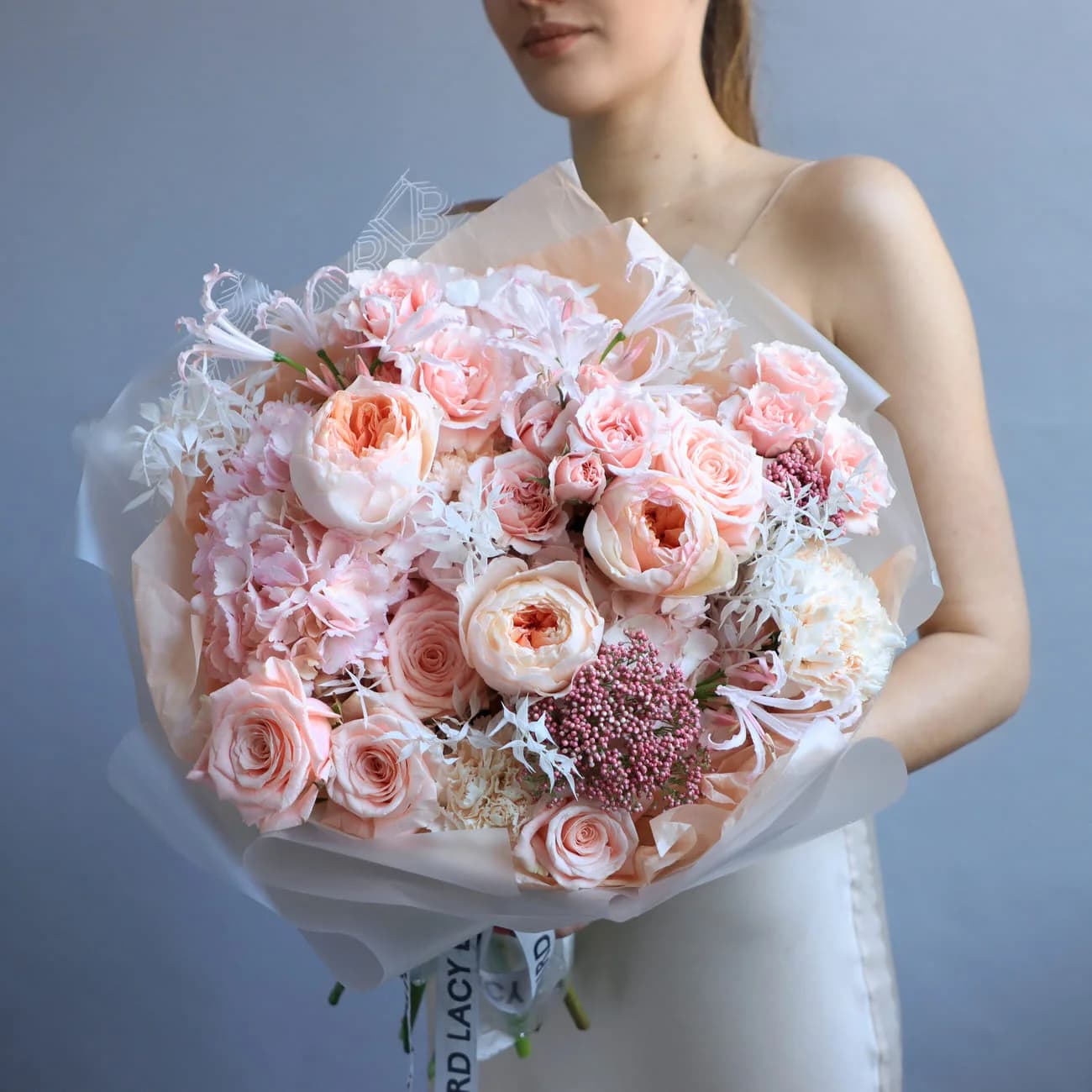
For bridal bouquets, silk ribbon is the standard finish. The ribbon becomes part of the bouquet's aesthetic.
Method:
- Take 2-3 metres of silk or cotton ribbon (2-3 cm wide)
- Start wrapping above the tape line
- Choose criss-cross X pattern (adds texture) OR smooth column (clean modern)
- Wrap tightly downward covering the tape
- Finish with a small bow at the base
- Pin the ribbon end with a straight pin, hidden in a fold
- Trailing ribbon: 30-60 cm below the bouquet base
Best for: bridal bouquets, luxury presentation, editorial photography.
Cost: $15-40 per bouquet in silk ribbon.
Ribbon materials:
- Real silk: $10-25 per metre; photographs beautifully; wedding standard
- Cotton canvas: $3-8 per metre; casual bridal
- Velvet: $8-15 per metre; formal winter weddings
- Polyester satin: avoid for bridal — reads cheap
Style 4 — Linen or muslin (garden style)
Natural cloth wraps read organic and garden. Popular for farmhouse, boho, and eco-conscious weddings.
Method:
- Cut linen or muslin cloth 40 × 60 cm
- Wet-condition the fabric slightly for drape (optional)
- Wrap around the bouquet stems like a diaper fold
- Tie with jute rope or leather cord
Best for: boho weddings, farmhouse aesthetics, eco-conscious clients.
Cost: $5-15 per bouquet in fabric.
Style 5 — Cellophane (delivery only)
Clear cellophane protects flowers in transit. Not for presentation.
Method:
- Cut cellophane 40-60 cm × bouquet height + 20 cm
- Wrap around the bouquet
- Gather at the base and secure with tape or rubber band
- Leave the top open for air
Best for: delivery transit only. Remove before presentation.
Do not use cellophane as the presentation wrap — reads retail/supermarket.
Cost: $0.20-1 per bouquet.
Combining styles
Working florists often combine:
- Kraft outer + tissue inner: casual gift with delicate reveal
- Cellophane inner + kraft outer: transit protection + rustic presentation
- Silk ribbon on tissue: luxury casual gift
- Linen cloth + silk ribbon: garden bridal
Occasion → wrap matrix
| Occasion | Best wrap |
|---|---|
| Bridal bouquet | Silk ribbon column |
| Wedding delivery to venue | Cellophane inner + tissue outer |
| Gift for anniversary | Tissue with silk ribbon |
| Farmer's market sale | Kraft paper diagonal |
| Farmhouse wedding gift | Linen cloth + jute cord |
| Sympathy bouquet | White or grey tissue |
| Corporate delivery | Kraft paper with logo band |
| Editorial photography | Silk ribbon or bare |
| Subscription box | Kraft paper flat |
Common wrapping mistakes
Wrap too tight around flowers. Wraps go around stems only, not flower heads. Loose enough to allow the flowers to breathe.
Cellophane as presentation. Reads supermarket. Use for transit; remove before delivery.
Wrong ribbon length. Bridal ribbon under 30 cm looks cheap. Splurge on 40-60 cm silk.
Wrong ribbon material. Polyester satin reads cheap in photography. Real silk or high-quality cotton for bridal.
No color palette thought. Random tissue colors clash with flowers. Match or complement the bouquet palette.
Kraft on formal weddings. Kraft reads rustic. For formal weddings, silk ribbon or tissue with silk.
No stem sleeve. For gift bouquets, wrap should extend 5-10 cm above the stem base to prevent water dripping onto the recipient's clothes.
The wet-stem consideration
For gift bouquets that will be carried home:
- Water tubes: individual glass or plastic tubes attached to each stem; hidden by the wrap
- Wet paper towel + cellophane: wet paper around the stems, secured with cellophane inside the wrap
- Dry wrap only: for very short transport (under 1 hour), no water protection needed
Sample wrap recipes
Casual gift ($8-15 total wrap materials)
- Kraft paper diagonal
- Jute string tie
- No ribbon
Romantic gift ($20-35 total wrap materials)
- 4 sheets tissue paper (ivory, peach, blush)
- Silk ribbon 1.5 m
- Layered look
Bridal bouquet ($40-80 total wrap materials)
- Real silk ribbon 2-3 m
- Straight pin
- Optional silk sleeve (extra layer)
Farmhouse wedding gift ($15-30)
- Linen cloth 40×60 cm
- Jute or leather cord
FAQ
How do you wrap in kraft paper?
Cut kraft paper 1.5× the bouquet width. Fold the sheet in half, place the bouquet diagonally, wrap one side then the other in an asymmetric envelope. Tie with jute string or thin ribbon at the taped stem area. Works for casual, rustic, and gift bouquets.
What is the best paper for wrapping?
Kraft for rustic and gift. Tissue for delicate romantic. Silk ribbon for bridal and luxury. Linen or muslin for garden-style. Cellophane only for delivery protection.
How much ribbon do I need for bridal?
2-3 metres of silk or cotton ribbon (2-3 cm wide) for a mid-size bridal bouquet. Allows for the wrap plus 30-60 cm of trailing ribbon below the base. Real silk or high-quality cotton; polyester looks cheap in photography.
Tissue or plastic for wrapping?
Tissue for presentation and gift; plastic only for delivery transit protection. Tissue is the historical florist standard and photographs beautifully. Plastic should be removed before presentation.
Related reading: