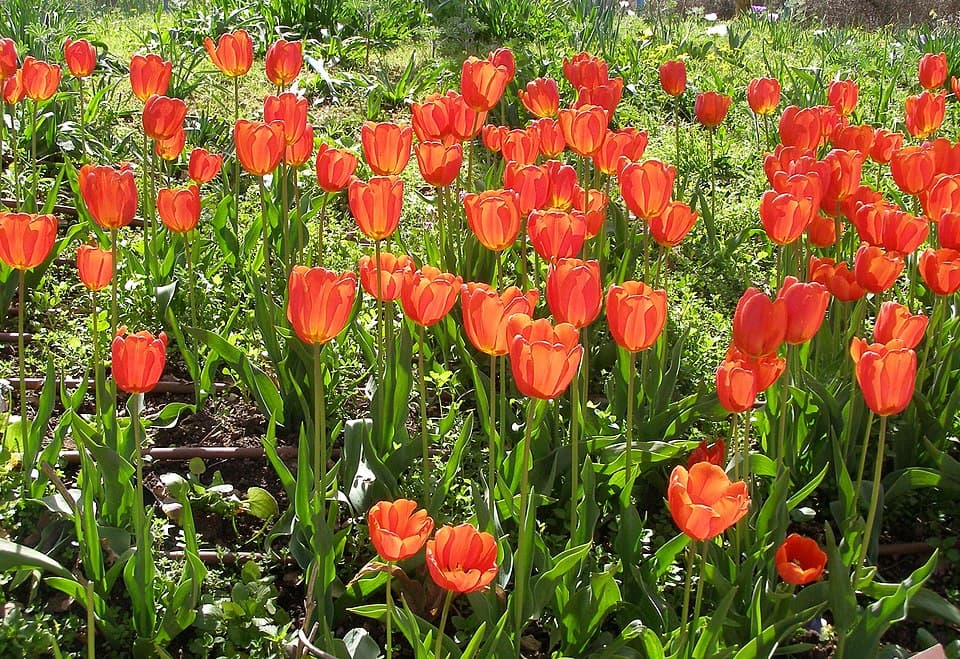
Tulip Season: When Tulips Are Available, Month by Month
Cut tulips are available year-round via Dutch greenhouse production; the natural peak is March–May. When each type is available, what it costs, and how to buy — by working florists.
Tulips are the archetype of spring — but modern commercial production has stretched availability across every month of the year. Dutch forced greenhouse tulips fill December displays; field tulips deliver peak quality in April; premium double tulips (peony tulips) provide luxury wedding options.
This guide covers when to buy each type, cultivar recommendations, and the specific care that tulips demand.
TL;DR. Tulips are available year-round through Dutch forced greenhouse production, but natural peak is March-May in Northern Hemisphere. Double (peony) tulips are the premium wedding cultivar. Vase life 5-8 days; tulips prefer plain cold water without flower food and continue to grow 2-4 cm after cutting.
Tulip production and season
Field tulips (highest quality):
- Peak: April-May Northern Hemisphere
- 6-8 weeks of natural supply
- Best colour saturation and stem strength
- Netherlands leads production; also UK, US Pacific Northwest
Forced greenhouse tulips:
- Available: October through May (Northern Hemisphere)
- Bulbs are chilled artificially to produce winter blooms
- Slightly weaker stems and paler colours than field
- Netherlands dominates production
Southern Hemisphere:
- Peak: September through November
- Fills the Northern Hemisphere off-season
Tulip categories
Single tulips (standard cut variety)
The traditional tulip shape — cup-shaped single-layer bloom.
- Wholesale $0.30-1/stem
- 30-50 cm stems standard; 60-70 cm for French tulips
- Colors: every colour except true blue
- Vase life 5-8 days
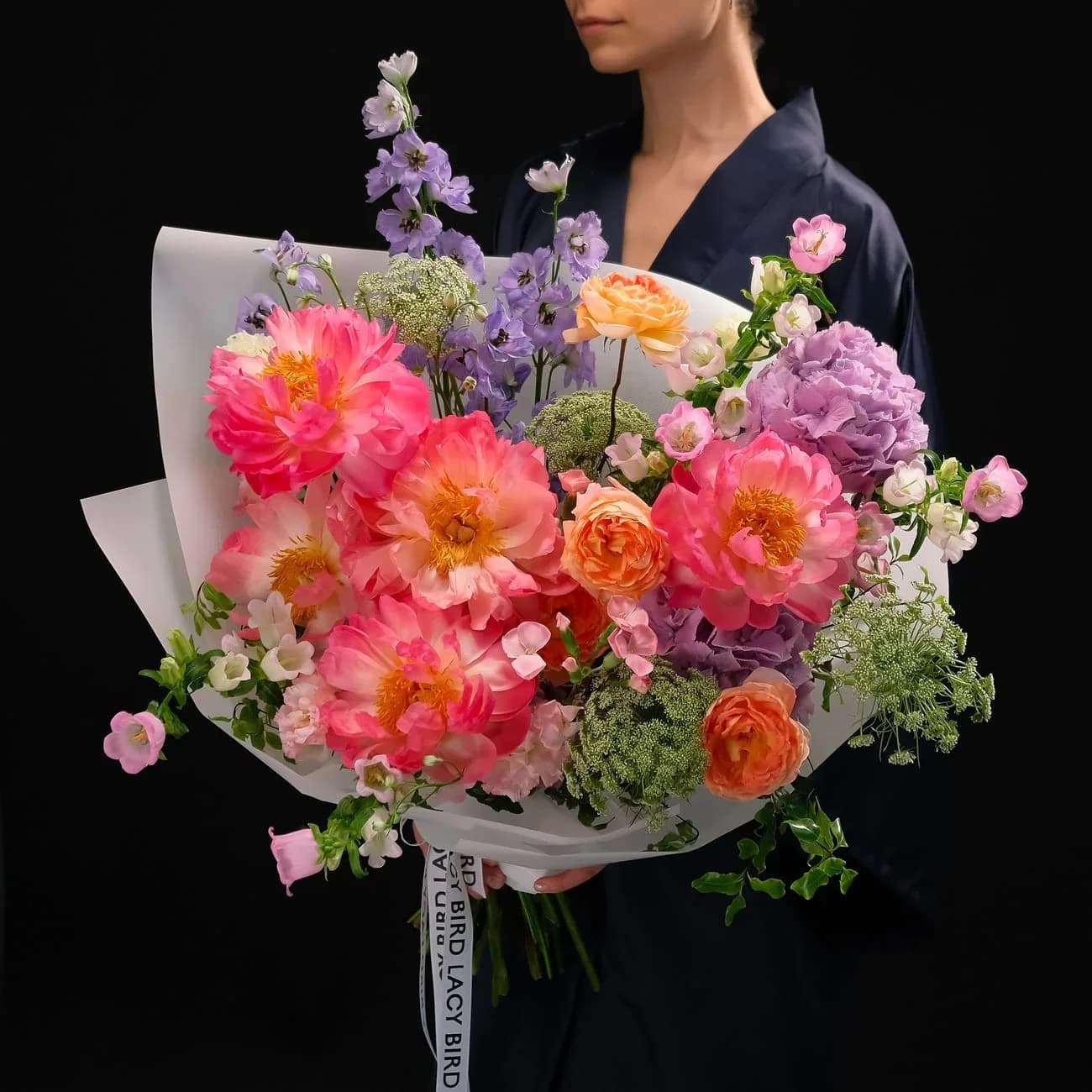
Double tulips (peony tulips)
Multi-petal layered varieties that resemble small peonies.
- Wholesale $1-3/stem (premium tier)
- Denser petal structure holds shape 5-7 days
- Wedding-favorite cultivars
- Colors: blush, white, peach, pink, coral, burgundy
Parrot tulips
Feathered, ruffled petals with dramatic edges. Editorial favorite.
- Wholesale $1.50-3/stem
- Unique visual character
- Colors: variegated, striped
French tulips
Extra-tall single tulips, 60-80 cm stems.
- Wholesale $2-4/stem
- Long stems ideal for tall arrangements
- Premium tier
Best double tulip cultivars for weddings
- Angelique — blush pink, most popular wedding double tulip
- Foxtrot — deep pink, romantic
- Charming Beauty — peach, sunset tones
- Belicia — creamy white
- Palmyra — deep wine
- Wedding Gift — pure white with green centre
- La Belle Époque — dusty pink
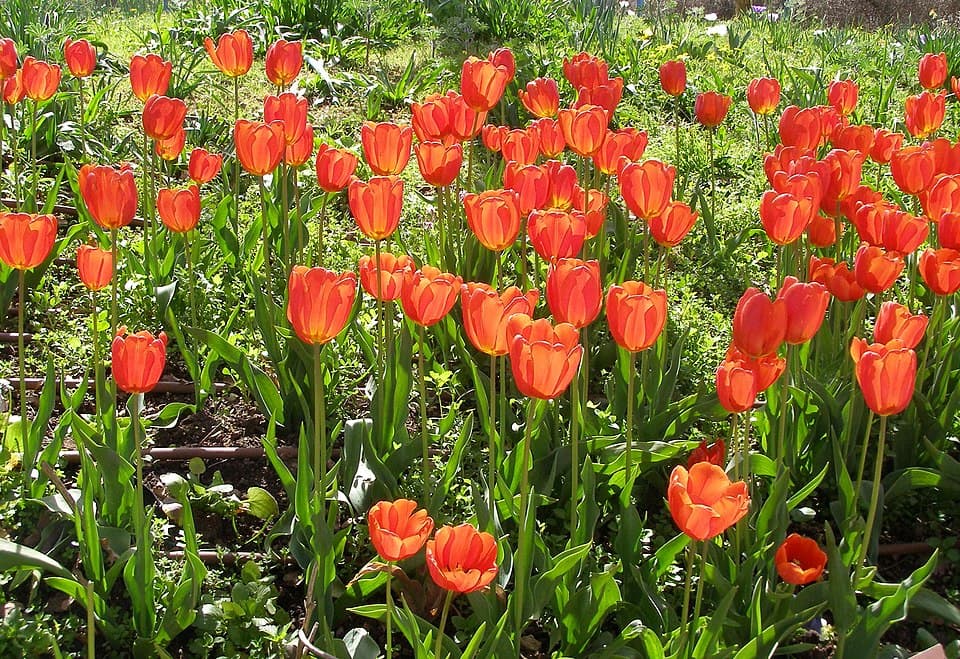
Care and conditioning
Buy:
- Buds showing colour but not fully open
- Firm to the touch
- Green healthy stems
- No brown edges or leaf yellowing
Cut:
- 45° diagonal cut
- Plain cold water (4-8°C), NO flower food
- Refresh water daily — tulips drink heavily
Storage:
- Cool 4-8°C
- Vertical storage to prevent stem-bending toward light
- Tulips continue growing 2-4 cm after cutting
Vase life: 5-8 days standard; 3-6 days for double tulips.
The stem-stretching and bending problem
Tulips are the most kinetic cut flower — they continue growing and bending toward light after cutting.
Managing stretch:
- Sugar (flower food) accelerates stretching — use plain water
- Cold storage slows it
- Support with a tall vase or grid tape
Managing bending toward light:
- Rotate the vase 180° every 12 hours
- Store in low light overnight
- Avoid single-sided light exposure
These behaviors are features, not bugs — tulip stems curve gracefully in arrangements over 3-5 days, creating movement.
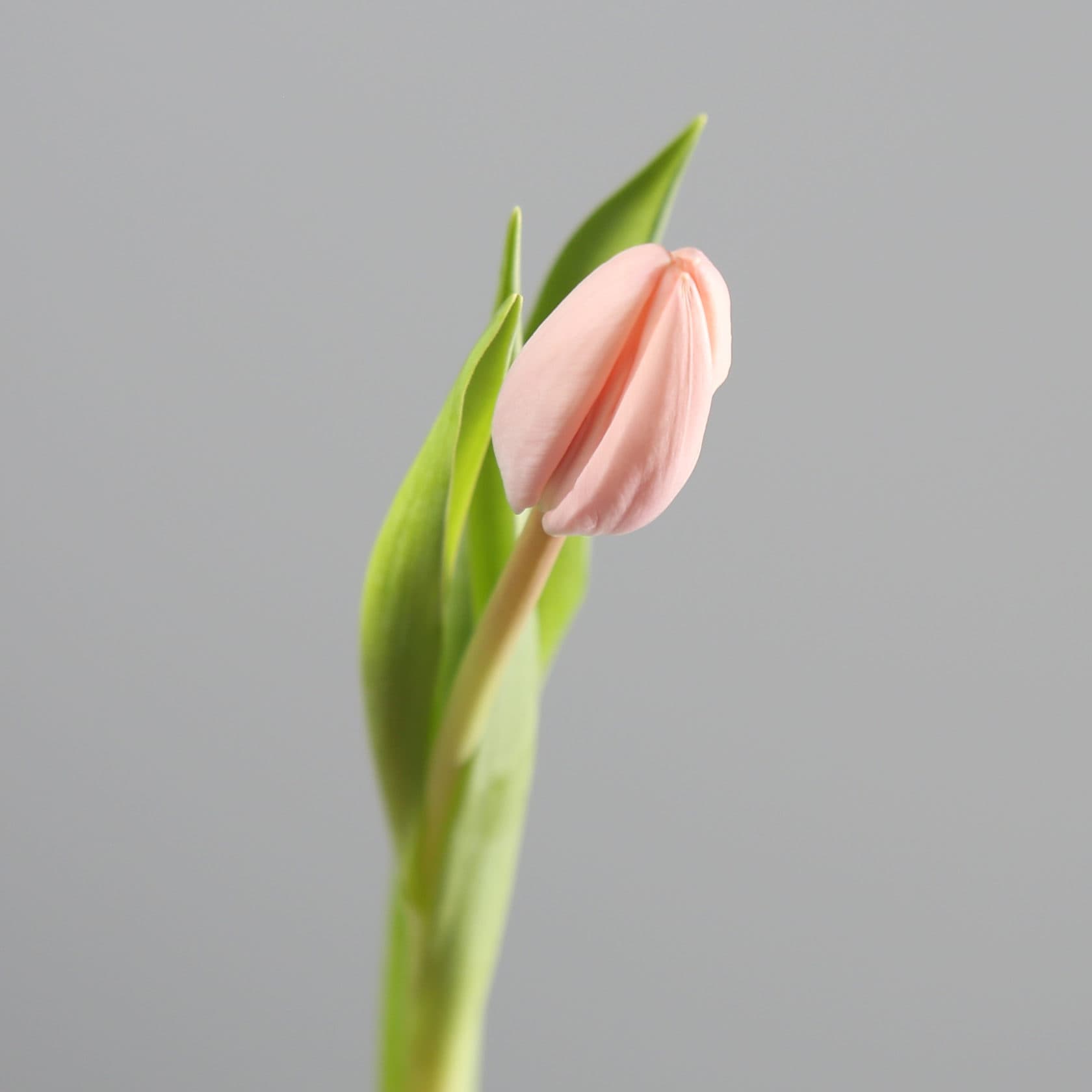
Design applications
Bridal bouquet
Modern minimalist: 15-20 French tulips in a hand-tied cascade, white or blush. Elegant and simple.
Peony-tulip alternative: 10-15 double tulips + garden roses
- eucalyptus. Peony aesthetic at tulip pricing.
Centerpieces
Tulips in low bud vases arranged in clusters down a long table. Modern simple.
Or: 12-15 tulips in a compote bowl with eucalyptus for a budget-friendly seasonal centerpiece.
Presentation bouquets
French tulips (60-80 cm) tied simply — the elegant gift for anniversary or spring celebration.
Cost efficiency
| Category | Wholesale $/stem | Vase life | Cost/day |
|---|---|---|---|
| Standard single | $0.30-1 | 5-8 days | $0.05-0.20 |
| Double (peony tulip) | $1-3 | 3-6 days | $0.15-1.00 |
| Parrot | $1.50-3 | 5-7 days | $0.20-0.60 |
| French tall | $2-4 | 5-8 days | $0.25-0.80 |
Standard tulips are among the best cost-per-day flowers when in season. Double tulips compete with peonies at 1/4 the cost.
Palette pairings by month
March: yellow + white + green (early spring, forced greens) April: blush + coral + peach (peak season) May: pastel mix + all colors (late season variety) Winter (forced): white + gold + deep red
Regional preferences
- Netherlands & Europe: tulips culturally central; large weddings feature them prominently
- US: tulips popular for spring weddings and Mother's Day
- Middle East: double tulips popular for luxury spring events
- Japan: double tulips used for tea-ceremony aesthetics
Common tulip mistakes
Using flower food. Sugar accelerates stem-stretching and flopping. Plain cold water only.
Deep water submersion. Tulip stems are prone to rot with deep water. 8-10 cm of water only.
Warm room display. Tulips age fast above 22°C. Refrigerate overnight.
Cutting tulips like roses. Tulips continue growing. Cut on the shorter side; they will extend.
Ignoring light direction. Tulips bend toward light. Rotate the vase or use even light.
Mixing with daffodils fresh. Daffodil sap kills other flowers. Condition daffodils separately 24 hours first.
Substitution considerations
- Ranunculus (double tulip alternative — layered petals)
- Peonies (May-June only; double tulips fill spring gap)
- Anemones (winter alternative with drama)
FAQ
When are tulips in season?
Natural peak: March through May in Northern Hemisphere. Available year-round through Dutch forced greenhouse production. Southern Hemisphere peak: September-November. Field tulips have highest quality; forced greenhouse have consistent supply.
Do tulips need flower food?
No — tulips prefer plain cold water. Sugar accelerates natural stem-stretching and flopping. Use plain cold water at 4-8°C; refresh daily; recut every 2-3 days. Tulips continue growing 2-4 cm after cutting.
Best varieties for weddings?
Double (peony) tulips: Angelique (blush), Foxtrot (pink), Charming Beauty (peach), Belicia (white). French tulips are the tallest and most elegant.
How long do cut tulips last?
5-8 days vase life for standard; 3-6 for double tulips. Tulips continue growing and bending toward light after cutting. Refrigerate to slow. Refresh water daily.
Related reading: