Flower Conditioning — the working florist's system
Professional flower conditioning: what commercial florists do to make cut flowers last their full vase life. Species-specific protocols, tools, and common mistakes.
Conditioning is the difference between flowers that survive an event and flowers that wilt during the ceremony. Every working florist conditions flowers before arrangement. Amateurs who skip this step wonder why their bouquets don't last.
This guide covers the universal method, water temperature and time targets, and per-flower adjustments that matter.
TL;DR. Conditioning is the 24-hour prep between flowers arriving and arrangement. Universal method: recut stems at 45°, strip leaves below the waterline, cool water at 15-18°C with flower food, cool dark storage. Per-flower adjustments matter — hydrangea needs stem-splitting, tulips need plain cold water, hollow-stem flowers need shallow water.
Why conditioning matters
Cut flowers arrive dehydrated. They've been out of water during transport, sometimes for hours or days. Vascular vessels may have collapsed or become blocked with air bubbles. Without conditioning, they cannot absorb water efficiently once placed in a vase — which means they wilt regardless of how fresh the solution is.
Conditioning solves three problems:
- Rehydration — restores water content in petals and stems
- Vascular reset — clears air locks and blockage
- Bacterial control — starts flowers in clean solution before the arrangement begins
Done right, conditioning delivers 40-70% more vase life than skipping the step.
The universal method (works for 80% of flowers)
Step 1 — Recut stems on the diagonal
Every flower gets 2-3 cm cut from the base at 45°. The diagonal exposes more vascular surface than a horizontal cut and prevents the stem from sitting flush against the vase bottom.
Use sharp secateurs. Dull tools crush stems and block xylem vessels. Test tools weekly.
Step 2 — Strip leaves below the waterline
Any leaf that would sit below the waterline must come off. Submerged leaves rot within 24 hours, releasing compounds that feed bacteria and shorten vase life for every stem in the vase.
Leaves above the waterline stay. They reduce transpiration stress on the flower.
Step 3 — Place in cool water with flower food
Cool water (15-18°C) with commercial food or the homemade recipe (see flower food).
Fill the conditioning bucket 15-20 cm deep — enough to submerge lower stem but not flower heads.
Step 4 — Cool dark storage
Move the bucket to cool dark space. Ideal: 4-8°C for hardy flowers, 15-18°C for tropical.
Cool storage matters more than most amateurs realise. A flower stored at 18-20°C loses vase life 2-3× faster than the same flower at 4-8°C.
Step 5 — Wait 12-24 hours
Minimum useful conditioning: 4-6 hours. Standard: 12-24 hours. Do not exceed 48 hours.
Step 6 — Recut before final arrangement
At arrangement time, recut every stem 1-2 cm at 45°. This clears minor bacterial buildup and opens fresh vascular tissue.
Per-flower adjustments
Hydrangea — stem-splitting
Hydrangea vascular vessels close quickly. Universal cut isn't enough.
- Cut stem at 45°
- Split the woody stem end 2 cm vertically
- Submerge in cool water immediately
- If wilted: submerge entire head and stem in cool water for 30-60 minutes to rehydrate through the sepals
See the hydrangea seasonal guide.
Tulips — plain cold water
Tulips prefer cold water without food. Sugar accelerates their stem-stretching and floppiness.
- Cut at 45°
- Plain cold water at 4-8°C
- Cool dark storage
- Refresh water daily; tulips drink heavily
Tulips continue growing after cutting — 2-4 cm over 3-5 days is normal.
Daffodils — 24 hours in isolation
Daffodils leak sap that fouls water for other flowers.
- Condition in a separate bucket for the first 24 hours
- Then transfer to fresh water; can mix with others
Anemones — shallow water
Anemone stems are hollow. Deep water rots them.
- Cut at 45°
- 2-3 cm of cool water only
- Cool dark storage
- Refresh every 24 hours
Roses — woody-stem method
- Cut at 45°
- Split woody base 2 cm
- Optional: dip stem end in boiling water 3-5 seconds to clear air locks (rescue technique)
- Cool water with food
Roses from wholesale often benefit from a "reviving soak" — submerge head and stem in cool water 30-60 min before conditioning.
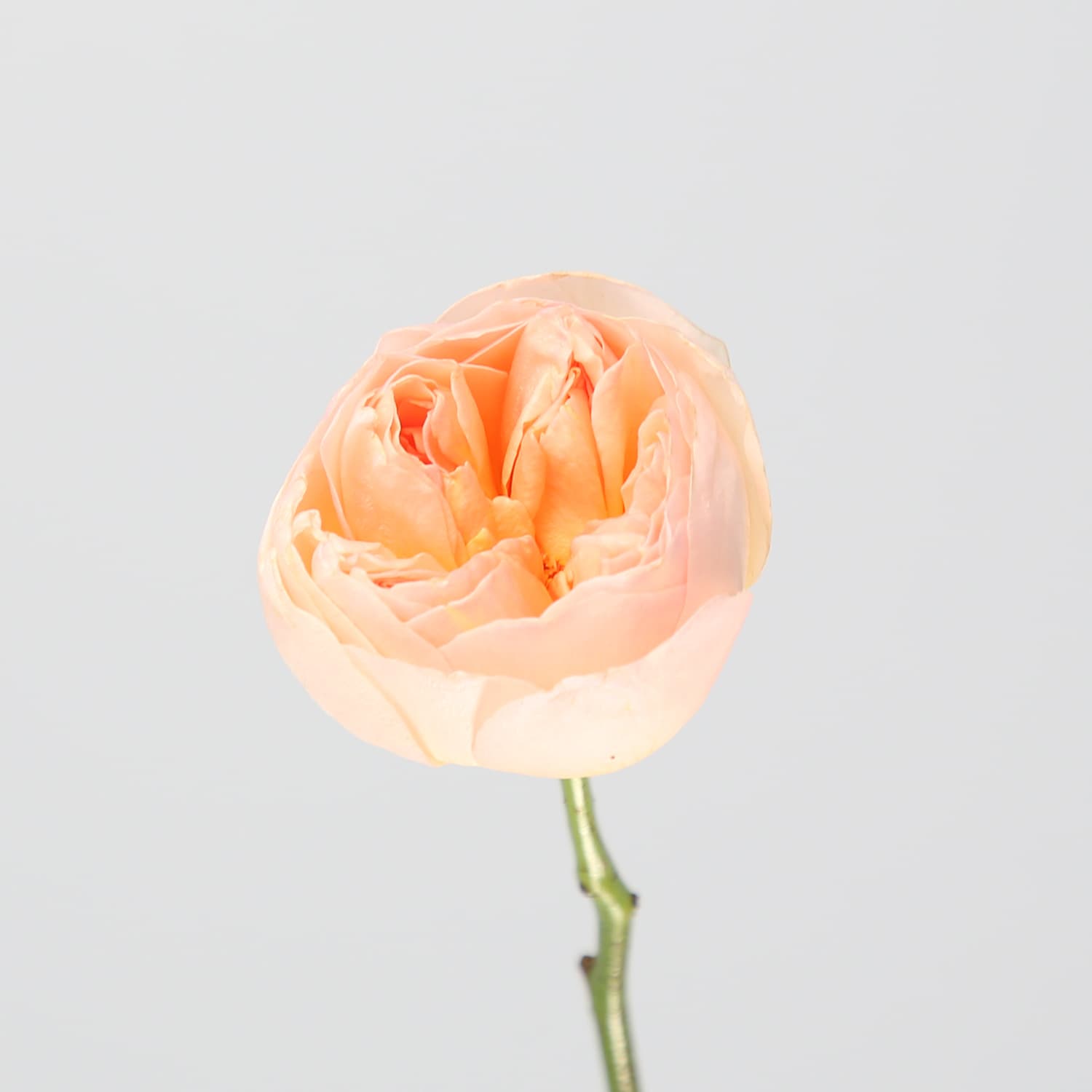
Peonies — dry storage until forcing open
Peonies arrive as marshmallow-firm buds. Can be dry-stored (wrapped in paper) at 4°C up to 2 weeks for staged opening.
- Storage: dry, cool 4°C, wrapped
- To open: cut at 45°, warm water 35-40°C for 1 hour
- Transfer to cool water for arrangement
- Timing: 2-3 days from firm bud to open bloom
Woody stems (lilac, viburnum, quince)
- Cut at 45°
- Split base 3-4 cm
- Warm water (35-40°C) for first 30 minutes
- Transfer to cool water
Hollow-stem flowers (amaryllis, delphinium)
- Cut diagonally
- Shallow water (5-8 cm)
- Cool storage
The conditioning bucket setup
Working studios use dedicated conditioning buckets, not arrangement vases.
Bucket properties:
- Tall (30-40 cm) — enough for long stems
- Narrow opening — reduces evaporation
- Clean (bleached weekly) — no bacterial residue
- Numbered or labeled — one per flower type
For home use: any clean tall vase works. Wash with 1:10 bleach solution between uses.
Conditioning by delivery source
Wholesale market
- Flowers arrive dry-packed in boxes
- Recut and place in conditioning buckets within 30 minutes
- Refrigerate 12-24 hours before arrangement
- 40-60% of retail price; 2-4× the vase life if conditioned right
Retail florist purchase
- Flowers arrive wrapped, sometimes with water tubes
- Recut stems, discard tubes, condition 4-6 hours
- Ready for immediate display
Supermarket
- Been out of water during transport and shelf display
- Recut, remove old wrapping, condition 6-12 hours
- Vase life gain: 2-4 days over unconditioned handling
Garden-picked
- Best: pick early morning when stems are fully turgid
- Place in water immediately
- Condition 4-6 hours cool
Conditioning temperature reference
| Flower type | Storage temp | Notes |
|---|---|---|
| Tulips, daffodils | 4-8°C | Cold storage essential |
| Roses, ranunculus | 4-8°C | Cool preserves petals |
| Peonies (bud) | 2-4°C dry | Longest hold at coolest |
| Peonies (open) | 15-18°C | Cool but not cold |
| Anemones | 4-8°C | Cool holds them closed |
| Orchids | 15-18°C | Warmer than most |
| Hydrangea | 4-10°C | Cool for water retention |
| Tropical (protea, anthurium) | 12-18°C | Never below 10°C |
| Foliage (eucalyptus, ruscus) | 4-10°C | Cool preserves colour |
Common conditioning mistakes
Warm water for all flowers. Warm water shocks most. Only use warm (35-40°C) as initial 30-minute treatment for hydrangea, roses, and woody stems.
Skipping the recut. Even if wholesale cut yesterday, recut on arrival. Stems seal within hours out of water.
Too much water depth. Hollow-stem flowers rot in deep water. Match depth to stem type.
Direct sun during conditioning. Sun speeds transpiration and bacterial growth. Cool dark storage always.
No cool storage. Conditioning at 18-22°C gains only 40-50% of possible vase-life extension. Cool storage at 4-8°C delivers the full 40-70%.
Reusing conditioning water. Fresh solution every 24 hours. The whole point of conditioning is a clean start.
FAQ
How long does flower conditioning take?
Minimum useful conditioning: 4-6 hours. Standard professional: 12-24 hours. Longer than 48 hours is counterproductive; flowers over-hydrate and lose freshness for arrangement.
Do I need to condition supermarket flowers?
Yes. Supermarket flowers have been out of water during transport. Recut, strip leaves, cool water with food, rehydrate 4-6 hours before rearranging. Extends vase life 2-4 days.
What water temperature for conditioning?
Cool at 15-18°C standard. Tulips and daffodils colder (4-8°C). Woody-stem flowers benefit from initial warm water (35-40°C, 30 minutes), then cool.
Should I remove all leaves?
Remove only leaves that would sit below waterline. Submerged leaves rot in 24 hours and contaminate water. Leaves above stay.
Can I skip conditioning for premium wholesale?
No. Even fresh Ecuadorian roses arrive after days of refrigerated transport. Conditioning unlocks full vase life. Skipping costs 30-50% of the flowers' potential lifespan.
Related reading: