Florist Diagnosis — 11 signs it's time to become a florist
Eleven signs you already have a florist's soul — and what to do about it. From childhood flower memories to career-change symptoms.
Some people fall into floristry through a chance job. Others recognise it as a calling they've carried for years but never named. This guide is for the second group.
If you find yourself nodding at four or more of the signs below, you may already be a florist without realising it.
TL;DR. If you've been arranging supermarket flowers just for the pleasure of it, spending hours on Pinterest looking at bouquets, or feeling burned out in your current career while dreaming of a creative craft — you may already be a florist. This guide names the eleven signs and points you to the first practical step.
Sign 1 — you collected petals and herbs as a child
Almost every working florist remembers a specific childhood memory of flowers: making crowns from field daisies, pressing petals in books, running errands to a mother's garden, or staring into flower-shop windows on the walk home from school.
That connection often gets covered by adulthood, career, and practical decisions. But it stays. If passing a flower shop window still gives you a specific feeling — you may already be one of us.
Sign 2 — Pinterest bouquet time is your default relaxation
You planned to check email. Instead you found yourself 90 minutes into a Pinterest deep-dive on European wedding bouquets. This happens weekly.
Visual inspiration is the first sign of a florist's brain — you are quietly training your eye without meaning to. If you can scroll bouquets for two hours without checking the time, this is diagnostic.
Sign 3 — you photograph the arrangement in every restaurant
Instead of looking at the menu, you're photographing the table flowers from three angles and looking up the studio credited on the venue website. Congratulations, you're already in the club.
The same behavior extends to hotel lobbies, weddings you attend as guests, and any public floral installation. If your camera roll has more flower photos than food photos, this counts.
Sign 4 — you already buy flowers for yourself
Not for a birthday or occasion. Just because your kitchen looked better with them. Weekly.
The people who buy flowers for themselves on a regular basis are almost never accidental customers. They are the future of the industry.
Sign 5 — you have opinions about wedding flowers you didn't attend
You saw a wedding on Instagram and know exactly what you would have done differently with the bouquet colour palette. You know who the florist should have hired. You have taste beyond your own weddings and events.
Sign 6 — you're burnt out at your current job
You've been in your career for years. It pays well. It also drains you. You keep thinking about "something with your hands" and "something creative" — and flowers keep coming to mind.
This is one of the most common paths into floristry. Many working studio florists came from healthcare, finance, law, or teaching. Career change is not just possible — it's typical.
Sign 7 — you already rearrange the supermarket bouquets
You bring home flowers from the supermarket. You immediately break the bunch, discard the filler, add greenery from your garden, and rebuild the bouquet on your kitchen counter.
You do this every time. The bought version never satisfies you.
Actually rebuilding retail bouquets is a very specific tell — you're already doing the mental work of a florist's design process.
Sign 8 — you know cultivar names, not just flower names
You don't say "roses." You say "David Austin Juliet garden roses."
You don't say "orchids." You say "green cymbidium with burgundy lip."
Knowing specific cultivar names by heart is a professional-tier marker. Most people can name 5-10 flowers. If you can name 40+ including specific cultivar variants, this is diagnostic.
Sign 9 — colour combinations occur to you unbidden
You saw an autumn leaf pattern and immediately thought: burgundy Sengari chrysanthemums + coral spray roses + copper foliage. You saw a coastal photo and thought: soft blue hydrangea
- blush ranunculus + silver eucalyptus.
Colour combinations that pair well are not obvious. If your brain assembles them spontaneously, you have the eye.
Sign 10 — you feel physical relief with flowers around
Not "I appreciate them." Actual physical de-escalation. Your shoulders drop when you enter a flower-filled room. Working with flowers after a stressful workday is stress-relief in a way that other hobbies aren't.
This tactile-emotional response is what makes floristry sustainable as a career — not just a career you tolerate.
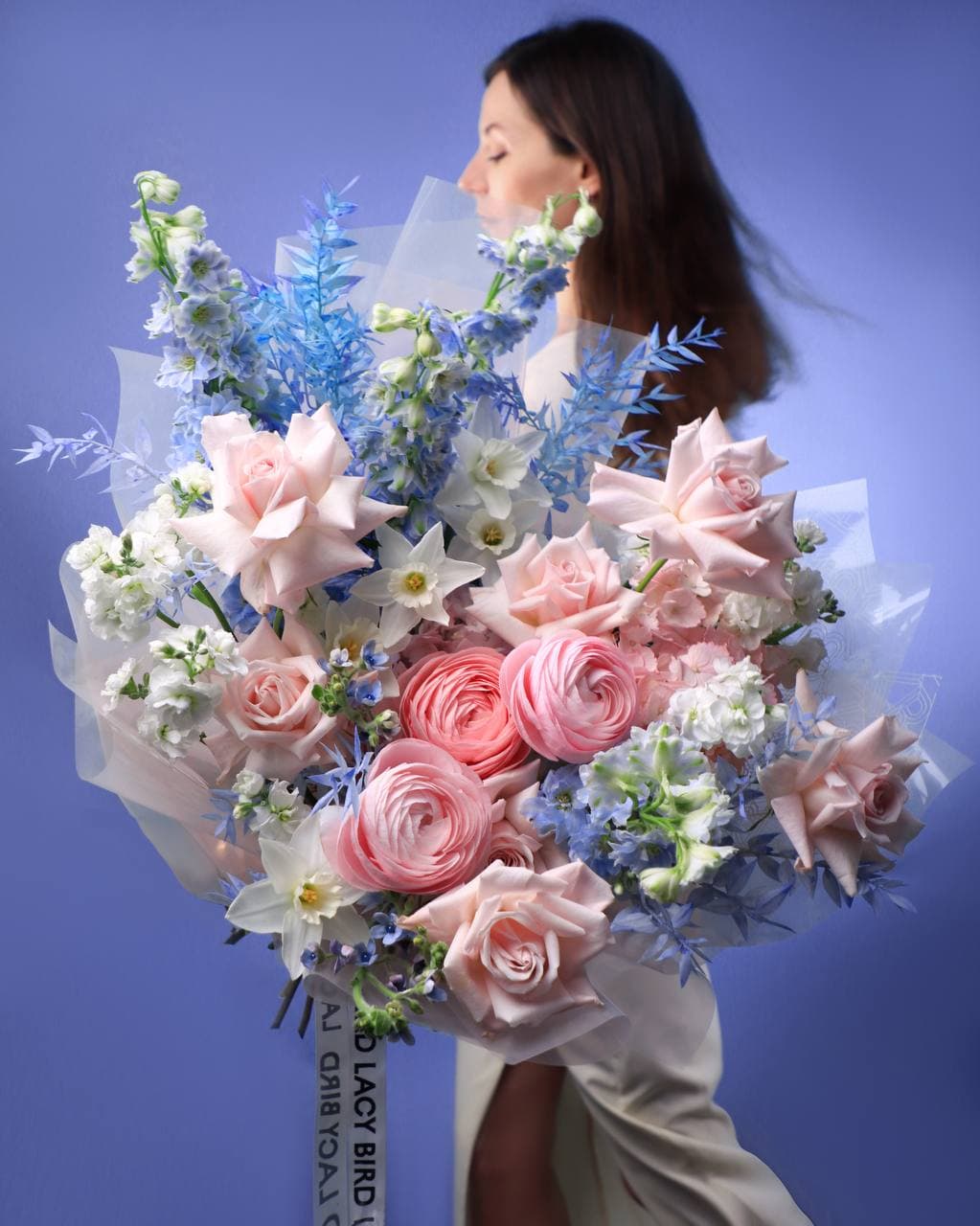
Sign 11 — you keep coming back to this article
If you've read this far — this is the meta-diagnostic. You are looking for permission to take yourself seriously.
Here it is. Take yourself seriously.
What to do next — the practical first step
If four or more signs match, floristry is worth pursuing beyond hobby-level. Here's the pathway:
-
Take a foundational course — one week of professional training compresses months of self-study. See our how to become a florist guide for programs and pathways.
-
Practise weekly — buy $30-50 of flowers from a wholesaler or supermarket. Rebuild bouquets in different styles. Photograph the result. Compare with references.
-
Start an anonymous Instagram — post your work without attaching it to your identity yet. Build a portfolio of 30-50 pieces before deciding on the commercial step.
-
Do one paying gig — friend's engagement, cousin's baby shower, small workplace event. Charge modestly. See how you feel afterward.
If step 4 leaves you exhausted-and-satisfied instead of exhausted-and-drained, you have your answer.
The career-change conversation
For readers currently in another career: nobody expects an overnight jump. The typical florist career change looks like:
- Year 1: weekly practice + one foundational course
- Year 2: first paying gigs on weekends, portfolio building
- Year 3: part-time floral work + reduced hours at day job
- Year 4: full-time floristry
Faster paths exist but are riskier. Slower paths preserve financial safety while you build craft and clientele.
The eleven-sign diagnostic — quick recap
- Childhood connection to flowers
- Default Pinterest time on bouquets
- Photographing arrangements everywhere
- Buying flowers for yourself weekly
- Strong opinions on other people's wedding flowers
- Burnout in current career
- Rebuilding supermarket bouquets at home
- Knowing cultivar names, not just flower names
- Unbidden colour combinations
- Physical relief in flower-filled rooms
- Looking for permission — reading this article
Four or more: consider a career course. Seven or more: you already are one, you just haven't been paid yet.
Related reading: