Garden Style Floristry: The Engineered Wildness Behind 'Just Picked'
Garden style explained — the varied-depth technique that fakes effortlessness, the flowers with 'garden faces', why it costs more than formal work, and where it fits.
Garden style is floristry's great sleight of hand: the bouquet that looks like someone wandered a cutting garden at dawn with scissors, assembled by a professional who spent forty minutes placing every stem at a deliberately different depth. It is the dominant register of the last decade — and the most misunderstood by clients, who reasonably assume that "natural" should cost less than "formal". It doesn't, and knowing why makes you better at buying it.
The technique: variation as system
Formal floristry aligns; garden style varies — systematically. The rules of the wildness:
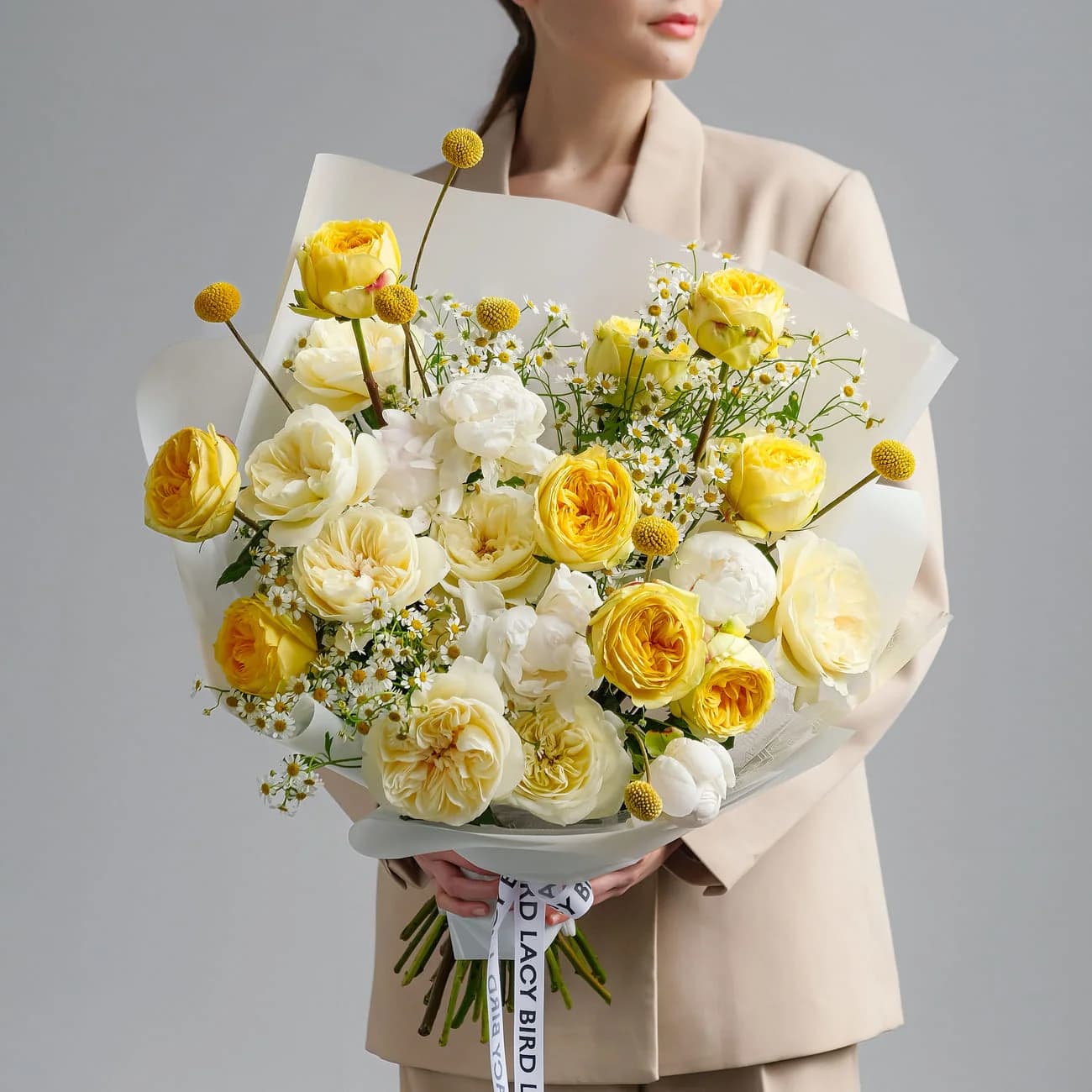
- No two stems at the same depth. The dome is abolished; flowers sit from deep in the composition to floating well above it, and the eye travels between layers.
- Asymmetry with balance. Visual weight equalises without mirroring — a heavy rose cluster left answers a long clematis gesture right.
- Movement material. At least one element that arcs, trails or wanders: sweet pea, clematis vine, a grass in seed. Motion is the register's signature.
- Seasonal honesty. The cast should be believable from an actual garden this month — tulips-with-dahlias reads as a supply chain, not a garden.
The result photographs as chance; the process is millimetre work. "Effortless," in floristry as in tailoring, is the most labour-expensive look on the menu.
The cast: flowers with garden faces
The register selects for imperfection of the beautiful kind — open, ruffled, individual faces:
- Garden roses — the anchor: ‘Juliet’ and its cousins carrying scent and softness no standard rose fakes.
- Sweet peas, cosmos, scabiosa — the movement corps.
- Ranunculus and anemones — faces with character.
- Clematis and jasmine vine — the wanderers.
- The supporting truth-tellers: herbs (mint, rosemary — scent is part of the style), grasses, seed heads, fruiting branches (blackberry, crab apple).
What fights the register: uniformity. Standard carnations in rows, identical spray mums, anything bred for sameness — their virtue is the exact opposite of a garden's.
The price of effortless, explained once
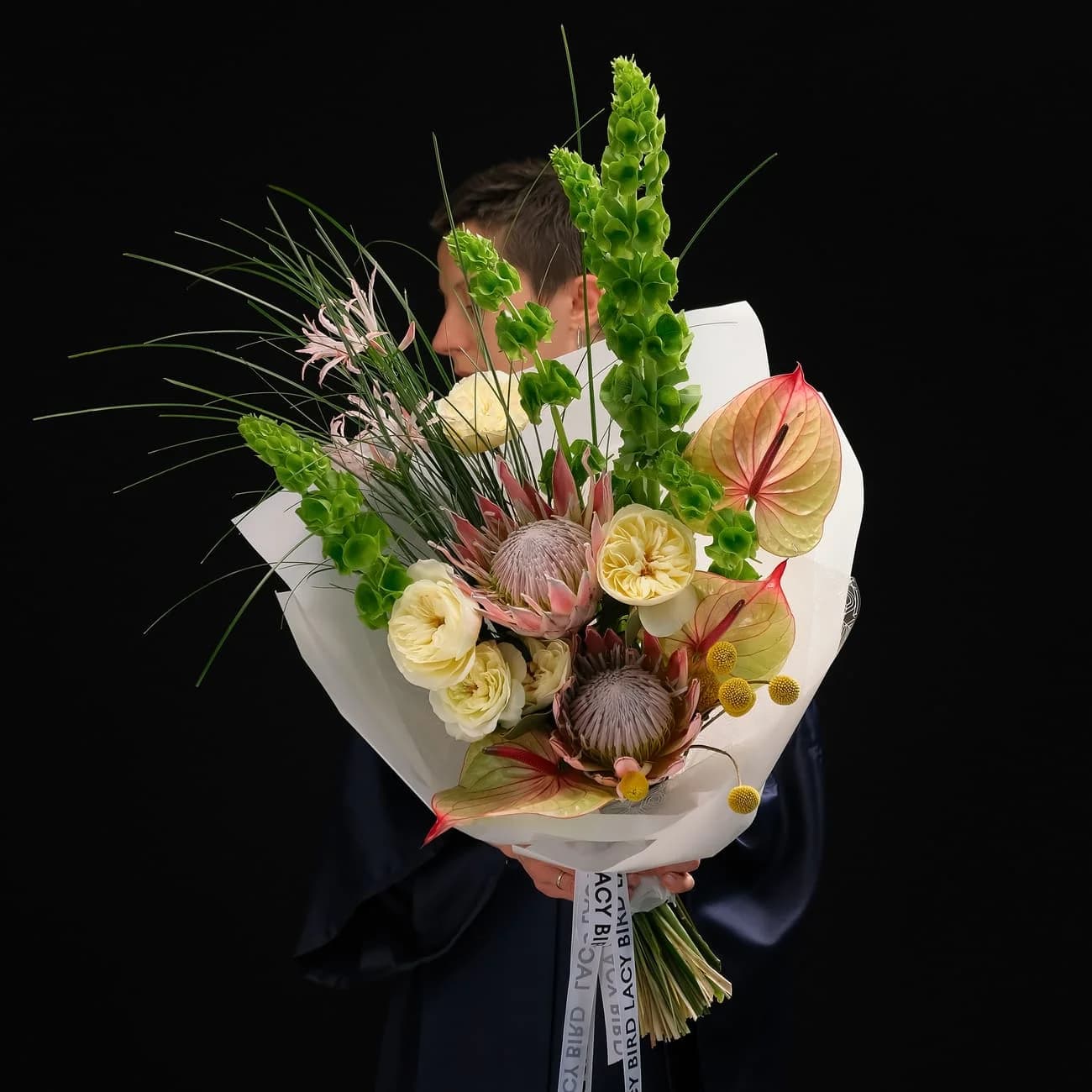
Garden style costs 20-50% over formal equivalents, for two structural reasons worth understanding rather than resenting. Ingredients: ten varieties in small quantities cost more than three in bulk — minimum order sizes at wholesale punish diversity. Labour: individual placement of forty stems at forty depths takes double the bench time of a spiral dome. You are paying for the appearance of nobody having tried, which — as with linen suits and undone hair — is the most engineered look in the building.
Where it earns that premium: relaxed and outdoor weddings (the register was practically invented for garden-venue bridal work), editorial and interiors that photograph, and every client whose brief begins "I don't want it to look like florist flowers." Where it doesn't: formal ballrooms, protocol events and funeral work — registers where structure carries the meaning and looseness reads as carelessness.
The one-line brief that gets you the real thing at any good studio: "Garden style — seasonal, loose, with movement; I'd rather have fewer, better varieties than a fuller dome." Twenty words, and the florist knows exactly which bench habits to bring.