Luxury Flowers: What Actually Makes a Bouquet Expensive — and Worth It
What separates luxury floristry from a big bouquet — rare cultivars, condition standards, design labour, presentation — plus honest prices and how to spot fake luxury.
Every city has flowers at three prices: the supermarket bunch, the flower-shop bouquet, and the thing that costs as much as dinner for four and somehow feels worth it. This piece is about the third category — what is actually inside that price, when it's real, and when "luxury" is just a serif font on a cellophane cone.
Luxury is not size
The defining error of fake luxury is quantity: a hundred and one roses, a metre-wide box, a bouquet you carry like firewood. Real luxury floristry moved the opposite direction years ago — fewer, better, composed. Its four load-bearing walls:
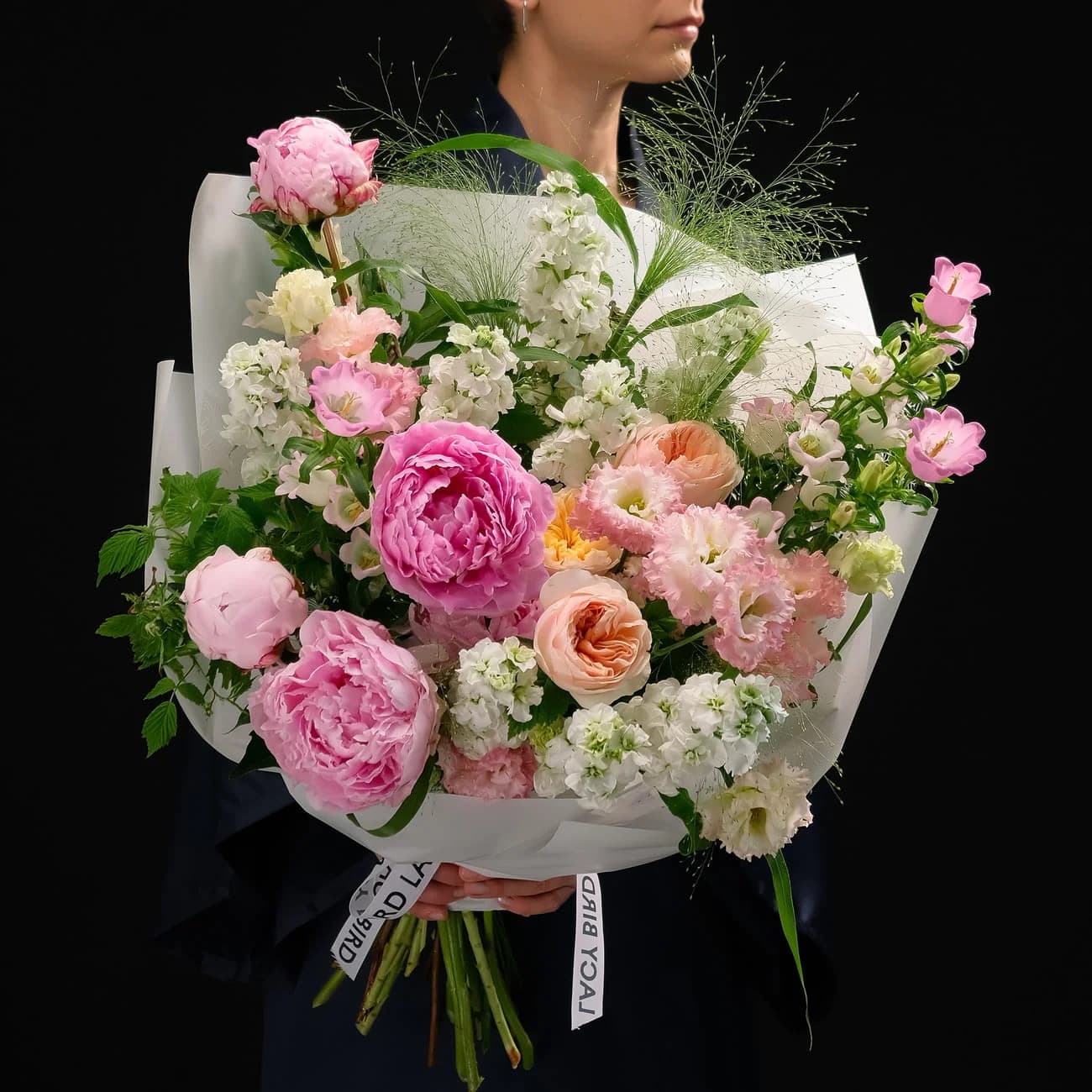
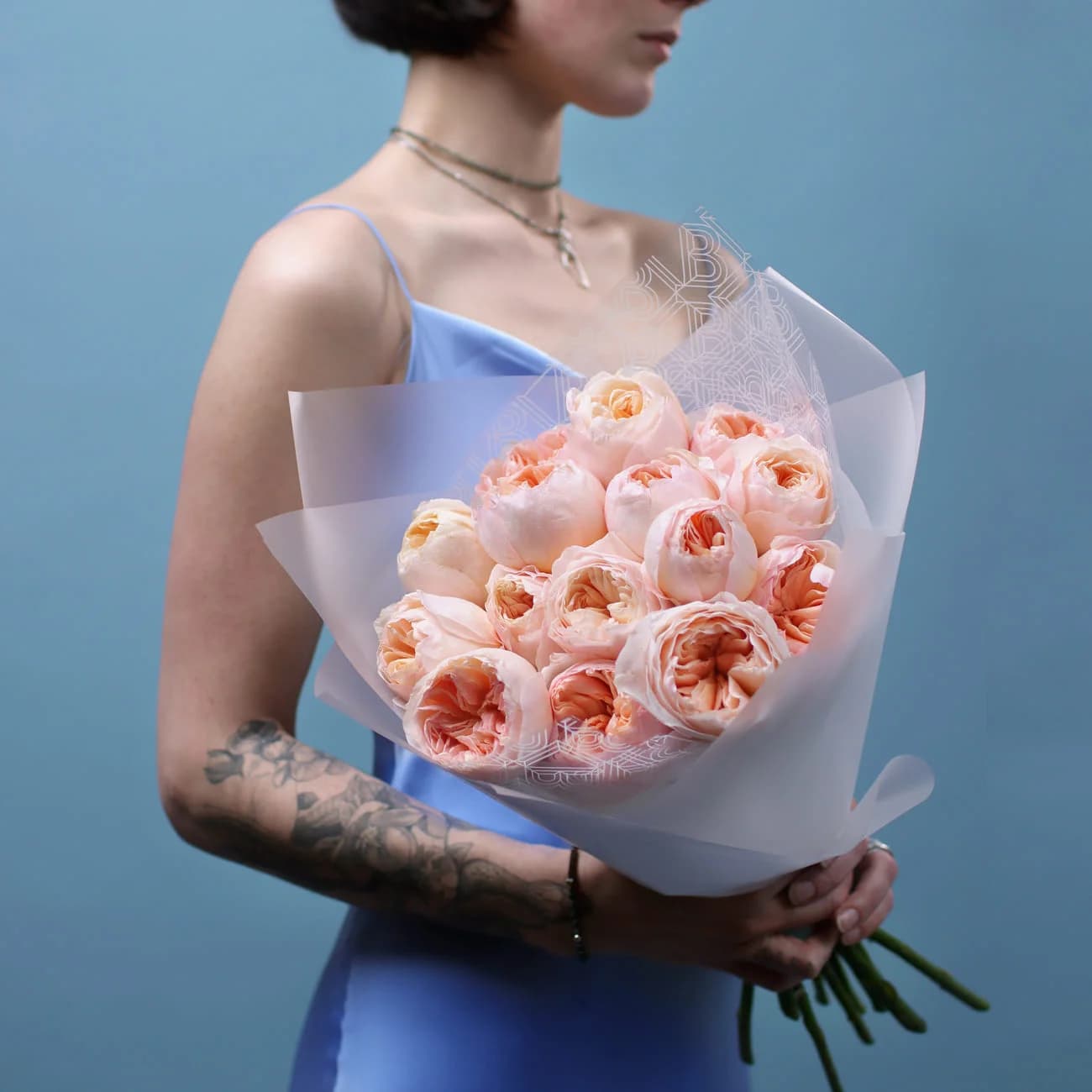
1. Cultivar. Named varieties with genetics behind them: David Austin's ‘Juliet’ and ‘Tsumugi’ garden roses, French ‘Pink Mondial’ and ‘Playa Blanca’, peonies ‘Coral Charm’ and ‘Sarah Bernhardt’, Japanese sweet peas and ranunculus. These are to standard stems what single-vineyard wine is to table wine — and they wholesale at three to six times the price.
2. Condition. The invisible half of the craft: flowers bought on tight rotation, conditioned overnight, opened to their exact best hour before they leave. A luxury peony is sold blooming, not as the hard green golf ball that may or may not open on your table.
3. Composition. Line, air, asymmetry, one idea carried through — design you can walk around, not a dome packed to hide its own mechanics. This is where the labour lives.
4. Presentation in a lowered voice. Heavy paper in one tone, a plain ribbon, a handwritten card. The louder the packaging, the cheaper the contents — a rule with remarkably few exceptions.
What the money actually buys
An honest deconstruction of a $250 studio statement bouquet: roughly half is stems — and at $6-15 per garden rose wholesale, twenty-five premium stems spend that fast. The rest splits between conditioning time (someone unpacked, cut, hydrated and staged those flowers over two days), design labour (a senior florist's hour, sometimes two), and presentation. What you are not paying for in a genuine studio is advertising-driven markup on commodity stems — which is precisely what the "luxury" tier of mass delivery platforms consists of.
The five-day rule states the trade-off plainly: luxury flowers optimise for the peak, not the duration. ‘Juliet’ gives five extraordinary days; a supermarket rose gives ten adequate ones. Luxury buyers are buying the five.
The luxury registers, currently
Luxury floristry is plural — several dialects coexist, and knowing them helps you brief a studio in one sentence:
- Garden abundance. Ruffled roses, sweet peas, clematis — an English cutting garden edited by a designer. The mainstream of bridal luxury.
- Sculptural minimal. Five callas and a bent branch; the luxury of restraint and line. Owes everything to ikebana, and reads most expensive of all in modern interiors.
- Editorial maximal. Saturated, painterly, a little strange — fruit on the stem, carnations rehabilitated, colour theory worn openly. The register fashion shoots order.
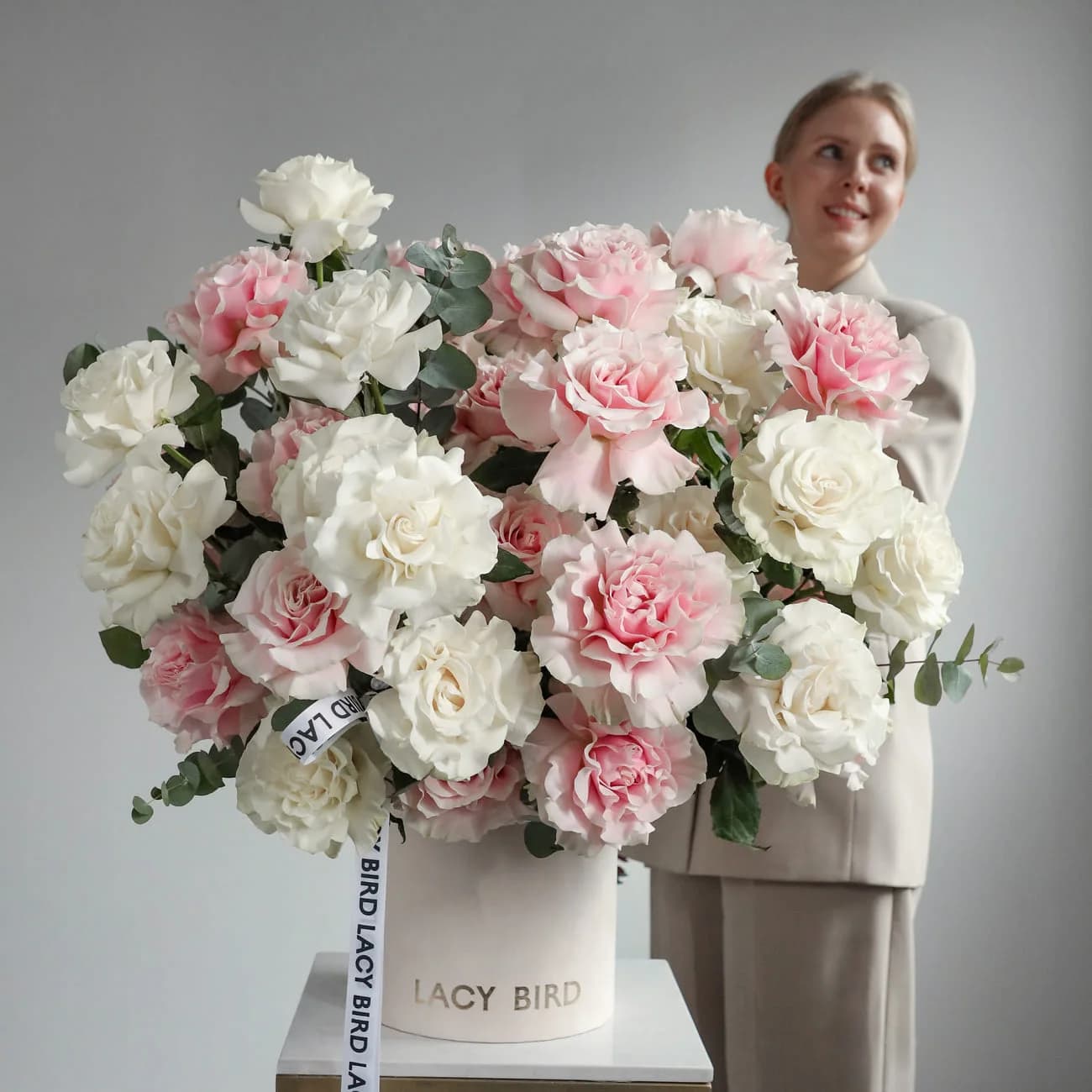
- The classical column. White phalaenopsis, white hydrangea, silver foliage — hotel-lobby eternal, and still unbeaten at scale.
A studio fluent in one dialect is a find; fluent in three, a keeper. (Ours leans editorial and sculptural — the chinoiserie line is where those two meet.)
How to spot fake luxury in ten seconds
Ask one question: "What varieties are these?" A real studio answers by name without looking, because they ordered them by name. Then confirm with the eyes and fingers: petals should feel dense and cool (premium cultivars carry more petal mass); there should be no cloud of filler gyp hiding gaps; the back of the bouquet should look as finished as the front; and the packaging should be quieter than the flowers. Any "luxury" bouquet that fails two of those is a standard bouquet with a margin strategy.
Price is the weakest signal of the lot — which is exactly why it's the one fake luxury leans on.
Buying it well
Three habits of people who buy luxury flowers happily: they buy from studios, not platforms (the conditioning and composition are the product; aggregators subcontract both); they give context, not specifications ("for our anniversary, she loves rust tones and hates lilies" outperforms any photo reference); and they buy less, more often — a $150 bouquet monthly beats a $600 event of regret annually, and subscriptions make that rhythm effortless (we've written up how those work).
Luxury in flowers, in the end, is the same as luxury in anything: someone competent cared, at every step, slightly more than the price strictly required. You can't fake it with quantity — and once you've seen the real thing open on your table, you stop wanting to.