Islamic Wedding Flowers — cultural conventions and design
Floral design for Islamic weddings — palette conventions, appropriate flowers, ceremony vs reception considerations, and cross-cultural adaptations.
 By Sofya VeyberPublished
 Islamic weddings vary widely by regional tradition — Arab Gulf, North African, Persian, South Asian Muslim, Southeast Asian, and Western Muslim conventions differ significantly. This guide covers universal considerations and Gulf-region specifics.
TL;DR. Islamic wedding floral design varies by cultural region. Common conventions: gender-appropriate presentation (women's ceremonies often more elaborate), modest packaging, palette skews cream/gold/white with regional variations. Peak venues: Emirates Palace, Burj Al Arab in UAE. Multi-day ceremonies common. Ramadan and post-Ramadan timing critical.
Islamic wedding structure variations
Gulf Arab (Emirati, Saudi, Qatari, Kuwaiti)
- Multi-day ceremonies
- Gender-segregated (women's ceremony separate from men's)
- Women's ceremony maximum floral drama
- Grand-scale (500-2,000+ guests)
- Palette: gold, cream, white dominant
North African (Moroccan, Tunisian, Egyptian)
- Multi-day (Henna, ceremony, reception)
- Sometimes gender-mixed
- Bright colorful palettes (gold, red, orange)
- Traditional attire influences floral choice
Persian (Iranian)
- Sofreh Aghd (traditional tabletop with symbolic items)
- White + pastel palettes
- Rose and jasmine emphasis
- Mixed-gender ceremony
South Asian Muslim (Pakistani, Bangladeshi)
- Multi-day (Mehndi, Sangeet, wedding, reception)
- Cross-influence with Indian tradition
- Bright saturated palettes
- Marigold + rose + jasmine
Western Muslim (convert / mixed marriages)
- Adapted to Islamic norms but Western wedding format
- Modest but modern
- Palette varies
Common conventions across Islamic weddings
Palette
- Sacred/formal: gold, cream, white, silver
- Celebration: bright saturated for reception
- Regional variations: significant
Modesty in presentation
- Modest floral installations (not overly ostentatious in some observant communities)
- Bridal bouquets often larger and more elaborate
- Modest packaging for gift arrangements
Gender considerations
- Women's ceremonies often receive maximum floral investment
- Men's ceremonies simpler
- Some venues separate men and women's areas — floral installations adapted
Halal / permissible
- All fresh flowers permitted
- Consider allergies at gatherings
- Some traditions avoid certain flowers (varies by tradition)
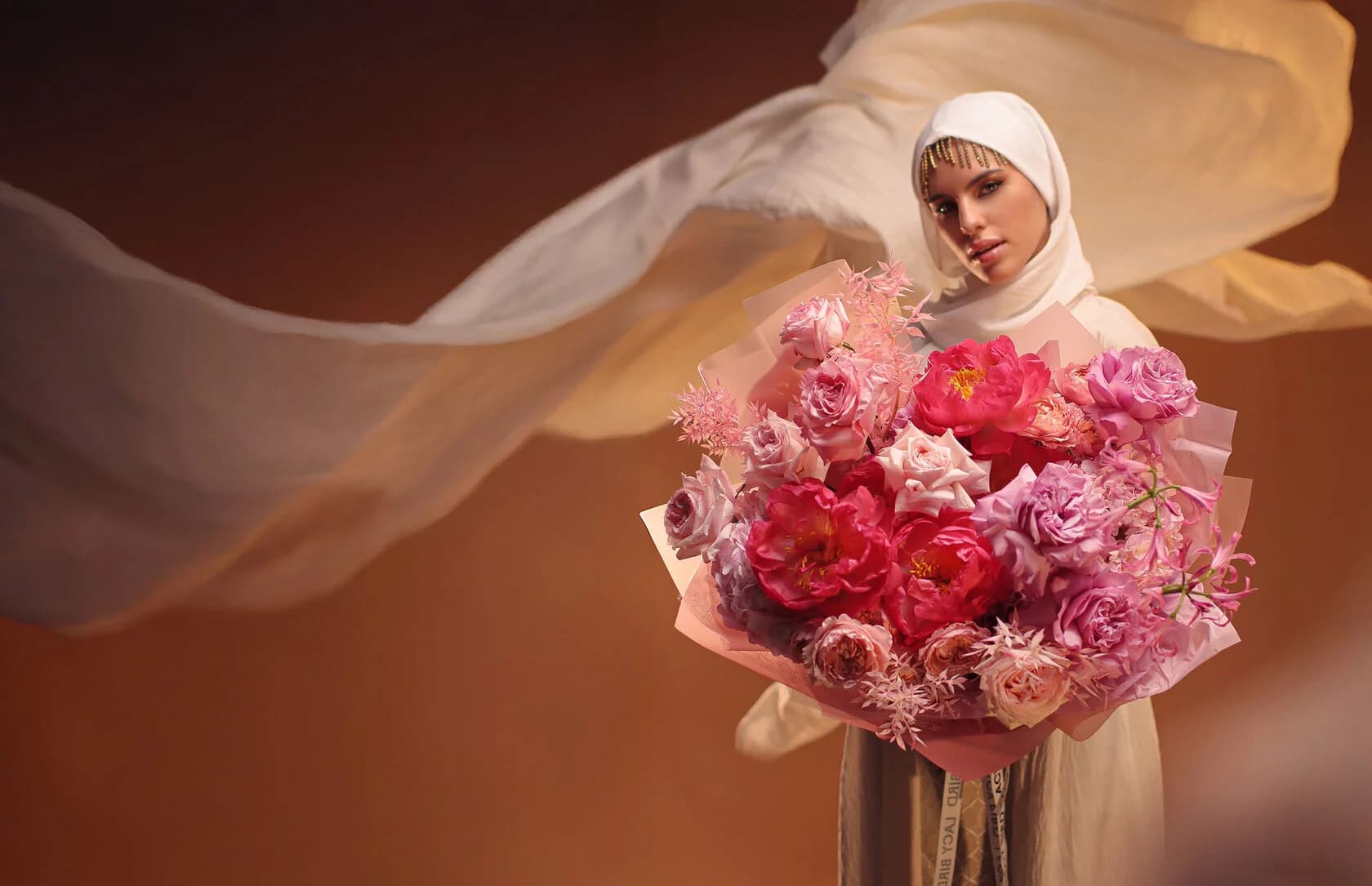
Peak floral installations for Gulf Arab weddings
Bridal reception (women's ceremony)
Grand ballroom transformation:
- Entry installation: guests walk through floral tunnel or archway
- Stage / throne: bride's seat elaborately floral
- Dining table florals: consistent across 30-100+ tables
- Photo backdrops: multiple for guest photography
- Ceiling drapes: floral chandeliers, ceiling gardens
Cost: $50,000-500,000+ for grand-scale Emirati weddings.
Men's ceremony (majlis format)
Simpler floral:
- Entry arrangements
- Majlis seating floral accents
- Formal decoration
Cost: $5,000-25,000.
Best flower selections
Traditional Gulf Arab weddings
- Roses (cream, gold, white — signature)
- Orchids (phalaenopsis white — luxury)
- Chrysanthemums (Baltica large white disbud)
- Lisianthus (cream)
- Anthurium (tropical accent)
- Palm fronds (structural)
Modern minimalist Islamic weddings
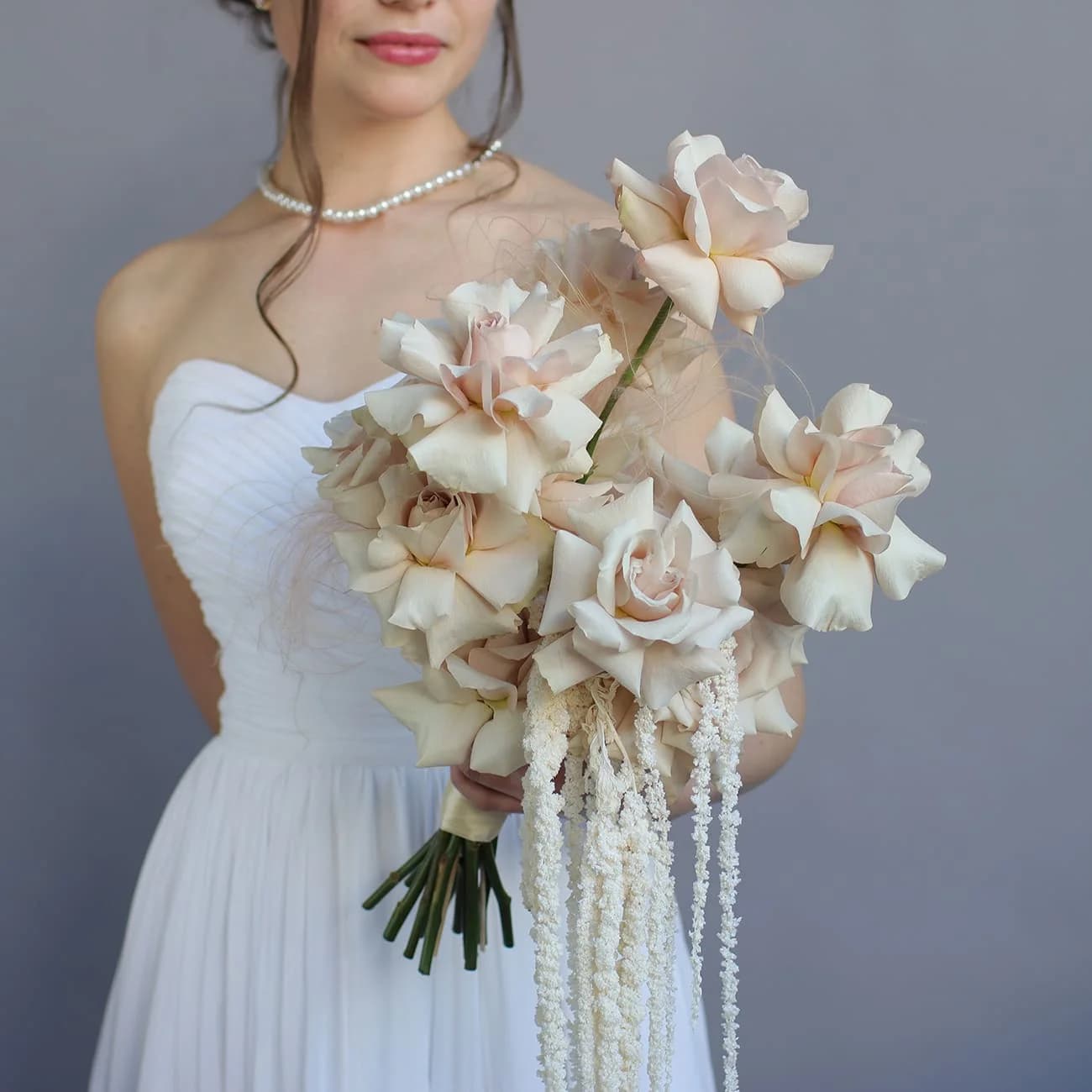
- White garden roses
- Cymbidium orchid
- Eucalyptus silver dollar
- Cream ranunculus
Bright celebration (Sangeet-style Muslim South Asian)
- Marigold + rose + jasmine
- Multi-color palette
- Similar to Indian wedding tradition
Traditional Moroccan / North African
- Bright saturated (red + gold + orange)
- Rose predominant
- Some jasmine
- Ceremonial tea flowers
Ceremony-specific floral
Nikah (Islamic marriage contract)
- Simple ceremony
- Officiant + witnesses + bride/groom
- Modest floral for the setting
- $200-2,000 depending on scale
Walima (reception feast)
- Larger celebration meal
- Maximum floral investment
- Community celebration
- Scale depends on guest count
Interfaith / mixed-cultural Islamic weddings
For couples where one partner is Muslim and other has different tradition:
- Palette adaptation to blend traditions
- Multiple ceremonies (religious + civil format)
- Cultural sensitivity across guest families
- Consultation with imams and other officiants for appropriate floral
Notable Islamic wedding venues in UAE
Emirates Palace (Abu Dhabi) — most grand Islamic weddings Burj Al Arab (Dubai) — intimate luxury Al Habtoor Palace (Dubai) — grand ballroom Grand Hyatt Dubai — mid-scale Address Downtown (Dubai) — modern luxury
Common Islamic wedding floral mistakes
Western palette assumptions. European wedding aesthetic doesn't translate directly.
Under-scaling women's ceremony. Women's celebrations often receive maximum floral investment.
Ignoring gender considerations. Both ceremonies may need distinct floral programs.
Overly saturated palettes for formal Gulf Arab. Gold + cream
- white preferred for formal Emirati / Saudi weddings.
Wrong flowers for cultural tradition. Some regions have strong preferences (e.g., marigold for Muslim South Asian).
Not consulting imam for religious ceremony. Some floral adjacent to ceremony space should be discussed.
FAQ
What flowers are appropriate for Islamic weddings?
All fresh flowers permitted. Common: roses (cream, gold, white), orchids (phalaenopsis), chrysanthemums, lisianthus, anthurium. Regional preferences vary significantly across Gulf Arab, North African, Persian, South Asian Muslim traditions.
Palette conventions?
Gulf Arab formal: gold, cream, white, silver dominant. North African: brighter saturated with red and gold. Persian: white and pastel. South Asian Muslim: similar to Indian wedding tradition (marigold + rose).
Gender-segregated weddings?
Common in observant Muslim communities, especially Gulf Arab. Women's ceremonies often receive maximum floral investment. Men's ceremonies simpler. Both may need distinct floral programs.
Islamic wedding venues in UAE?
Emirates Palace (Abu Dhabi — grand), Burj Al Arab (Dubai — intimate luxury), Al Habtoor Palace (Dubai — grand ballroom), Grand Hyatt Dubai (mid-scale), Address Downtown (modern luxury).
Related reading: