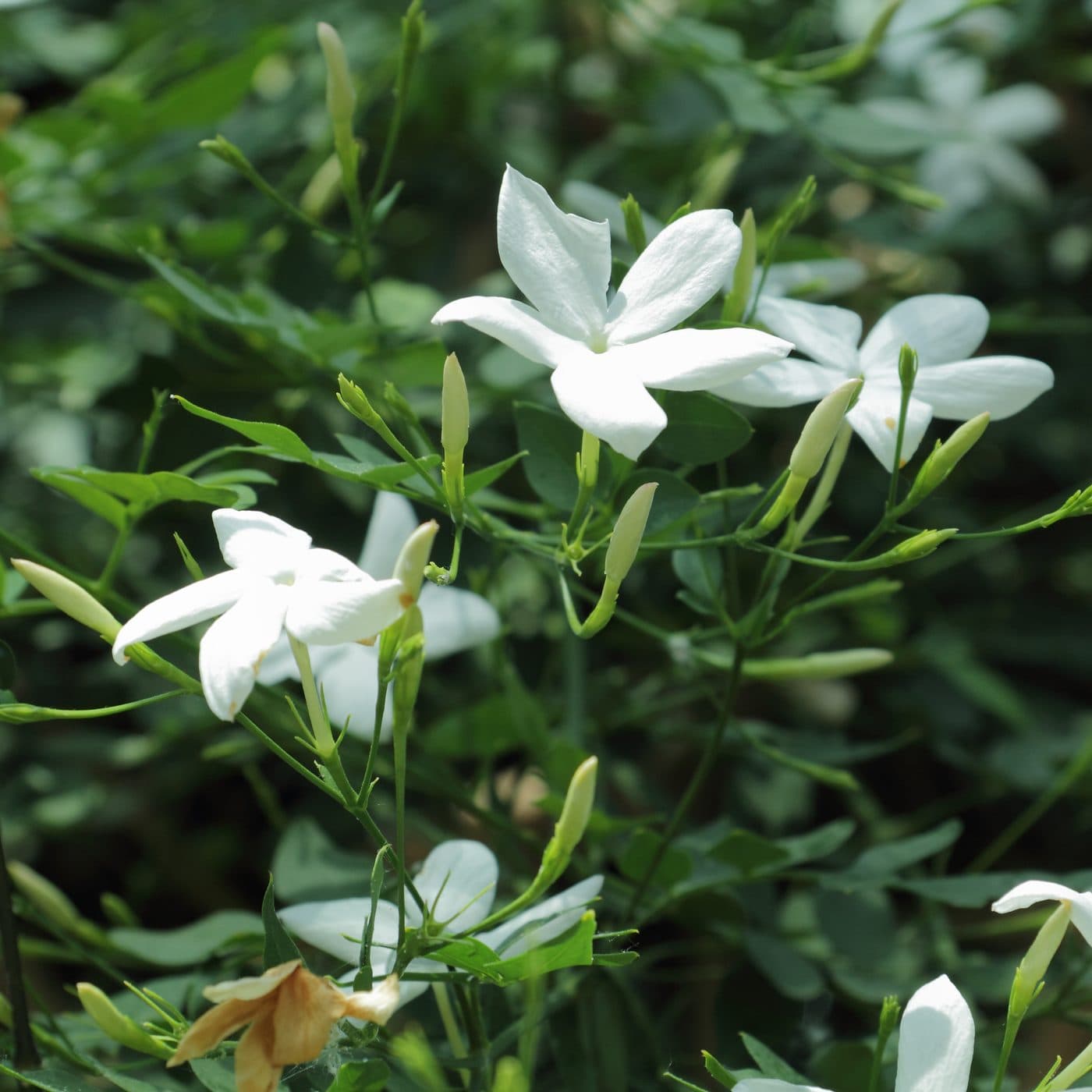
Photo: C T Johansson · CC BY-SA 3.0 · Wikimedia Commons
Jasmine
Jasmine's fragrance is one of the most powerful in the flower world — a single sprig can perfume a room. Vining stems are used extensively in Indian and Arabic bridal traditions, threaded into hair and worn around wrists. Short vase life (3–5 days) makes it strictly an event-day flower; plan accordingly.
| Family | Oleaceae |
|---|---|
| Origin | Asia, Middle East; commercially grown India, Egypt, France |
| Peak season | all year |
| Availability | all year |
| Stem length | 30–90 cm |
| Vase life | 3–5 days |
| Colors | white, cream |
| Price tier | premium |
Cut on a diagonal, cool water. Sprigs used in bridal work often threaded onto wire for shape.
- •Legendary fragrance — one of the strongest in floristry
- •Short vase life (3–5 days) — event-day flower
- •Vining sprigs used in bridal bouquets and hair
- •Cultural significance in Middle Eastern and Indian weddings
 Bouquet Builder — by Lacy Bird
Design the bouquet. See it as a photo.
Botanical reference
- Also known as
- poet's jasmine, star jasmine (Trachelospermum), Jacksonia, Jasminium, Mogorium, Noldeanthus, Nyctanthos
- Distribution
- Afghanistan, Aldabra, Andaman Is., Angola, Assam, Bangladesh, Benin, Bismarck Archipelago, Borneo, Botswana
Open-data sources: GBIF, Wikidata (CC0/CC BY)
Frequently asked questions
When is Jasmine in season?
Jasmine peaks in all year, and florists can usually source it all year. Availability shifts by region and greenhouse supply.
How long does Jasmine last in a vase?
Expect 3–5 days with proper conditioning — a clean vase, fresh water every couple of days, flower food, and a cool spot away from ripening fruit and direct heat.
What can I use instead of Jasmine?
Good substitutes for Jasmine include Stephanotis, Gardenia, Passionflower Vine. Match on look, colour and season — our substitute finder ranks the closest alternatives.
What does Jasmine symbolise?
Jasmine is associated with love, purity, sensuality, grace.
How do you care for cut Jasmine?
Legendary fragrance — one of the strongest in floristry
Related flowers


Free to quote and cite with attribution and a link back, for non-commercial and editorial use (blogs, journalism, classrooms, research).
Lacy Bird Flower Encyclopedia — “Jasmine”. https://lacybird.com/flowers/jasmine/<a href="https://lacybird.com/flowers/jasmine/">Lacy Bird Flower Encyclopedia — Jasmine</a>