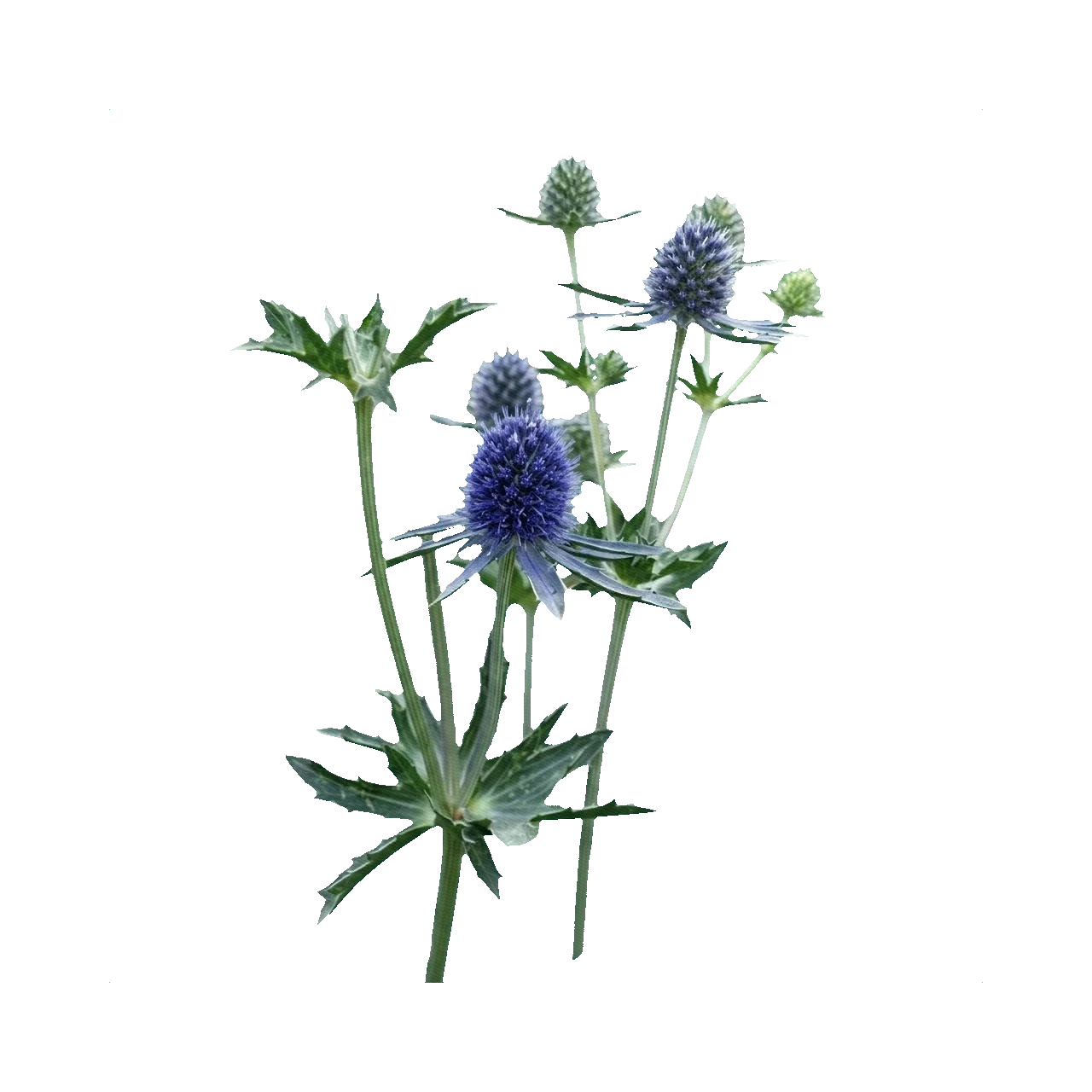
Eryngium
Eryngium delivers a rare naturally-blue cut flower in a sculptural, cone-headed form. Photographs like nothing else in a bouquet; also dries perfectly and holds its silver-blue colour for years. One caveat: the spines will draw blood — always handle in gloves.
| Family | Apiaceae |
|---|---|
| Origin | Mediterranean; commercially grown Netherlands, Italy, California |
| Peak season | June, July, August, September |
| Availability | May to October |
| Stem length | 50–80 cm |
| Vase life | 10–21 days |
| Colors | silver-blue, blue, purple, green |
| Price tier | mid |
Cut on a diagonal, fresh water. Watch the spines — eryngium is unfriendly to bare hands.
- •SHARP SPINES — always work in gloves
- •One of the few naturally-blue cut flowers
- •Dries perfectly — preserves colour for years
- •Sculptural silver-blue cone-heads — a design signature
2 named sea holly cultivars from the Lacy Bird master catalogue — each a distinct commercial variety.
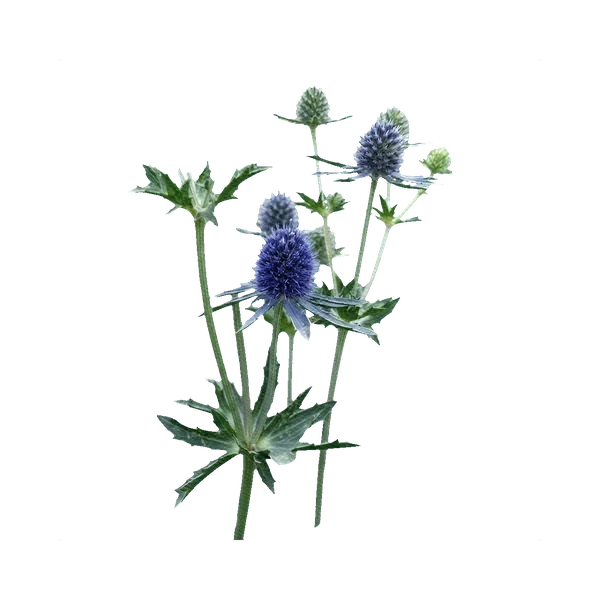
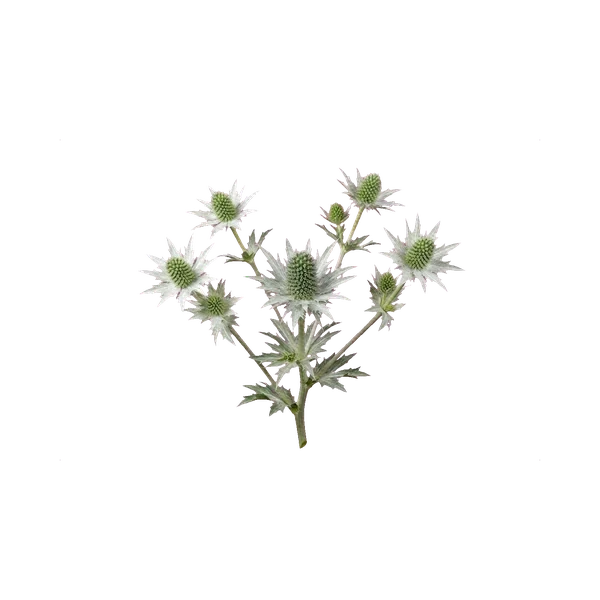
Entries marked ✦ come from the Acanta master catalogue — the shared database of cut flowers, forms, colours and named varieties that florists and studios build on. The rest are our editorial genus reference. What is Acanta →
 Bouquet Builder — by Lacy Bird
Design the bouquet. See it as a photo.
Botanical reference
- Common name
- Eryngos
- Also known as
- sea holly, Atirsita, Klonion, Reilia, Strebanthus
- Distribution
- Afghanistan, Alabama, Albania, Algeria, Altay, Argentina Northeast, Argentina Northwest, Argentina South, Arizona, Arkansas
Open-data sources: GBIF, Wikidata (CC0/CC BY)
Frequently asked questions
When is Eryngium in season?
Eryngium peaks in June, July, August, September, and florists can usually source it May to October. Availability shifts by region and greenhouse supply.
How long does Eryngium last in a vase?
Expect 10–21 days with proper conditioning — a clean vase, fresh water every couple of days, flower food, and a cool spot away from ripening fruit and direct heat.
What can I use instead of Eryngium?
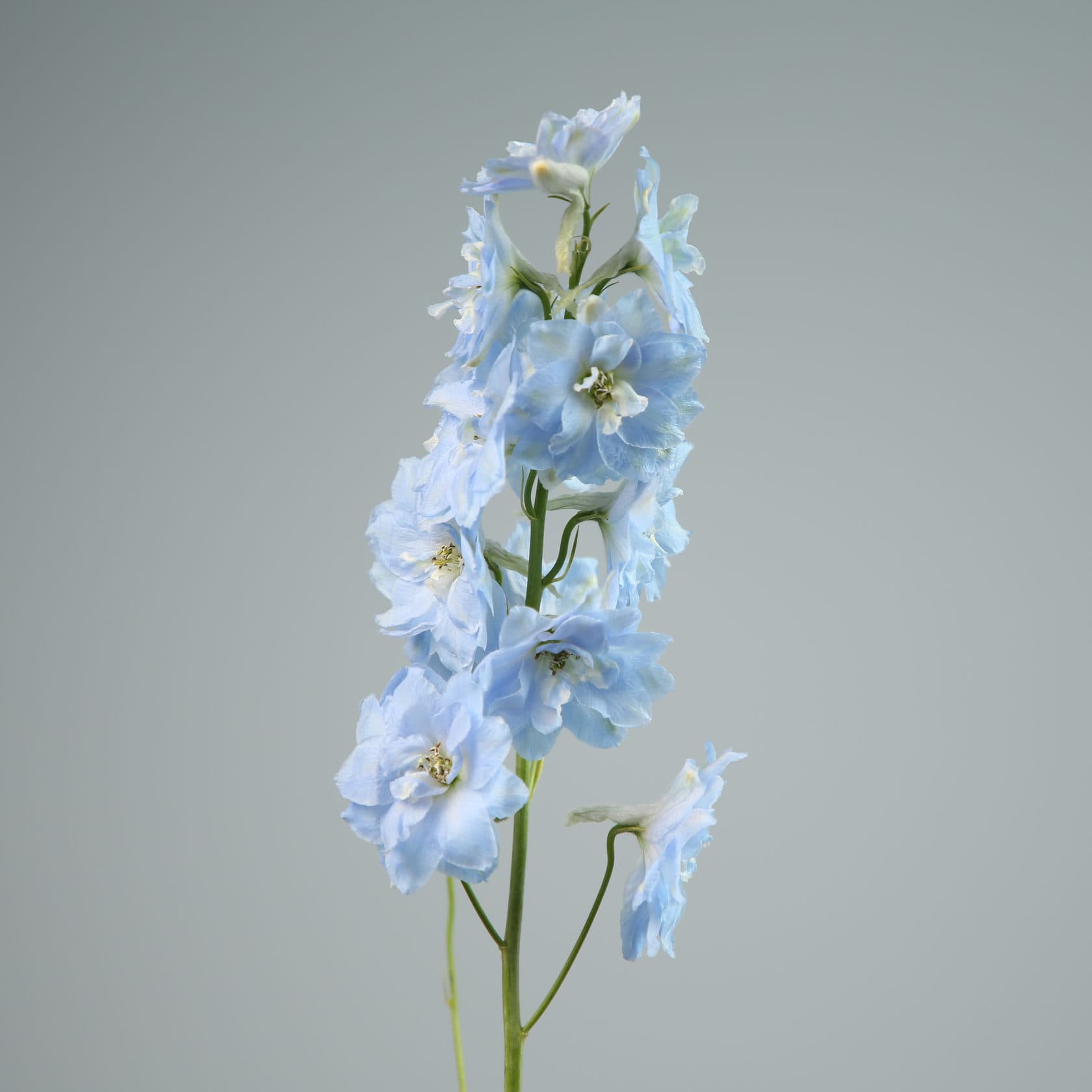
Good substitutes for Eryngium include Thistle, Delphinium. Match on look, colour and season — our substitute finder ranks the closest alternatives.
What does Eryngium symbolise?
Eryngium is associated with independence, attraction.
How do you care for cut Eryngium?
SHARP SPINES — always work in gloves
Related flowers

Free to quote and cite with attribution and a link back, for non-commercial and editorial use (blogs, journalism, classrooms, research).
Lacy Bird Flower Encyclopedia — “Eryngium”. https://lacybird.com/flowers/eryngium/<a href="https://lacybird.com/flowers/eryngium/">Lacy Bird Flower Encyclopedia — Eryngium</a>