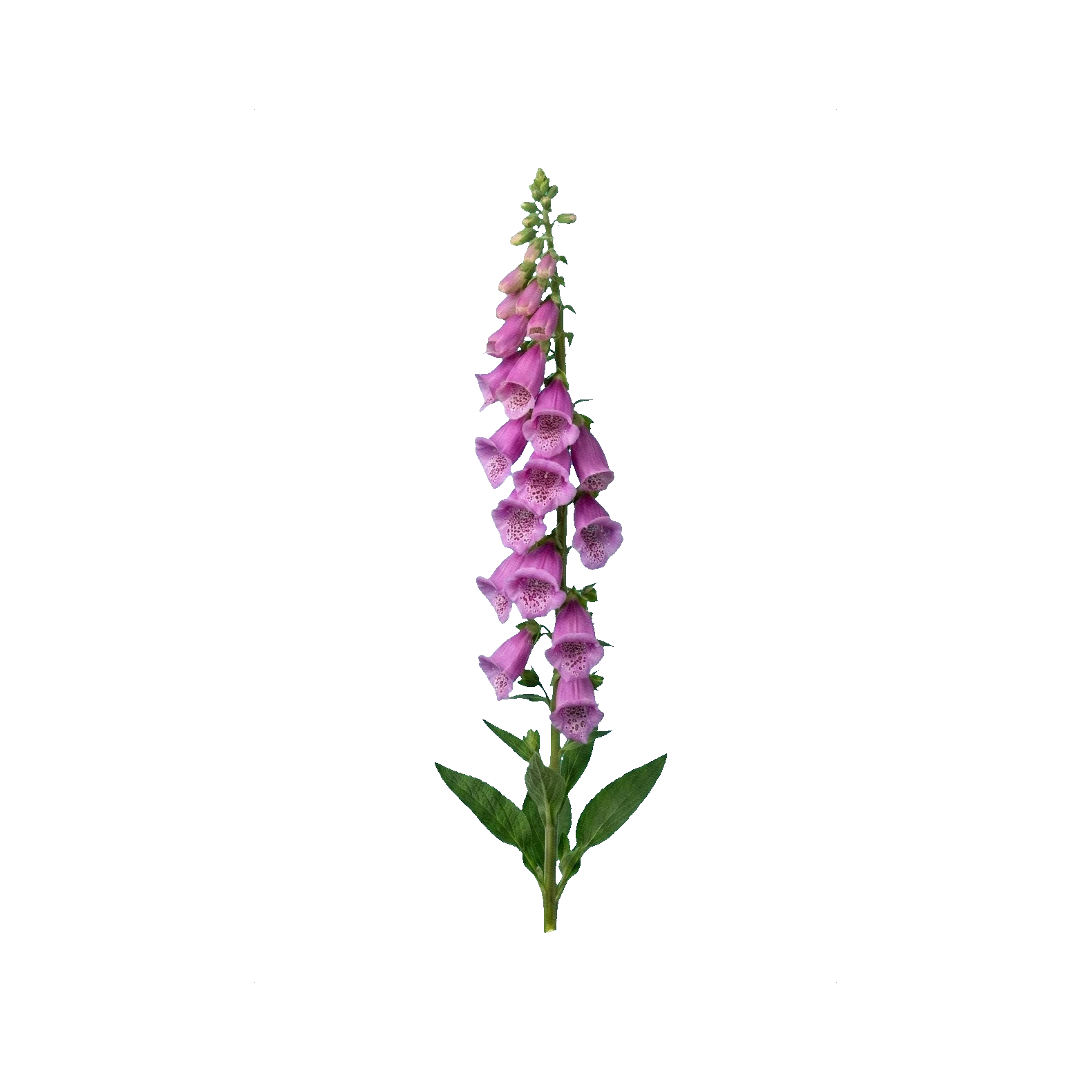
Foxglove
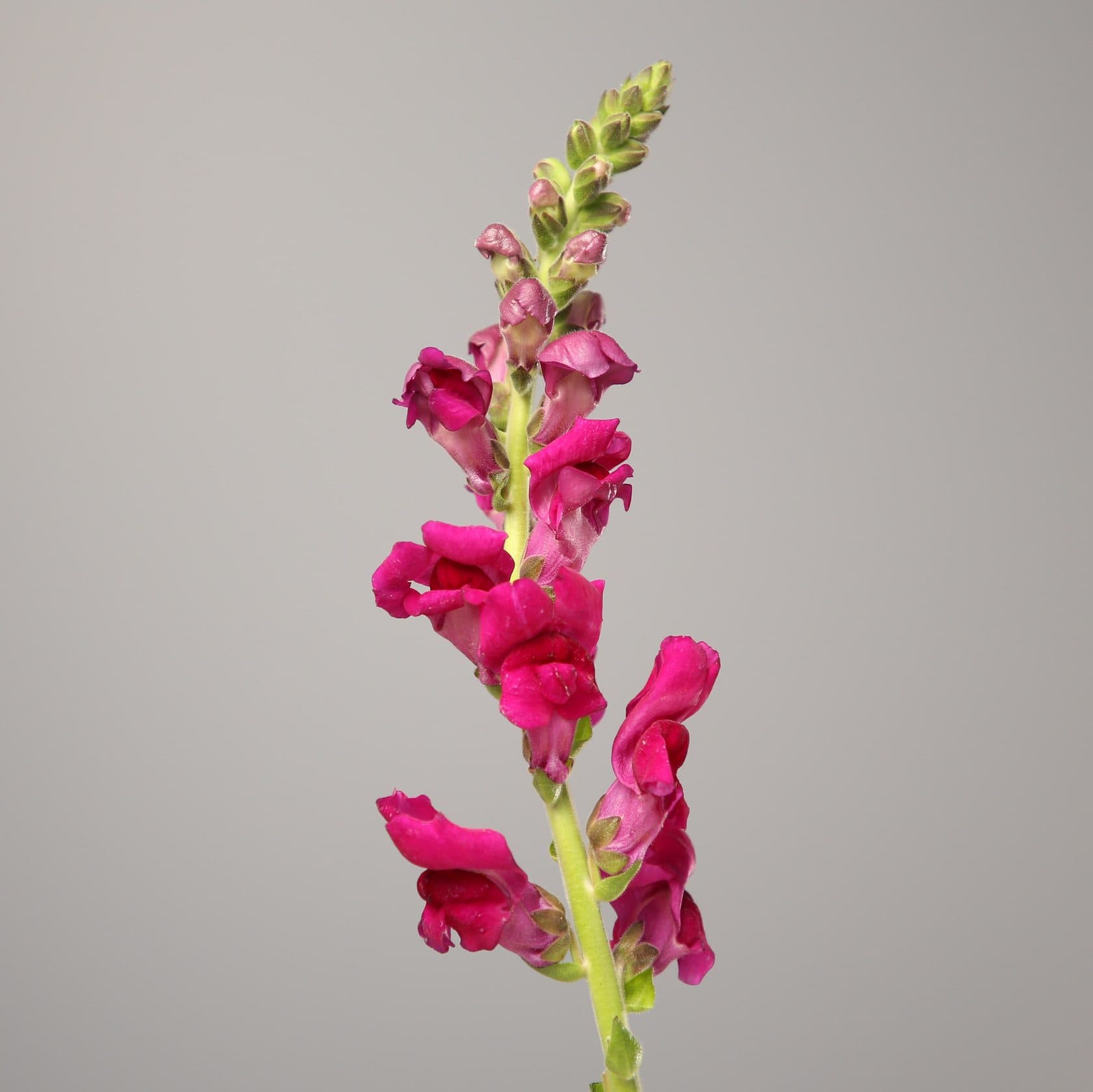
Foxglove is the quintessential cottage-garden spire, its tall stems hung with tubular, freckle-throated bells in soft pinks, purples, apricots and clean whites. Florists prize it for instant height and an English-garden romance that anchors editorial and garden-style weddings. Because the spikes bloom from the bottom up and are fleetingly seasonal, they read as luxurious and of-the-moment. Handle with care: every part of the plant is poisonous.
| Family | Plantaginaceae |
|---|---|
| Origin | Western and Southern Europe |
| Peak season | June, July |
| Availability | May, June, July, August |
| Stem length | 60–120 cm |
| Vase life | 5–8 days |
| Colors | pink, purple, white, cream, apricot |
| Price tier | mid |
Cut stems on an angle and give them a long, deep drink in cool water before designing. Strip lower leaves and buy stems with the lowest bells open and plenty of colour showing up the spike. All parts are toxic if eaten, so wash hands after handling and keep away from food, children and pets. The tall spikes are top-heavy, so store upright to keep them straight.
- •Toxic — wash hands and keep away from food and pets
- •Give a long deep drink before arranging
- •Buy with lower florets already open
- •Store upright so spikes stay straight
- •Recut stems and refresh water regularly
- •Keep cool to slow the opening florets
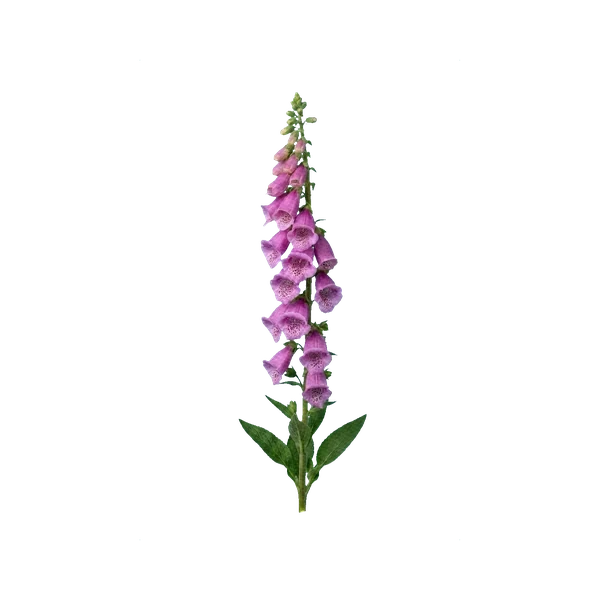
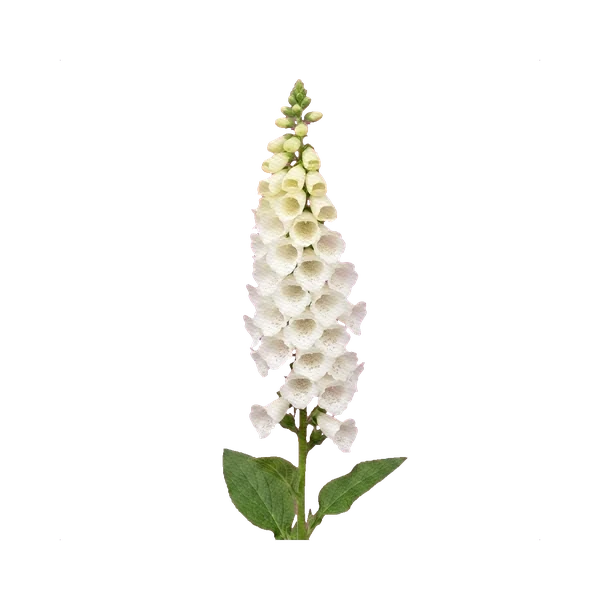
2 named foxglove cultivars from the Lacy Bird master catalogue — each a distinct commercial variety.
Entries marked ✦ come from the Acanta master catalogue — the shared database of cut flowers, forms, colours and named varieties that florists and studios build on. The rest are our editorial genus reference. What is Acanta →
 Bouquet Builder — by Lacy Bird
Design the bouquet. See it as a photo.
Botanical reference
- Common name
- Common Foxglove
- Also known as
- digitalis, fairy thimbles, witch's gloves, Digitalis purpurea alba, Digitalis purpurea gloxiniiflora, Digitalis purpurea toletana
- Distribution
- Belgium, California, Corse, Czechia-Slovakia, Cómbita, France, Germany, Great Britain
- Uses
- medicinal plant
Open-data sources: GBIF, Wikidata (CC0/CC BY)
Frequently asked questions
When is Foxglove in season?
Foxglove peaks in June, July, and florists can usually source it May, June, July, August. Availability shifts by region and greenhouse supply.
How long does Foxglove last in a vase?
Expect 5–8 days with proper conditioning — a clean vase, fresh water every couple of days, flower food, and a cool spot away from ripening fruit and direct heat.
What can I use instead of Foxglove?
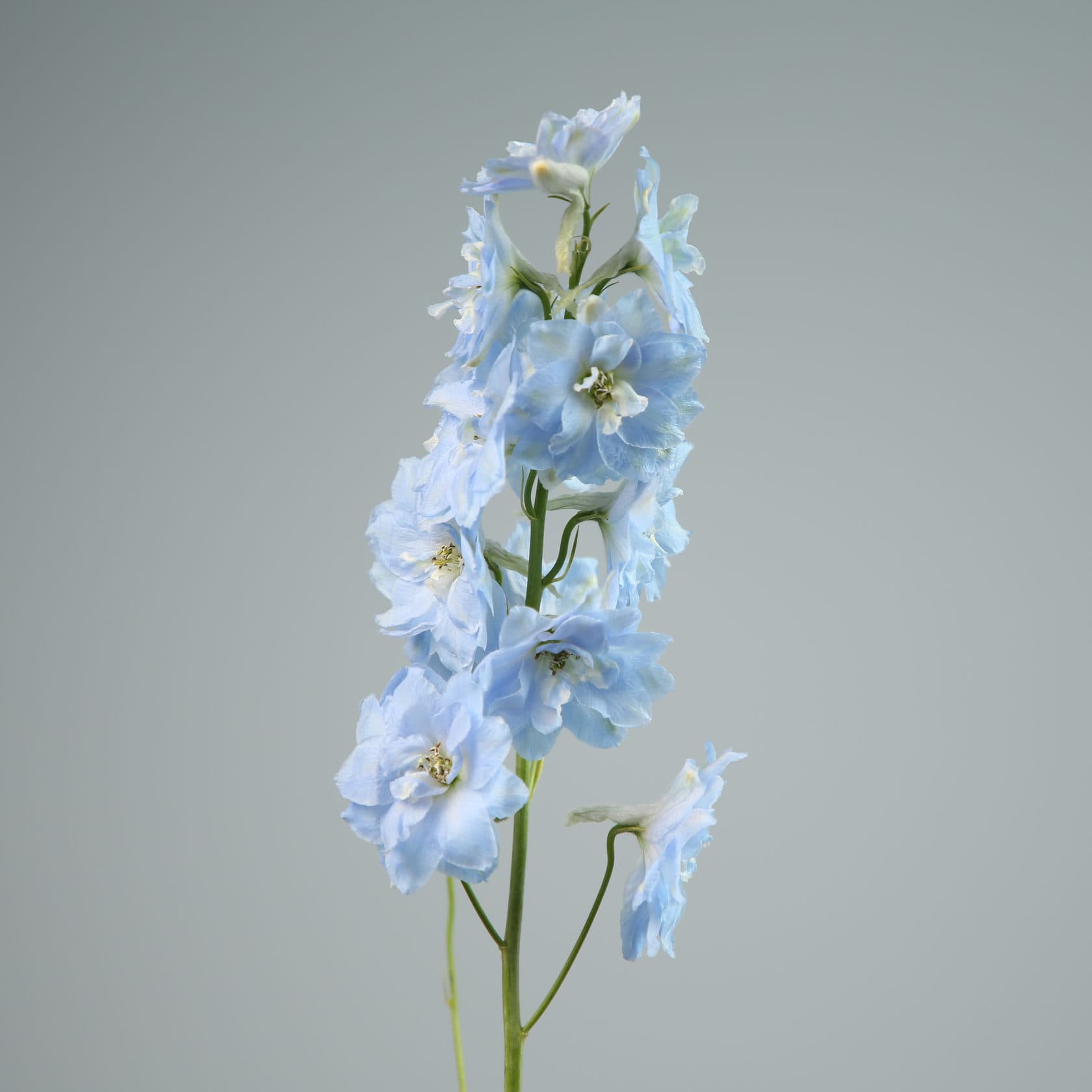
Good substitutes for Foxglove include Delphinium, Snapdragon, Larkspur, Lupine, Monkshood. Match on look, colour and season — our substitute finder ranks the closest alternatives.
What does Foxglove symbolise?
Foxglove is associated with insincerity, creativity, intuition, protection.
How do you care for cut Foxglove?
Toxic — wash hands and keep away from food and pets
Related flowers


Free to quote and cite with attribution and a link back, for non-commercial and editorial use (blogs, journalism, classrooms, research).
Lacy Bird Flower Encyclopedia — “Foxglove”. https://lacybird.com/flowers/foxglove/<a href="https://lacybird.com/flowers/foxglove/">Lacy Bird Flower Encyclopedia — Foxglove</a>