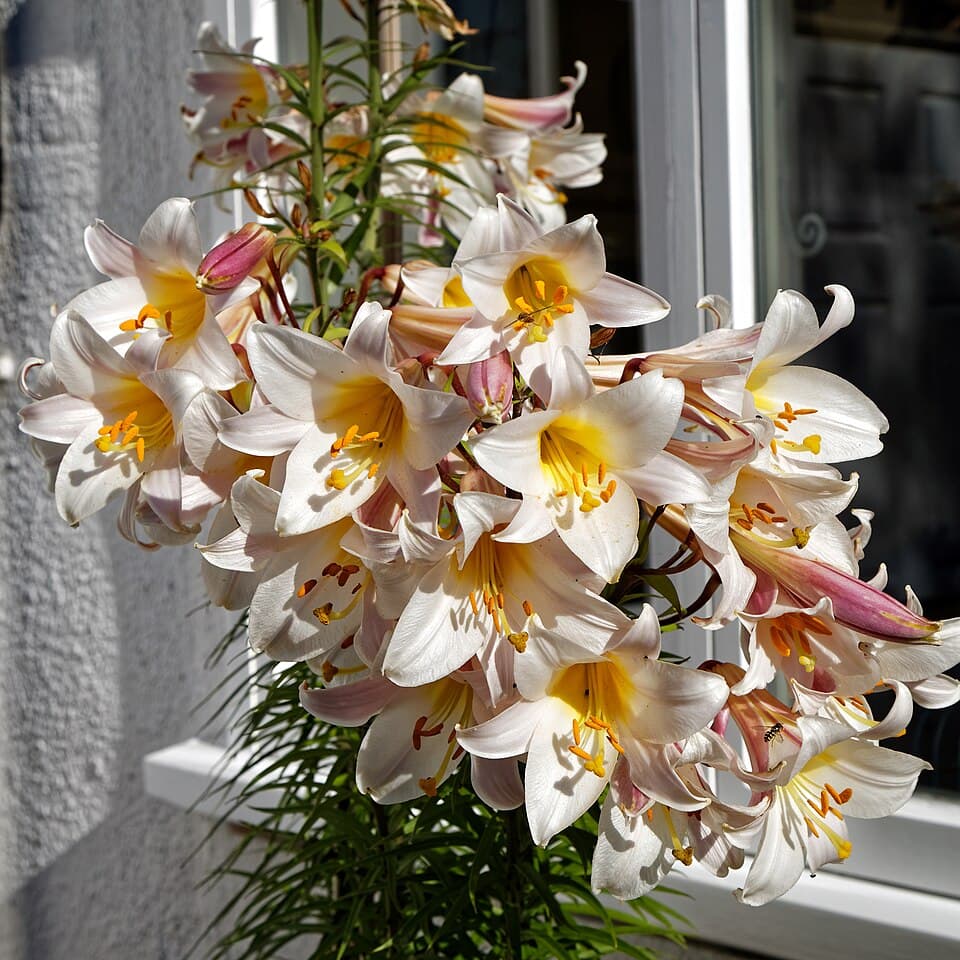
Oriental lily
Oriental lilies bring drama, scale, and heavy fragrance. Stargazer (pink with white edges) is the most-recognised cultivar. A single stem can dominate an arrangement — three lilies with greenery make a hotel-lobby-scale piece. Two critical warnings: pollen stains permanently (remove anthers), and Lilium is highly toxic to cats (do not use in feline households).
| Family | Liliaceae |
|---|---|
| Origin | East Asia; commercially grown Netherlands, Ecuador, Colombia |
| Peak season | May, June, July, August |
| Availability | all year |
| Stem length | 60–100 cm |
| Vase life | 7–14 days |
| Colors | white, pink, burgundy, yellow, spotted |
| Price tier | mid |
Cut on a diagonal. Once open, remove the anthers (pollen sacs) with tweezers — pollen stains fabric and skin. Multiple buds open progressively.
- •REMOVE ANTHERS on open flowers — pollen stains everything permanently
- •Long vase life; multiple buds open over 10–14 days
- •Strong fragrance — not for enclosed spaces, hotel rooms, or sensitive noses
- •Toxic to cats — do not use in arrangements for cat households
 Bouquet Builder — by Lacy Bird
Design the bouquet. See it as a photo.
Botanical reference
- Common name
- Lilies
- Also known as
- Stargazer lily (a specific cultivar), Lirium, Martagon, Nomocharis
- Distribution
- Afghanistan, Alabama, Albania, Alberta, Altay, Amur, Arizona, Arkansas, Assam, Austria
Open-data sources: GBIF, Wikidata (CC0/CC BY)
Frequently asked questions
When is Oriental lily in season?
Oriental lily peaks in May, June, July, August, and florists can usually source it all year. Availability shifts by region and greenhouse supply.
How long does Oriental lily last in a vase?
Expect 7–14 days with proper conditioning — a clean vase, fresh water every couple of days, flower food, and a cool spot away from ripening fruit and direct heat.
What can I use instead of Oriental lily?
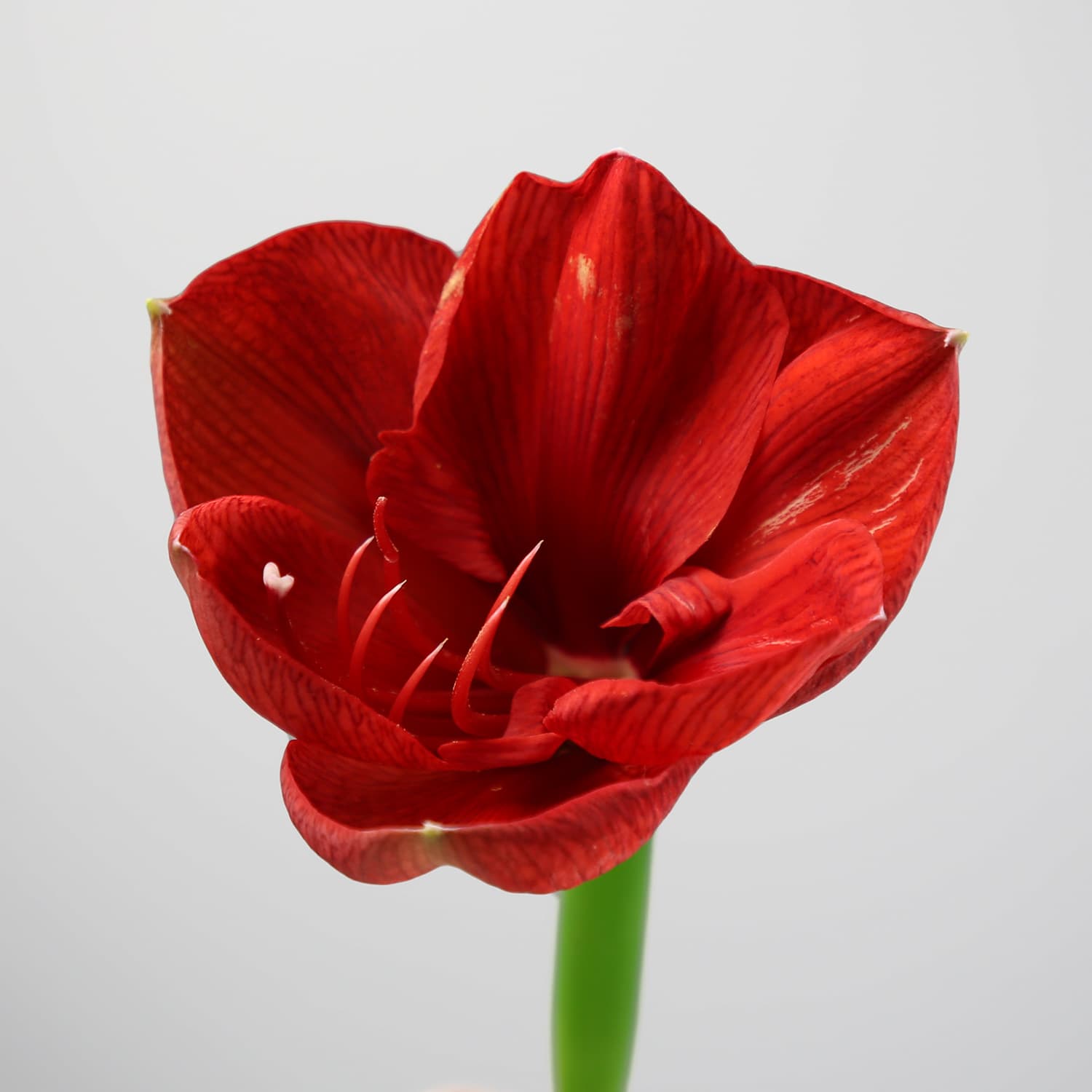
Good substitutes for Oriental lily include Amaryllis, Asiatic Lily. Match on look, colour and season — our substitute finder ranks the closest alternatives.
What does Oriental lily symbolise?
Oriental lily is associated with purity, refined beauty, devotion.
How do you care for cut Oriental lily?
REMOVE ANTHERS on open flowers — pollen stains everything permanently
Related flowers


Free to quote and cite with attribution and a link back, for non-commercial and editorial use (blogs, journalism, classrooms, research).
Lacy Bird Flower Encyclopedia — “Oriental lily”. https://lacybird.com/flowers/lily-oriental/<a href="https://lacybird.com/flowers/lily-oriental/">Lacy Bird Flower Encyclopedia — Oriental lily</a>