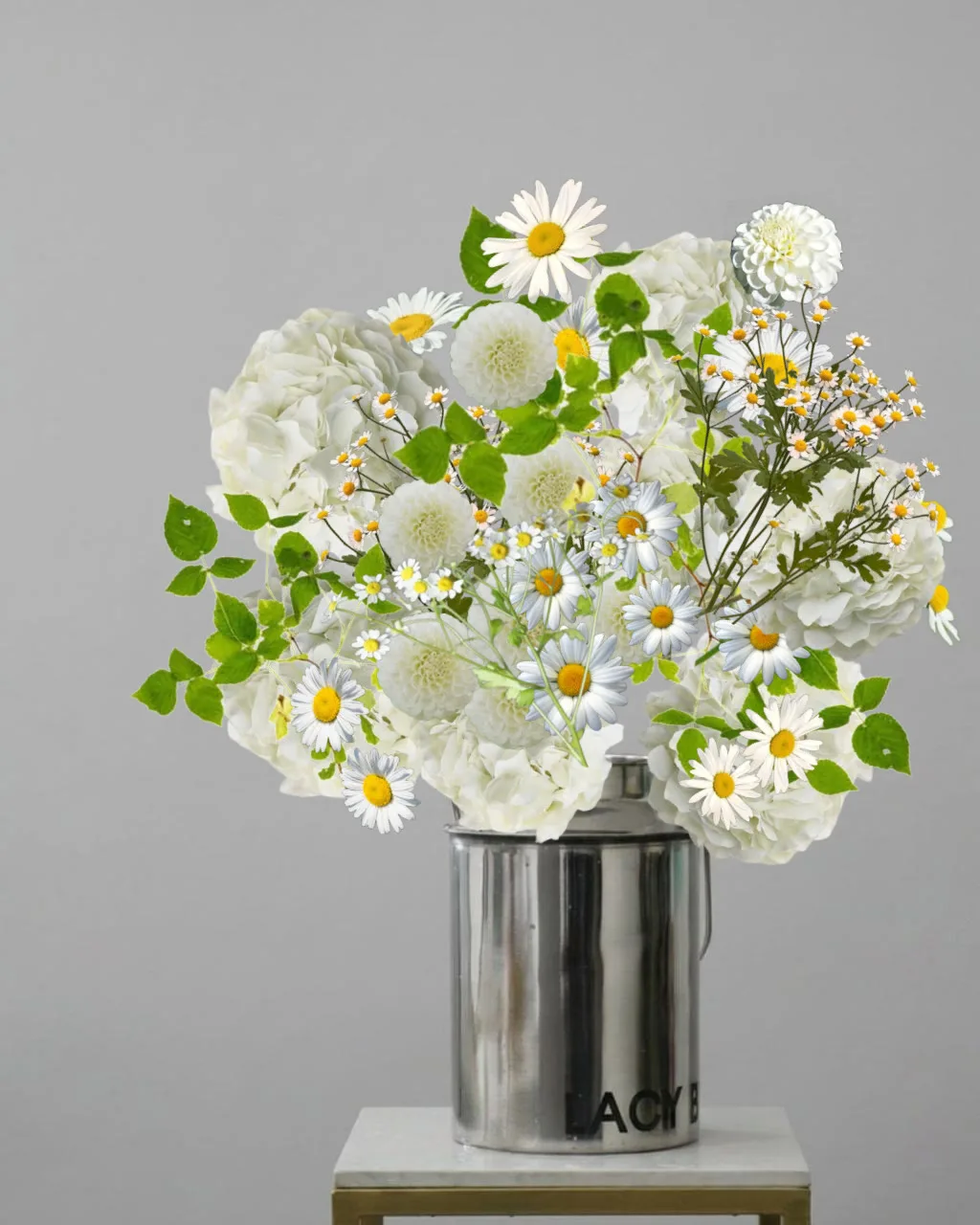
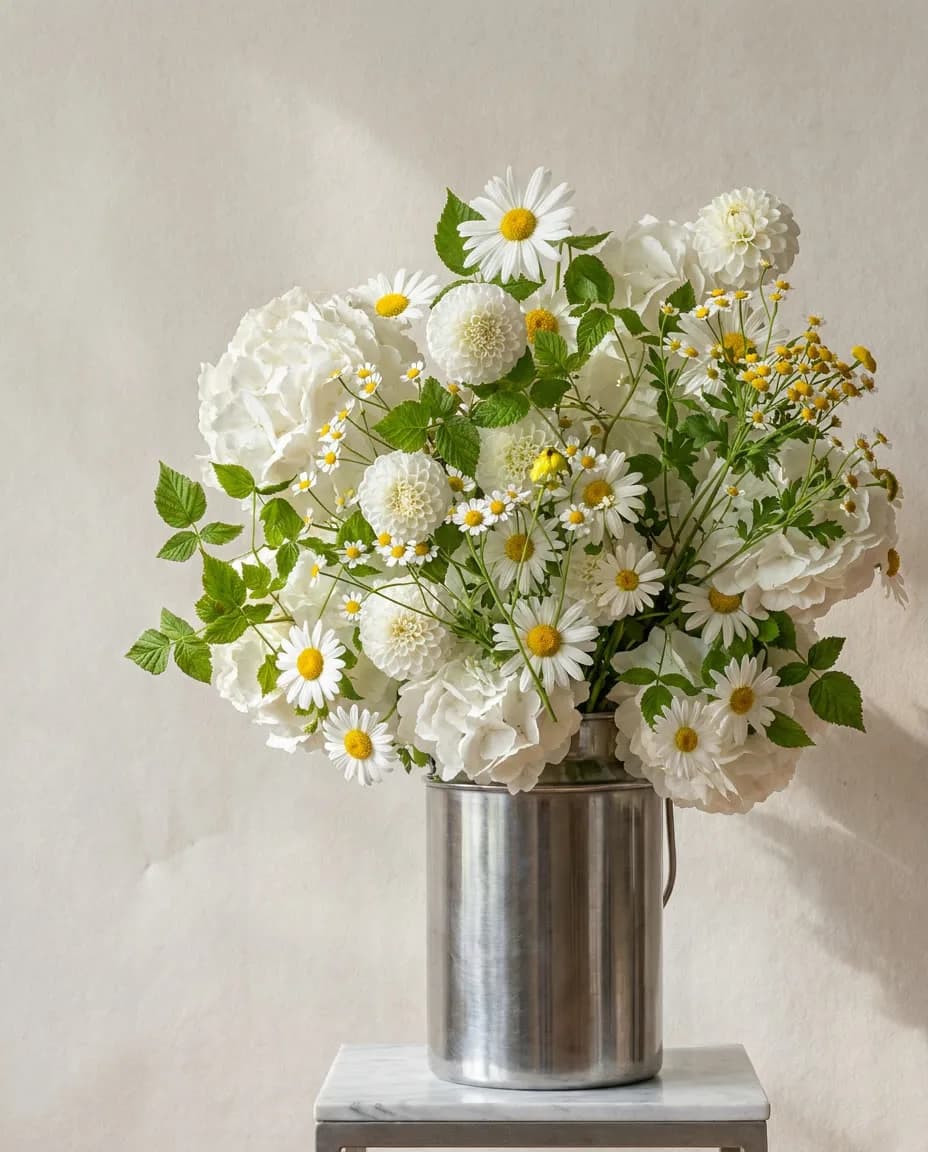
How to Keep Lilies Fresh: Pollen Trick & 8–14-Day Vase Life
Florist care for cut lilies: buy in bud, remove anthers to stop staining, the tape trick for pollen marks, cat-safety warning, and 8-14 day vase life.
Cut lilies are one of the best-value flowers in the shop: buy a single stem in bud and it unfolds over a week or two, each bloom opening in turn up the stem. But they come with a few species-specific rules that make the difference between a clean, long-lasting stem and a pollen-stained mess — plus one serious safety warning that every florist should pass on to customers.
TL;DR. Buy lilies in tight bud — they open sequentially over 1-2 weeks. Snip out the pollen anthers as each flower opens to prevent staining and add days of life. Lift pollen off fabric with sticky tape, never water. Keep cut lilies cool and change the water regularly for 8-14 days of display. Critically: lilies are highly toxic to cats — keep them out of any home with a cat.
Safety first — lilies and cats
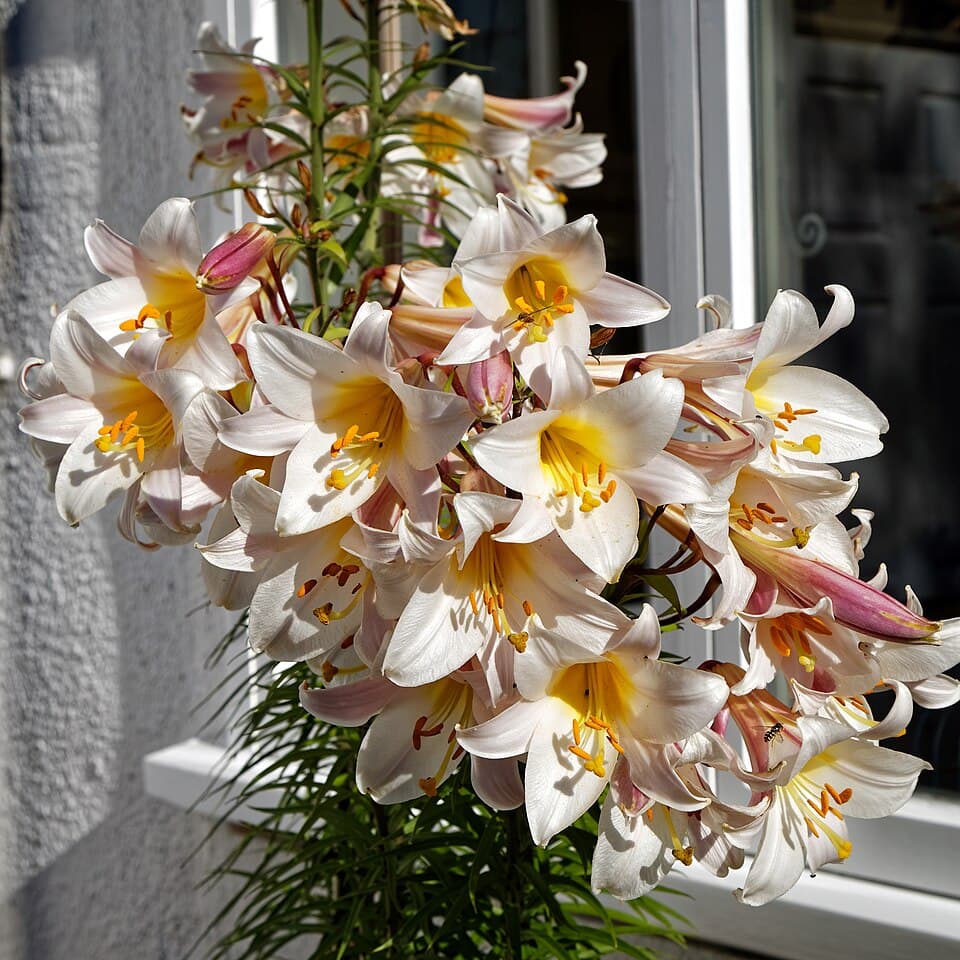
Before anything else, the warning that matters most. True lilies (Lilium) and daylilies (Hemerocallis) are extremely toxic to cats. Every part is dangerous — petals, leaves, pollen, and even the water in the vase. A cat that brushes pollen onto its coat and grooms it off, or drinks vase water, can suffer acute, often fatal kidney failure. There is no safe amount.
Do not keep cut lilies in any home with a cat, and always mention this when a customer with cats is choosing flowers. If you suspect a cat has ingested any part of a lily, treat it as an emergency and contact a vet immediately — early treatment matters enormously. (Lilies are less acutely dangerous to dogs and people, though the sap can irritate skin.) For a cat-safe alternative with a similar look, the lily substitute finder can point you toward safer choices such as alstroemeria (often sold as "Peruvian lily").
Buying — choose tight, coloured buds
Lilies are the classic "buy in bud" flower. Because they open in sequence over one to two weeks, choosing the right stage gives you a much longer display than buying them already open.
Look for:
- Plump, coloured buds with the lowest one or two just cracking open. The colour should be showing so you know they'll open true.
- A few tight buds at the tip — these open last and stretch the display. Fully open stems are near the end of their potential.
- Firm, green stems and crisp foliage, no yellowing lower leaves.
- No brown, papery, or bruised buds, which won't open.
Oriental lilies (heavily scented, large blooms) and asiatic lilies (unscented, brighter, slightly smaller) share the same care. For the botanical detail, varieties, and fragrance notes, see the lily encyclopedia entry, and check the seasonality calendar for best value.
Conditioning cut lilies, step by step
- Recut on a diagonal. Take 2-3 cm off each stem at 45° with a clean, sharp blade so the cut face can't seal flat against the vase base.
- Strip the lower leaves. Remove any foliage that would sit below the waterline — submerged leaves rot and foul the water. Leave the upper leaves to feed the opening buds.
- Deep, clean water with flower food. Unlike the shallow-water spring flowers, lilies are happy in a normal deep vase. Add flower food at label rate — see the flower food guide.
- Keep them cool, out of direct sun. Cool rooms and cool storage slow the opening and extend the whole run.
- Give a first drink before arranging. A couple of hours in deep, cool water settles them.

The pollen job — remove the anthers
This is the step that separates florists from everyone else. As each lily flower opens, it reveals long stamens tipped with anthers loaded with rust-orange pollen. That pollen stains everything it touches — petals, tablecloths, shirts, skin — and it is the number-one complaint about cut lilies.
As each flower opens, gently pinch or snip out the anthers. Do it before the pollen ripens and starts to shed. Use a tissue so you don't transfer pollen to the petals, and remove the anthers entirely — don't just brush the pollen off. Beyond keeping things clean, removing the anthers stops the flower spending energy on pollen, which modestly extends the life of each bloom.
If pollen does land on something, the rescue technique is specific and counter-intuitive:
- Do not use water — it turns the powder into a dye and sets the stain permanently.
- Lift it off with the sticky side of tape, a lint roller, or a soft dry brush.
- Then put the item in bright sunlight. Sun naturally bleaches the residual pigment out of fabric over a few hours.
Common problems and fixes
| Problem | Likely cause | Fix |
|---|---|---|
| Orange stains on petals / linen | Pollen shed from open anthers | Remove anthers as each bud opens; lift stains with tape, then sunlight — never water |
| Top buds never open | Bought too tight; too cold; stem sealed | Choose stems with lowest bud cracking; keep warmer, recut, add flower food |
| Lower flowers fade while top still opening | Natural sequential aging | Snip off spent blooms individually; the stem keeps displaying |
| Leaves yellow before flowers fade | Age, warm room, or nitrogen-poor water | Keep cool; use flower food; strip yellowed leaves |
| Stems slimy, water cloudy | Bacteria from submerged foliage | Strip lower leaves, wash vase, refresh water every 2-3 days |
| Overpowering scent (oriental) | Normal for orientals in a small room | Choose unscented asiatics, or remove anthers, which cuts scent too |
How long lilies last — and how to extend it
Expect 8-14 days from cut oriental or asiatic lilies bought in good bud. Because the buds open in sequence, the stem is a slow performance rather than a single peak — there are usually open, opening, and still-tight flowers on the stem at once.
To reach the top of that range:
- Remove the anthers on every flower as it opens.
- Snip off each spent bloom as it fades, so it doesn't drag down the look or foul the water.
- Change the water every 2-3 days, recutting the stem each time.
- Keep them cool, out of sun and away from heat.
- Keep them away from ripening fruit — like most flowers, lilies are sensitive to the ethylene fruit gives off.

Making them open (or holding them back)
- To open them faster: a warmer room, fresh water, and flower food coax the lower buds. Good light (not direct sun) helps.
- To hold them back for an event: keep them cool and in bud. Cold storage is how florists time lilies to open on the day — bring them into warmth a day or two before they're needed.
For how lilies stack up against other long-lasting flowers, our vase life by species guide is the quick reference, and the sibling keep flowers fresh guide covers the general habits that apply across the vase.
From the Lacy Bird studio. We teach floristry hands-on — from a first bouquet to running your own shop — at the Lacy Bird Academy, and we build tools for florists: Bouquet Builder for designing arrangements and Acanta for selling them. In the UAE, we also deliver flowers.
Related reading:
 Bouquet Builder — by Lacy Bird
Design the bouquet. See it as a photo.
Arrange real flowers on a canvas, then turn the layout into a photorealistic photo in one tap — with live pricing and a shopping list. 570+ varieties, free to start.
Free plan · no card needed