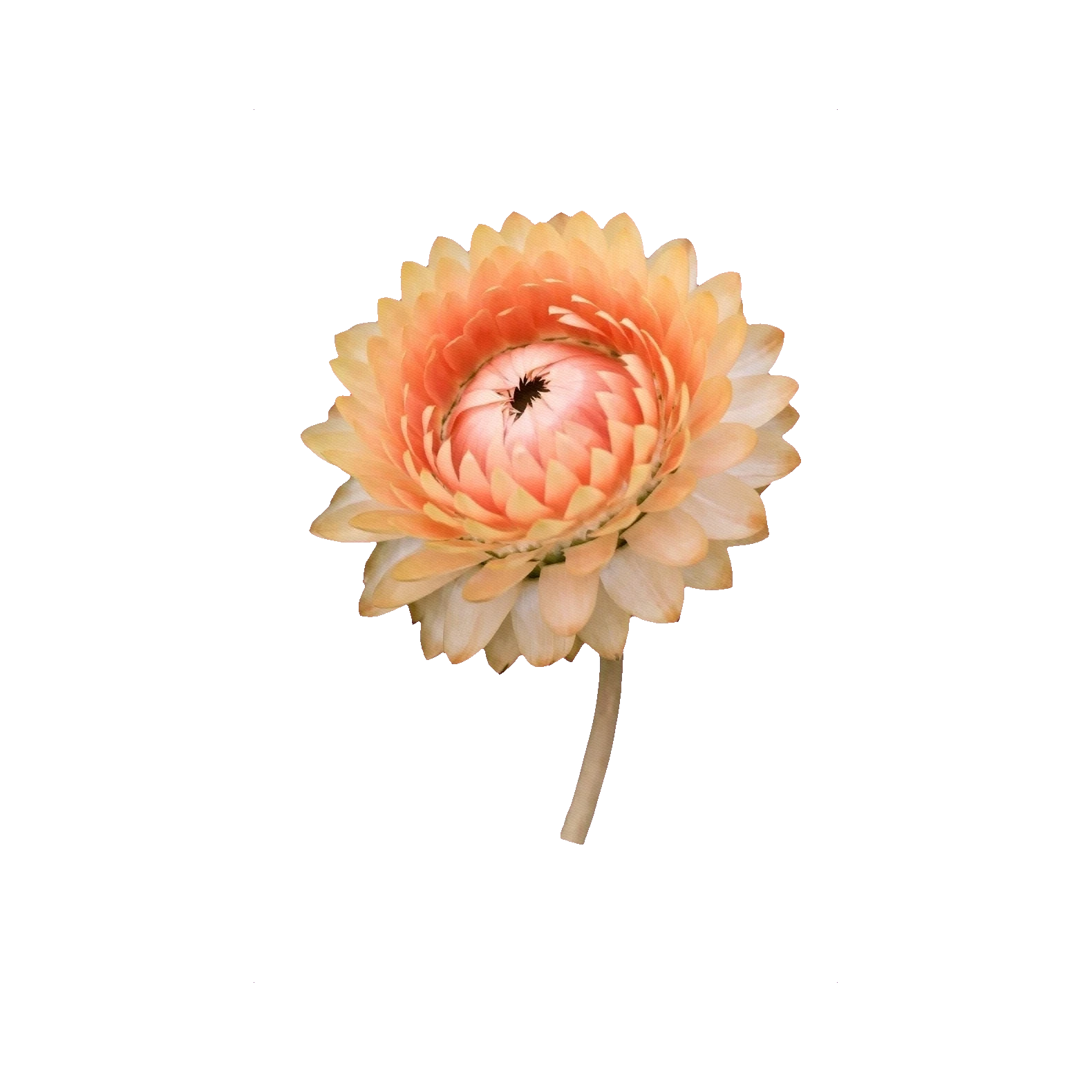
Strawflower
Strawflower earns its many nicknames — everlasting, paper daisy — from stiff, papery bracts that feel like crisp straw and keep their vivid colour long after cutting. Native to Australia, it works beautifully fresh but truly shines dried, holding rich yellows, oranges and pinks for months. Florists lean on it for textural interest in boho and autumn arrangements, and as an affordable staple of dried bouquets and wreaths. Its durability and warm palette make it a versatile, budget-friendly filler.
| Family | Asteraceae |
|---|---|
| Origin | Australia |
| Peak season | July, August, September, October |
| Availability | June, July, August, September, October, November |
| Stem length | 30–60 cm |
| Vase life | 7–14 days |
| Colors | yellow, orange, red, pink, white, bronze |
| Price tier | budget |
As a fresh cut, recut stems and condition in shallow, clean water with flower food, as the wiry stems dislike sitting deep. To dry, harvest or buy when the flowers are only partly open, strip the leaves and hang small bunches upside down in a warm, dark, airy place. The papery bracts hold their colour for months once dried, so keep them out of damp and direct sun. Handle gently to avoid crushing the stiff, straw-textured petals.
- •Condition in shallow clean water
- •For drying, pick half-open blooms
- •Hang upside down in a warm dark spot
- •Strip leaves before drying
- •Keep dried stems out of damp and sun
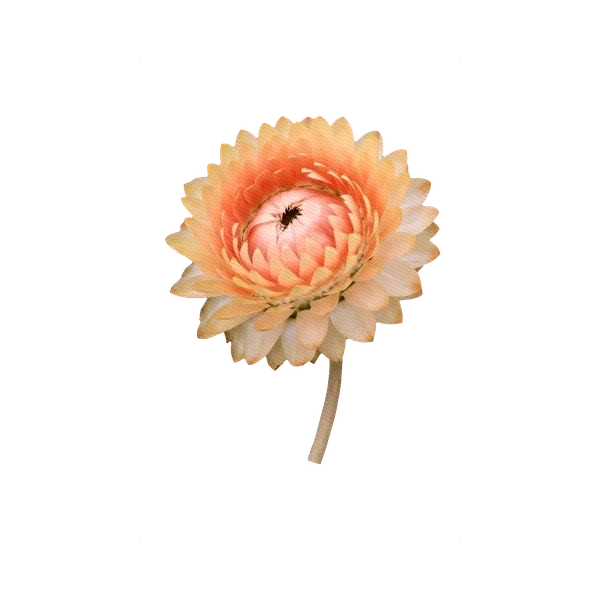
1 named strawflower cultivars from the Lacy Bird master catalogue — each a distinct commercial variety.
Entries marked ✦ come from the Acanta master catalogue — the shared database of cut flowers, forms, colours and named varieties that florists and studios build on. The rest are our editorial genus reference. What is Acanta →
 Bouquet Builder — by Lacy Bird
Design the bouquet. See it as a photo.
Botanical reference
- Common name
- Annual Everlasting-flower
- Also known as
- everlasting, golden everlasting, paper daisy, Aphelexis spectabilis, Argyrocome bracteata, Bracteantha bracteata, Elichrysum bracteatum, Gnaphalium acuminatum, Gnaphalium chrysanthum, Gnaphalium glabratum, Gnaphalium macrocephalum, Helichrysum acuminatum
- Distribution
- Australia, Austria, Caribbean, Estonia, North America, Northern Territory, Queensland, South Australia, Tasmania, Victoria
Open-data sources: GBIF, Wikidata (CC0/CC BY)
Frequently asked questions
When is Strawflower in season?
Strawflower peaks in July, August, September, October, and florists can usually source it June, July, August, September, October, November. Availability shifts by region and greenhouse supply.
How long does Strawflower last in a vase?
Expect 7–14 days with proper conditioning — a clean vase, fresh water every couple of days, flower food, and a cool spot away from ripening fruit and direct heat.
What can I use instead of Strawflower?
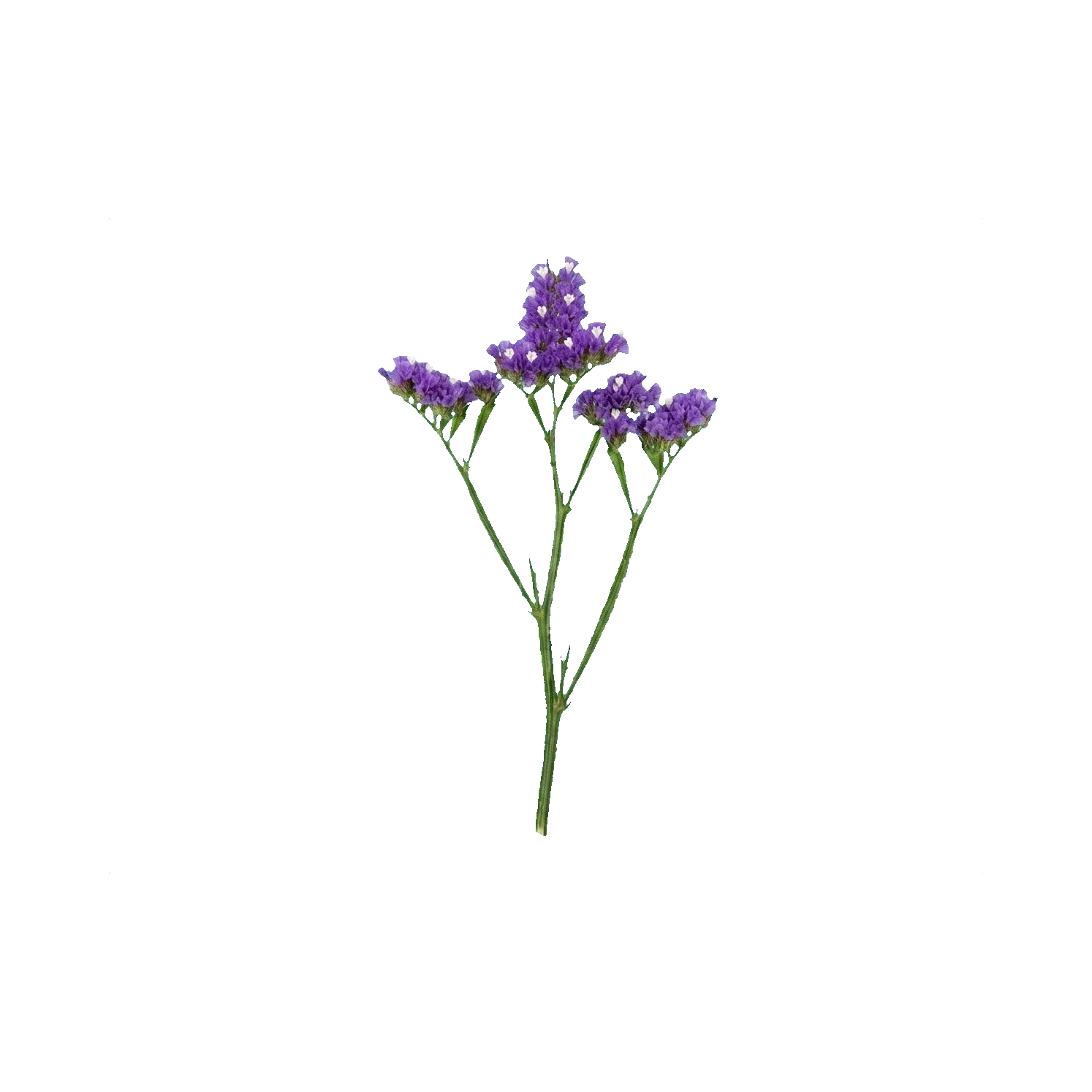
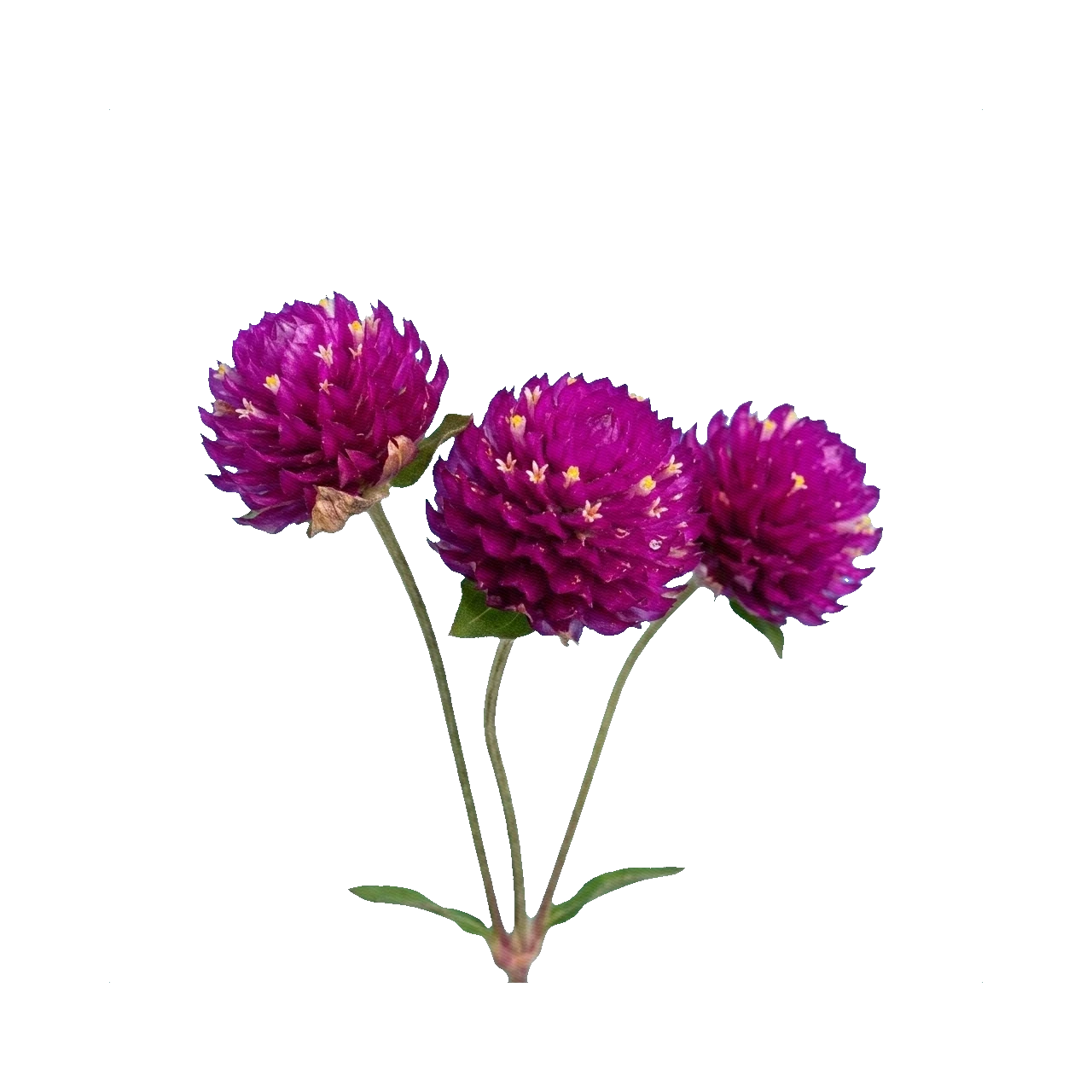
Good substitutes for Strawflower include Craspedia, Statice, Globe amaranth. Match on look, colour and season — our substitute finder ranks the closest alternatives.
What does Strawflower symbolise?
Strawflower is associated with everlasting love, endurance, remembrance, resilience.
How do you care for cut Strawflower?
Condition in shallow clean water
Related flowers

Free to quote and cite with attribution and a link back, for non-commercial and editorial use (blogs, journalism, classrooms, research).
Lacy Bird Flower Encyclopedia — “Strawflower”. https://lacybird.com/flowers/strawflower/<a href="https://lacybird.com/flowers/strawflower/">Lacy Bird Flower Encyclopedia — Strawflower</a>