Flower Vases: How to Choose the Right One for Any Bouquet
Vase shapes explained by a working florist — which vase fits a hand-tied bouquet, tulips, hydrangeas or one stem, the water-line rule, and the five vases that cover 95% of flowers.
Half the "my bouquet looks wrong at home" messages we get have nothing to do with the flowers — the bouquet was built for one geometry and dropped into another. A vase isn't a bucket; it's the mechanic that holds your arrangement's shape. Here's the whole logic in one page.
The one rule that fixes most vases
The binding point sits at the rim. A hand-tied bouquet is built around the point where the stems are tied — that point wants to rest exactly at the vase mouth, stems below, heads above. From this, everything follows:
- Vase height ≈ 1/3 to 1/2 of the total finished height;
- Mouth slightly narrower than the bouquet's natural spread;
- If stems are much longer than the vase wants, cut them — a bouquet perched high on long stems reads unstable and drinks badly.
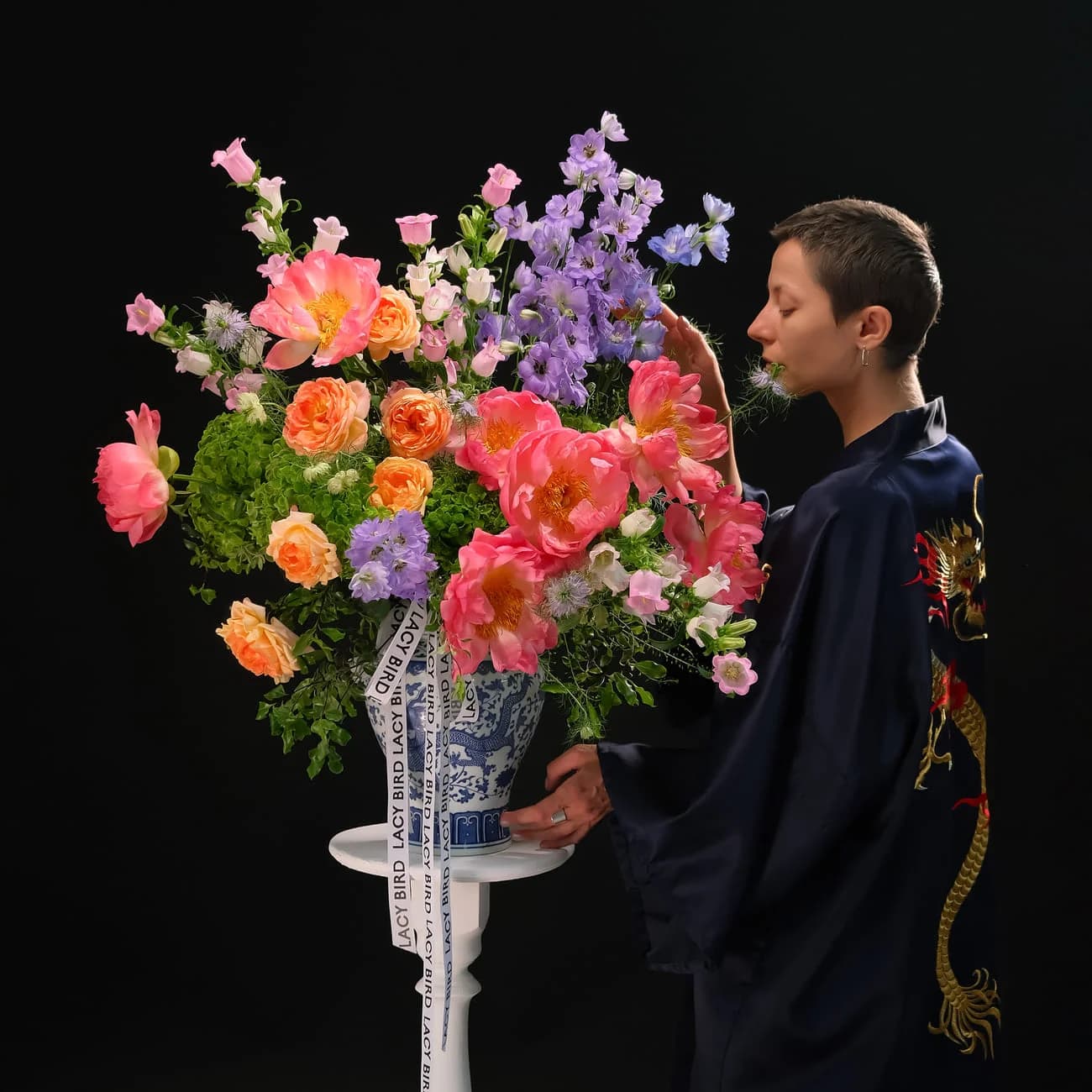
The five vases that cover 95% of flowers
1. The cylinder (20-25 cm). The workhorse. Hand-tied bouquets, dozen roses, tulips, market bunches. Thick glass, straight sides, invisible.
2. The waisted vase. Wide base, narrow middle, flared mouth — the narrow point grips stems so mixed arrangements fan naturally. The most forgiving shape for arranging loose stems at home.
3. The low bowl / compote. For garden-style and centerpiece work — needs a kenzan or chicken-wire ball inside (see our flower frog guide), but produces the open, editorial look that tall vases can't.
4. The bud vase (10-15 cm). One to three stems. A cluster of three bud vases beats one medium vase for dinner tables — sightlines stay clear, and single garden roses get the attention they deserve.
5. The heavy wide-mouth (30 cm+). Branches, lilac, delphinium, anything tall and woody. Weight is the feature: a blossom branch in a light vase is a crash waiting for a door draft.
Matching vase to flower — the quick table
| Flowers | Vase | Why |
|---|---|---|
| Hand-tied bouquet | Cylinder, binding at rim | Keeps built shape |
| Tulips | Tall cylinder, half-stem support | They keep growing and curving |
| Hydrangea | Waisted, deep water | Heavy drinkers, heavy heads |
| Garden roses (few) | Bud vases | Each bloom is the show |
| Peonies | Cylinder or waisted, room to open | Heads triple in size |
| Lilac, branches | Heavy wide-mouth | Weight and woody stems |
| Sweet peas, anemones | Short narrow vase | Delicate stems, shallow water |
| Garden-style mix | Compote + frog | Open silhouettes need mechanics |
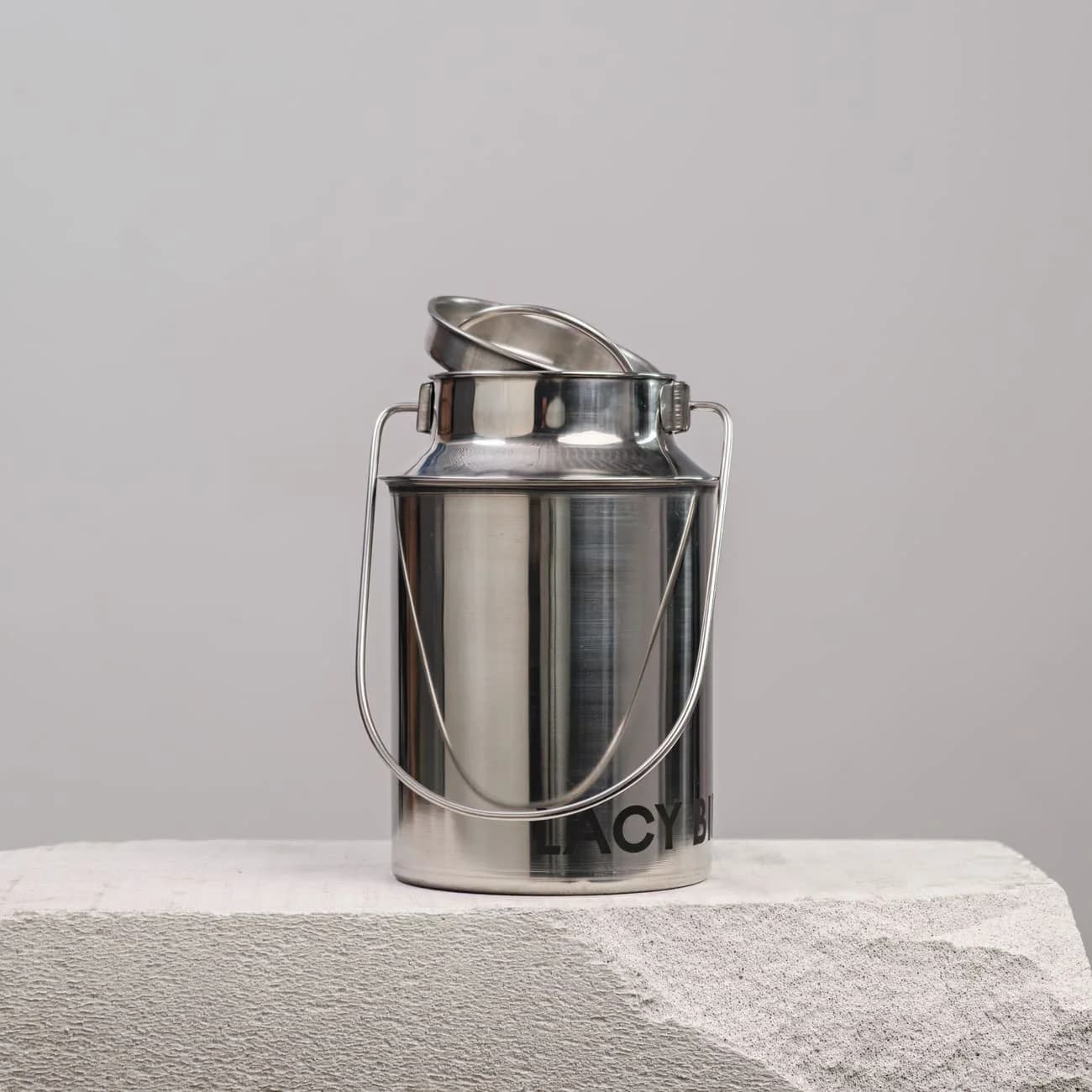
Material and colour, briefly
Clear glass shows stems — which means it shows dirty water: rinse at every change (our flower food guide explains why cloudy water kills flowers). Ceramic hides stems and mechanics — better for loose arrangements, worse for checking water level. Metal looks great, but raw brass and copper can react; use a liner. Colour: neutral vases serve everything; a strongly coloured vase becomes part of the palette — treat it as one more flower when you choose the bouquet.
What florists actually own at home
Not thirty vases. Ours mostly come down to: two cylinders (20 and 30 cm), one waisted, one compote with a kenzan, and a family of mismatched bud vases that multiply on their own. Start with the 20-25 cm cylinder, add the compote when you start playing with foam-free mechanics, and let the bud vases happen to you.