Foam-Free Floristry — mechanics, techniques, and reality
Why floral foam is problematic, foam-free alternatives that actually work at scale, and practical techniques for weddings and installations.
Floral foam (Oasis) has been the default flower mechanic since the 1950s. It's convenient, effective, and completely non-biodegradable. This guide covers why foam is problematic and the specific mechanics that replace it — including at large-scale wedding installation level.
TL;DR. Foam alternatives that work at wedding scale: chicken wire pillows (best all-round), kenzan pin frogs (minimalist), reusable armatures (installations), wet moss (ceremony arches), water tubes (cake work). Foam-free work takes 30-60% more prep time and 15-25% more material cost — but eliminates single-use non-biodegradable pollution.
Why foam is a problem
- Non-biodegradable — persists in landfill essentially indefinitely
- Microplastic pollution — foam disintegrates into microplastic particles that enter waterways
- Toxic manufacture — phenol-formaldehyde production releases pollutants
- Skin and respiratory irritant — designers report long-term health effects from constant handling
- Single use — cannot be reused, unlike alternative mechanics
The UK's RHS Chelsea Flower Show banned foam from all displays in 2021. Many luxury studios have followed.
Foam-free mechanics that work
Chicken wire pillows (best all-round replacement)
Crumpled chicken wire in a low bowl or compote provides:
- Multiple stem-holding angles
- Reusable across events
- Water-holding when bowl underneath
- Sculptural freedom
Best for: compote arrangements, low centrepieces, mantle work
Technique:
- Cut chicken wire to 2× bowl area
- Crumple loosely into ball shape
- Nestle into bowl
- Add water
- Insert stems through wire holes
Kenzan (pin frog)
Heavy brass or lead base with sharp pins for anchoring stems. Japanese ikebana tradition.
Best for: minimalist, sculptural, low-vessel arrangements
Technique:
- Anchor kenzan to base with floral clay or waterproof putty
- Fill vessel with water
- Press stems onto pins at desired angle
- Small kenzan for boutonnieres; large for centrepieces
Cost: $25-80 per kenzan; reusable indefinitely
See flower frog guide.
Floral pins and clay (for hand-tied)
For hand-tied bouquets and simple arrangements:
- Waterproof floral tape wrapping the stem cluster
- Traditional binding techniques (no foam involved)
Water-tube systems
For cake decoration and installations:
- Individual glass or plastic water tubes for each stem
- Reusable
- Direct hydration without foam
Reusable armatures
For large installations:
- Grapevine or willow branches as structural base
- Floral wire and cable ties
- Metal cage frames
Example: ceremony arch built on twisted willow armature. Willow reused across multiple events. Flowers wrapped with individual water tubes or wet-moss cores.
Wet moss
Damp sphagnum moss holds water and stems. Used in:
- Ceremony arch installations
- Cake flower foundations
- Wreath work
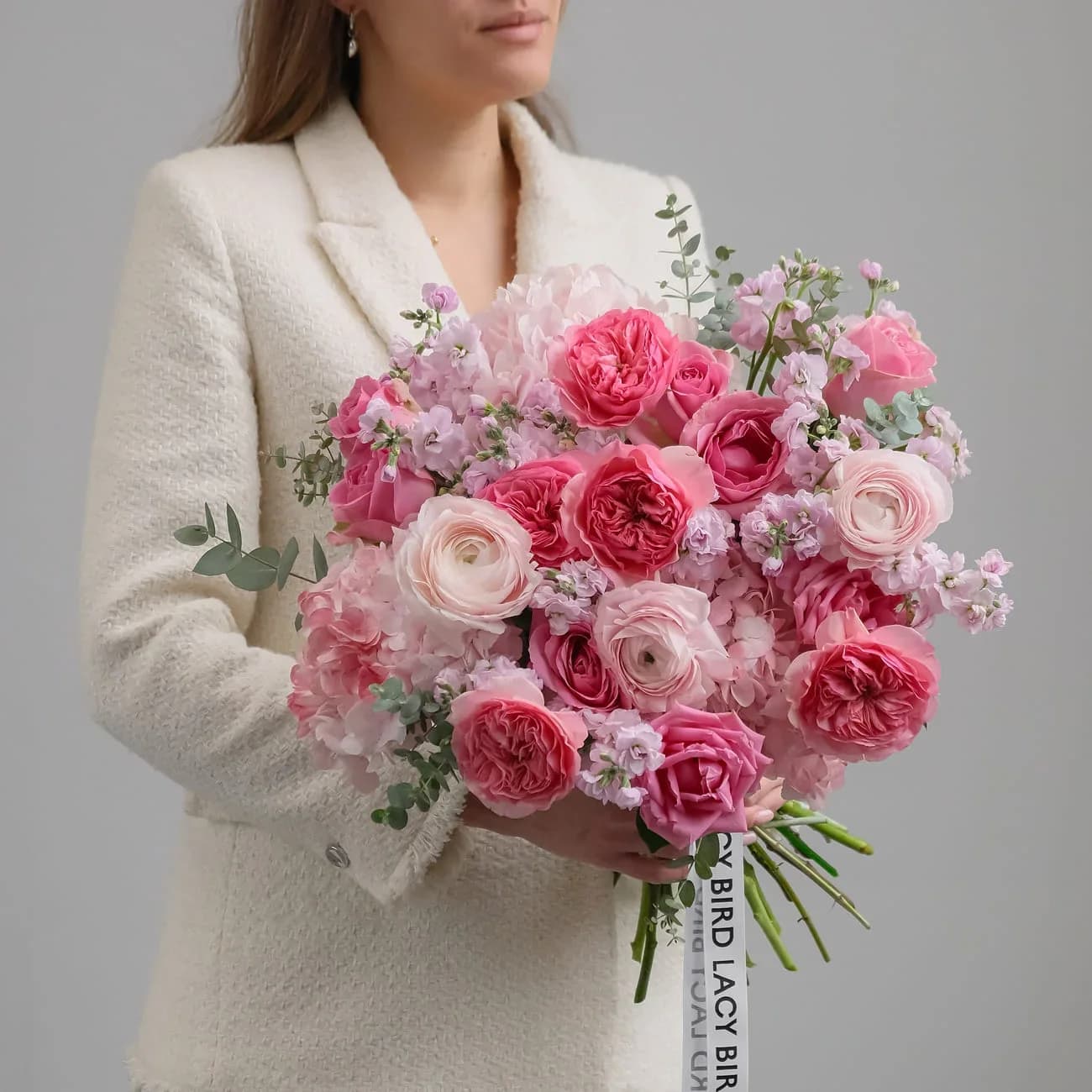

Foam-free at wedding scale
Ceremony arch (foam-free):
- Chicken wire cage on stand
- Wet moss around chicken wire
- Water-tube system for premium focal flowers
- Foliage anchored into moss/wire
- Total labour: 30-45 min longer than foam equivalent
Ceremony aisle installations:
- Individual bud vases with flowers, not foam-attached posts
- Foliage-only garland with fresh flowers in tubes
Head table runners:
- Chicken wire tray running length of table
- Cover with moss and foliage
- Insert flowers into wire mesh
- Reusable framework
Cake work:
- Water tubes hidden into cake decoration
- Kenzan on cake board with stems
- Cake flowers picked in morning of event only
Where foam is hardest to replace
Suspended installations: foam is uniquely lightweight for suspended work. Replacements:
- Wet moss wrapped in chicken wire cages
- Individual water tubes
- Fresh-cut arrangements pre-hydrated then attached dry
Small volume boutonnieres: boutonnieres traditionally have no water at all — wired only. Foam-free is default.
Standing sprays for funeral: foam-standard historically. Replacements require rethinking of mechanic — often chicken wire
- moss + water source.
Time and cost implications
Foam-free work takes:
- 30-60% more preparation time
- 10-20% more material (moss, wire)
- Studio investment in reusable mechanics
- Skill in mechanic-first design thinking
Foam-free wedding pricing typically 15-25% higher than foam-based equivalent — for a genuine studio commitment.
Some studios market foam-free but use foam behind the scenes. Real foam-free requires operational and pricing changes.
Foam-free chapter of the industry
Notable foam-free-committed studios:
- Sustainable Floristry Network (US directory)
- Foam Free at Weddings (industry pledge, UK)
- British Florist Association Sustainable Awards
Industry momentum: 30-40% of luxury European studios foam-free by 2026 estimates. US commercial retail still foam-dominant.
Client conversation
Couples asking about sustainability should be informed:
- Foam-free is 15-25% more expensive
- Some installation styles (very abundant lush) are harder
- Chicken wire and kenzan mechanics can be seen if arrangements are viewed from unusual angles
- Vase life is equal or better (fresh water not compromised)
Starting a foam-free practice
For a studio transitioning:
- Invest in chicken wire (100m roll: $50-100)
- Invest in 10-20 kenzan of varying sizes ($400-1,200)
- Water tube stock (packs of 50: $25-50)
- Practice arrangements with only these mechanics
- Reprice for realistic time/material costs
Full transition typically takes 6-12 months and requires client-education investment.
Common foam-free mistakes
Marketing foam-free while using foam. Detectable and brand-damaging.
Under-pricing foam-free work. Extra labor and material must be built into pricing.
No mechanic-first design thinking. Foam-free requires different design approach.
Wrong mechanic for arrangement type. Match kenzan for minimalist, chicken wire for lush.
Not investing in reusable mechanics. One-time investment saves ongoing cost.
FAQ
Why is floral foam bad?
Non-biodegradable, microplastic pollution, toxic manufacture, skin and respiratory irritant, single-use. RHS Chelsea Flower Show banned foam from all displays in 2021.
What replaces foam?
Chicken wire pillows (best all-round), kenzan pin frogs (minimalist), reusable grapevine or willow armatures, wet moss, individual water tubes, floral pins with clay. Each suits different arrangement types.
More expensive?
Foam-free wedding pricing typically 15-25% higher. Reasons: 30-60% more preparation time, 10-20% more material, studio investment in reusable mechanics. Long-term: reusable amortize.
At installation scale?
Yes — professional foam-free studios do full ceremony arches, cascade installations, large centerpieces. Method: chicken wire cage + wet moss + water tubes for premium flowers.
Related reading: