Flower Baskets: How Florists Build Them, and When the Format Wins
The flower basket format explained — mechanics with liner and foam-free options, proportions, which occasions it beats a bouquet, costs, and care once it arrives.
The basket is floristry's oldest delivery format — older than wrapping paper, older than the glass vase as a household object — and it survives because it solves a problem no bouquet can: it arrives finished. Water, vessel, shape and a handle to carry it by. Here is how the format works from the inside, and when to choose it.
What's actually inside a flower basket
From the outside: flowers growing, improbably, out of woven willow. From the inside, three layers of engineering:
- The liner. Heavy waterproof film or a moulded plastic insert, stapled or tucked so no drop ever reaches the basket — a wet willow basket stains furniture and moulds within the week.
- The water source. Traditionally a brick of soaked floral foam; in foam-free studios, a hidden low container packed with a ball of chicken wire or dense soaked moss. Either way, every stem end sits in moisture. (Why we lean foam-free — and what replaces it — is covered in our foam-free mechanics piece.)
- The frame. Stems placed low at the rim first, building toward the centre and the handle line, so the finished dome reads full from every angle — a basket is seen in the round far more often than a bouquet.
That hidden infrastructure is what you are paying the extra $10-20 for, and it is why a basket survives a car journey that would wreck a vase.
Proportion: the rule that separates amateur from studio work
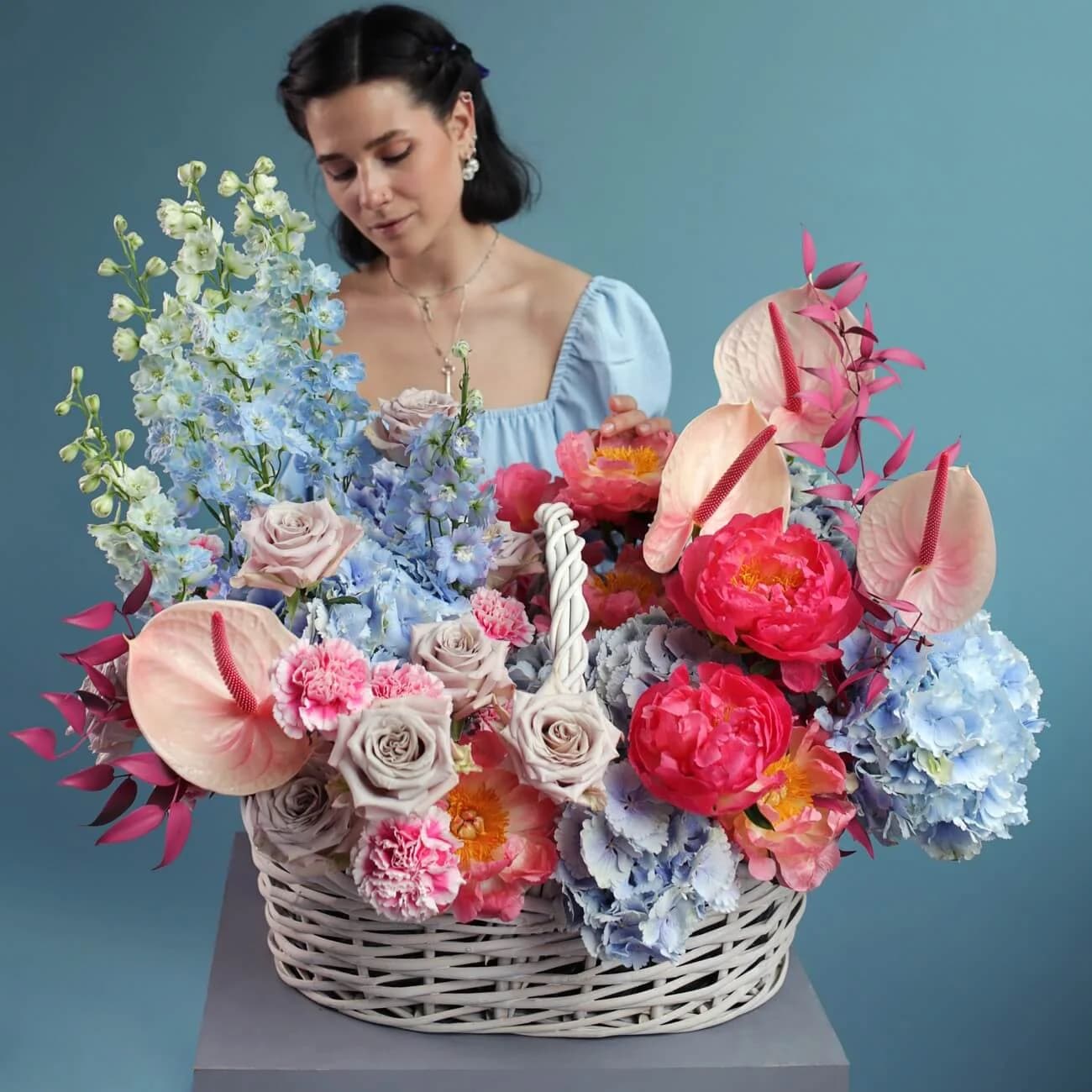
The classic proportion for a handled basket: the flower dome rises to about two-thirds of the handle height, leaving visible air under the arch. Fill to the handle and the piece looks stuffed; stop at half and it looks mean. Wide low baskets without handles follow vase logic instead — arrangement height roughly one-and-a-half times the vessel's.
Colour behaves differently in wicker, too. The basket brings its own warm brown into the palette, which flatters creams, corals, peaches and greens, and fights with cool violet unless the weave is whitewashed or painted. Good studios treat the basket as the first "flower" chosen, not as packaging.
Where the basket beats every other format
Hospitals and offices. No vase hunt, no spilled water near electronics, moves with one hand when the desk is needed.
Sympathy deliveries. A grieving household should receive flowers that ask nothing of them — the basket's founding use case, and still its most important. More on that etiquette in our sympathy flowers guide.
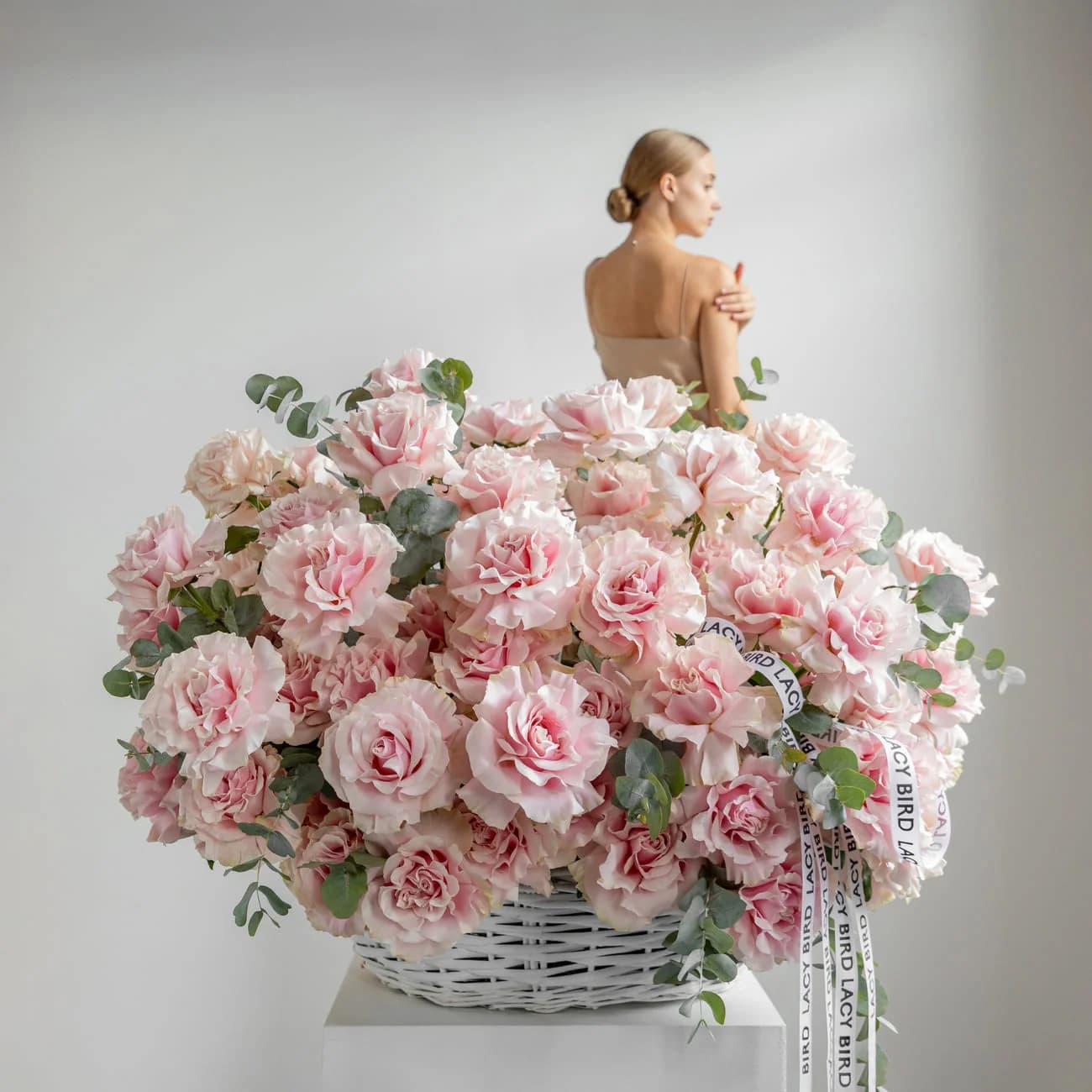
Grand gestures. A basket is the format that scales gracefully. A hundred roses hand-tied is a weightlifting event; a hundred roses in a basket is furniture — it stands on the floor and organises the room around itself.
Events and buffets. Sits directly on tables, survives being moved by waiters, and photographs from all sides.
Where it loses: the romantic handover. A basket is received; a bouquet is given. If the moment is a doorstep, an airport arrival or a proposal, put the flowers in someone's arms, not on their floor.
Care once it arrives
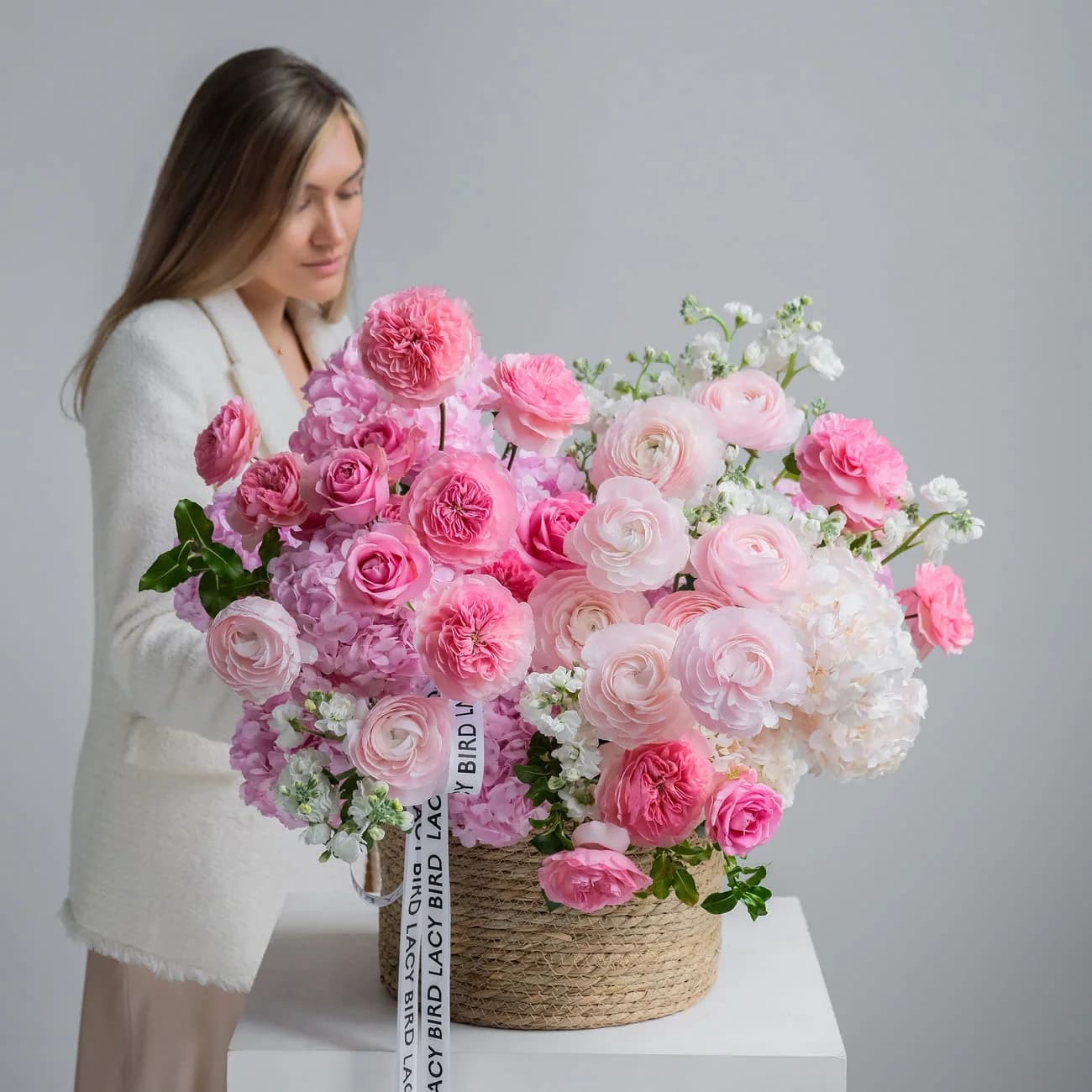
A basket drinks from the top. Every day or two, pour a small glass of water slowly into the centre of the arrangement and let the mechanics distribute it — the liner catches what the stems don't take. Keep it off radiators and out of direct sun, lift out any stem that finishes early, and a well-built basket holds its shape for five to nine days. When the flowers are done, the basket itself begins its second life: most clients tell us theirs end up holding fruit, yarn or the post — the only floristry packaging that nobody throws away.
Ordering one well
Three things to tell the florist: where it will sit (floor pieces build tall, table pieces build low and round), who carries it (a one-handed handle matters for hospital corridors), and the palette of the room if you know it — the basket is furniture for a week, so it may as well agree with the sofa. And if you are choosing between sizes, size up on fullness rather than diameter: a smaller basket packed dense reads more generous than a large one arranged thin.