Anemone Season: November–April — When Anemones Bloom
Anemones peak November through April in the Northern Hemisphere. Premium varieties (Mistral, Panda), vase life, care and wedding design — by working florists.
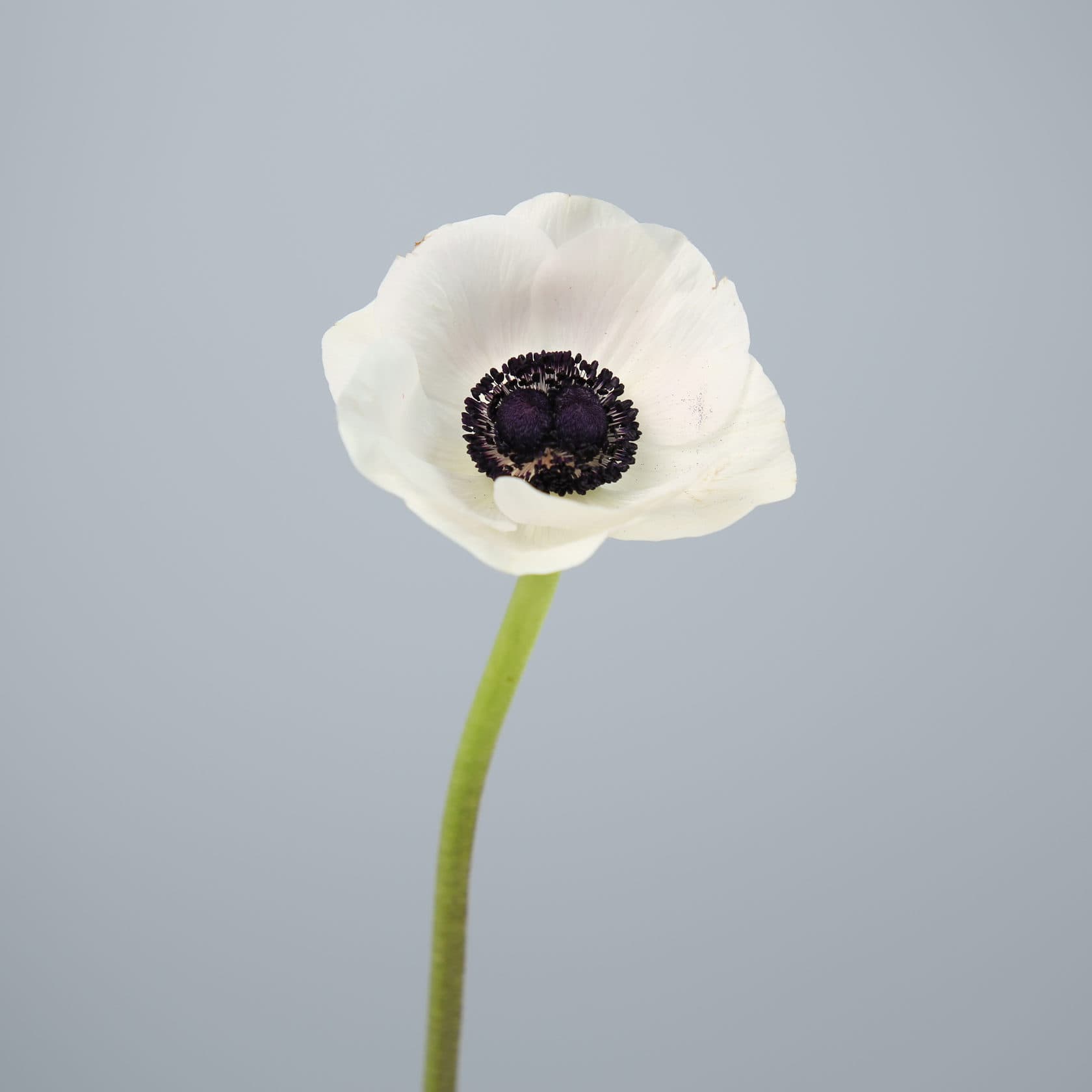
Anemones are one of the most photogenic wedding flowers of the winter and spring seasons. The deep navy or near-black centre against contrasting petals creates a signature colour statement that no other flower matches.
This guide covers when anemones are in season, the varieties that dominate the wedding market, and specific design examples.
TL;DR. Anemones peak November through April (Northern Hemisphere). Italian Mistral is the premium cultivar; Panda offers unique bicolor. Vase life 4-7 days; hollow stems need shallow water. Deep navy-black centre against contrasting petals creates unmatched photographic contrast — the reason editorial designers love them.
When anemones are in season
Peak: November through April (Northern Hemisphere)
Supply from:
- Italy (peak December-March; premium Mistral varieties)
- Israel (October-April)
- Netherlands (year-round with peak in early spring)
- California (limited December-March)
Off-season: May through October — availability drops significantly; quality is variable.
Best month to buy: February-March, when Italian Mistral varieties peak and prices are stable.
Main varieties
Mistral (Italian): premium variety. Large heads, strong stems, saturated colour. $2-4/stem wholesale.
Marianne series: mid-market Italian. Medium heads. $1.50-3/stem.
Panda (bicolour black + white): unique visual. Premium.
Standard Coronaria: budget option. $0.80-1.50/stem.
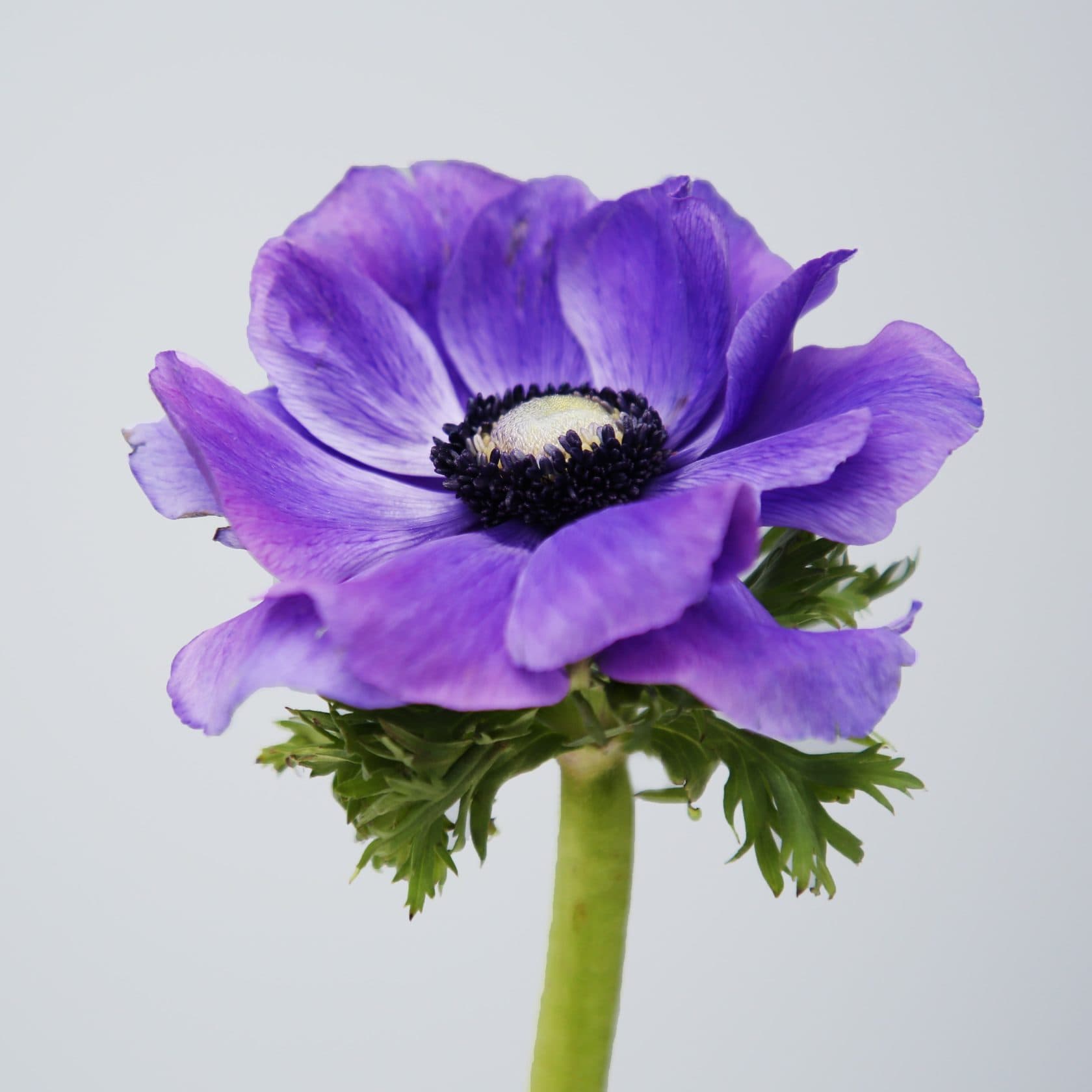
Color range
- White (pure white with deep navy centre)
- Blush (pale pink)
- Coral / red
- Burgundy
- Purple
- Deep navy blue
- Bicolour (Panda variety)
The signature dark centre appears across all colours — that's what makes anemones photogenic.
The 2-3 hour opening problem
Anemones open with light and warmth. In photography:
- Buy tight, closed buds — they should show just the edge of the centre
- Store cool (4-8°C) until 30 minutes before photograph
- Photograph at 40-60% open — the ideal visual state
- After 4-6 hours in warm room, anemones are fully open and slightly bruised
For weddings, plan flower delivery to match photograph timing.
Care and conditioning
Buy:
- Buds just showing colour above the sepals
- Firm to the touch
- No brown edges on sepals
Store:
- Cool 4-8°C
- Shallow water (2-3 cm)
- Do NOT deep-water (hollow stems)
Cut:
- 45° diagonal cut
- Fresh water
- Recut every 24 hours
Vase life: 4-7 days at peak. Warmer rooms shorten this significantly.
Design applications
Bridal bouquet
Anemones as focal accents (2-4 stems) with garden roses and ranunculus. Signature dark centres photograph beautifully in first-look photography.
Boutonnieres
Single anemone with waxflower and eucalyptus. The dark centre + light petal contrast reads modern.
Centerpieces
Anemones as bright statement points scattered through mixed floral compositions.
Cake work
Individual anemones as barrier-mounted cake decoration (see the wedding cake flowers guide). Note toxicity warning below.
Editorial and photography
Anemones are photographers' favourite. Their contrast is unmatched.
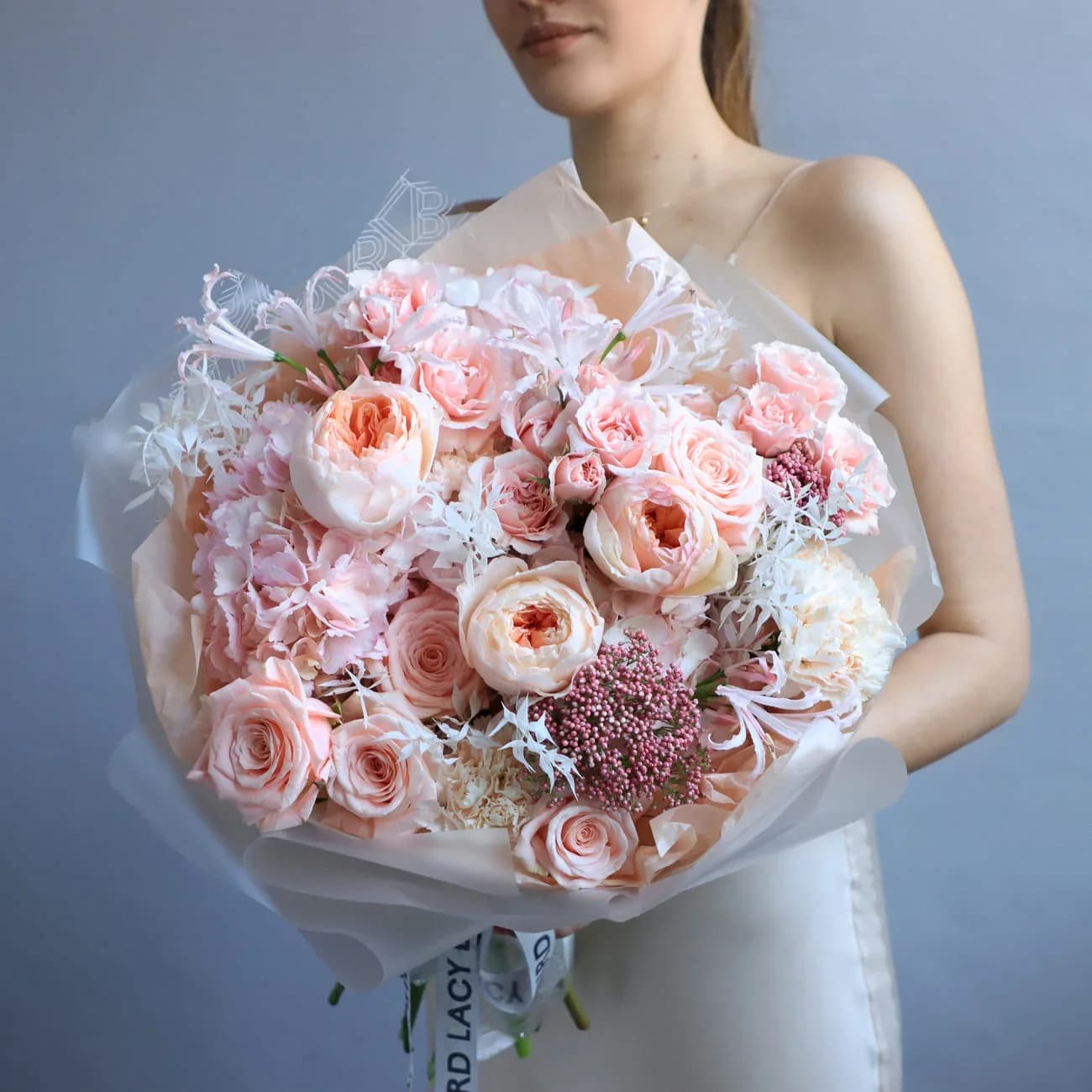
Palette pairings
- Blush + burgundy + white — soft romantic
- Deep purple + coral + peach — moody warm
- White + navy + eucalyptus — modern minimalist
- Blush + burgundy + orange dahlia — autumn statement
Toxicity note
All parts of anemones (Anemone coronaria) are toxic to humans if ingested. Contact irritation possible for some people. Wash hands after handling. Not appropriate for edible or barrier-free cake work — must be mounted on a barrier.
Timing considerations
For a February wedding: anemones will be at peak. Order 5-7 days ahead. Deliver refrigerated.
For a May wedding: anemones still available but heading toward end-of-season. Expect 20-30% premium for good quality.
For summer/autumn wedding: consider substitute — anemones unavailable at peak quality.
Common anemone mistakes
Warm-room storage. Anemones open faster than expected in warm rooms. Cool storage essential.
Deep water. Hollow stems rot. 2-3 cm water only.
Buying at full open. They won't survive to wedding day. Half-open at photograph time is the target.
Photograph timing missed. After 4-6 hours in warm room, anemones fully open. Plan photography accordingly.
Substitute considerations
Off-season, consider:
- Hellebore (autumn/winter alternative, similar drama)
- Poppy (spring alternative, different centre style)
- Cosmos (late summer, softer look)
- Chocolate cosmos (dark palette alternative)
FAQ
When are anemones in season?
Northern Hemisphere peak: November through April, with February-March offering best Italian Mistral quality. Southern Hemisphere peak: May through October. Off-season availability drops significantly and quality varies.
How long do anemones last?
Vase life 4-7 days at peak. Warm rooms shorten this significantly. Hollow stems require shallow water (2-3 cm). Cool storage 4-8°C keeps buds closed longer for staged photography.
What are the best varieties?
Mistral (Italian, premium): large heads, strong stems, saturated color. Marianne series (Italian mid-market): medium heads. Panda (bicolor black + white): unique visual. Standard Coronaria: budget option.
Are anemones toxic?
Yes — all parts of Anemone coronaria are toxic to humans if ingested. Contact irritation possible for sensitive skin. Wash hands after handling. Not appropriate for cake work or edible arrangements without a barrier.
Related reading: