The Mono-Bouquet: One Flower, Total Conviction — When Less Outperforms Mixed
Why single-variety bouquets are floristry's power move — the scale rule, which flowers carry a mono, honest price logic, and when mixed still wins.
There is a moment in every florist's training when the mono-bouquet stops looking like the easy option and starts looking like the confident one. A mixed bouquet can hide behind variety; a mono-bouquet stands there saying one thing, loudly, with nowhere to hide a weak stem. Done right, it is the most modern-reading format on the counter — and usually the best value too.
Why one flower reads as more, not less
The psychology is real and florists watch it daily: presented with a $60 mixed bouquet and a $60 armful of one flower, recipients consistently rate the mono as the more designed gift. The reason is legibility. A mix at mid-budget reads as assortment — a bit of this, a bit of that. The same money in one variety reads as a decision: someone chose tulips, specifically, for you, specifically.
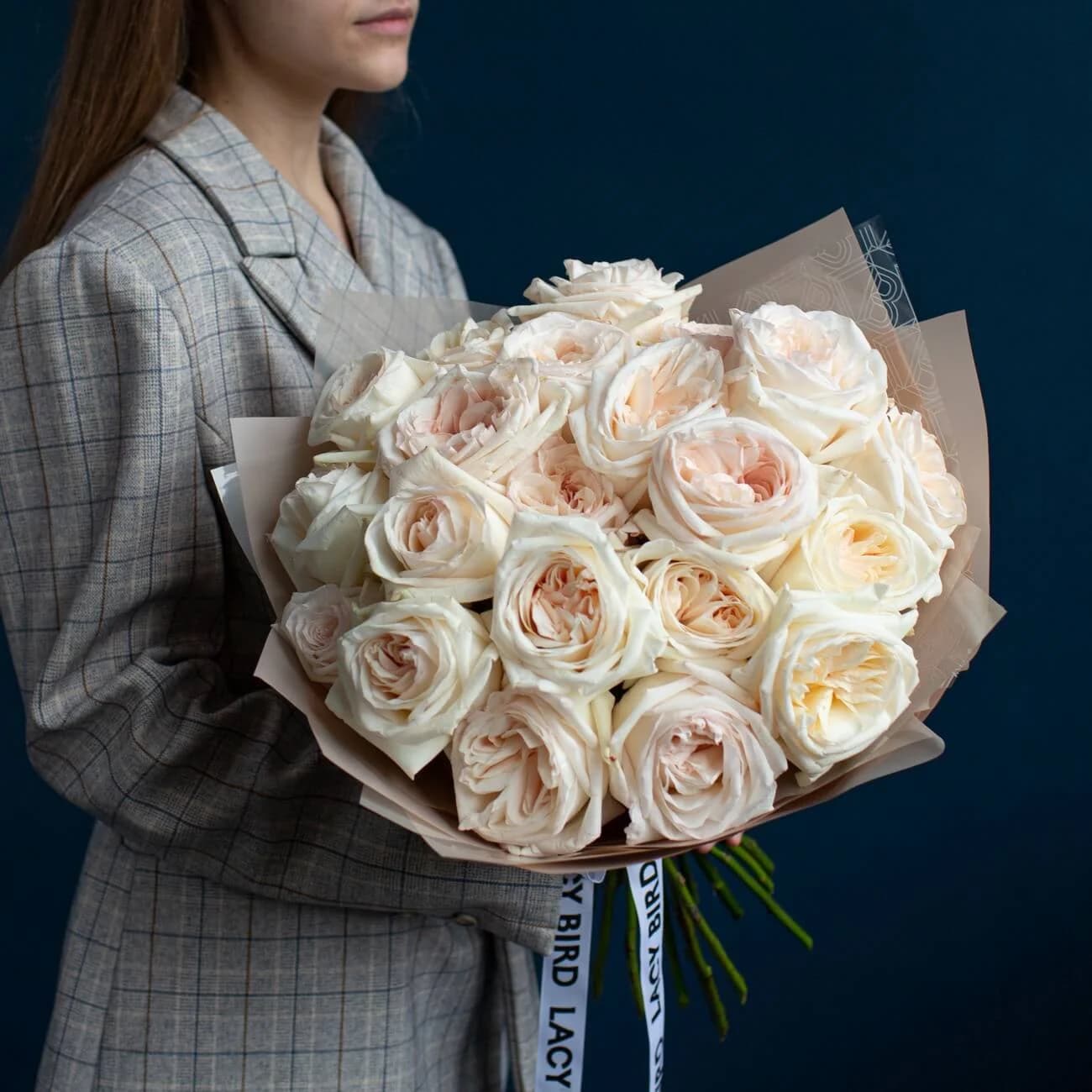
The format has one law, and breaking it is the only way to fail: generosity replaces variety. The mono works by repetition — the eye luxuriates in fifteen of the same gesture. Five tulips are a sad Tuesday; fifteen are a statement; thirty-five are an event. Working minimums from our bench: 15 tulips, 9-11 roses, 5-7 peonies, 25 carnations, 7-9 matthiola.
The flowers that carry it
Not every flower can hold a room alone. The ones that can:
- Tulips — the definitive mono: architectural, seasonal, and they keep moving in the vase, so the bouquet redesigns itself daily.
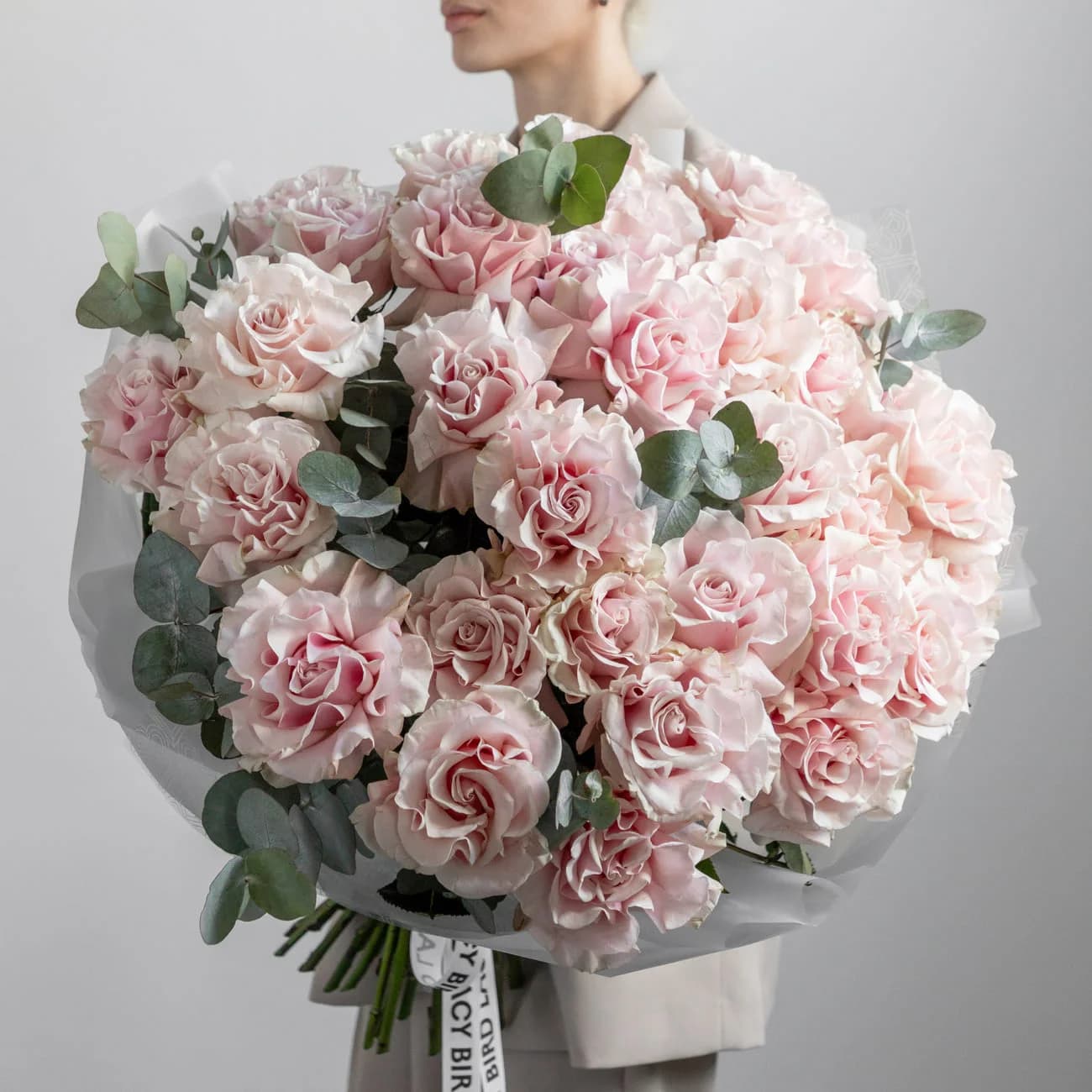
- Peonies and garden roses — luxury monos; five open Sarah Bernhardt need no accompaniment.
- Carnations — the format's comeback story: twenty-five ruffled heads in one saturated colour is the most fashion-forward cheap bouquet in floristry.
- Matthiola (stock) — vertical, fragrant, and a mono that perfumes a room.
- Chrysanthemums, sunflowers, hydrangea — each a different dialect of generous.
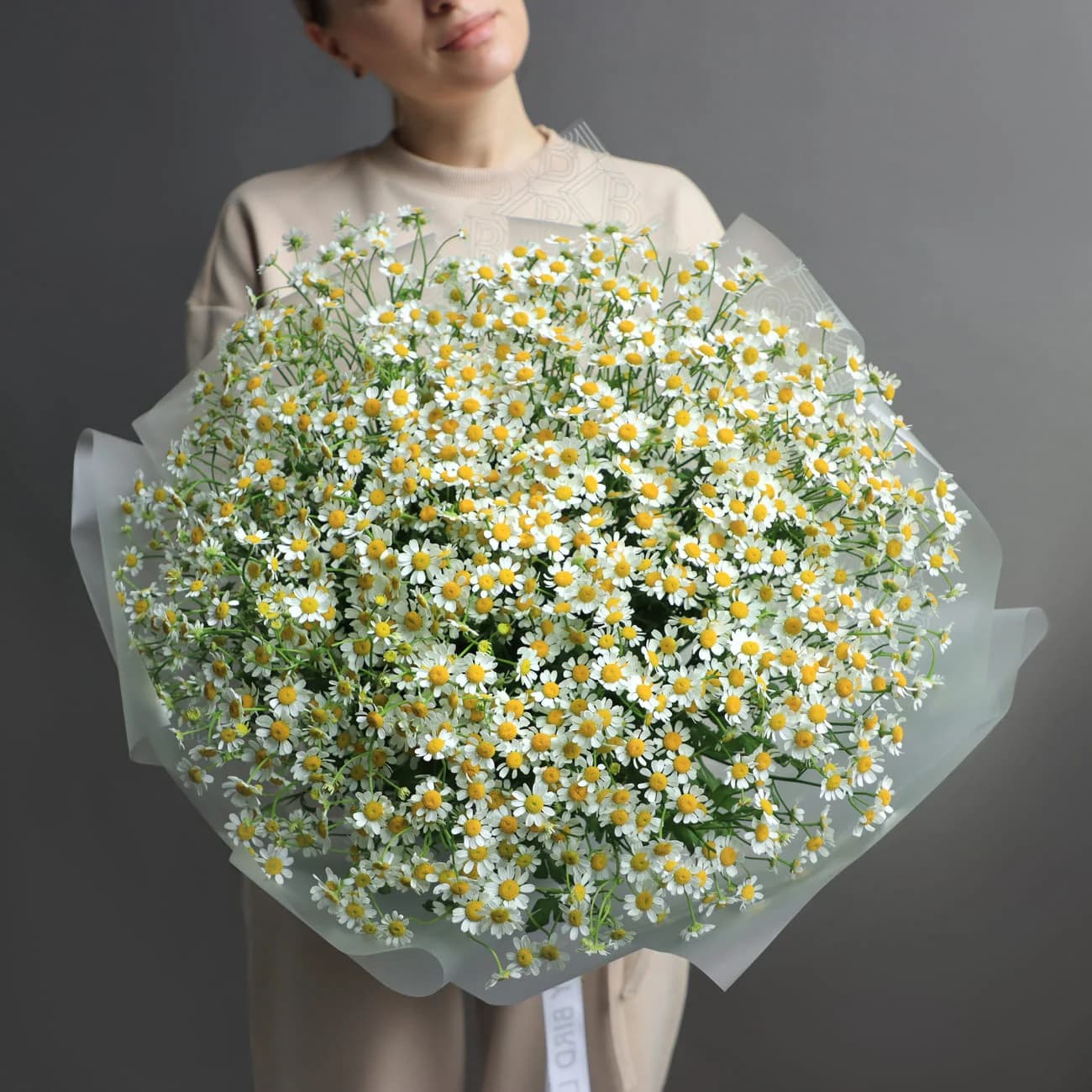
- Tanacetum, gypsophila, lagurus — the texture monos: what used to be "filler" becomes a cloud when it's all there is.
The common thread: either strong individual character (a sunflower face) or beautiful multiplication (matthiola's massed spires). What doesn't carry: small-faced mixers designed to accompany — alstroemeria alone reads like an orchestra of second violins.
The price logic, honestly
Monos are the smart money's format for three quiet reasons. No assortment waste — a mixed bouquet forces the studio to hold seven varieties at minimum quantities, and you pay for that logistics. Grade transparency — with one variety, quality is legible, so studios put their best stems where they can't hide. And the endurance play: a mono of carnations or chrysanthemums costs less per week of vase life than anything mixed, because the whole bouquet ages at one speed instead of dying in instalments (the mixed bouquet's dirty secret — it looks "done" when its fastest flower quits).
Budget translation: the same $40-70 that buys an okay mix buys a remarkable mono. It's the single best answer to "small budget, big effect" that the trade has.
When mixed still wins
Honesty clause: the mono is not the universal answer. Mixed composition wins when the brief needs orchestration — a sympathy piece layering softness and structure, a luxury commission built on texture contrast, an anniversary telling a specific multi-flower story. And some recipients simply read abundance-of-kinds as generosity — know your audience.
But as a default, for the standing Tuesday order, the gesture at the door, the desk of someone you like: one flower, in quantity, in their colour. It is the bouquet equivalent of a well-cut plain shirt — and like the shirt, it never reads as the cheap option, only as the certain one.