Preserved Flowers: How They're Made, How Long They Last, and When to Choose Them
Preserved (stabilized) flowers explained — the glycerin process, the honest 1-3 year lifespan, care rules, how they differ from dried flowers, and where they beat fresh.
Every florist eventually meets the client who asks, half joking, for a bouquet that doesn't die. For most of floristry's history the honest answer was "buy a painting." Preservation changed that — and spawned an industry of eternal roses in acrylic boxes, moss walls in hotel lobbies and bridal bouquets that outlive the marriage license drawer. Here is how it actually works, minus the marketing.
How a flower is stabilized
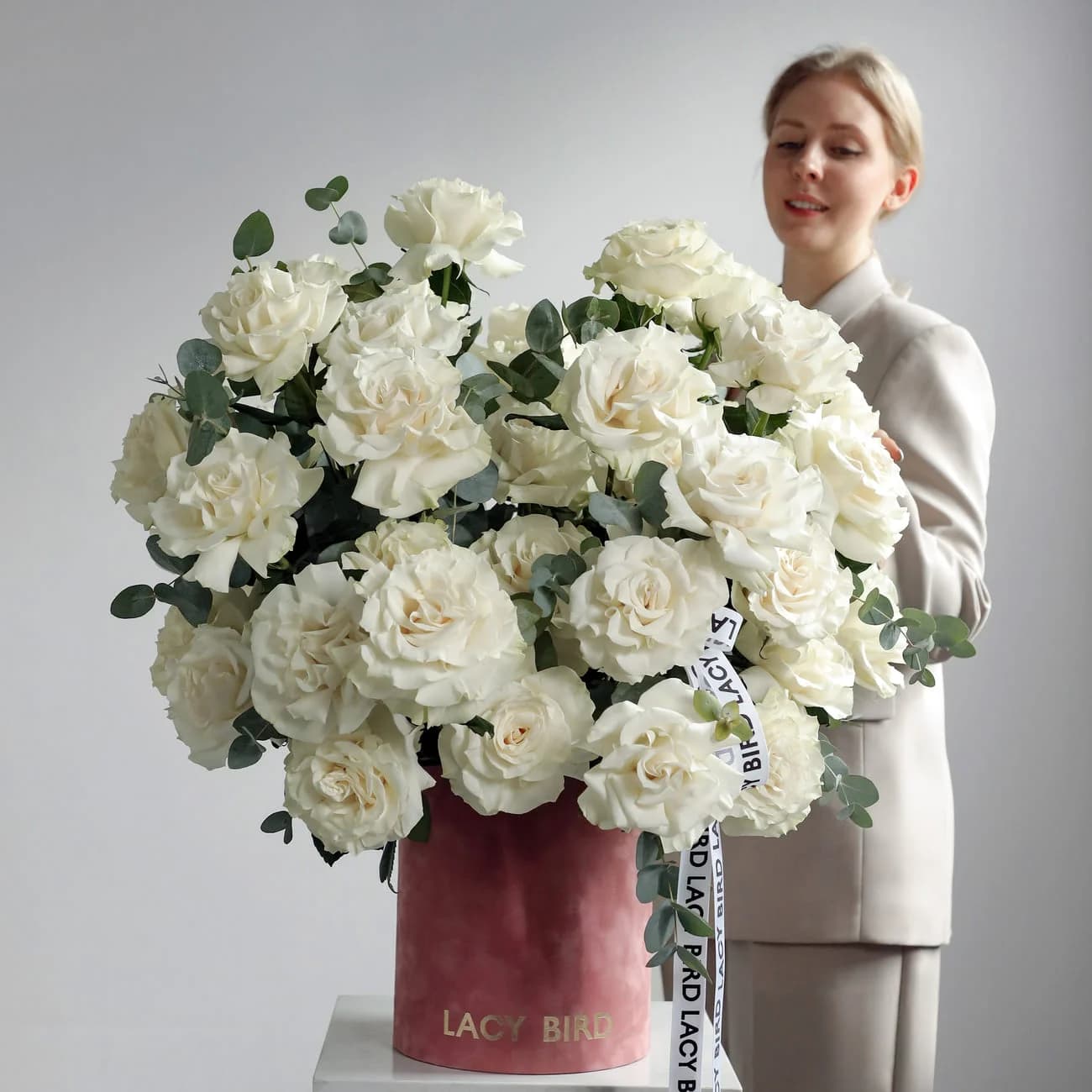
Preservation is a transfusion. Flowers are cut at their absolute peak, then stood in — or infused under pressure with — a solution based on glycerin, plant sugars and food-grade dyes. Over several days the solution travels up the stem and replaces the water in every cell. When the process ends, the flower's biology has stopped, but its architecture hasn't: petals stay soft, stems stay bendable, the bloom holds the exact shape of its best day.
Because the original pigments wash out during processing, colour is reintroduced with dyes — which is why preserved roses exist in honest reds and creams but also in navy, black and mint. The material is real; the palette is a design decision.
Roses take preservation best, which is why they dominate the market. Hydrangea, gypsophila, eucalyptus, ferns and mosses follow; thin-petaled flowers like tulips and poppies mostly refuse.
Preserved vs dried: two different materials
The two get shelved together and confused constantly, so, plainly:
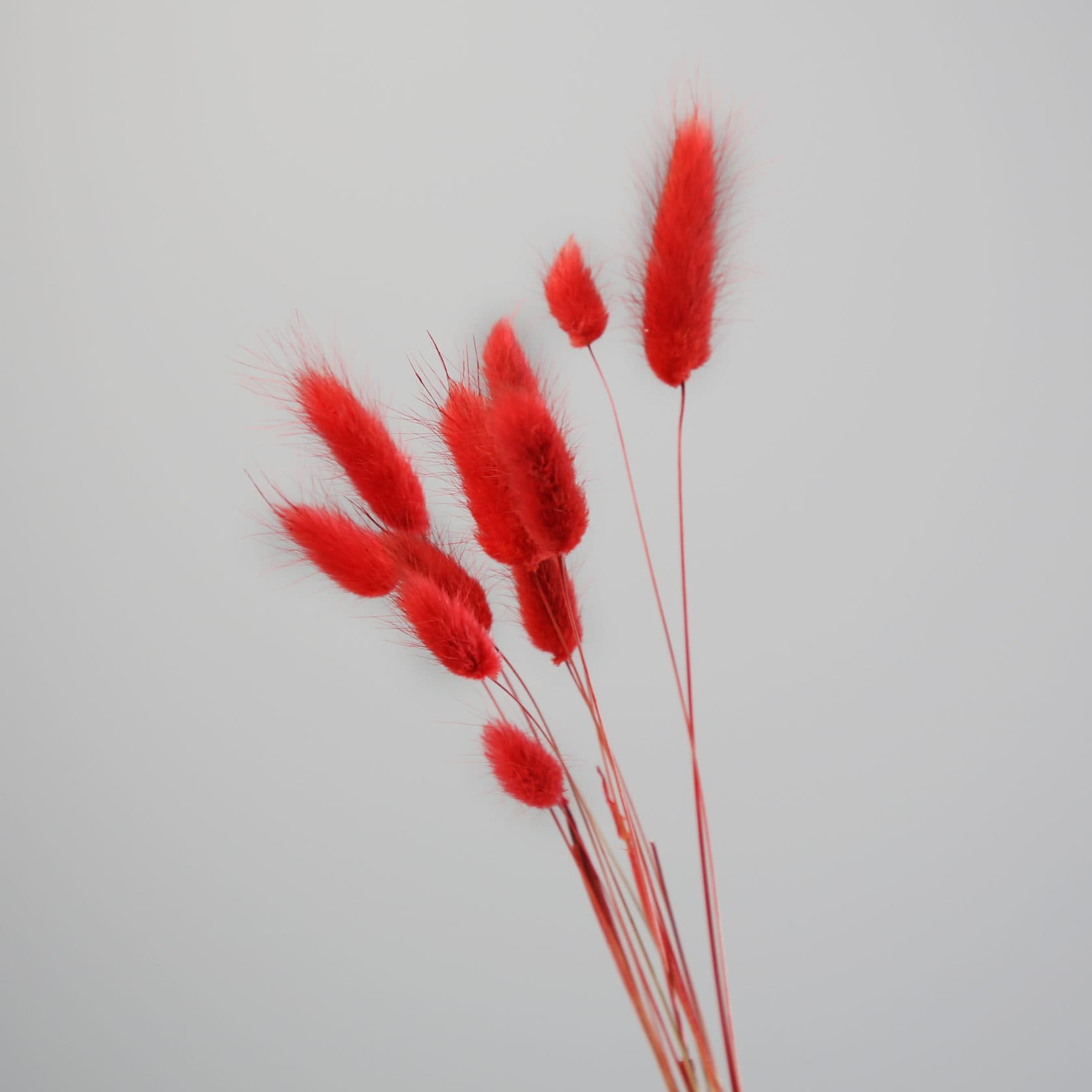
- Dried flowers have had their water removed. Tissue turns papery and brittle, colours mute toward parchment and rust. They shed, they snap, and they carry a deliberate vintage-meadow aesthetic.
- Preserved flowers have had their water replaced. Tissue stays supple, colours stay saturated, and the look reads fresh from across a room — close enough that guests routinely touch them to check.
They also style differently. Dried is a texture — grasses, lagurus, seed heads — that mixes happily into fresh work (we cover that whole craft in the dried flowers guide). Preserved aims to be the fresh work. A studio arrangement might use both in one vessel; they are still doing two different jobs.
The honest lifespan, and the care that earns it
Sellers promise "up to five years"; the honest number in a lived-in home is one to three. What actually ages a preserved flower is not time but environment, and the care sheet is gloriously short:
- No water. Ever. Humidity above ~70% makes petals weep dye and droop; a bathroom is the worst room in the house for them.
- No direct sun. UV is what fades the dyes. A shelf away from the window keeps colour for years.
- No squeezing. Supple is not indestructible; petals crease like silk.
- Dust occasionally — soft brush, or a cool hair-dryer on its gentlest setting from thirty centimetres.
Do that little, and the arrangement simply persists — which is the whole product.
Where preserved wins, and where fresh still does
Preserved earns its price anywhere flowers are wanted and maintenance isn't: reception desks, restaurants, hotel corridors, medical spaces where standing water is unwelcome, gift boxes shipped across a country, and interiors in hot climates where a fresh rose lives three days. Our clients in the Gulf lean on preserved work for exactly that reason — the fresh-flower economics of 45°C summers are unforgiving.
Fresh wins whenever the point is the transience: the anniversary armful, the apology, the bedside bouquet. A preserved rose says "this will last"; a fresh one says "this is for today, and today matters." Different sentences. Both worth saying — to different people.
There is a third road for one special case: your own wedding flowers. Preserving a bouquet after the day — freeze-drying or pressing the actual flowers you carried — is a different craft entirely, and we cover it separately in our bouquet preservation guide.
Buying without getting burned
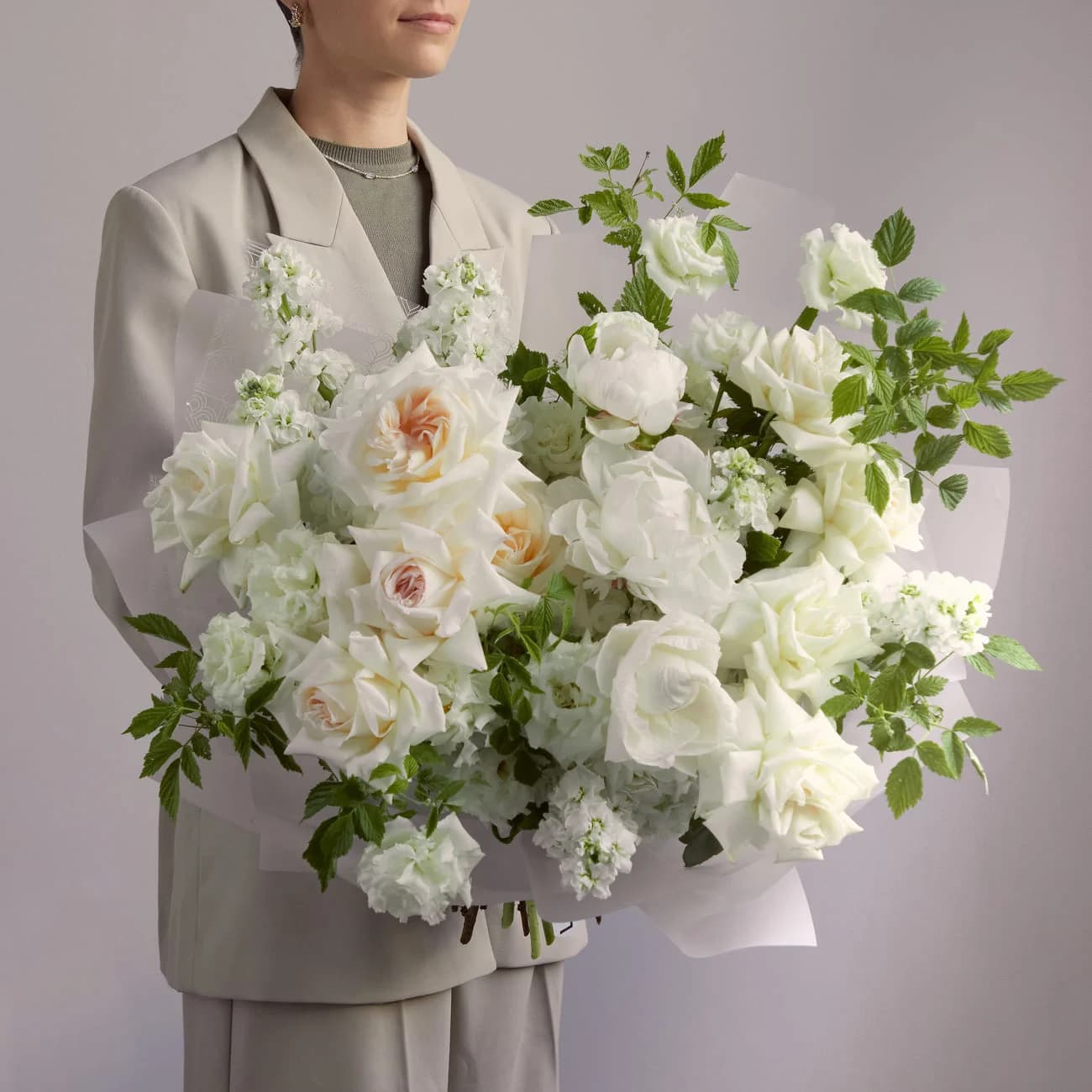
Quality varies wildly. Three checks before paying preserved prices: petals should feel soft and cool, not crispy (crispy means dried flowers sold under a fancier name); colour should sit in the petal, not on it (surface paint cracks within months); and stems should be the flower's own or honestly declared as wired — some budget "eternal roses" are heads glued to plastic. A fair price for a genuine preserved rose runs $8-15 a stem, $60-150 for an arranged box. Cheaper than that, something in the transfusion was skipped — and the product will tell you so within the year.