How to Make a Centerpiece — a working florist's guide
Step-by-step: how to build a compote-style flower centerpiece. Mechanics, palette, timing — the technique we teach in our floral design course.
The wedding centerpiece is the second most-photographed floral element after the bouquet. It sits in every guest photograph throughout the reception. Getting it right is the difference between "beautiful reception" and "wedding I'd remember."
This guide covers the compote-style centerpiece — the modern professional default — and the mechanics, proportions, and sequence that produce a balanced result.
TL;DR. A wedding centerpiece is a low compote or footed bowl arrangement 25-40 cm tall × 30-40 cm wide, built on a chicken- wire mechanic. Add greenery first for structure, then focal flowers, then secondaries and filler. Dining-table centerpieces should be under 25 cm tall so guests can see across.
Choose the vessel
The compote bowl — a footed shallow bowl on a pedestal — is the modern default for wedding centerpieces. Its shape:
- Wide shallow bowl (20-30 cm diameter, 8-12 cm deep)
- Pedestal foot (raises arrangement above tablecloth)
- Ceramic, marble, or blown glass for luxury; wood or vintage brass for garden style
Alternative vessels:
- Small urn (formal, taller arrangements)
- Low bowl without foot (modern minimalist)
- Vintage silver or pewter (traditional weddings)
- Cylinder vase (linear tall arrangements at high ceiling venues)
Build the mechanic
The mechanic holds stems where you want them.
Chicken wire (modern default)
- Cut wire to 2× bowl area
- Crumple loosely into a ball shape
- Nestle into bowl
- Add water and flower food
- Insert stems through wire openings
Kenzan (pin frog)
- Heavy pin frog anchored with floral clay
- Best for minimalist arrangements with few dramatic stems
Floral foam (traditional but declining)
Some studios have moved away because foam is single-use and non-biodegradable. Chicken wire is now the modern standard.
Add greenery first
Greenery establishes the arrangement's outline.
- Structural (eucalyptus, italian ruscus, pistacia) around the outer edge
- Wispy (astrantia, waxflower) between structural pieces
- Trailing (small amaranthus, ivy) at the front where it drapes over the vessel lip
Total greenery: 6-8 stems for a mid-size centerpiece.
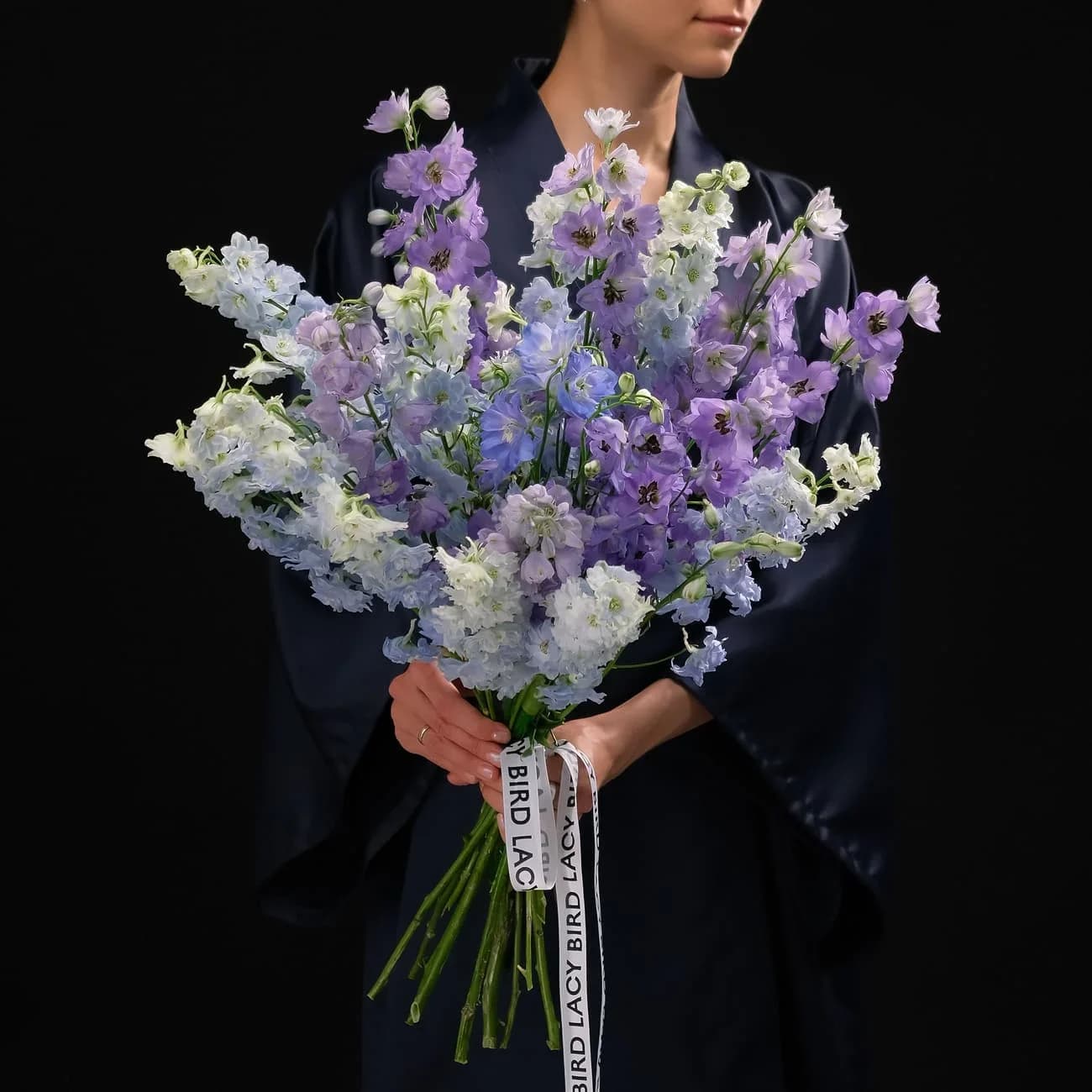
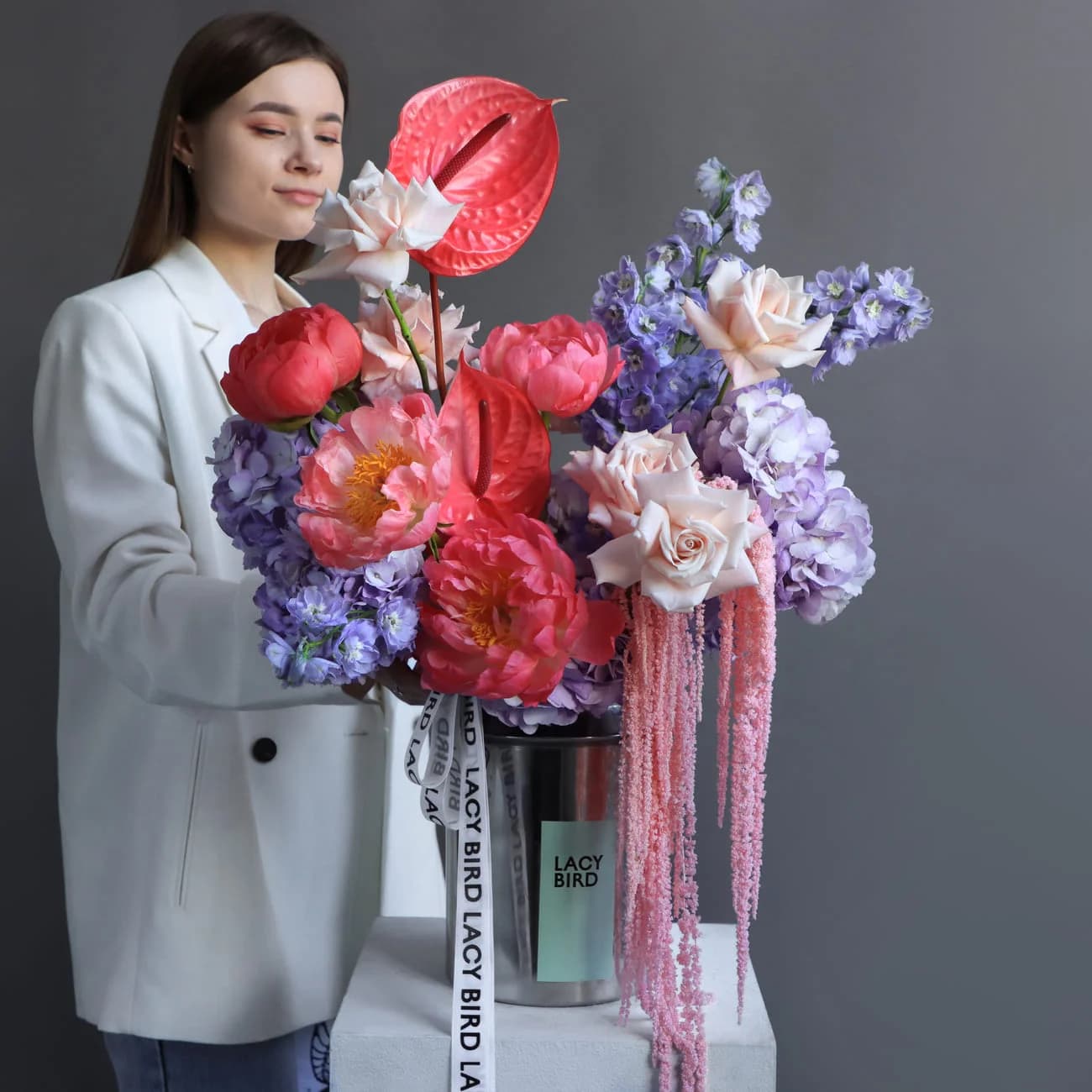
Add focal flowers
Place 3-5 focal flowers in a triangle or asymmetric pattern.
- Tallest focal slightly higher than the vessel rim + 1.5×
- Lower focals at varying heights across the arrangement
- Rotate the vessel after each addition to check balance
Focal spacing: avoid two focals at identical heights on the same side. Vary always.
Add secondaries
Fill visual weight between focals.
- 8-12 secondaries — ranunculus, spray roses, lisianthus, mattiola, alstroemeria
- 30-45° angled positions, filling gaps between focals
- Continue rotating the vessel
Add filler
Filler fills small gaps and adds texture.
- 6-10 filler stems — waxflower, ammi, astrantia, small buds
- Some can extend beyond the arrangement's main silhouette for wispiness
The 60-30-10 rule applies:
- 60% focal + secondary
- 30% filler + wispy greenery
- 10% structural greenery
Check the shape from every angle
Wedding guests view centerpieces from all sides simultaneously. Build in the round.
- Front: primary viewing angle from where photography happens
- Back: as clean as the front — guests sit opposite
- Sides: balanced from both left and right
- Top-down: roughly round or intentional asymmetric
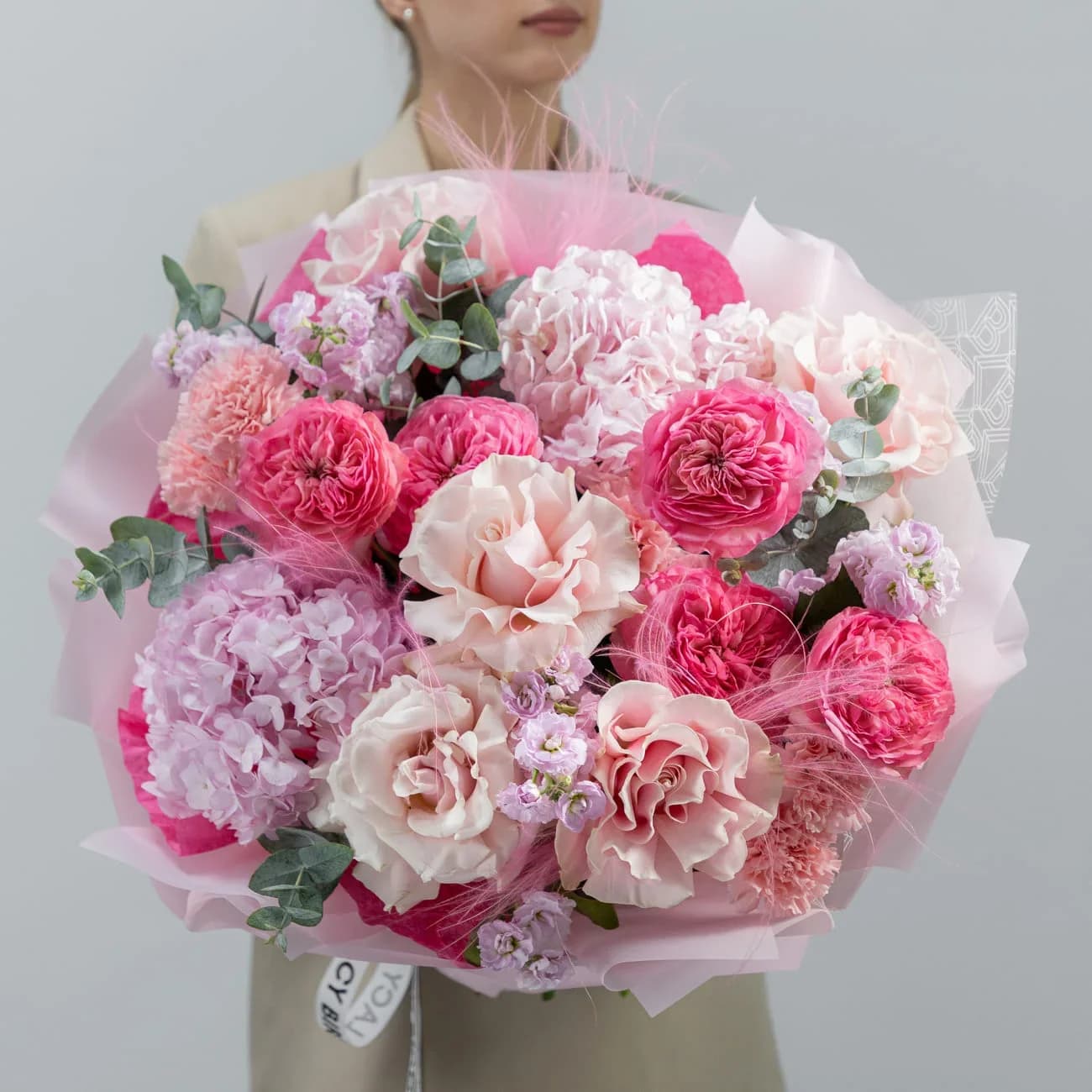
Height and proportions
Dining-table centerpieces:
- Total height: under 25 cm (guests must see across)
- Width: 30-40 cm
- Density: lush and low
Cocktail-table centerpieces:
- Height: 40-60 cm can work (guests stand, sight lines above)
- Width: 25-35 cm
- Style: taller, sculptural
Head-table statement pieces:
- Height: 60-90 cm
- Width: 40-60 cm
- Use raised compotes or urns
Aisle centerpieces:
- Height: 60-100 cm on tall pedestals
- Width: 30-45 cm
- Frame the walking path
Care after building
- Refresh water 24 hours before event
- Store cool 8-15°C overnight
- Deliver in vehicles set at 15-18°C
- Set up on tables just before guest arrival
- Do not mist heavily — leaves the tablecloth wet
Cost breakdown
DIY materials
| Item | Cost |
|---|---|
| Compote bowl (reusable) | $20-40 |
| Chicken wire | $2-3 per arrangement |
| Focal flowers (5 stems) | $15-40 |
| Secondaries (10 stems) | $15-30 |
| Filler (8 stems) | $8-15 |
| Greenery (6 stems) | $6-12 |
| Total per centerpiece | $66-140 |
Professional pricing
| Studio tier | Per centerpiece |
|---|---|
| Mid-market wedding studio | $80-200 |
| Luxury boutique studio | $200-500 |
| Elite / destination luxury | $500-1,200 |
For a 10-table wedding: $800-5,000+ for centerpieces alone depending on tier.
Common centerpiece mistakes
Too tall for dining tables. Guests can't see across. Under 25 cm is the rule.
Uneven from the back. Build in the round; back guests see too.
Too few stems. Under 15 stems reads sparse. Aim 20-35 for a mid-size compote.
Wrong greenery scale. Long trailing greenery looks messy on dining tables. Structural + short wispy only for dining; trailing for accent tables.
Water too full at delivery. Water splashes onto tablecloths during transport. Fill 2/3 for transport; top up on-site.
Same arrangement everywhere. Vary centerpieces slightly across the 10-table event so photographs don't feel repetitive.
Sample centerpiece recipes
Modern minimal (20 stems)
- 3 focal (white garden roses)
- 6 secondaries (blush ranunculus)
- 5 fillers (astrantia)
- 6 greenery (silver dollar eucalyptus)
Lush garden style (35 stems)
- 5 focal (peonies + dahlias mix)
- 12 secondaries (ranunculus + spray roses + lisianthus)
- 10 fillers (waxflower + ammi)
- 8 greenery (mixed eucalyptus, ruscus)
Autumn moody (25 stems)
- 4 focal (burgundy dahlias + chocolate cosmos)
- 8 secondaries (spray roses + carnation caramel)
- 7 fillers (lagurus grass + waxflower)
- 6 greenery (seeded eucalyptus + pistacia)
FAQ
How do you make a wedding centerpiece?
Choose a compote bowl or low vessel. Fill with chicken wire crumpled loosely. Add water and flower food. Greenery around edges first, then 3-5 focal flowers in center, then 8-12 secondaries, then 6-10 filler in gaps. Height: 25-40 cm total.
How tall should a wedding centerpiece be?
Dining tables: under 25 cm so guests see across. Cocktail tables: 40-60 cm can work. Head-table statement pieces: 60-90 cm using a raised compote or urn.
How much do centerpieces cost?
DIY: $40-80 in flowers + $20-40 for a reusable compote. Professional: $80-200 mid-market, $200-500 luxury. A 10-table wedding at professional pricing runs $1,000-5,000 for centerpieces alone.
How many flowers per centerpiece?
Mid-size compote: 20-35 stems total — 3-5 focal, 8-12 secondaries, 6-10 filler, 6-8 greenery. Statement centerpieces at head tables use 40-60 stems.
Related reading: