Flower Crown — the complete wedding guide
Full-crown vs half-crown vs asymmetric side pieces. Which flowers hold shape on a head, weight considerations, how to build one, and what a professional flower crown actually costs.
The flower crown had its Coachella moment in 2014, its Pinterest-boho peak in 2016, and today it exists as a mature bridal option — no longer a trend, a durable choice with proven design territory.
Whether you're a bride considering one, a florist designing one for a client, or a flower girl's parent planning something small, this guide covers what actually works. Written after building hundreds of crowns in our studio for weddings, festivals, and editorial shoots.
Three types — pick by aesthetic and event
Full crown (circlet). Complete ring around the head, flowers on all 360°. Reads as ceremonial, bohemian, ethereal.
- Best for: garden weddings, festivals, editorial shoots, matching flower girl crowns
- Wrong for: black-tie ballroom, formal traditional Catholic or Orthodox ceremonies
- Size: typically 55-58 cm inner circumference
Half crown (headband style). Flowers along the front and sides, open at the back where hair covers. Lighter, easier to wear.
- Best for: boho brides who want the look without full commitment
- Wrong for: brides with elaborate up-dos (no place to attach)
- Size: headband length, ~30-35 cm floral section
Asymmetric side piece. A single cluster of flowers mounted on one side of the head, often coordinated with a hair comb. Modern, sculptural, allows a full hairstyle.
- Best for: modern brides who want floral but not the crown aesthetic
- Wrong for: any event where symmetry is part of the visual brief
- Size: varies — cluster 8-15 cm across
Flowers that hold shape on a head
A flower crown is exposed to warmth, sweat, movement, and occasional bumps against a hug or a car interior. Not every flower handles that.
Excellent — build the crown from these:
- Waxflower (tiny, resilient, adds volume without weight)
- Craspedia (drumstick heads — indestructible)
- Statice (paper-like, doesn't wilt)
- Ranunculus (holds shape 6-10 hours)
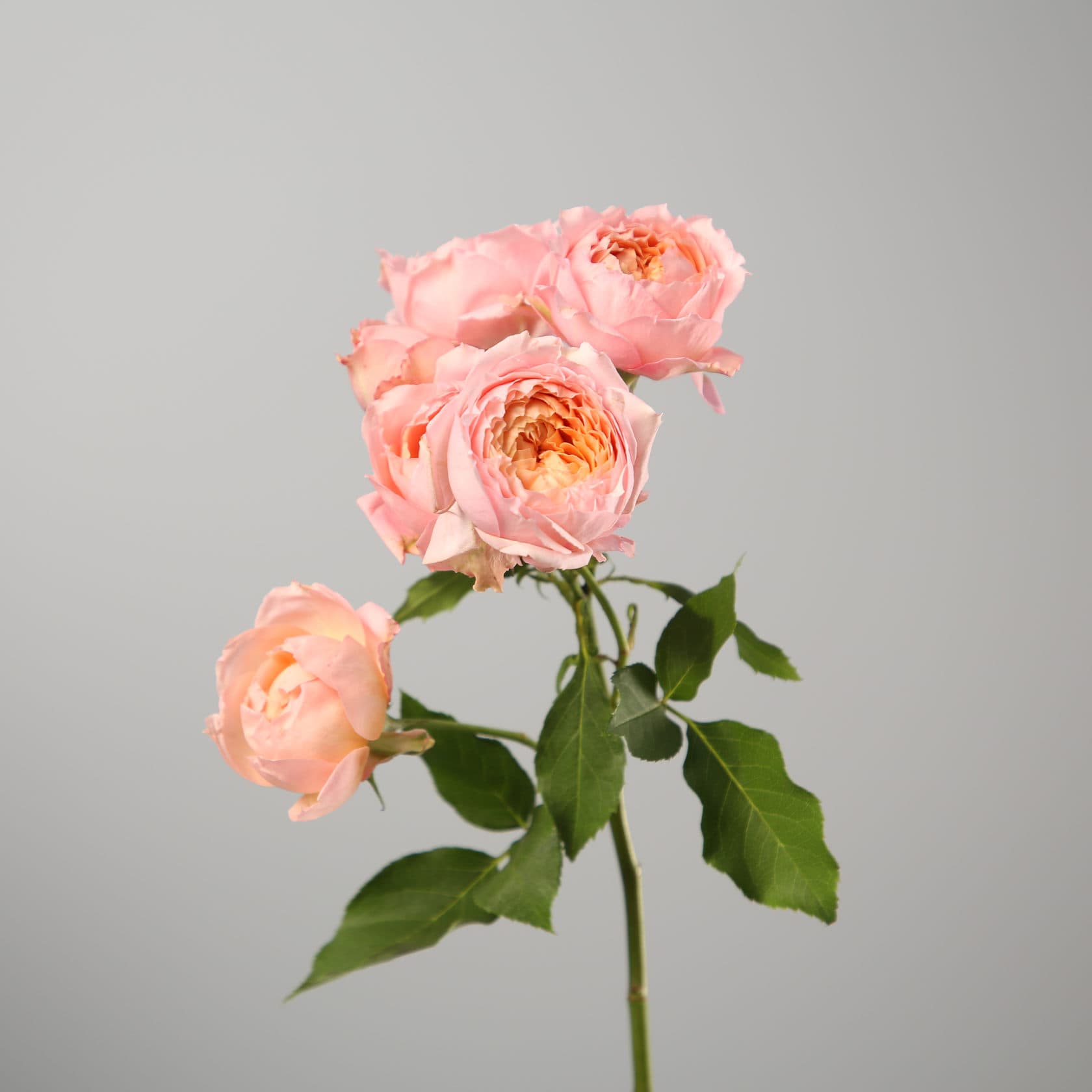
- Spray roses (small heads, sturdy)
- Gomphrena (paper petals, essentially permanent)
- Silver dollar eucalyptus (structural greenery)
- Chamomile (whimsical, cottage-garden feel)
Acceptable with care:
- Small garden roses (heavier — use sparingly)
- Freesia (short-lived but stunning first 3 hours)
- Astrantia (delicate)
- Baby's breath (splits into micro-clusters perfectly)
Avoid for full crowns:
- Peonies (too heavy, petals shed)
- Large garden roses (unwearable weight)
- Tulips (grow post-cut, will point wrong direction)
- Anemones (open in warmth, close in shade — inconsistent)
- Any fragrant lily (staining, overwhelming)
Weight matters more than you think
A well-built flower crown weighs 40-120 grams. Above 150 grams it becomes noticeable to wear; above 250 grams it causes headaches by hour four.
Weigh flowers before you build. A single peony is 30-50 grams; a whole crown of peonies would be unwearable. Build the mass from lightweight materials (waxflower, statice, small greenery) and accent with 3-5 focal flowers at most.
How a professional builds one
Tools: 22-gauge floral wire (structural), 26-gauge wire (individual flower mounts), floral tape, small scissors, cold-glue gun (optional).
Steps:
- Measure the head. Wrap a soft tape around the head where the crown will sit — typically at the widest point above the ears.
- Build a wire base. Cut a length of 22-gauge wire 3 cm longer than the head measurement. Form into a ring, twist ends together.
- Wrap the base in floral tape. This gives grip for mounting flowers.
- Wire individual flowers. Trim stems to 2 cm; wire each with 26-gauge; tape wire ends.
- Attach flowers to base. Start with greenery all around, then layer focal flowers on top. Wrap wire tightly to the base tape as you go. Alternate directions of stems so all wires disappear inward.
- Refresh and store. Mist lightly with water. Store in a shallow box lined with damp paper towel in the refrigerator until wear.
Time: 45-90 minutes per crown depending on complexity.
DIY vs professional
DIY works for: flower girl crowns (smaller, less complex), festival crowns, bachelorette parties, low-stakes events. Budget: $25-50 in flowers per crown, several hours of your time.
Professional needed for: bridal crowns for wedding day, editorial shoots, high-stakes events. Cost: $150-400 per crown. Includes delivery, refreshing, and often a hairstylist consultation for integration.
The gap between DIY and professional is largely construction quality — a professional crown holds shape all day; a DIY crown often needs touch-ups by hour four.
Cost expectations
- Flower girl crown (small, simple): $40-80
- Half crown for bride: $80-150
- Full bridal crown: $150-300
- Matching set (bride + 5 flower girls): $250-500
- Editorial / luxury: $400-800 per crown
Wearing rules
Where it sits. The crown sits 2-3 cm behind the hairline, not on the forehead like a tiara. Higher for a lighter look, lower for a more bohemian feel.
Hair styling first. The crown is fitted over the finished hairstyle, not before. If you're planning a bun, the crown goes on after the bun is set.
Pinning. Even with a snug fit, pin the crown at 4-6 points using small U-pins matched to your hair colour. Otherwise it slips throughout the day.
Photograph early. Crowns look freshest in the first 3 hours. Get portraits done between hair-and-makeup and the ceremony.
The alternative — a "living halo" hair style
Instead of a wired crown, individual flowers tucked directly into an up-do or braid. Advantages: no weight to wear, no sizing problem, photographs beautifully. Disadvantages: requires a florist and hairstylist working together at the same time (a coordination premium), and the flowers cannot be removed and reused.
Cost is comparable ($100-250) but the styling premium is real.
Cultural notes
Ukrainian tradition (vinok): the wreath crown is deeply significant — worn by unmarried women, decorated by season and region. Wedding vinok is white flowers only.
Greek tradition (stefana): paired crowns joined by ribbon, blessed and exchanged during the ceremony. Not floral in traditional form.
Norse and Scandinavian: flower crowns for midsummer bride and for confirmation ceremonies.
Contemporary Western weddings: the crown is a design choice, not a tradition. Wear it because it fits your visual brief.
Related reading: