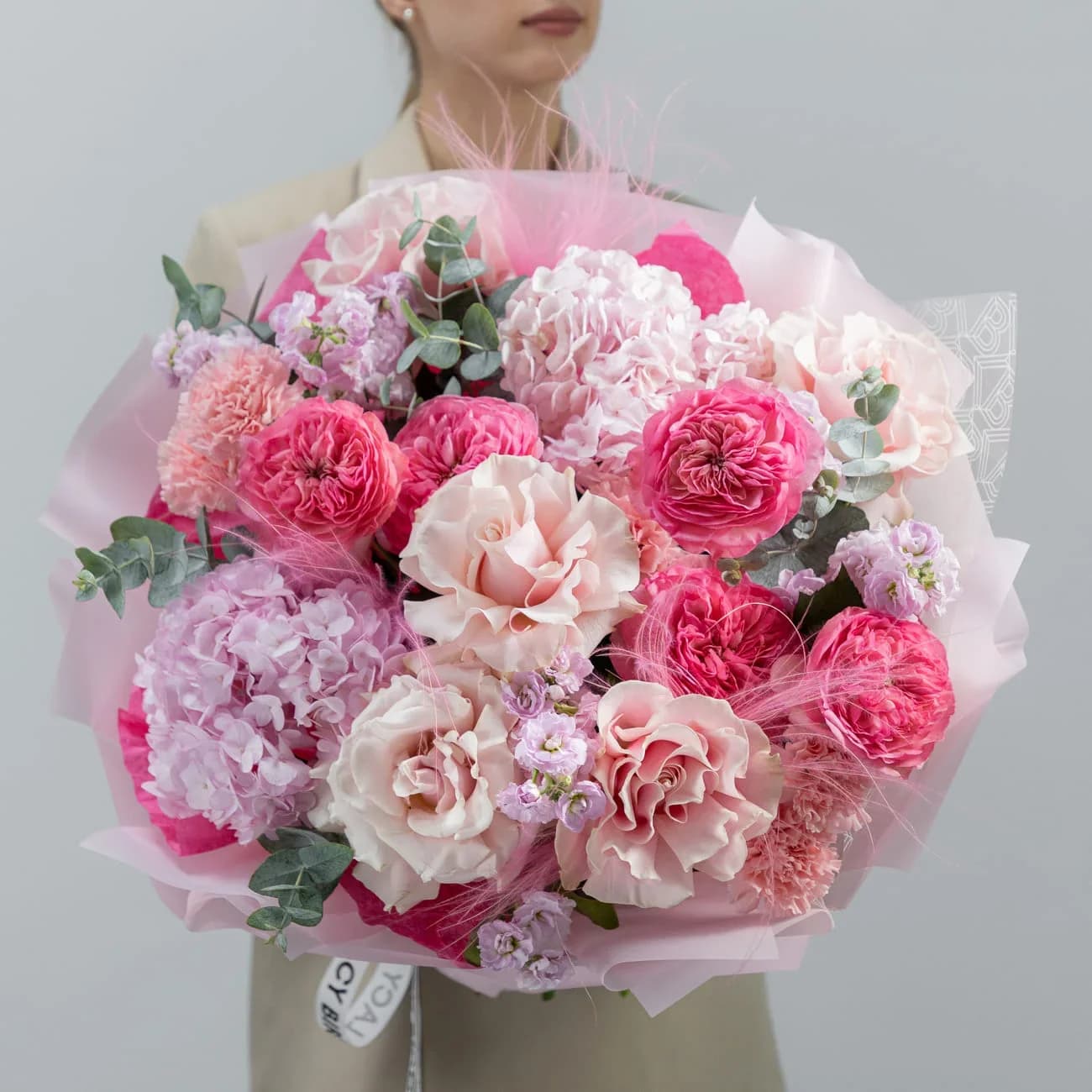
Boho Wedding Flowers — the working design guide
What makes flowers 'boho', which flowers signal the aesthetic, cost tiers, and specific bouquet + installation designs from our studio.
The "boho" wedding aesthetic — bohemian, whimsical, garden-natural — has moved from trend to mature style over the last decade. What makes flowers boho isn't the specific species so much as the arrangement principles: loose, textured, wildflower-adjacent, mixing dried and fresh, warm palettes.
This guide covers what actually distinguishes boho floristry, the flowers that signal the aesthetic, cost tiers, and specific designs.
What defines boho floristry
Loose over structured. A boho bouquet has visible movement and asymmetry. A garden-hand-picked feel. Not a tight round dome.
Texture over polish. Boho leans on textural elements — grasses, pods, dried statice, wheat, cotton — that give visual variety.
Warm palette. Terracotta, rust, dusty peach, ivory, sage green, mustard yellow. Occasional pops of burgundy or deep purple. Never bright primary colours.
Mixed materials. Fresh + dried + preserved, layered together. The dried elements last through the whole wedding day; the fresh carry the freshness.
Ribbon and binding as feature. Trailing silk ribbons in warm tones, often multiple ribbons. Twine as a subtle option.
Greenery-heavy. Boho bouquets are 40-60% greenery/foliage/dried material, with flowers as accents. This is the biggest single difference from more traditional bridal design.
The signature boho flowers
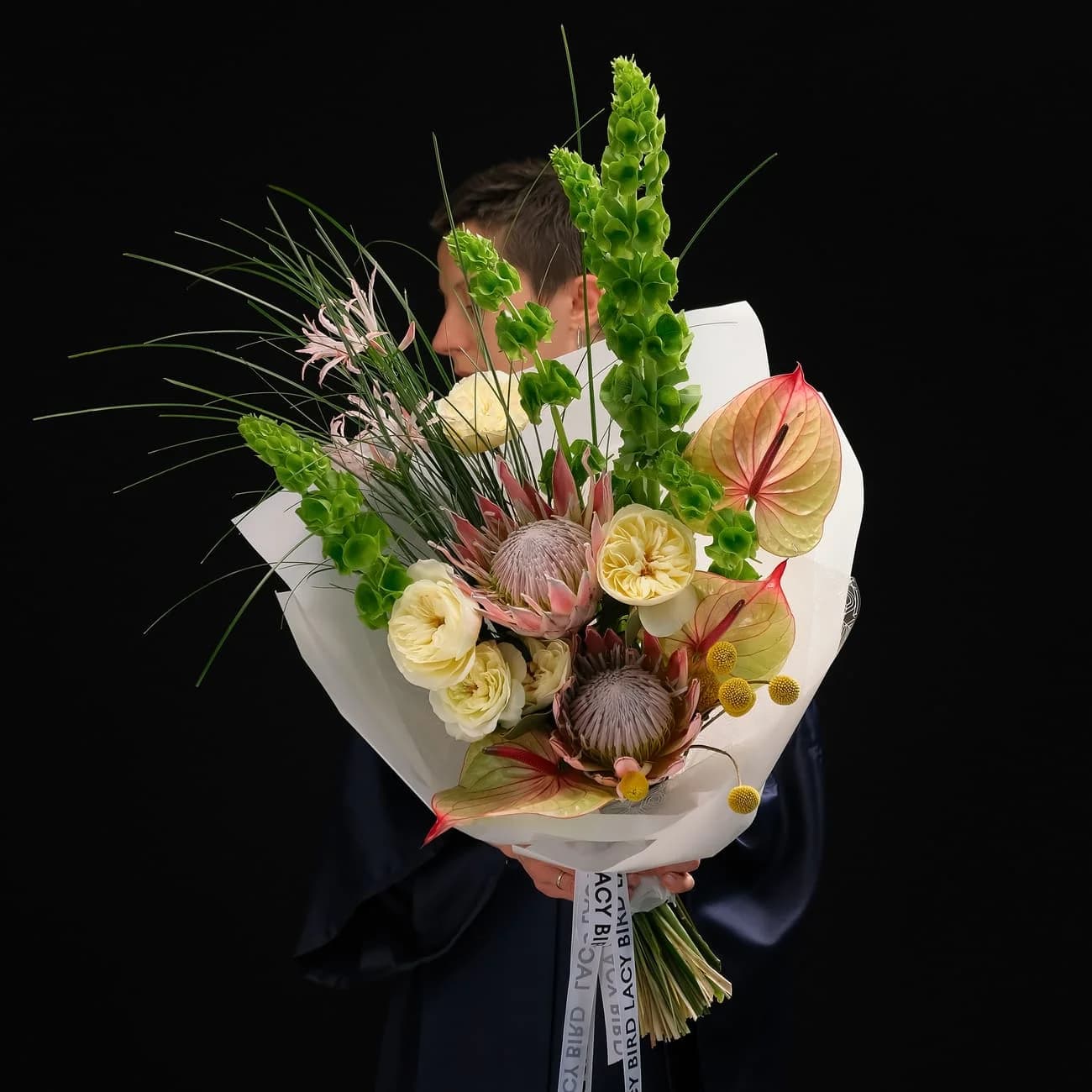
Fresh flowers that signal boho:
- Pampas grass (usually dried, but stem-fresh varieties exist)
- Bunny tail grass — dried, whimsical
- Cotton — dried, textural
- Amaranthus (trailing) — modern boho staple
- Sunflower (in autumn boho weddings)
- Chocolate cosmos — dark warm palette
- Marigold — mustard warmth
- Craspedia (billy buttons) — yellow drumsticks
- Ranunculus — soft romantic accent
- Anemone — dark centre, moody accent
- Garden rose in coral or terracotta tones
Dried and preserved staples:
- Dried statice — long-lasting purple/blue
- Bleached ruscus — creamy neutral base
- Preserved eucalyptus — silver-green foundation
- Dried wheat and grasses
- Preserved hydrangea — warm rust tones
- Bleached fern and palm
Palettes that read boho
Terracotta earth — terracotta + burnt orange + ivory + sage green + gold
Dusty peach garden — peach + cream + mustard + dusty sage + warm brown
Autumn boho — burgundy + rust + gold + deep green + cream
Neutral desert — bleached cream + soft peach + warm brown + pampas gold
Wildflower spring — blush + coral + mustard + fresh green + occasional lavender
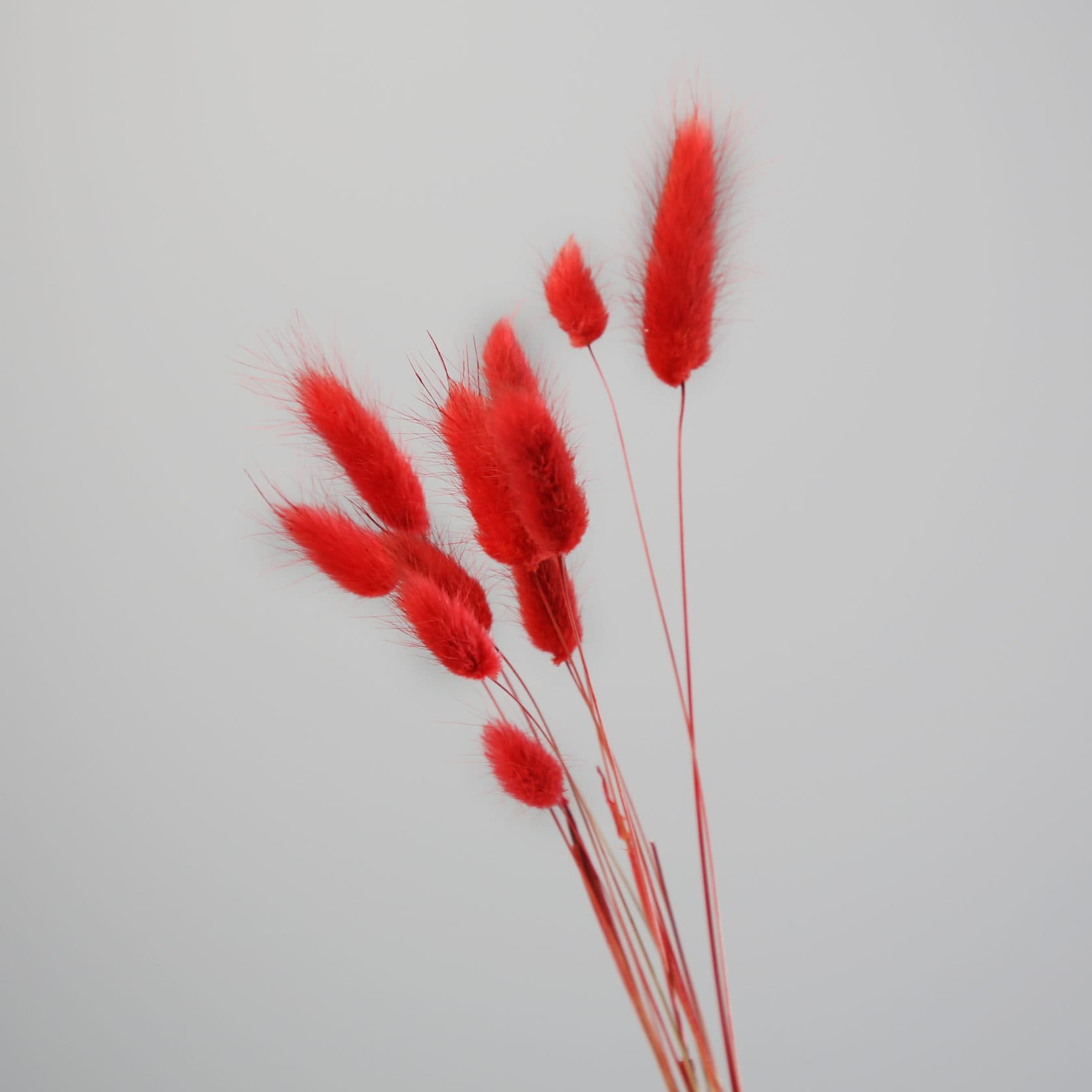
Four bouquet designs
1. Small elopement boho
- 3-5 garden roses (blush + peach + terracotta mix)
- 2-3 chocolate cosmos (moody accents)
- Craspedia (2-3 stems) for yellow pops
- Amaranthus for trailing movement
- Sprigs of dried statice
- Loose ribbon binding in ivory silk + dusty rust ribbon trailing 40cm
Reads as: intimate elopement, editorial, warm.
Cost tier: low to mid ($120-200).
2. Full boho bridal (terracotta)
- 3 garden roses (terracotta or coral shade)
- 4-6 spray roses in matching palette
- 3-5 stems of pampas grass or bunny tail
- Amaranthus (trailing purple or green)
- Ranunculus in peach and cream
- Preserved eucalyptus (mixed varieties)
- Dried craspedia
- Silk ribbon in dusty rust + ivory + gold, trailing to 45cm
Reads as: classic modern boho, warm autumn, editorial.
Cost tier: mid ($180-350).
3. Wildflower cottage boho
- Mixed garden roses (peach + blush + cream)
- Ammi (Queen Anne's lace)
- Scabiosa
- Chamomile (whimsical)
- Ranunculus
- Wild greens — multiple varieties
- Twine binding + silk ribbon accent
Reads as: cottage-garden bride, backyard-wedding romantic.
Cost tier: mid ($150-280).
4. Neutral desert boho
- Bleached pampas
- Dried palm fronds
- Ivory garden roses
- Bleached ruscus
- Cotton (dried bolls)
- Craspedia
- Muted burgundy scabiosa for one focal accent
- Cream silk ribbon + suede tie
Reads as: desert-wedding chic, minimalist boho, editorial.
Cost tier: mid ($150-280). Dried material is cheaper than fresh peonies.
Installation styles for boho weddings
Pampas grass installation — the signature boho move. Suspended or free-standing arrangements of pampas plumes. Dramatic, cheap, photographs beautifully.
Trailing floral cascade — installations with heavy amaranthus, ivy, and greenery flowing downward. Modern boho staple.
Bud vases scattered across long tables — cluster of small vessels each holding 1-3 stems, arranged along a rustic wood table. Alternative to formal centerpieces.
Reclaimed wood + florals — pallet backdrops, weathered wood arches, wine barrels as bases. All natural texture.
Cost expectations for boho weddings
Boho weddings are typically middle-budget:
- Bridal bouquet: $150-350
- Bridesmaid bouquets (loose garden style): $60-120 each
- Boutonnieres: $20-40 each
- Ceremony arch (with pampas): $500-1,500
- Table centrepieces (bud vase clusters): $30-80 per table
Total floral budget for a moderate boho wedding: $2,000-5,000.
What separates good boho from cliché
Good boho:
- Restrained palette, deliberately warm
- Real garden-inspired asymmetry
- Textural variety (fresh + dried)
- Trailing elements but not overloaded
- Photographs like editorial magazines
Boho cliché:
- Everything covered in pampas grass (peak 2019)
- Only dried flowers, no fresh (looks static)
- Rainbow palette (isn't boho, it's disorganised)
- Trailing ribbons three metres long (impractical for movement)
- Too many "unique" props (macramé, dreamcatchers, animal skulls)
The line between "boho" and "kitsch" is more about restraint than about specific elements.
Related reading:
- Wedding bouquets
- Flower crown
- Rustic wedding flowers — coming soon
- Colour palette picker — start with terracotta preset