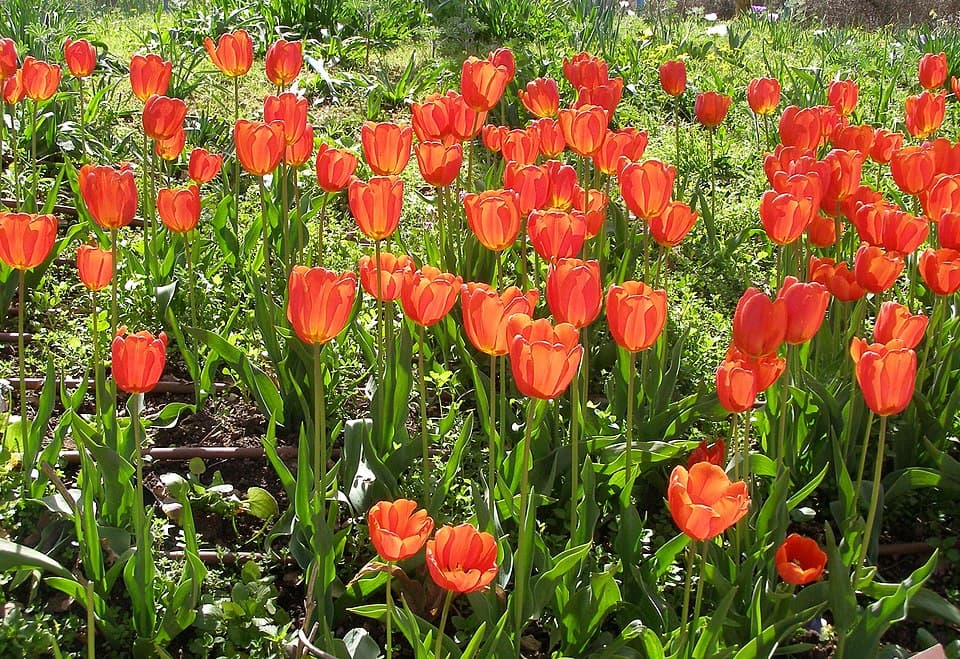
Tulip Wedding Bouquet — season, types, and design
Spring tulip bouquets, double tulips as peony alternatives, cost tiers, and how to work around the fact that tulips keep growing after cutting. Designs from our studio.
Tulips are the most-produced cut flower in the world — Netherlands alone ships 2+ billion stems annually. That scale keeps them affordable and reliable, but it also means they're a flower where the variety matters more than the species. A field tulip and a double tulip are as different in a bouquet as a spray rose and a garden rose.
This guide covers the tulip types worth using in bridal work, the critical structural quirks (they keep growing after cutting), and specific bouquet designs.
The tulip types you'll encounter
Single tulips — the classical field tulip. Wide colour range, budget-friendly, spring-only in the Northern Hemisphere. Cost: $0.50-1.50 per stem.
French tulips — extra-long stem (60 cm+), premium single tulip category. Elegant proportion, longer vase life. Cost: $2-4 per stem.
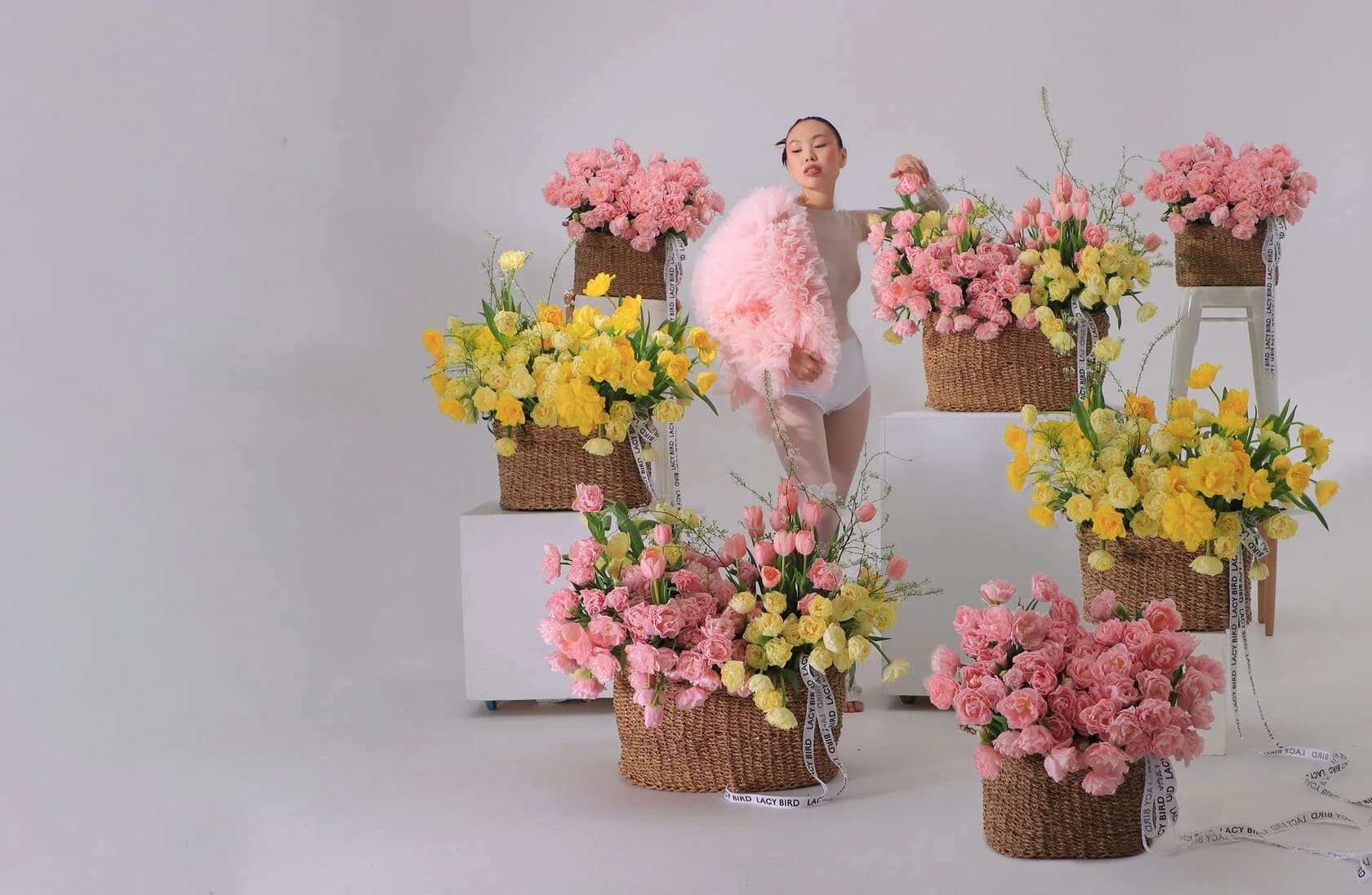
Double tulips (peony tulips) — dense multi-petal heads resembling peonies. La Belle Époque (peach), Aveyron (soft pink), Foxtrot (blush) are the wedding favourites. Cost: $2-4 per stem — comparable to garden roses at 20-30% of the cost of peonies.
Parrot tulips — dramatically fringed petals, often bicolour. Rembrandt-tulip aesthetic. Cost: $2-4 per stem.
Fringed tulips — serrated petal edges. Modern texture.
For bridal bouquets, double tulips deliver the peony aesthetic at significantly lower cost. This is the most impactful information in this whole guide.
The critical quirk: tulips keep growing
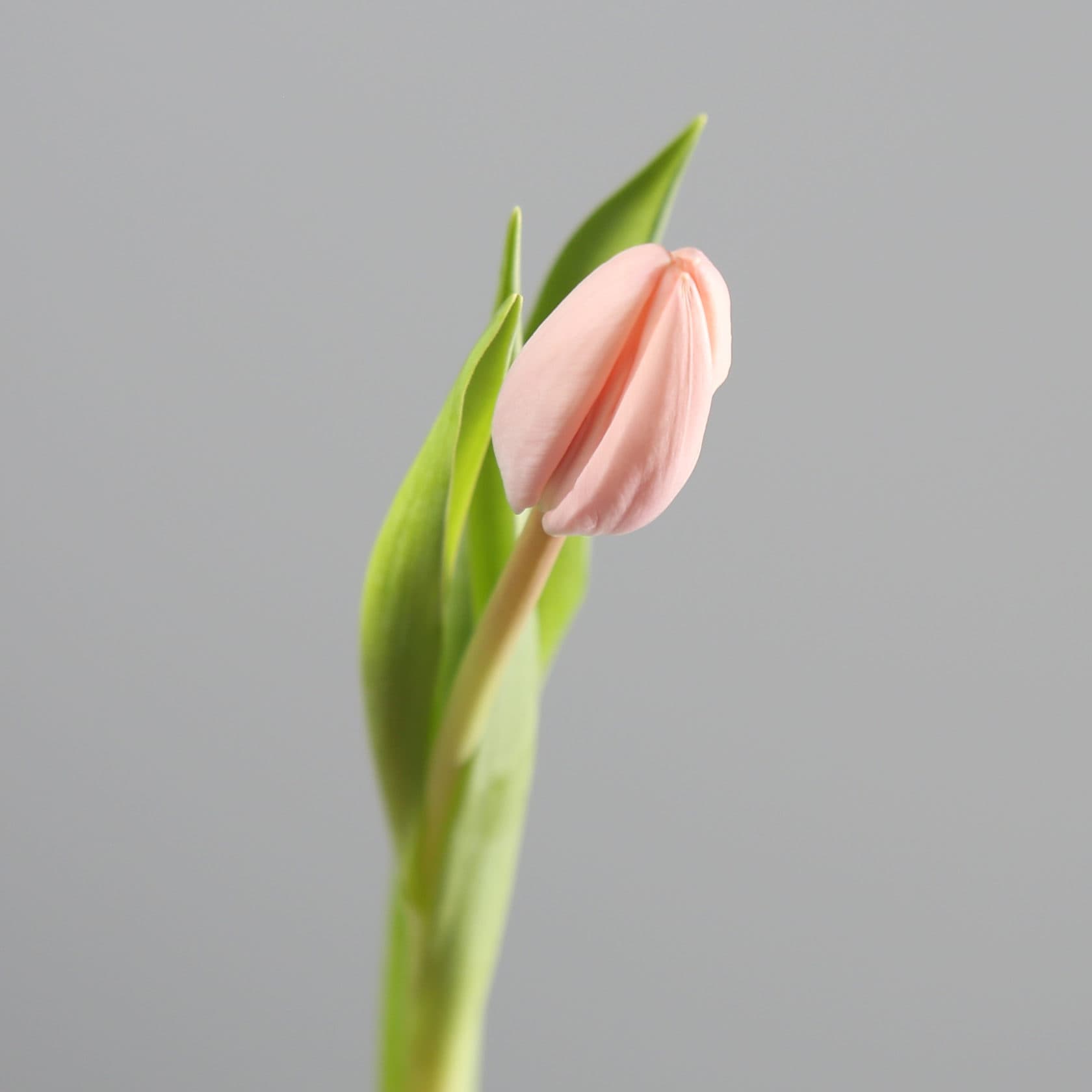
After being cut, tulips continue to grow 2-5 cm in the vase — and they bend toward light. This means:
- A bouquet you built at 6 AM will look different at 3 PM
- Tulips near a window turn toward the light within hours
- Storage in flat position causes tulips to curve wrong direction
Design implications:
- Build the bouquet closer to the ceremony time
- Store the bouquet vertically until use
- Don't set tulip bouquets on a window ledge before the ceremony
- Trim stems shorter than you would for other flowers, expecting growth
Symbolism and colour meaning
- Red tulips — declaration of love. Bold romantic reading.
- White tulips — purity, forgiveness. Classical bridal.
- Yellow tulips — cheerfulness (historically "hopeless love" in Victorian floriography, but that meaning has faded).
- Purple tulips — royalty, admiration.
- Pink tulips — happiness, affection.
- Black tulips (Queen of Night variety) — mystery, sophistication.
- Bicolour — welcoming duality, modern.
Four bouquet designs
1. All-white classical spring
- 15-20 white single tulips (Purissima or White Marvel)
- Wide white silk ribbon in a simple bow
Reads as: minimalist, elegant, classical spring. Photographs purely.
Cost tier: low to mid ($40-100). Excellent value.
2. Blush double tulip (peony alternative)
- 12-15 La Belle Époque double tulips
- Optional: 2-3 blush garden roses as focal anchors
- Silver dollar eucalyptus
- Silk ribbon in dusty blush
Reads as: garden-wedding romantic, peony-adjacent, sophisticated.
Cost tier: mid ($90-180). Half the cost of a similar peony bouquet.
3. Mixed spring garden
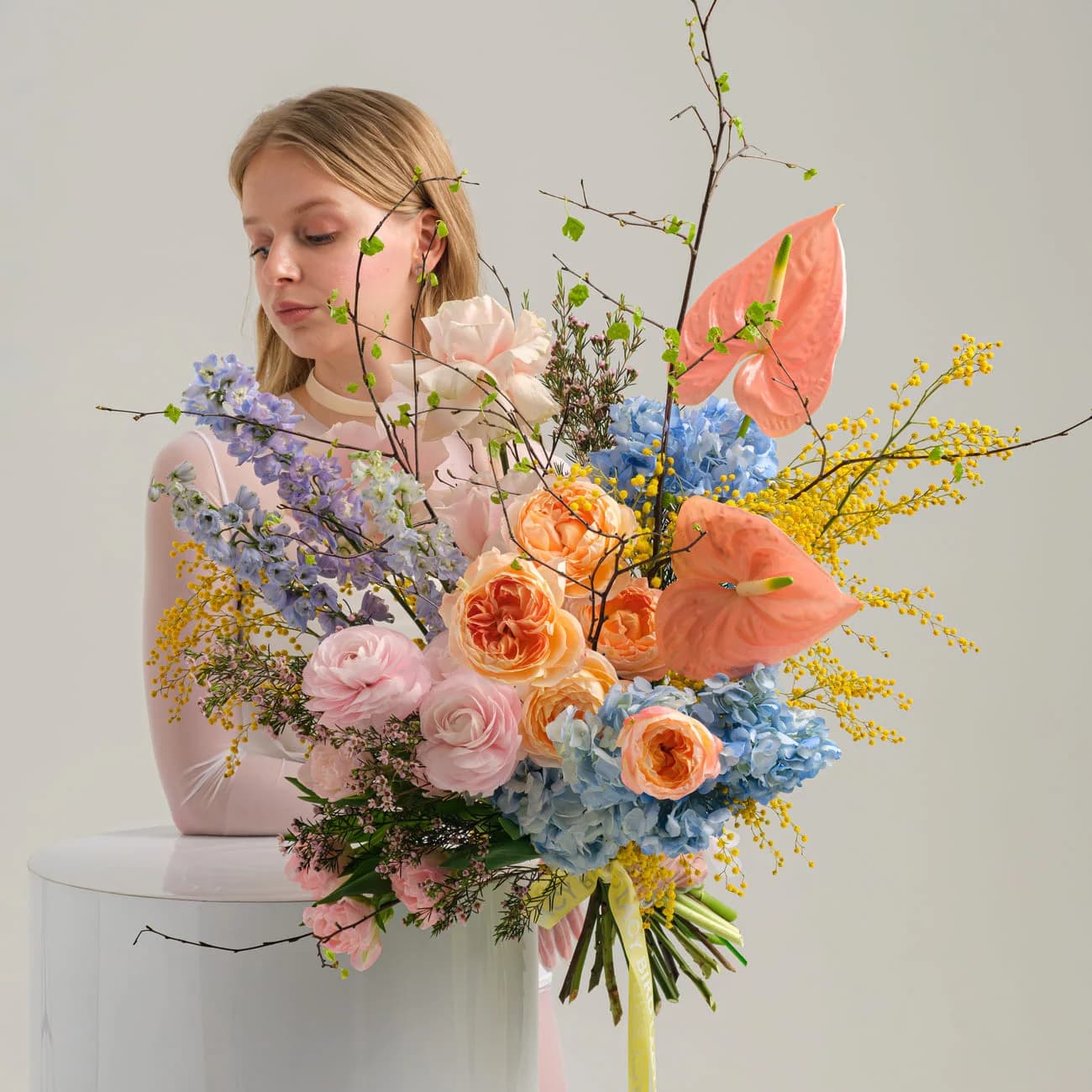
- 8-10 double tulips (mixed colours from same palette)
- Ranunculus in matching palette
- Muscari (grape hyacinth) for blue accent
- Sweet pea (in season)
- Loose garden aesthetic — twine or narrow silk binding
Reads as: wild spring garden, cottage-wedding romantic.
Cost tier: mid ($100-200).
4. Modern French tulip (contemporary minimalist)
- 20-25 French tulips (single colour or two-tone from palette)
- No greenery, no filler — just tulips
- Silk ribbon in matching palette colour
Reads as: modern editorial, minimalist. Photographs graphically.
Cost tier: mid to high ($100-250).
Practical techniques
Newspaper wrapping to straighten stems. If tulips arrive with bent stems, wrap the top third of the bouquet firmly in newspaper and place in cool water for one hour. Stems straighten.
Cool temperatures slow growth. Storage in a cool room (10-15°C) slows tulip growth substantially. This lets you build the bouquet earlier without dramatic shape change.
Fresh cut on the diagonal. Trim stems 1-2 cm on the diagonal just before arranging. This is standard but especially important for tulips because of their hollow-stem drinking pattern.
No warm water. Unlike some flowers, tulips prefer cool water. Warm water accelerates opening and unwanted growth.
Cost expectations
- Simple field-tulip bouquet: $40-100
- Double tulip standard: $90-180
- French tulip statement: $100-250
- Mixed tulip garden: $100-200
For a spring wedding with the bride's bouquet + 5 bridesmaids: $300-1,000 depending on tier.
Timing on the wedding day
Tulips are actively alive on the wedding day. Plan around it:
- Wedding morning: trim and arrange the bouquet fresh
- Pre-ceremony storage: cool, dark, vertical position
- First-look photography: bouquet at planned shape
- Ceremony: bouquet may have grown 1 cm; no visible change
- Cocktail hour: tulips may have opened further; still beautiful
- Late reception: tulips fully open, possibly starting to bend
If the bride wants a fresh-tight look for late reception photos, plan to swap in a smaller "toss bouquet" made just before that moment.
Cultural notes
Netherlands: the national flower. Dutch tulip weddings blend old traditions with modern design. Tulip Museum in Amsterdam features wedding-tulip installations seasonally.
Turkey and Persian region: the tulip's historical home (Ottoman period). Traditional weddings sometimes use tulips symbolically.
Modern global weddings: tulips are a "spring wedding" signal. Not usually a fall-winter choice unless specifically referencing Dutch tradition.
Related reading: