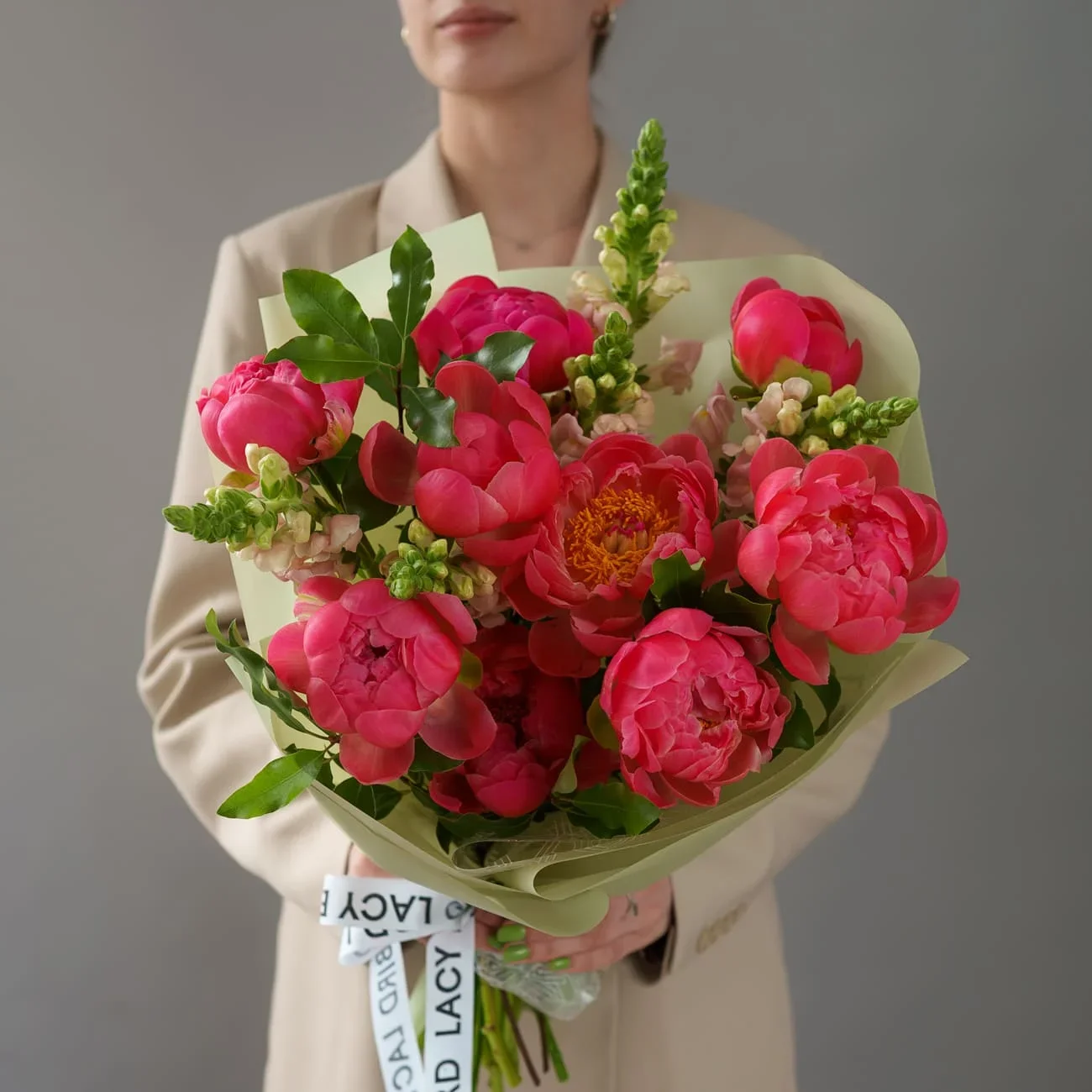
Mother's Day Flowers — a modern florist's guide
What flowers to give for Mother's Day, palette ideas beyond the classic pink, timing your order, and the sustainable arrangements our studio recommends.
Mother's Day is the second-largest flower-sending occasion of the year after Valentine's Day. In the US, more than 65% of the population buys flowers for the holiday, and demand peaks in the two days before the Sunday itself.
This guide covers what to order, why the classic pink-carnation model is mostly gone, and how our studio thinks about a modern Mother's Day bouquet — including the palette, the flower choice, and the timing.
When is Mother's Day?
Dates vary by country. The most common:
- US, Canada, Australia, most of Latin America — Second Sunday of May (May 10, 2026)
- UK, Ireland — Fourth Sunday of Lent (usually mid-March); called Mothering Sunday
- Mexico — Always May 10 (any day of the week)
- UAE, most Arab countries — March 21 (spring equinox)
- Russia, most former Soviet countries — Last Sunday of November
For any given florist, Mother's Day is really two or three peak days — the Friday and Saturday before, when 60-70% of orders ship.
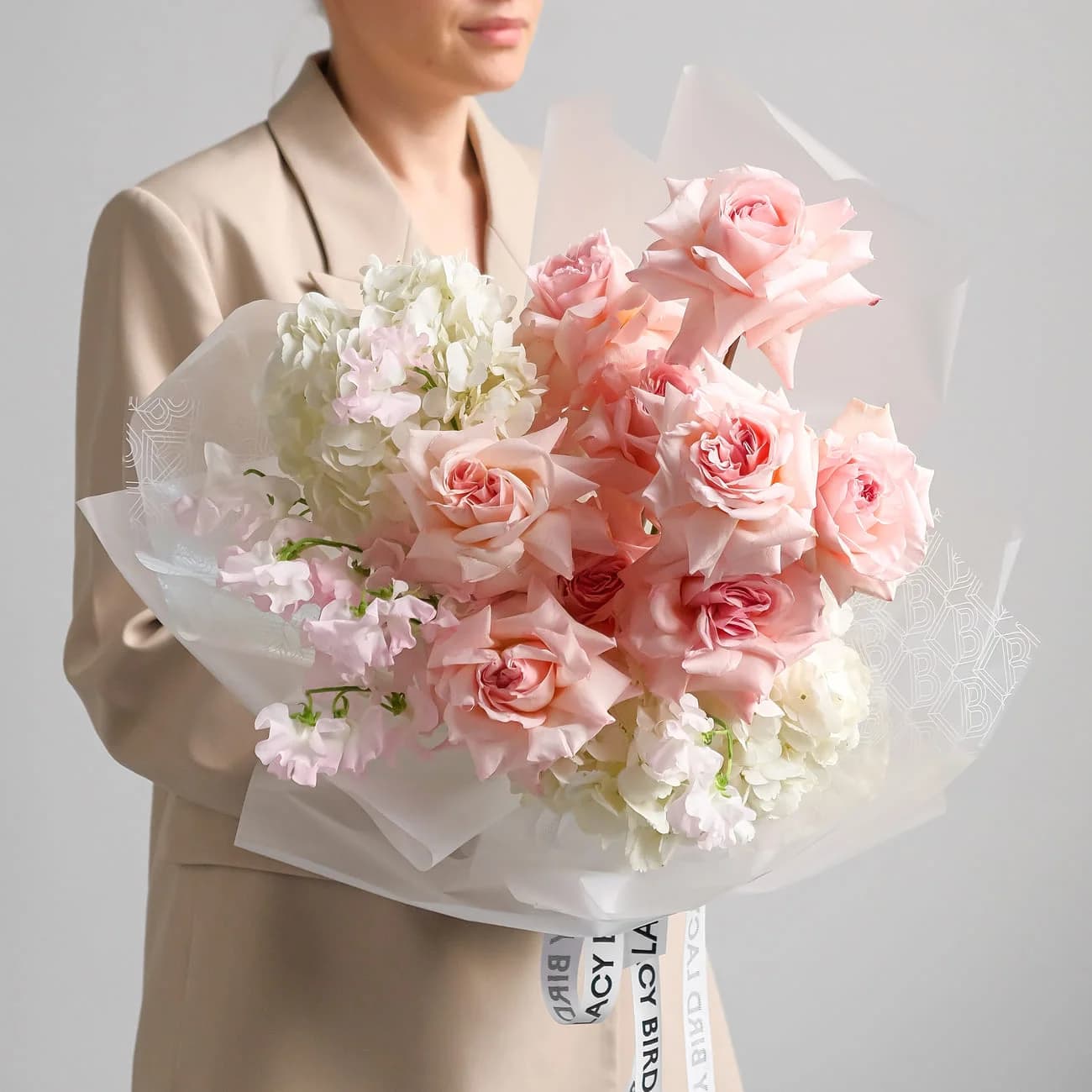
The modern Mother's Day palette
For decades the Mother's Day palette was pink. Pink roses, pink carnations, pink hydrangea. This has quietly diversified in the last five years.
The new default palette:
- Soft neutrals — cream, beige, dusty peach, pale pink, ivory. Modern-feminine, works for any mother.
- Bright optimism — coral, warm yellow, orange, mustard. For cheerful arrangements that don't lean nostalgic.
- Considered pastels — lavender, sage, dove blue, blush. Editorial and design-forward.
- Bold statement — burgundy, magenta, deep plum. For younger mothers or as a departure from the expected.
What we don't do anymore: dyed carnations, sprayed baby's breath, foam-based arrangements. The 1980s bouquet.
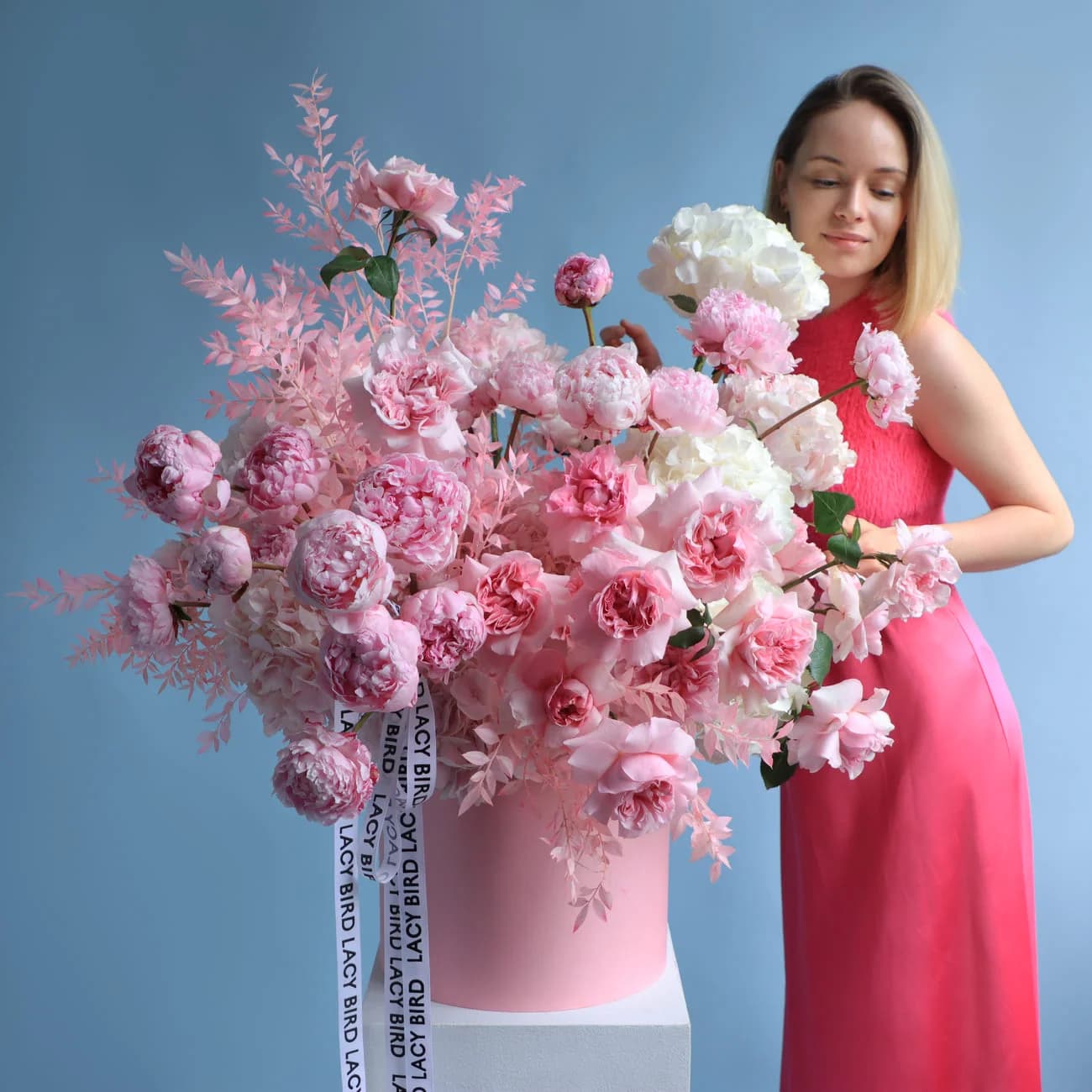
Best flowers for Mother's Day
By category, in order of what our studio recommends most:
Roses and garden roses
The reliable centrepiece. Standard commercial roses (Mondial, Playa Blanca, Free Spirit) for a classic look; David Austin garden roses (Juliet, Patience, Keira, Constance) for softer, more romantic style.
Peonies
If Mother's Day falls in peony season (early May in most Northern Hemisphere markets, near-peak in the second week), peonies are the premium choice. Sarah Bernhardt, Coral Charm, Duchesse de Nemours.
Ranunculus
Widely available in spring, layered petals give visual density without the aggressive scale of peonies. Cloud, Elegance, and Butterfly series are the wedding-grade varieties.
Lisianthus
Ruffled multi-petal blooms in ivory, blush, lavender. Long-lasting in a vase and photographs beautifully. Underrated commercial workhorse.
Sweet peas
Delicate, scented, wonderfully romantic. Short vase life (3-5 days) so usually a mixed-arrangement element rather than the standalone. Peak in May.
Tulips
Modern, cheerful, wide colour range. See our tulip season guide. Parrot and double tulips are our current favourites for Mother's Day.
Alstroemeria
Long-lasting (10-14 days), inexpensive, comes in mixed multi-colour sprays. Not for premium arrangements but excellent for supermarket-level gifts and volume-adding.
What to avoid
- Carnations, unless heirloom or unusual varieties. Standard dyed supermarket carnations are what everyone gives and no one loves.
- Sprayed or glittered flowers. Reads as decades-out-of-date.
- Overly large bouquets. A 40-stem monster is impressive briefly and awkward to transport, arrange, and store. 15-25 stems is the sweet spot for a home vase.
- Very fragile flowers alone. Sweet peas and cosmos are gorgeous but finish in 3 days. Better mixed with hardy focals so the bouquet outlasts the delicate pieces.
Ordering timing
Order 3-7 days ahead for delivery in most markets. Mother's Day week sells out most florists by Wednesday for Sunday delivery.
Delivery windows are tight. Most florists deliver Mother's Day bouquets on the Saturday before (if it falls on a Sunday). Confirm the window when you order.
Same-day delivery in most markets is available up to noon Friday, but selection drops sharply — the "premium" bouquets sell first, and by Friday morning the remainder is often the compromise flowers.
International delivery — order minimum 5-7 days ahead. If sending to another country, verify local Mother's Day date; sending Mother's Day flowers to your UK mother on the US date (or vice versa) is a common mistake.
Bouquet vs. arrangement vs. plant
The three options:
Cut bouquet. Loose flowers wrapped in paper or cellophane, given with the expectation that the recipient will place them in their own vase. Traditional, still the most-common.
Arrangement in a vase. Flowers pre-arranged in a container, ready to place on a table. Higher ticket price, more convenient for the recipient. Growing category — increasingly what we recommend for recipients who don't have great vases or don't want to arrange.
Living plant. Orchid, peace lily, houseplant. Lasts weeks to years rather than days. Solid choice for mothers who value longevity, but not what a traditional flower recipient expects.
The hybrid we increasingly design: a small planted arrangement (a compact planted centerpiece with 2-3 live plants and 3-5 cut flowers inserted in tubes). Lasts weeks, looks like fresh flowers on day one, and evolves as the plants take over.
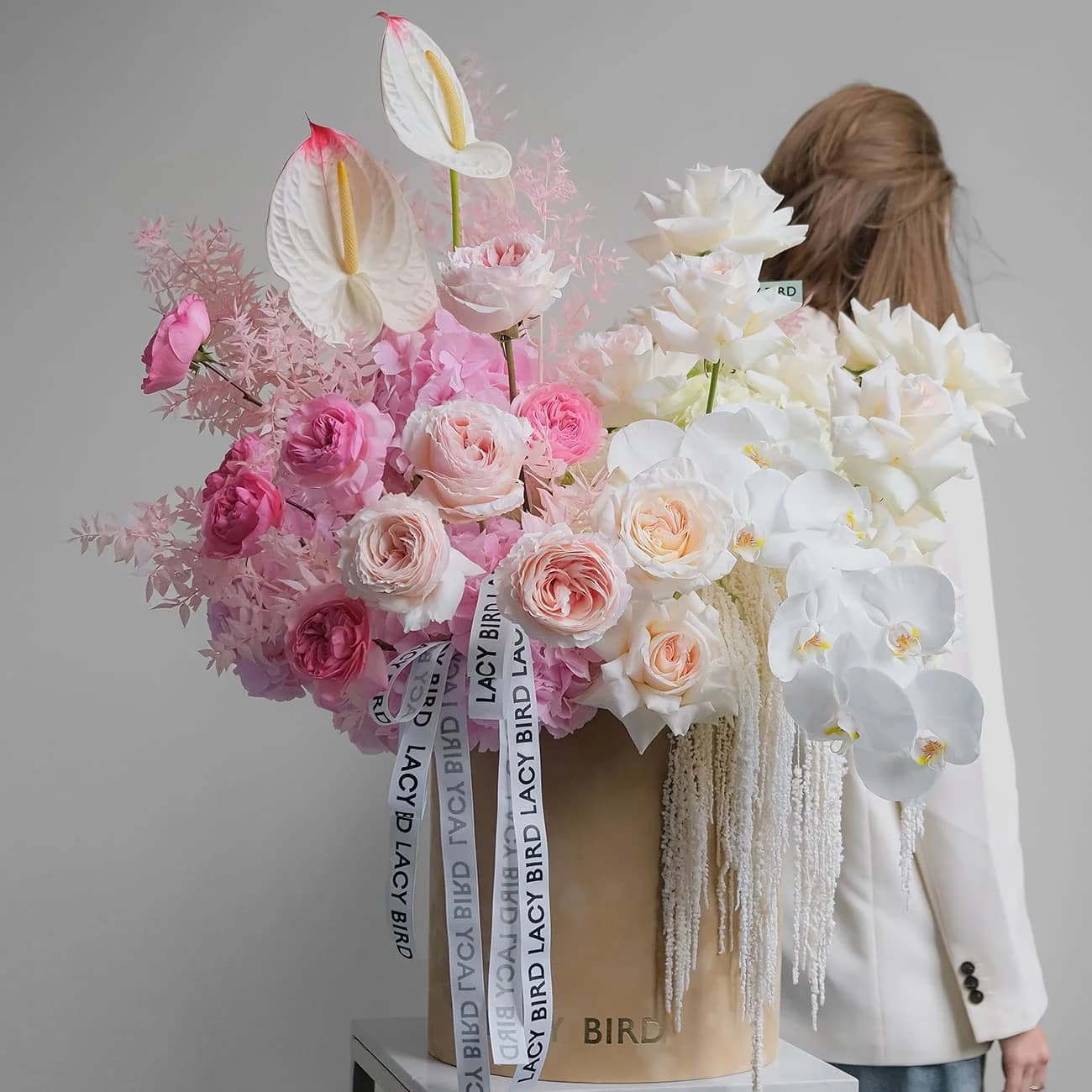
Modern arrangement styles our studio favours
Compote-style. Loose garden-inspired arrangement in a low pedestal bowl. Ideal for a dining table centrepiece. Roses, peonies, garden foliage — all in soft muted tones.
Cascading hand-tied. A hand-tied bouquet with elongated silhouette — longer stems on one side, standard on the other. Signals designed, not commodity.
Single-flower statement. 20 stems of one flower (parrot tulips, or coral charm peonies, or wisteria stems) in a simple footed vase. Editorial, modern, striking.
Bud vase collection. Six small vases each with 1-3 stems, delivered as a set. Recipient arranges around their space. Modern gift model, lasts longer than a single bouquet.
Mother's Day for florists
If you're on the professional side reading this: Mother's Day is one of the most operationally intense days of the year. Rules for surviving it:
- Cap orders by Wednesday. Anyone who orders Thursday-Saturday for Sunday-delivery in a saturated market causes chaos.
- Standardise the bouquet options. Offer 3-5 tiers, not 50 custom choices. Speed of production is the constraint.
- Pre-condition Wednesday-Thursday. Flowers processed and conditioned by Thursday morning; arrangements built Friday-Saturday.
- Delivery Sunday. Never Saturday — flowers deliver best when they're the freshest, and Sunday morning to noon is the window.
- Overstaff. Weekend Mother's Day is the highest customer-service volume of the year. One extra person on delivery routing pays for itself in a morning.
Frequently asked questions
What are the traditional Mother's Day flowers?
Carnations (pink for living mothers, white for deceased) were the traditional Mother's Day flower in the 20th century. That association has weakened considerably; today no single flower is universal.
What colour should I choose?
If your mother has a colour preference, use it. If not, soft neutrals (cream, blush, dusty peach) are a safe modern default. Bright colours (coral, mustard, magenta) for cheerful arrangements. Avoid dark reds and burgundies unless requested — the association with romance is too strong.
How much should I spend?
$40-60 for a small home bouquet. $75-125 for a mid-range arrangement in a vase. $150-300 for premium designer arrangements with peonies, garden roses, and exotics. Delivery adds $10-30 depending on distance.
Should I include a card?
Yes. Almost every florist provides a small card free with the order. A short handwritten (or typed) message means significantly more than an extra stem.
Can I send flowers to another country for Mother's Day?
Yes — most florists partner with international delivery networks (Interflora, FTD). Verify the local Mother's Day date before ordering; the destination country's date may not match yours.
What if my mother is allergic to flowers?
A living plant is the answer — bromeliad, orchid, jade plant, snake plant. Or a herb garden (rosemary, thyme, lavender). Flowers with the most allergy potential are lilies, chrysanthemums, and daisies; roses, tulips, and orchids trigger fewer reactions.
What's a good long-lasting Mother's Day flower?
Alstroemeria (10-14 days), chrysanthemum (12-14 days), lisianthus (10-12 days) are the vase-life champions. Combine one of these with 2-3 higher-drama flowers (roses, ranunculus) for a bouquet that ages gracefully.
Should I send flowers to a mother who's grieving?
White or cream flowers — lilies, roses, lisianthus. Avoid bright colours in the first year of grief. A short handwritten note acknowledging the loss goes further than any flower selection.
Related
- Peonies season if you're ordering for early-May Mother's Day
- Tulips season for spring bouquet planning
- How to keep flowers fresh for the gift recipient
- Order Mother's Day flowers in Dubai from our studio