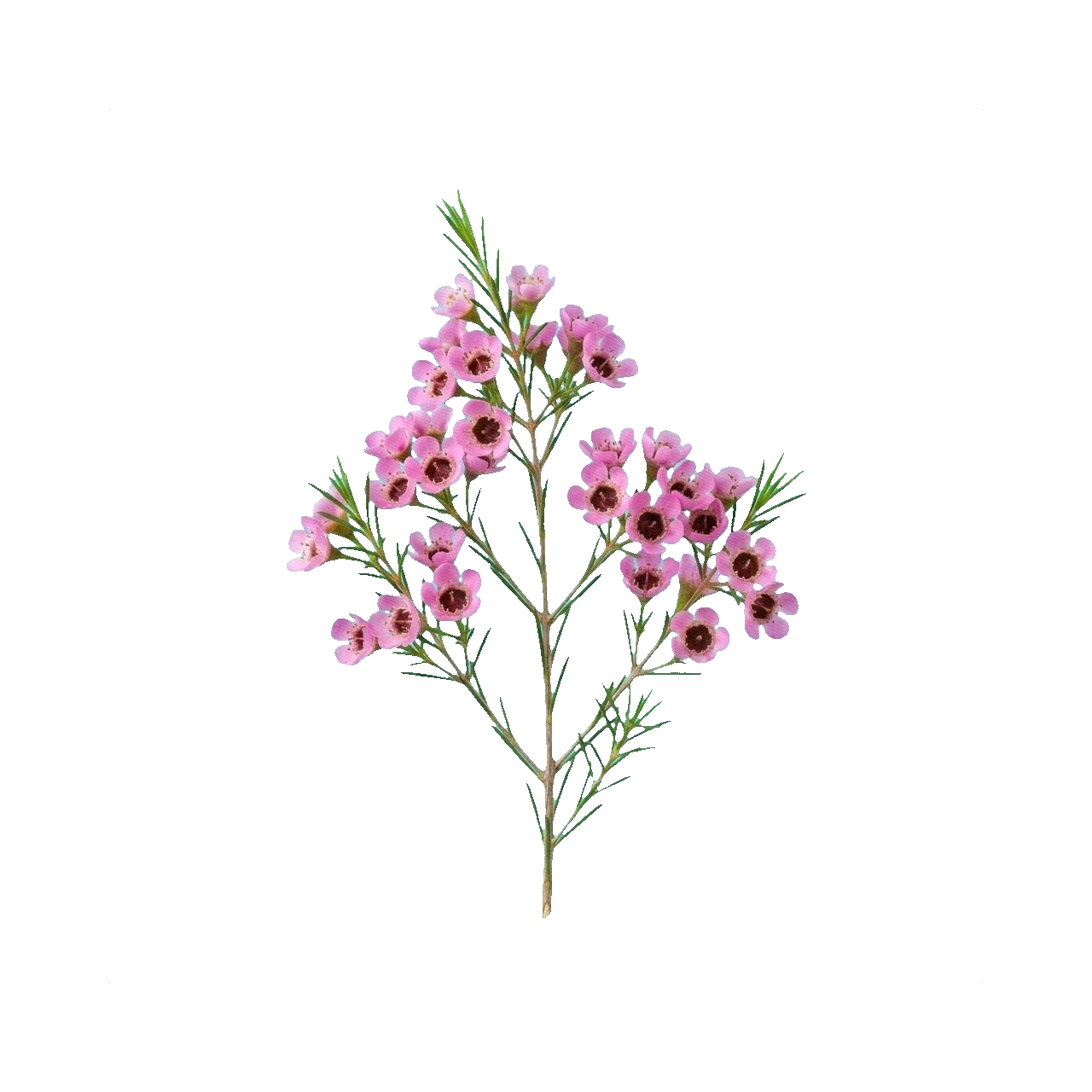
Waxflower
Waxflower is Australia's contribution to global wedding floristry — dozens of tiny florets per stem, weeks of vase life, and a subtle citrus scent. Splits into many usable side stems, making a single bunch cover multiple boutonnieres. A rare filler that lasts longer than the focal flowers it supports.
| Family | Myrtaceae |
|---|---|
| Origin | Western Australia; commercially grown Australia, Israel, California |
| Peak season | all year |
| Availability | all year |
| Stem length | 40–80 cm |
| Vase life | 10–21 days |
| Colors | white, blush, pink, purple, burgundy |
| Price tier | mid |
Cut on a diagonal, split woody stems 2 cm for water uptake. Fresh water.
- •Long vase life — 2–3 weeks common
- •Distinctive citrus-eucalyptus scent
- •Tiny florets provide huge coverage per stem
- •Splits into many usable side stems for boutonnieres
2 named waxflower cultivars from the Lacy Bird master catalogue — each a distinct commercial variety.
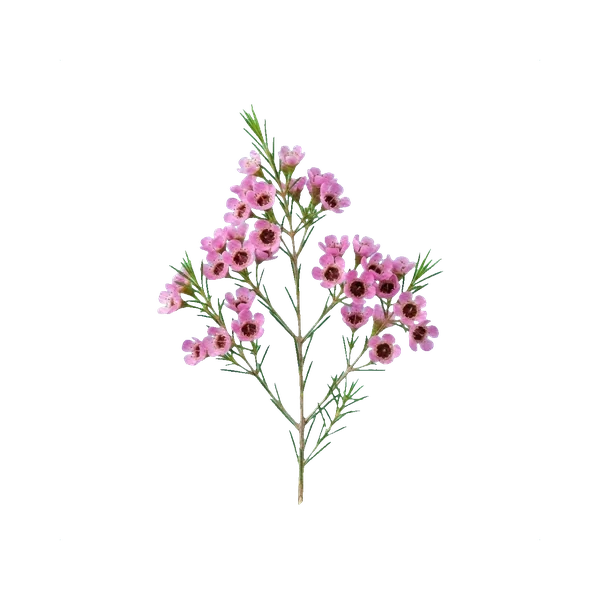
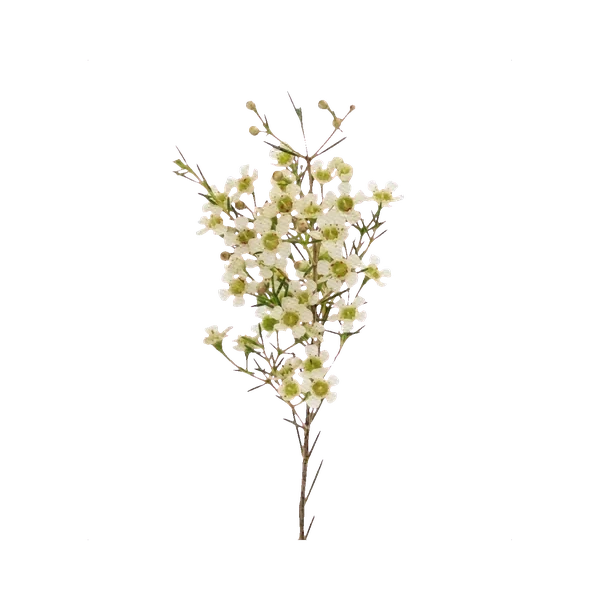
Entries marked ✦ come from the Acanta master catalogue — the shared database of cut flowers, forms, colours and named varieties that florists and studios build on. The rest are our editorial genus reference. What is Acanta →
 Bouquet Builder — by Lacy Bird
Design the bouquet. See it as a photo.
Botanical reference
- Common name
- Geraldton Wax
- Also known as
- Geraldton wax, Chamelaucium affine, Chamelaucium uncinatum leptophyllum, Darwinia uncinata
- Distribution
- Western Australia
Open-data sources: GBIF, Wikidata (CC0/CC BY), USDA Agriculture Handbook 66 (public domain)
Frequently asked questions
When is Waxflower in season?
Waxflower peaks in all year, and florists can usually source it all year. Availability shifts by region and greenhouse supply.
How long does Waxflower last in a vase?
Expect 10–21 days with proper conditioning — a clean vase, fresh water every couple of days, flower food, and a cool spot away from ripening fruit and direct heat.
What can I use instead of Waxflower?
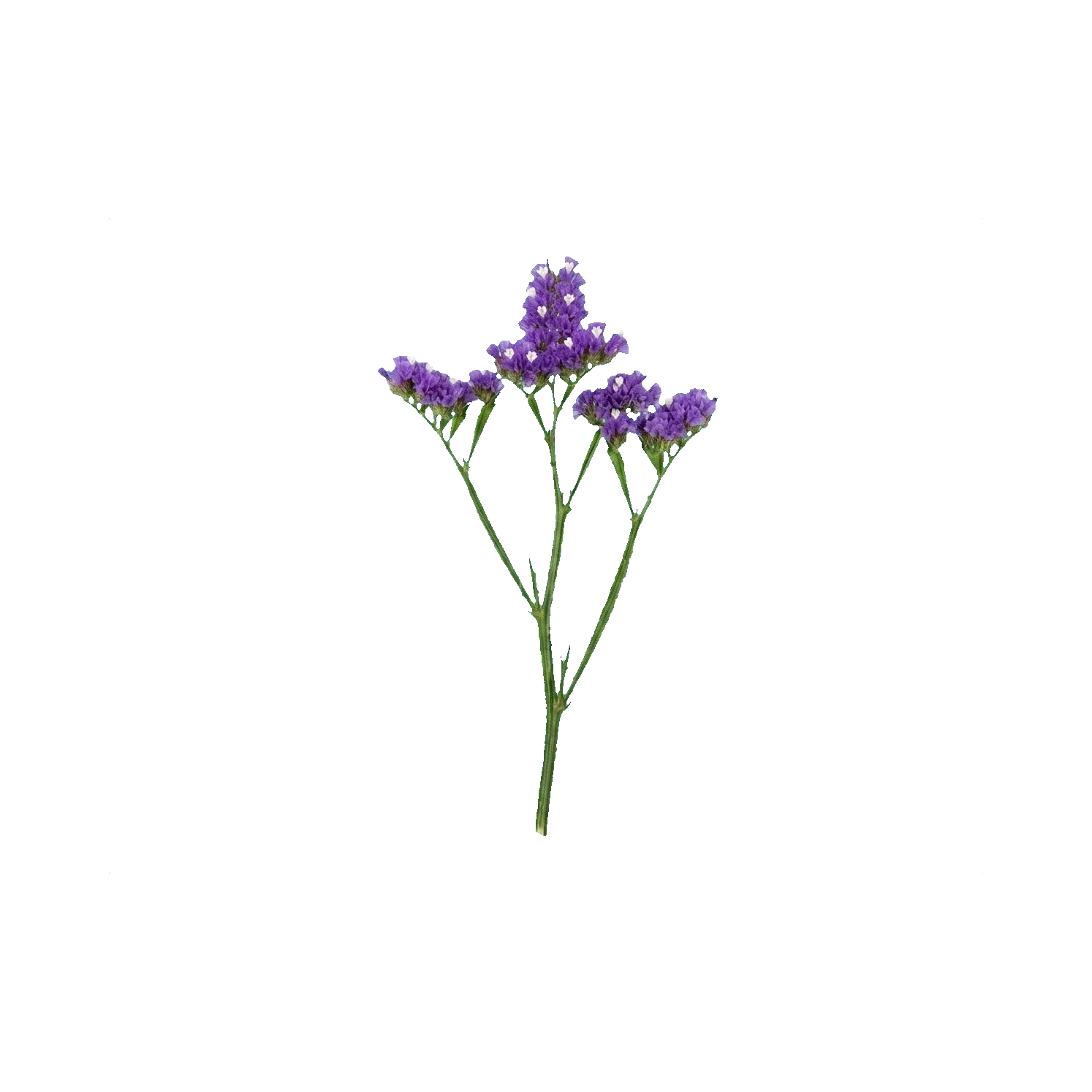
Good substitutes for Waxflower include Gypsophila, Statice. Match on look, colour and season — our substitute finder ranks the closest alternatives.
What does Waxflower symbolise?
Waxflower is associated with riches in love, lasting success.
How do you care for cut Waxflower?
Long vase life — 2–3 weeks common
Related flowers

Free to quote and cite with attribution and a link back, for non-commercial and editorial use (blogs, journalism, classrooms, research).
Lacy Bird Flower Encyclopedia — “Waxflower”. https://lacybird.com/flowers/waxflower/<a href="https://lacybird.com/flowers/waxflower/">Lacy Bird Flower Encyclopedia — Waxflower</a>