Flower Conditioning: The Overnight Ritual That Doubles Vase Life
How florists condition flowers — the unpack-strip-cut-rest sequence, water temperatures by flower type, special protocols (searing, hot water, hydration solutions) and home shortcuts.
Every trade has its invisible half. In floristry it's conditioning — the unglamorous hours between the wholesale box and the display vase, when the studio does the work that decides whether your bouquet lives four days or nine. None of it shows in the final photograph; all of it shows on day six. Here is the ritual, and the parts worth stealing for home.
The core sequence: unpack, strip, cut, rest
Unpack immediately. Flowers travel dry and sealed; every hour in the box costs vase life at the far end. First thing on arrival — out of the sleeve, into the ritual. (Sleeves stay on only for flowers that need support while drinking — see tulips, below.)
Strip the lower third. Any foliage that would sit under water comes off — submerged leaves are the bacterial fuel that turns vase water into stem-clogging soup. This one habit, done or skipped, is visible in every vase within three days.
Recut at an angle. A centimetre off every stem with a sharp blade — cut flowers self-seal within minutes of leaving water, so the "fresh" stem end from the farm is a closed door. The angle maximises drinking surface and keeps the stem off the bucket floor.
Rest: 4-12 hours, deep, cool, dim. Clean buckets, water half-way up the stems, somewhere cool and out of light — and the flowers simply drink. Overnight is the studio standard. A flower arranged thirsty carries its deficit to the grave; one arranged full starts the week ahead.

Temperature: the lever most people don't know exists
Water temperature is a tool, not a default:
- Cool for everything from a bulb — tulips, daffodils, hyacinths, anemones. They are spring flowers; cold is their native register and they last visibly longer in it.
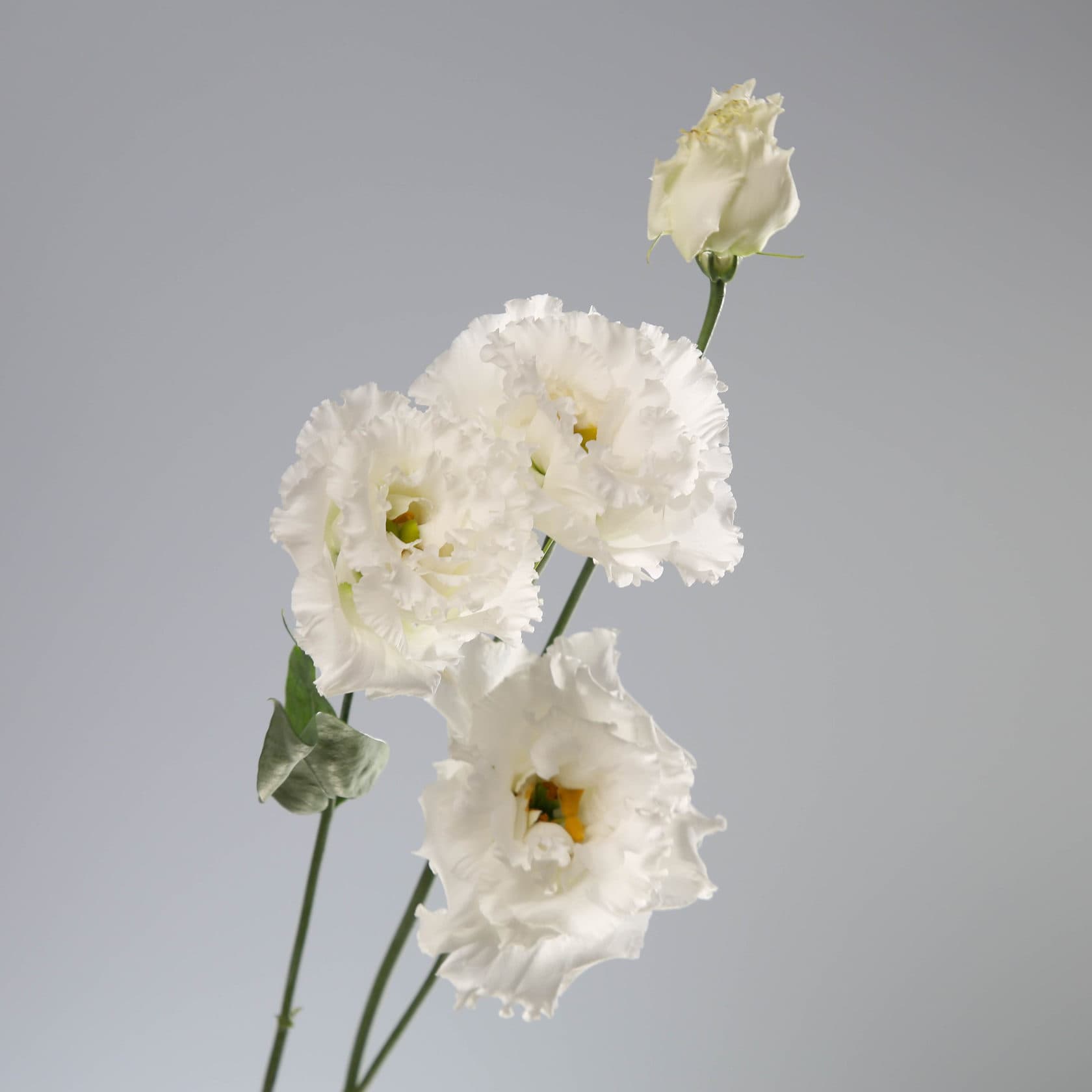
- Room temperature for the general population — roses, carnations, lisianthus, chrysanthemums.
- Warm (comfortable to the hand) for woody stems — lilac, viburnum, blossom branches — whose vessels need coaxing, and as the revival protocol for a wilted rose: fresh angled cut, warm water, an hour of dim rest. It works more often than it should.
Two special protocols worth knowing by name: searing — poppy, euphorbia and other milky-sap stems get their cut ends held in boiling water for 10-15 seconds (or flame-touched), which stops the sap sealing the stem and spares neighbours the latex; and splitting — woody branch ends get a vertical 2-3 cm cut so they can drink at all.
And the tulip trick every florist uses: they keep growing and curving after cutting, so they're conditioned wrapped upright in their paper, drinking while held straight — unwrapped, they set into whatever curve they rested in. (More on their vase behaviour in our daffodil and bulb-flower care notes.)
The home version: three minutes, most of the benefit
You don't run a studio, but every shop bouquet you carry home is a conditioning candidate — it just travelled, dry, again. The doorstep ritual: strip anything that would sit below water, recut everything at an angle, and give the bouquet one hour in deep water somewhere cool before it goes to its display spot. That hour is the whole secret; a bouquet moved straight from wrapper to warm living room skips the recovery its stems needed.
Then the maintenance you already know — clean water every other day, feed it properly, fresh cuts at each change — lands on a flower that started full instead of running on empty. Conditioning isn't advanced floristry; it's hospitality. The flowers just arrived from a very long trip, and everything after depends on whether anyone offered them a drink.