Floristry in the U.S. — a case study from Florida
How Daria built a modern floristry studio in Florida after moving from Russia — differences in the U.S. market, wholesale supply, and what actually sells.
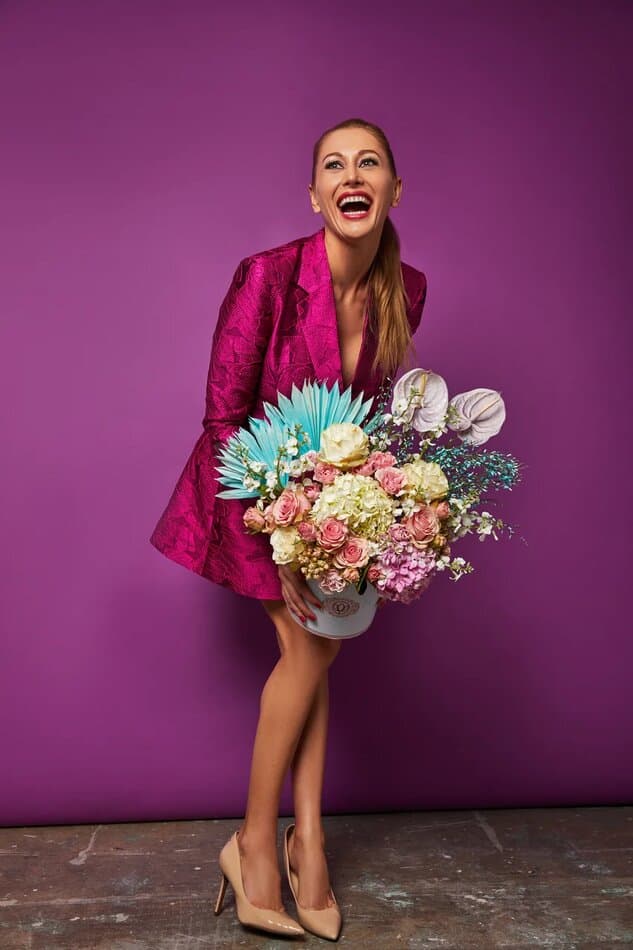
Daria Medvedeva moved from Russia to Florida three years ago and built a small modern floristry studio in a market she describes as "underdeveloped compared to what we're used to." Her Instagram customers are surprised by asymmetric spiral bouquets that Europeans consider standard.
This interview covers what she observed about the U.S. flower market and how she built her business from zero.
TL;DR. Daria Medvedeva moved from Russia to Florida and built a modern floristry business in a market dominated by simple retail bouquets. Coastal U.S. floral markets are underdeveloped versus New York/LA, Russian and Spanish immigrant customers appreciate lush asymmetric bouquets, and the U.S. requires strict business licensing before wholesale flower access.
How the transition happened
Daria wasn't a florist before moving. After emigrating, she scrolled Instagram and encountered Lacy Bird Academy — the first modern bouquets she'd seen since arriving in the U.S.
"It was so unusual and curious for me to see absolutely stunning bouquets. I immediately fell in love with your style and thought that I want to do the same."
Before she was a student, she'd been quietly disassembling supermarket bouquets and rebuilding them in her kitchen using techniques she'd seen in videos. The professional path became obvious when she recognised the mismatch between what U.S. Florida retail offered and what she wanted to make.
The Florida floral market — what she found
Daria's observation:
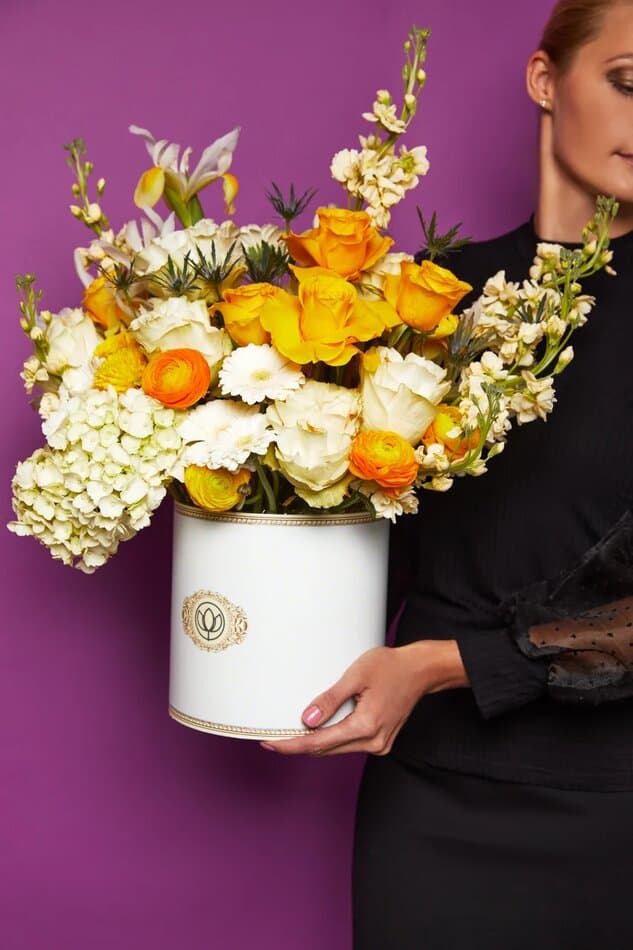
"In New York, Chicago, or Los Angeles the situation is completely different: people there have taste, they understand colors. And the range of colors and flowers is large in these cities. However, in other states it is normal and even popular to give just some flowers with little wrapping."
The gap between coastal luxury cities and mid-market states is larger than European florists expect. Ecuador and Colombia flowers are cheaper and more available in the U.S. than in Europe — but professional design demand is concentrated in specific cities.
Where U.S. luxury floristry concentrates:
- New York (highest concentration of European-trained florists)
- Los Angeles (film/celebrity events driving demand)
- Chicago (established old-money market)
- San Francisco (tech-money weddings)
- Nashville (rising: growing luxury wedding market)
- Miami (international clientele from Latin America)
Where the retail-supermarket market dominates:
- Most of Florida (outside Miami)
- Most Southern states (Georgia, Alabama, Mississippi)
- Rural markets across the Midwest and Plains
Customer base — who actually buys
Daria found her core clientele was not native-born Americans:
"Mainly it's the Russian and the Spanish. The Spanish, like us the Russian, are closer to lush and asymmetrical forms. As for native populations, the Americans also are unlikely to buy 101 roses."
Immigrant communities in the U.S. often drive luxury bouquet demand because they carry the flower-buying culture from their countries of origin. Latin American, Russian, Iranian, Filipino, and Chinese-American clients frequently order full luxury bouquets that native-born Americans wouldn't consider.
For any florist setting up in a U.S. mid-market city: identify your local immigrant communities and speak to them directly. It is a bigger and more loyal market than the general U.S. population.
The wholesale supply landscape
The U.S. wholesale flower market is unique:
- South American flowers dominate. Ecuador and Colombia supply 70%+ of U.S. cut flowers. Prices lower than European equivalents.
- Airport-based wholesalers. Miami is the largest port of entry; Los Angeles and New York also major.
- Wholesalers require business licenses. You cannot buy at wholesale without a valid resale certificate and business registration.
- Direct-from-farm buying available. Some Ecuadorian farms ship direct to U.S. florists in weekly cadence.
Business licensing process:
- Register LLC in your state (1-3 weeks)
- Federal EIN from IRS (1-3 days)
- State sales tax permit / resale certificate (1-3 weeks)
- Business bank account (1 week)
- First wholesale account application (2-4 weeks)
Total: 4-8 weeks minimum before you can order at wholesale prices.
Photography and social media
Daria emphasised the shift from "I take pictures" to "I take commercial pictures":
"After the photography course, I know exactly what photos I need for my website, for social media and for my customers, what backgrounds I should use or what kind of light."
For any florist launching in the U.S., photography is not optional. Your Instagram feed is your storefront.
- Consistent background (neutral wall, wood surface)
- Even lighting (natural window or ring light)
- Multi-angle shots (top-down, three-quarter, side profile)
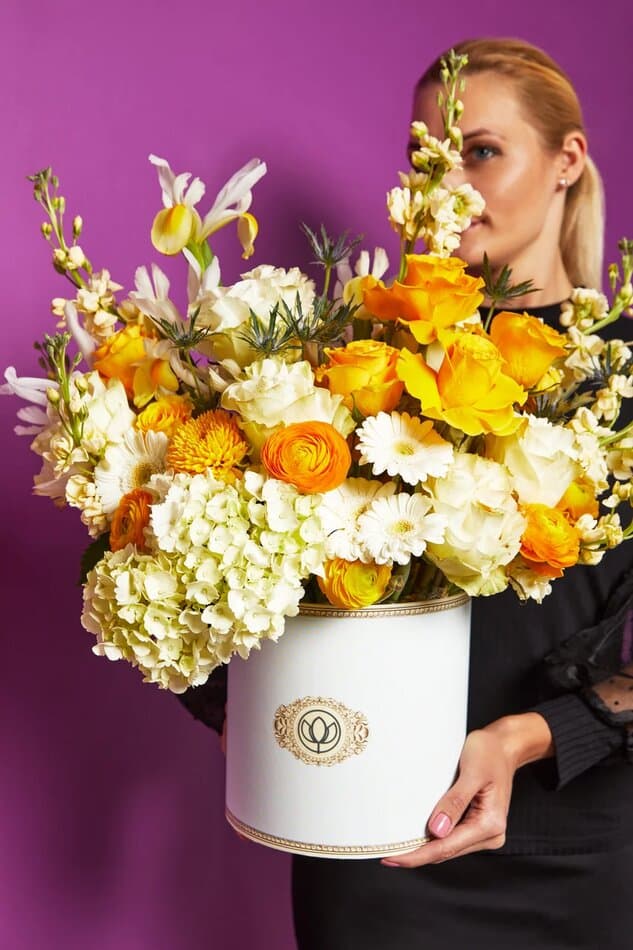
- Bouquet + hand + face shots for humanising the studio
- Detail shots showing individual focal flowers
What Americans consider a normal bouquet
Daria's most striking observation:
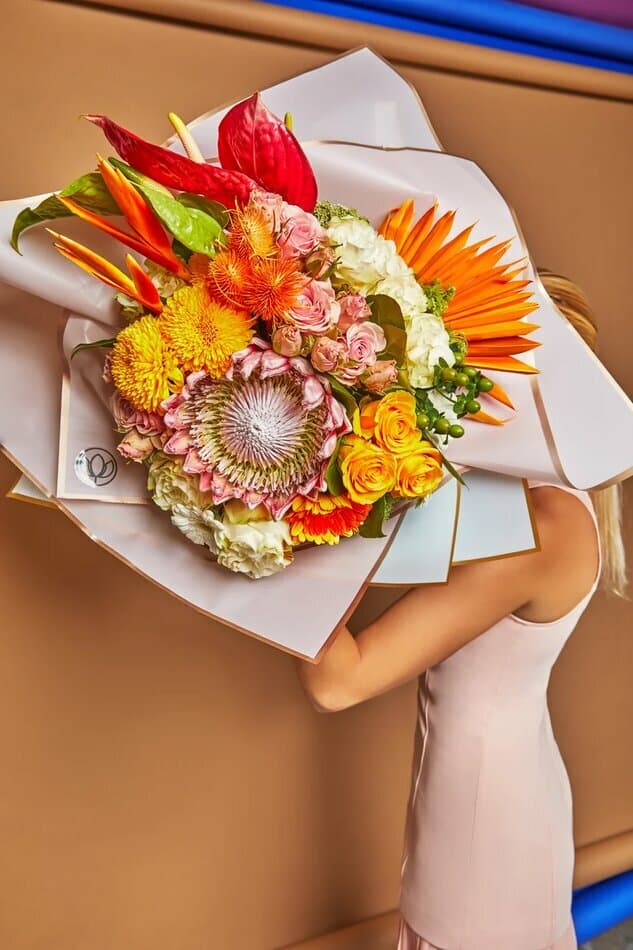
"Many people buy flowers in supermarkets, but it's not a bouquet, it's more like an armful of flowers in a package. If we talk about specialized flower shops, they often deliver flowers in a transparent vase. As for a technique of assembling bouquets, most of the time flowers aren't even assembled with a spiral. I don't see arrangements in boxes at all."
The "armful in cellophane" style is genuinely dominant in retail. Spiral hand-tied bouquets are almost unknown outside professional studios in most U.S. cities. This is both a challenge (customers don't know to ask for them) and an opportunity (once shown, they're immediately impressed).
Similarly, box arrangements — a Russian/European standard — are barely present in U.S. retail. Daria imports the boxes from Russia because they're hard to source domestically.
Occasions Americans buy for
- Valentine's Day (February 14) — largest day of the year
- Mother's Day (second Sunday of May) — second largest
- Anniversaries — significant recurring business
- Thanksgiving — table arrangements, seasonal
- Christmas — wreaths and centerpieces, seasonal
- Weddings — the luxury bulk of the year
What Americans buy less often:
- Weekly personal purchase (compared with European culture)
- Get-well and sympathy (compared with Latin American culture)
- Housewarming (compared with Asian cultures)
Advice for florists considering the U.S. move
Based on Daria's observations:
-
Choose your city carefully. New York or LA compete on luxury design and cost; smaller markets offer less competition but lower price ceilings.
-
Legalise your business first. No wholesale access without proper LLC and resale certificate.
-
Speak to immigrant communities first. Your first paying clients likely won't be native-born Americans.
-
Invest in commercial photography. Instagram and website photography drive 70%+ of new U.S. clients.
-
Bring imported materials as needed. Boxes, specific containers, and Russian-style wrapping may not be available locally.
-
Study U.S. wedding aesthetic. Some techniques and colour palettes that work in Europe don't translate — U.S. weddings often favor lighter, whiter palettes and less lush density.
The takeaway
The U.S. is not one flower market — it is dozens, with wildly different sophistication, price levels, and customer bases by city. For florists considering the move: research the specific target city's floral scene through local Instagram accounts and in-person walk-throughs of studios before committing.
If Daria's experience is representative: a well-trained European florist can build a successful boutique studio in a mid-market U.S. city within 2-3 years, focusing on immigrant communities and building an English-speaking customer base gradually.
Related reading: