Groomsmen Boutonnieres — the modern wedding guide
How to design boutonnieres for a full wedding party — matching vs unique per groomsman, cost per piece, cohesion rules, pitfalls to avoid, and modern flower selections that don't wilt by cocktail hour.
The groom's boutonniere is a decision. The boutonnieres for the four or six or ten men standing next to him — that's a design problem.
Should every groomsman wear the same thing? Should each have his own? Should the best man have something distinct? What flowers hold up through a summer ceremony and cocktail hour without going brown? What does it cost to get this right?
This is the guide we walk our wedding couples through. It's built from a decade of designing wedding-party florals and watching what holds up in photographs at hour six.
Three approaches — pick before you buy flowers
Approach 1 — Matched (traditional). Every groomsman wears the identical boutonniere. Groom's boutonniere is a slightly larger version, or the same design with one extra element.
- Reads as: classical, formal, unified
- Best for: black-tie weddings, symmetric ceremonies, larger bridal parties (6+)
- Pitfall: every groomsman has to be equally comfortable with a floral piece; if one refuses, the whole visual falls apart
Approach 2 — Coordinated but unique. Each groomsman gets a different design using the same flower palette. The groom's is a signature within the family.
- Reads as: modern, personal, considered
- Best for: garden weddings, mid-sized parties, couples who value each groomsman as an individual
- Pitfall: requires more design time from your florist (billable) and more coordination on photo day
Approach 3 — Groom distinct, groomsmen matched. Groom wears something meaningfully different; the men next to him wear the same simpler piece.
- Reads as: hierarchical, wedding-day-tradition
- Best for: most weddings — this is the working default
- Pitfall: distinction has to be genuine (bigger, different focal flower, or added ribbon) — not just a slightly bigger version of the same thing
The 60/30/10 rule for a coordinated palette
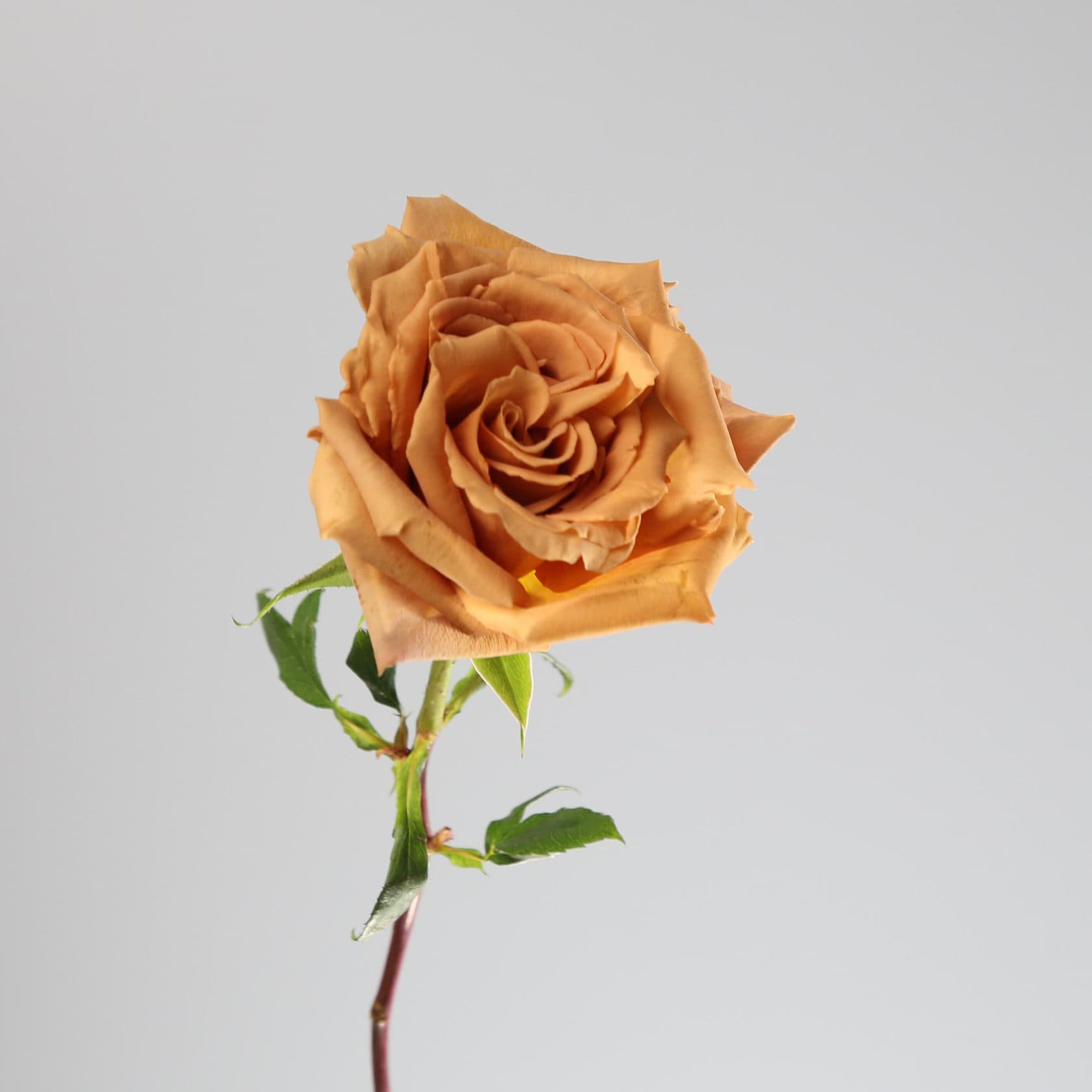
If the wedding palette is, say, blush + burgundy + eucalyptus:
- 60% of each boutonniere is the palette's neutral (the greenery — eucalyptus)
- 30% is the dominant colour (blush spray rose)
- 10% is the accent (a single burgundy scabiosa or berry)
Every boutonniere follows this ratio. What differs between them is which specific flower fills each slot — but the ratios stay constant.
Flower selection — what holds up
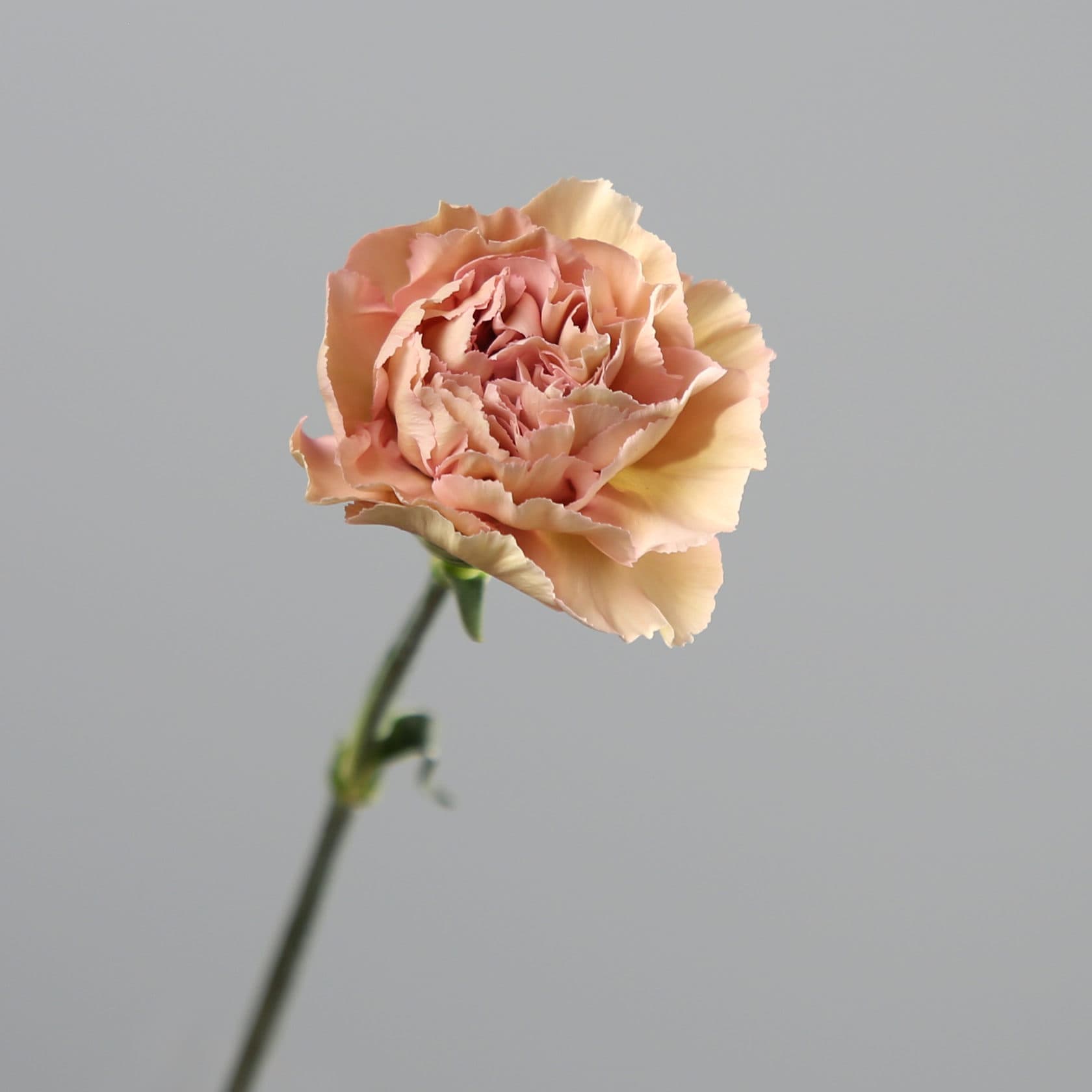
A groomsman boutonniere lives 6-10 hours from ceremony to reception exit, in the heat of a summer venue or the moisture of a spring outdoor wedding. Choose flowers accordingly.
Reliable for a 10-hour day:
- Spray roses (small heads, sturdy)
- Ranunculus (papery petals hold up)
- Waxflower (tiny, resilient)
- Craspedia (indestructible)
- Silver dollar eucalyptus (holds shape when dried)
- Hypericum berries (visual weight, texture)
- Statice (dries in place if forgotten)
Handle with awareness:
- Anemones (open in warmth — dramatic if photographed early, less so by dinner)
- Full-size garden roses (heavier — need better pin support)
- Sweet pea (fragrant, but only 4-hour life)
Avoid for groomsmen:
- Full peonies (too big, too fragile)
- Tulips (grow post-cut, will point wrong direction by dinner)
- Any lily (fragrance overwhelming at collar level)
- Anything requiring water (which no boutonniere has)
Cost per boutonniere — what to expect
- Simple, one-flower: $12-25 per piece
- Standard coordinated: $18-35 per piece
- Custom / larger: $35-65 per piece
- Luxury / rare flower / event scale: $65+ per piece
For a wedding party of six groomsmen plus groom (7 total): $126-455 total for boutonnieres alone. Budget the same again for father-of-the-bride, father-of-the-groom, and ring bearer if applicable.
Common pitfalls we see
Over-scale. A boutonniere the size of a golf ball dominates the lapel and looks amateur. Keep the finished cluster 6-9 cm tall.
Over-fragrance. Anything worn at collar level should be lightly-scented or unscented. Freesia, sweet pea, jasmine — all beautiful, all overwhelming at close range.
Wired-and-foamed. The 1990s technique with floral foam and 30 cm of wire looks industrial. Modern boutonnieres are stem-mounted with cold glue and wrapped in silk ribbon.
Colour drift. If you ordered eucalyptus and got olive, the whole palette shifts. Test the flowers at delivery — reject substitutions if they change the palette meaning.
Late delivery. Boutonnieres for a 3pm ceremony should be delivered by 1pm. Store them refrigerated at 4-8°C until pinning time.
Pinning correctly
Most groomsmen have never pinned a boutonniere. Assign one person (often the mother of the groom or the wedding coordinator) to pin all boutonnieres 15 minutes before the ceremony:
- Left lapel of the suit
- Stems pointing up-and-to-the-right
- Cluster on the outside of the lapel, ribbon side inward
- Two small floral pins (from the florist) — one horizontal, one angled for stability
If you're doing a lot of these, pre-pin one boutonniere at home the day before to muscle-memory the angle.
Photography considerations
Boutonnieres photograph best in the first 3 hours. By hour 6 the flowers show heat damage.
Photograph early: getting-ready shots with the boutonniere in a glass or on a linen. Ceremony arrival with the pinning. First-look photographs.
Skip late: exit photos where every man's boutonniere is starting to droop. Better to photograph the wedding party earlier in the day.
The alternative — dried or preserved boutonnieres
A growing trend: boutonnieres made from preserved / dried materials (dried lavender, wheat, statice, craspedia, small preserved roses, seed heads). Advantages:
- Lasts the whole day with zero degradation
- Photographs beautifully throughout
- Can be gifted as a keepsake after the wedding
- Sustainable — no imported fresh flowers
- Same or lower cost than fresh
Best fit for boho weddings, autumn/winter weddings, and outdoor weddings in hot climates. Not the fit for formal traditional weddings where fresh flowers are expected.
A working example
For a September garden wedding with a burgundy + blush + eucalyptus palette:
- Groom: garden rose (blush) + burgundy scabiosa pod + silver dollar eucalyptus + astrantia
- Groomsmen (5): blush spray rose + burgundy hypericum berry + silver dollar eucalyptus + waxflower
- Fathers (2): the same as groomsmen but with silver ribbon instead of the natural twine
Cost: $32/groomsman × 5 + $55 groom + $30 × 2 fathers = $275 total for boutonnieres.
Related reading: