Photo: H. Zell · CC BY-SA 3.0 · Wikimedia Commons
Ammi
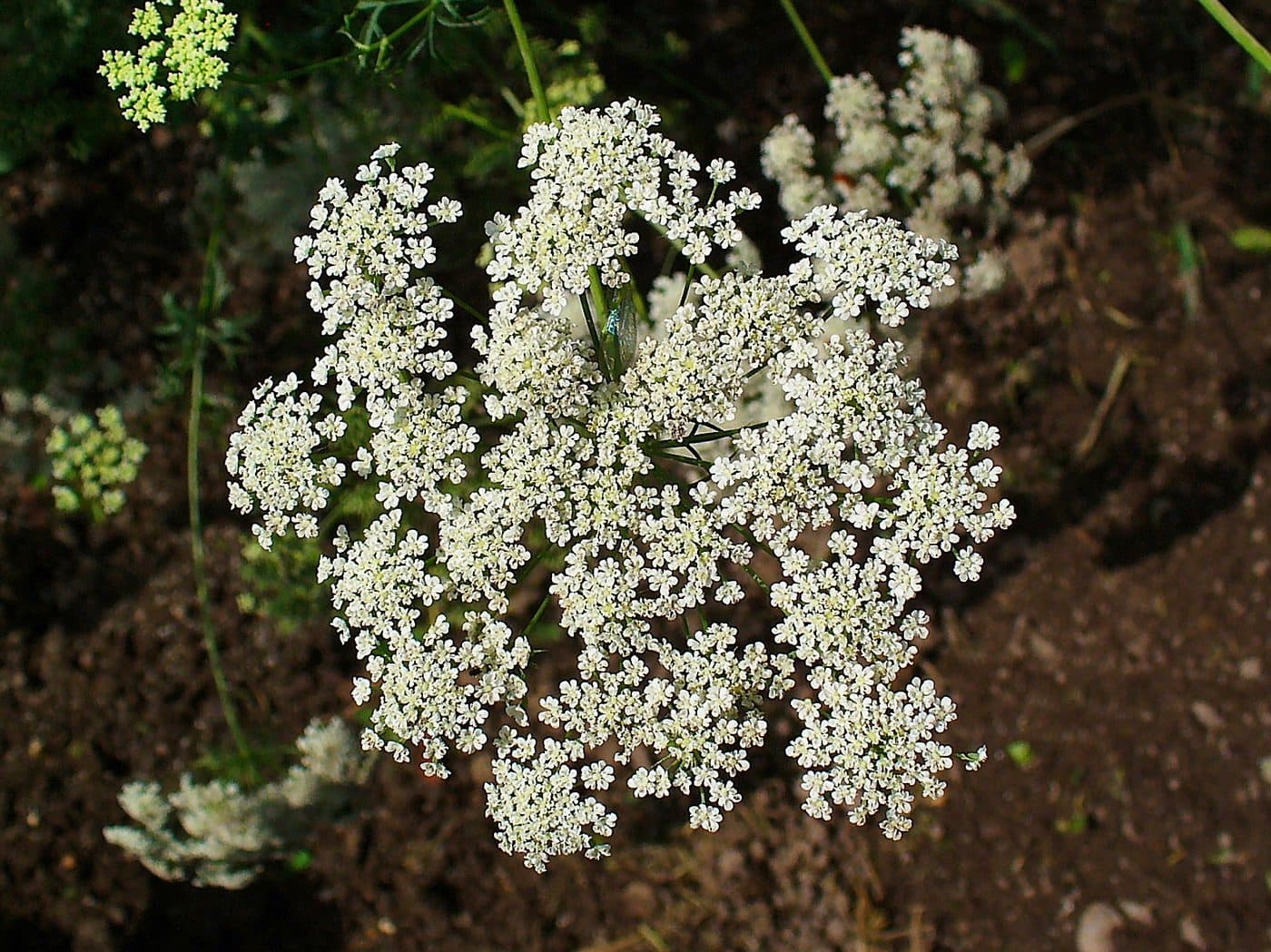
Ammi — often marketed as Queen Anne's lace — provides the airy, lacy white umbrellas that define modern cottage-garden wedding work. One stem breaks into 5–10 usable side stems, giving strong coverage. Sensitive individuals may develop skin irritation from handling; wear gloves at conditioning.
| Family | Apiaceae |
|---|---|
| Origin | Mediterranean; commercially grown Italy, Israel, Colombia |
| Peak season | May, June, July |
| Availability | April to September |
| Stem length | 60–100 cm |
| Vase life | 5–10 days |
| Colors | white, cream |
| Price tier | mid |
Cut on a diagonal, fresh water. Splits into many usable side stems.
- •Lacy umbrella-shaped flower clusters — signature filler
- •One stem provides many usable side branches
- •May cause skin irritation in some people — handle with gloves
- •Cottage-garden wedding staple
 Bouquet Builder — by Lacy Bird
Design the bouquet. See it as a photo.
Botanical reference
- Common name
- Bishop's Weed
- Also known as
- Queen Anne's lace, false bishop's weed, Aethusa ammi, Ammi apiifolium, Ammi boeberi, Ammi broussonetii, Ammi cicutifolium, Ammi diversifolium, Ammi diversifolium daucifolium, Ammi diversifolium glaucifolium, Ammi elatum, Ammi glaucifolium
- Distribution
- Albania, Algeria, Azores, Baleares, Canary Is., Corse, Cyprus, East Aegean Is., Egypt, France
Open-data sources: GBIF, Wikidata (CC0/CC BY)
Frequently asked questions
When is Ammi in season?
Ammi peaks in May, June, July, and florists can usually source it April to September. Availability shifts by region and greenhouse supply.
How long does Ammi last in a vase?
Expect 5–10 days with proper conditioning — a clean vase, fresh water every couple of days, flower food, and a cool spot away from ripening fruit and direct heat.
What can I use instead of Ammi?
Good substitutes for Ammi include Gypsophila. Match on look, colour and season — our substitute finder ranks the closest alternatives.
What does Ammi symbolise?
Ammi is associated with haven, sanctuary.
How do you care for cut Ammi?
Lacy umbrella-shaped flower clusters — signature filler
Related flowers

Free to quote and cite with attribution and a link back, for non-commercial and editorial use (blogs, journalism, classrooms, research).
Lacy Bird Flower Encyclopedia — “Ammi”. https://lacybird.com/flowers/ammi/<a href="https://lacybird.com/flowers/ammi/">Lacy Bird Flower Encyclopedia — Ammi</a>