Flower Boxes: How the Format Works, When It Beats a Bouquet, and What's Inside
The flower box explained — hidden mechanics (liner and soaked foam or eco alternatives), why it travels better than a bouquet, honest prices, care, and ordering tips.
The flower box is the youngest classic in floristry — barely a decade from Instagram novelty to standard studio menu — and it earned the promotion honestly: it solved delivery. A bouquet is designed for the moment of handover; a box is designed for the twenty-four hours around it — the car ride, the doorstep, the desk, the photo. Here is the format from the inside.
What's actually in the box
Lift the flowers out of any professional box (gently) and you find a small engineering project:
- The waterproof liner — heavy film sealing the cardboard from its own water supply. One leak ruins box, table and reputation simultaneously, which is why studios overbuild this layer.
- The water source — classically a brick of soaked floral foam; in foam-free studios a moss-packed wire build or a hidden low dish with chicken wire (why we lean that way).
- Short stems, set dense. Box flowers are cut to 8-12 cm and placed at controlled depths — which is exactly why a box holds its designed dome or flat "field" for its whole life instead of relaxing outward the way a vase arrangement does.
That last point is the format's quiet superpower: a box is the only fresh format that still looks like the product photo on day five. The mechanics allow no slouching.
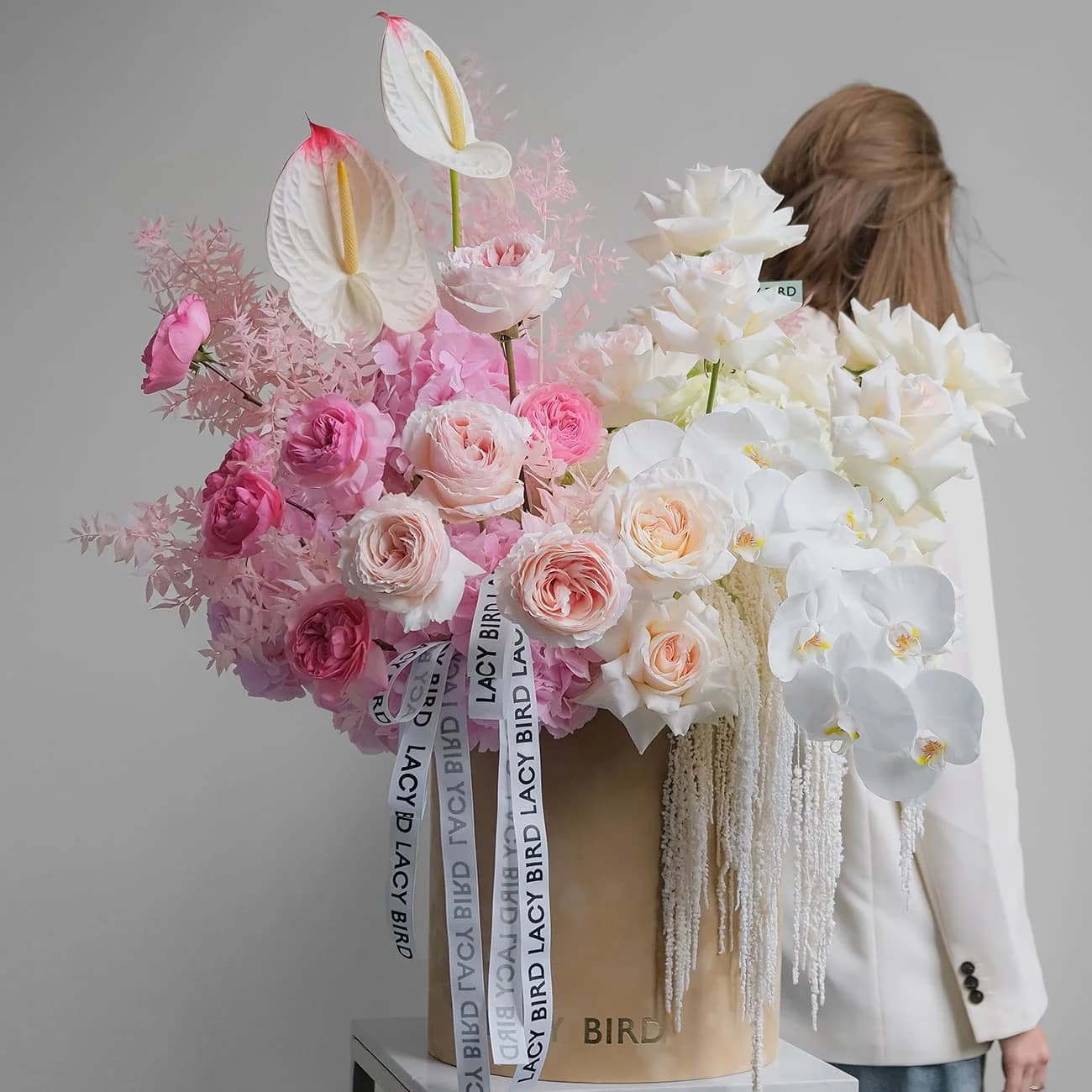
Where the box wins
The surprise delivery. Its founding use case. A box rides flat and upright in a car boot, tolerates a doorstep wait, and requires nothing of a recipient who wasn't expecting flowers — no vase, no scissors, no instructions. For deliver-when-they're-not-home romance, nothing else comes close.
The office and the hospital. Same virtues as the basket: self-contained, one-handed to move, no water near the keyboard. The box adds a dress code — it reads polished where wicker reads countryside.
The photograph. Boxes were born on Instagram and it shows: the top-down flat-lay of a packed rose box is a genre of its own. If the gift will be posted before it is smelled, the box is the format.
The big number. "A hundred roses" as a bouquet is a forearm workout; as a wide, low box it becomes furniture — impressive without being absurd.
Where it loses: the handover. Giving someone an armful of flowers is a gesture older than language, and handing over cardboard — however beautiful — is not the same sentence. Doorstep: box. Restaurant table, airport arrivals, apology in person: bouquet.
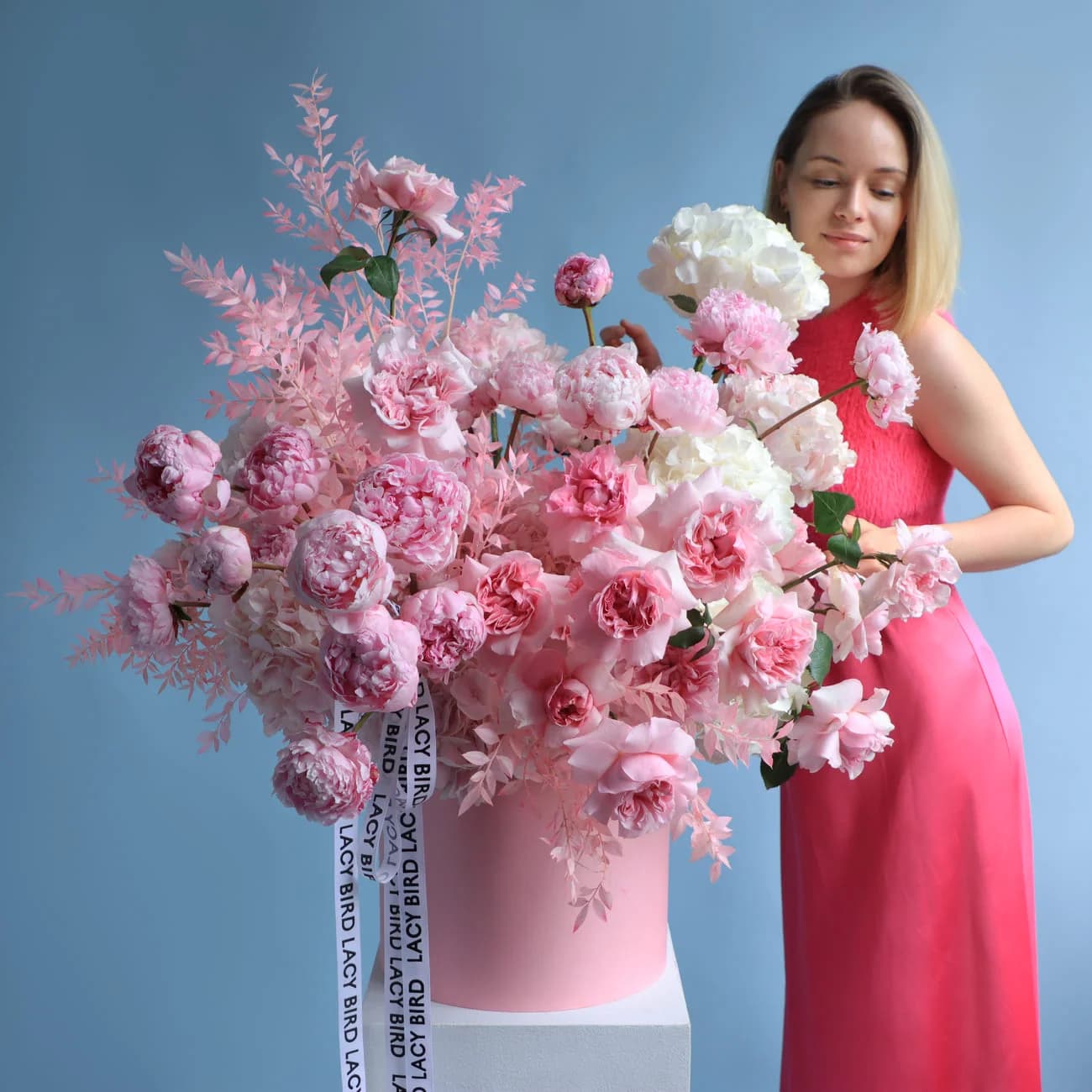
Fresh box vs preserved box: don't confuse the shelves
The same hat box now ships two entirely different products, and shops blur them constantly. A fresh box is everything above — living flowers on water, 5-8 days, then done. A preserved box holds stabilized roses — glycerin-treated, one to three years, no water ever. Different price logic ($80-300), different care (opposite, in fact: water kills preserved), different gift meaning ("this week matters" vs "this stays"). Both legitimate; just check which shelf you're buying from — the full breakdown is in our preserved flowers guide.
Care, and the one mistake everyone makes
A box drinks from the top: a small glass of water poured slowly into the centre every day or two, aimed between the stems. Keep it cool, out of sun, off the radiator.
The mistake: treating the box as sealed. Recipients routinely never water boxes at all — "it came as a product, not a plant" — and then report that boxes "don't last." They last precisely as long as anyone waters them. Good studios now print a one-line care card into the lid; if yours arrived without one, now you know the line.
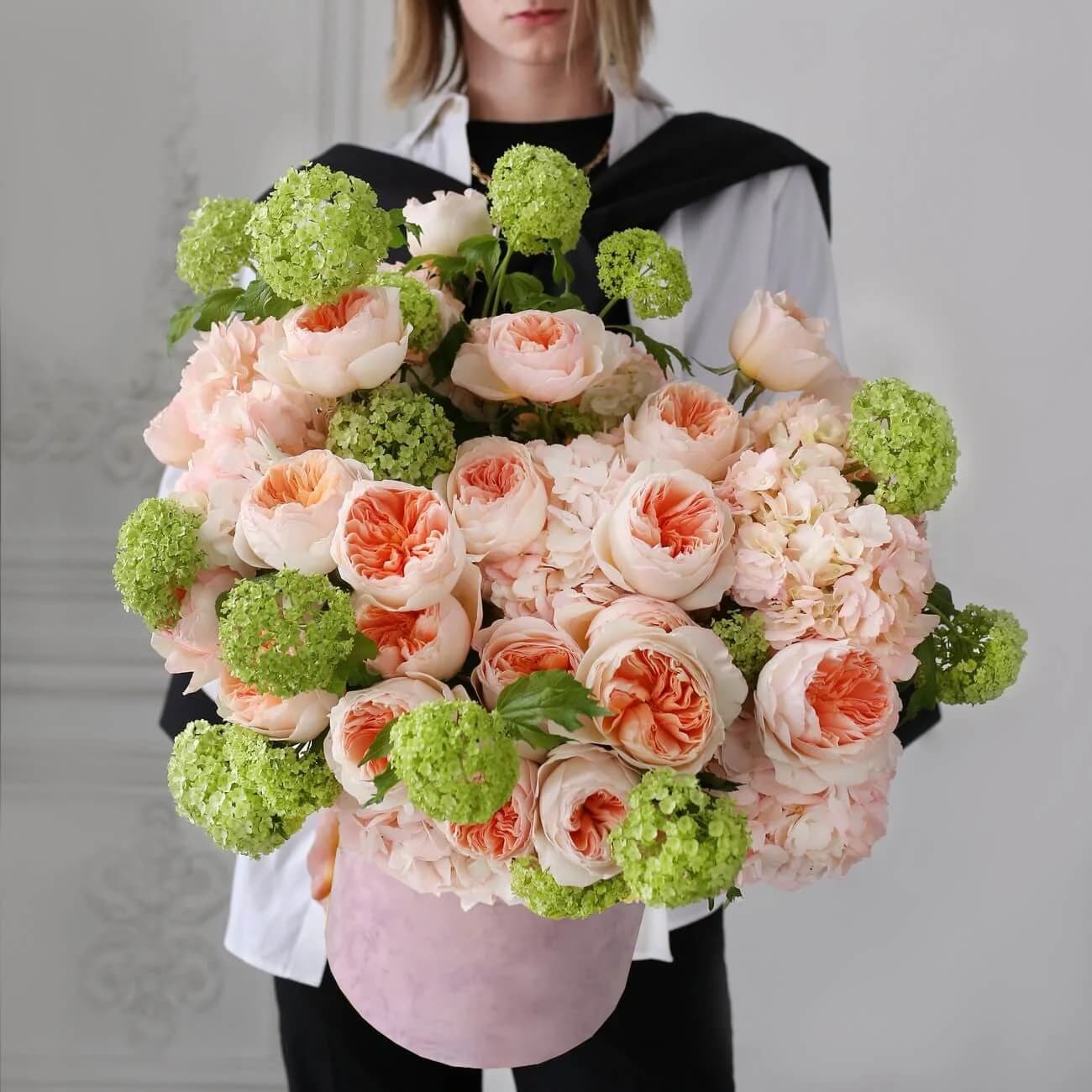
Ordering one well
Three specifications that matter more than the flower list: size against the destination surface (a statement round overwhelms a bedside table; measure with your eyes before ordering), palette against the occasion register — soft pastels read tenderness, saturated jewel tones read celebration, all-red reads exactly what all-red always reads — and the delivery window, the format's whole reason for being: a box can arrive at 9 a.m. to an empty porch and still be perfect at 7 p.m. Use that superpower; it's what you paid the extra twenty dollars for.
And keep the box. Everyone does — it is the only flower packaging with a documented second career, holding photographs and letters in a thousand homes long after the roses. Which, for a format built around the memory of a gesture, feels exactly right.