The Lacy Bird Style — what modern commercial floristry actually looks like
An articulation of the design language of our studio — colour theory, movement, focal hierarchy, and the deliberate choice to build airy, gestural arrangements instead of dense round bouquets.
The Lacy Bird style — often called modern commercial floristry — is a specific design language distinct from traditional retail floristry. This guide articulates what it is, why it works, and how to build in this style.
TL;DR. The Lacy Bird modern style is airy and gestural rather than dense and round. Signature elements: disciplined 3-4 color palette, asymmetric focal placement, generous negative space, mixed flower opening stages, sculptural greenery, named premium cultivars. Reads editorial rather than traditional retail dense round.
The six signature elements
1 — Disciplined palette (3-4 colors)
Traditional retail bouquets: rainbow of colors.
Lacy Bird modern: 3-4 colors maximum, with clear hierarchy.
Typical palette:
- Dominant color (e.g., blush)
- Supporting color (e.g., burgundy)
- Accent color (e.g., peach)
- Neutral (white or sage)
Discipline reads as intentional design.
2 — Asymmetric focal placement
Traditional: focal in the center.
Lacy Bird: focal off-center using rule of thirds. Usually upper- left or upper-right third of the arrangement.
Detailed in focal centres.
3 — Generous negative space
Traditional: fill every gap.
Lacy Bird: 15-25% of visible area is intentional negative space. Space frames the focal moment and reads as expensive.
4 — Mixed opening stages
Traditional: all flowers at same opening stage.
Lacy Bird: mixed stages — tight buds, half-open, and fully-open in same arrangement. Reads as garden-picked and organic.
5 — Sculptural greenery
Traditional: greenery as filler.
Lacy Bird: greenery as architectural element. Pistacia, italian ruscus, silver dollar eucalyptus, dicranopteris. Chosen for shape, not just green mass.
6 — Named premium cultivars
Traditional: "roses" and "eucalyptus" generic.
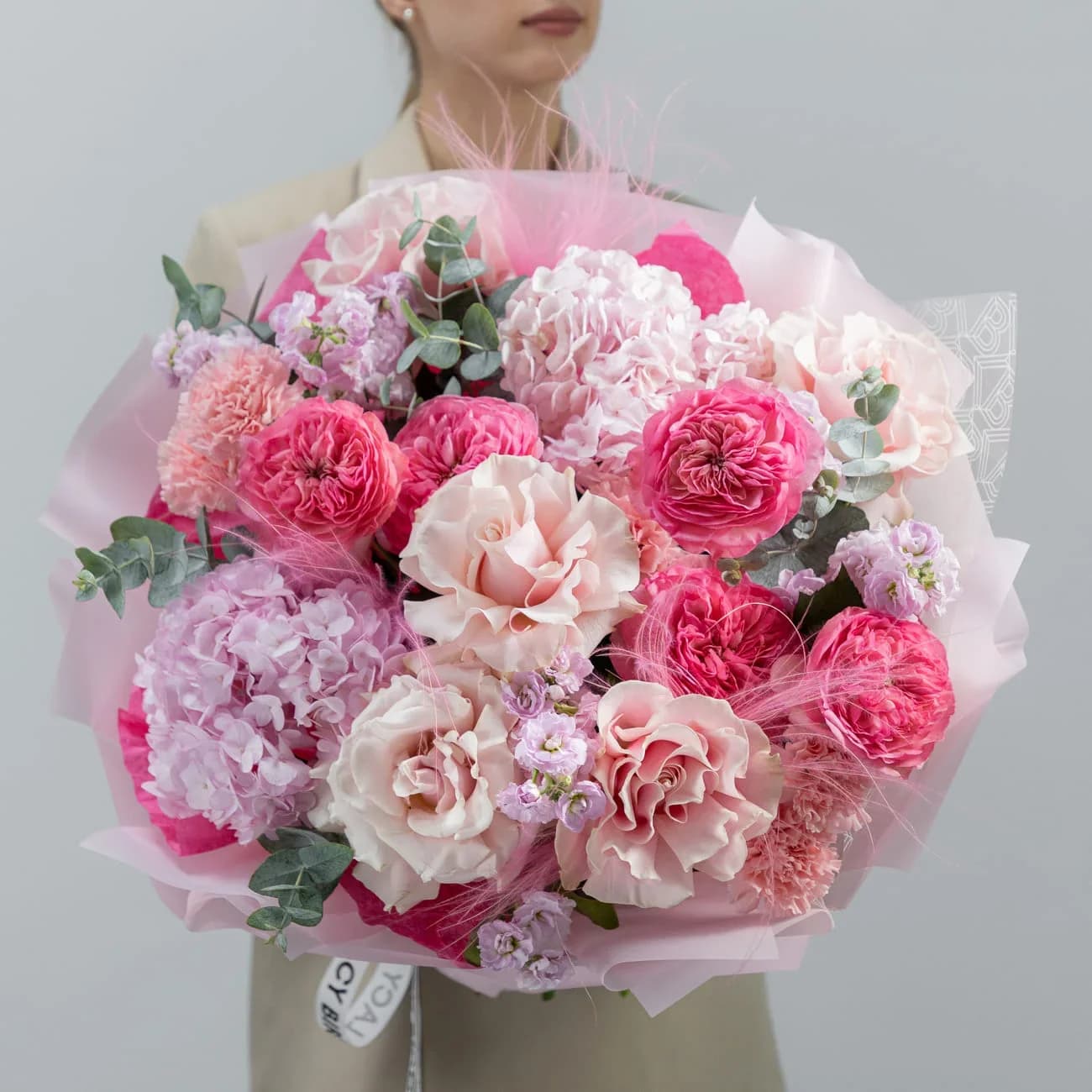
Lacy Bird: specific cultivars named upfront. Rose David Austin Juliet, Ranunculus Cloni Success Elegance Bianca, Silver Dollar Eucalyptus. Specificity is signal of quality.
Applying to different arrangement types
Bridal bouquet
- 3-4 colors, one dominant
- Focal cluster off-center in the hand grip
- Trailing greenery on the opposite side for balance
- 25-40 stems, not 60+
- Silk ribbon in wedding palette
Centerpiece
- Compote or low bowl
- 3-4 colors matching bouquet
- Focal at 2/3 length of arrangement
- Trailing to the front, not equal around
- Under 25 cm tall for dining tables
Ceremony installation
- Asymmetric focal moment
- Cascade from focal to trailing greenery
- Not symmetric coverage
- Statement piece rather than full frame
Boutonniere
- Single focal flower
- 1-2 supporting stems
- Textural filler
- Silk ribbon or organic tie
- Not the standard rose + baby's breath
The negative space principle
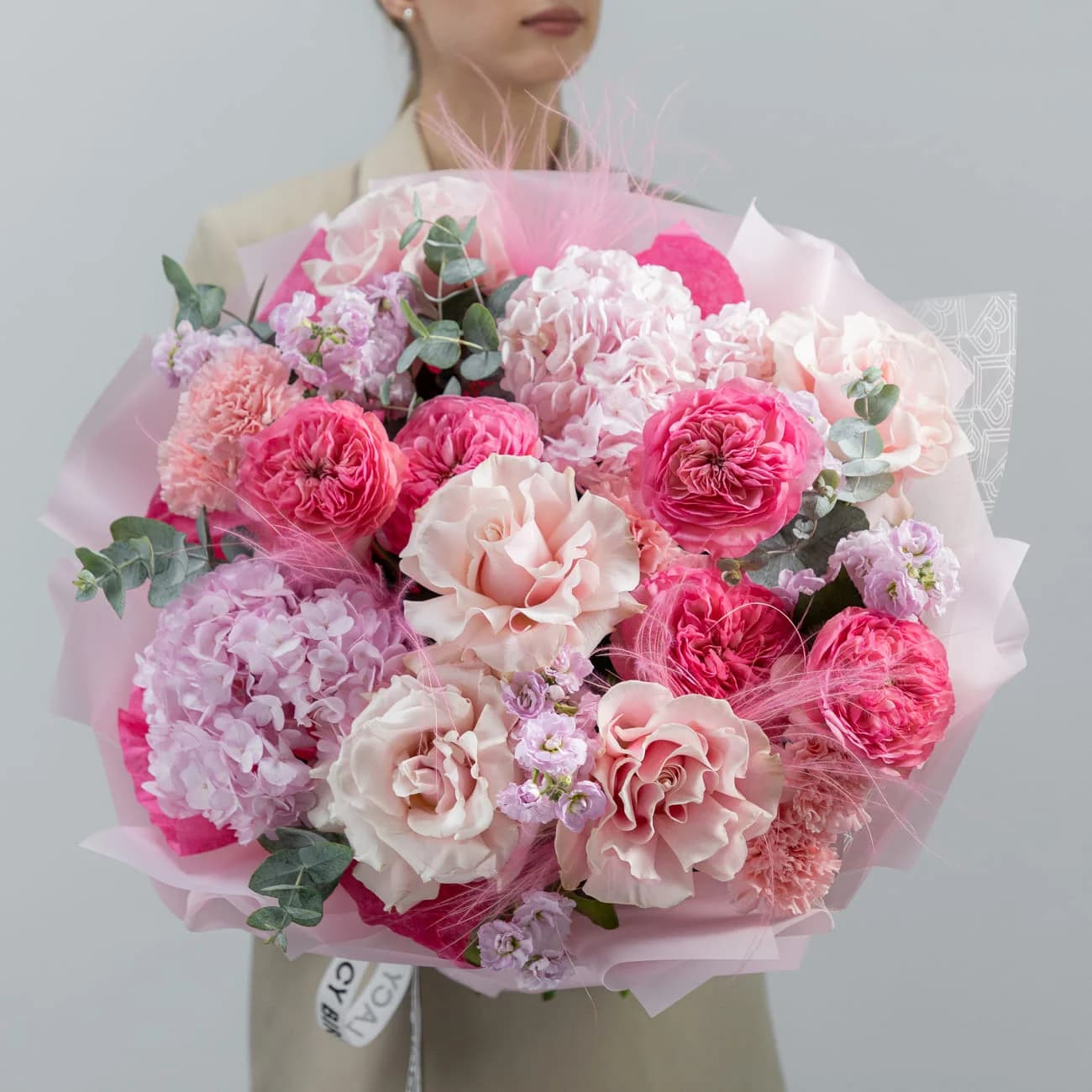
Space around the focal moment is what makes it feel expensive.
Rules:
- 15-25% of visible arrangement = negative space
- Space directly around focal flower (frames it)
- Space between focal cluster and outer edges
- Never fill to the vessel edges
Test: photograph the arrangement. If you can trace it against the background with no space between flowers and edge: too full.
Palette discipline in practice
Monochromatic
- One color plus neutrals
- Example: blush garden roses + blush ranunculus + white matthiola + silver eucalyptus
- Sophisticated and modern
Analogous
- 3 adjacent hues
- Example: peach + coral + blush
- Warm and cohesive
Complementary
- Opposite hues (with restraint)
- Example: burgundy + soft blush + eucalyptus neutral
- Dramatic
Never
- More than 4 distinct colors
- Random mixed palette
- All hot or all cool with no anchor
Working with mixed opening stages
Get flowers at multiple stages:
- Tight bud (2-3 days from open)
- Half-open
- Fully open
Arrange them so:
- Fully-open flowers as focal
- Half-open flowers in supporting positions
- Tight buds at the edges for line and movement
Reads as photographed-in-nature rather than florist-arranged.
Greenery selection
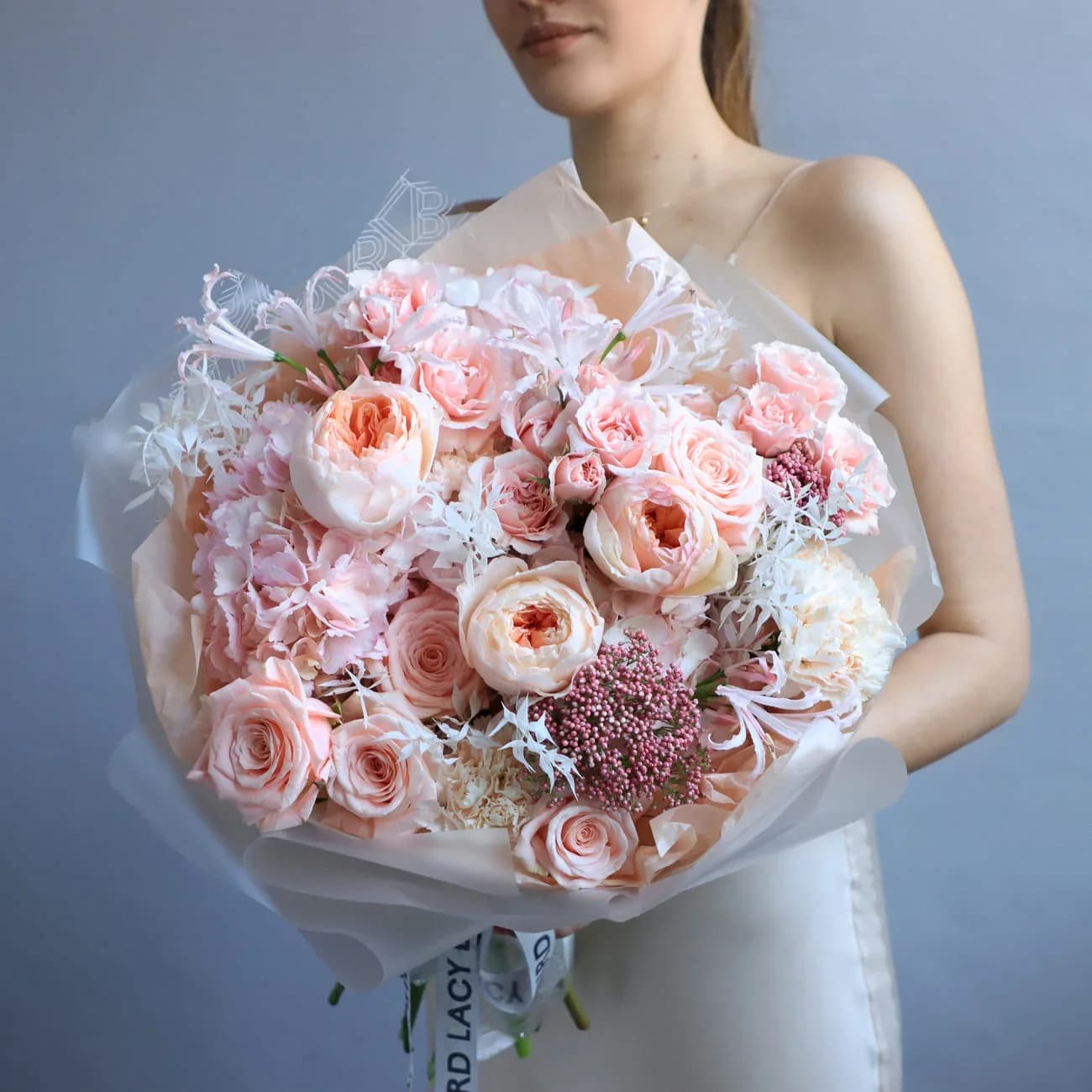
For sculptural greenery over filler:
- Pistacia — architectural, mid-scale
- Italian ruscus — structural, cascading potential
- Silver dollar eucalyptus — rounded leaves, soft texture
- Seeded eucalyptus — textural detail
- Dicranopteris — linear, dramatic
- Salal — dense, architectural
Avoid: standard baby's breath (retail cliché), leatherleaf fern (dated), plumosa (dated).
Named cultivars — the specificity
Modern floristry names its materials.
Instead of "pink roses":
- Rose David Austin Juliet (peach garden rose)
- Rose Keira (blush garden rose)
- Ranunculus Cloni Success Elegance Fabio (pink with darker centre)
Instead of "greenery":
- Silver dollar eucalyptus
- Italian ruscus
- Pistacia
- Dicranopteris
Specificity signals quality and expertise.
When to use the modern style
Best for:
- Modern couples
- Editorial photography
- Small-scale intimate weddings
- Boutique studio positioning
- Instagram-focused brands
Less suited for:
- Traditional retail (older customer expects density)
- Some cultural traditions (some prefer dense round)
- Very small budgets where quantity matters more than aesthetic
Common mistakes
Filling every gap. Kills the modern aesthetic. Leave space.
Traditional retail cultivars. Standard roses read retail. Named premium.
Symmetric arrangements. Asymmetric is the modern signature.
Standard baby's breath. Retail cliché. Use sculptural greenery.
Rainbow palette. Discipline to 3-4 colors.
All same-stage flowers. Mix opening stages for garden-picked feel.
Centered focal. Off-center using rule of thirds.
FAQ
What is the Lacy Bird modern style?
Airy asymmetric arrangements with disciplined 3-4 color palettes, off-center focal placement using rule of thirds, generous negative space (15-25%), mixed opening stages, sculptural greenery, and named premium cultivars.
Modern vs traditional?
Traditional: dense round bouquets, centered focals, equal color, minimal negative space, retail cultivars. Modern: asymmetric, off- center focals, disciplined palette, generous negative space, sculptural greenery, premium named cultivars.
How to get modern style?
Six practices: limit palette to 3-4 colors, place focals off- center using rule of thirds, leave 15-25% negative space, include mixed opening stages, use sculptural greenery, specify named cultivars.
Modern on a budget?
Yes — modern style is more about discipline than cost. Palette restraint, focal placement, negative space, mixed opening stages don't require premium flowers. Standard cultivars with modern principles read more expensive than premium cultivars with traditional principles.
Related reading: