Technical Greenery — the invisible skeleton of a commercial bouquet
Why we build every commercial bouquet on a foundation of cheap, hidden greenery — and which species we buy for the job. Pistacia, ruscus, salal, boxwood, blueberry branch compared.
Professional bouquets are built on a foundation of cheap hidden greenery that no one sees. Technical greenery is the invisible skeleton that supports the expensive focal flowers.
This guide covers what technical greenery is, which species work best, and how to use it in commercial arrangements.
TL;DR. Technical greenery is the invisible structural foundation of professional bouquets — pistacia, italian ruscus, salal, boxwood, blueberry branch. Cheap ($0.50-2/stem), sturdy, and hidden inside the arrangement. Provides mechanical support for expensive focal flowers.
Technical vs decorative greenery
Technical greenery (hidden)
- Strong straight stems
- Cheap ($0.50-2/stem)
- Structural role
- Covered by decorative greenery and flowers
Species: pistacia, italian ruscus, salal, boxwood, blueberry branch
Decorative greenery (visible)
- Distinctive shape or leaf
- Mid-priced ($1.50-4/stem)
- Aesthetic role
- Prominent in visible parts of arrangement
Species: silver dollar eucalyptus, seeded eucalyptus, dicranopteris, ivy trailing, pistacia when featured
The role of technical greenery
Focal flowers alone can't hold structure. Their stems are often too short, too weak, or too expensive to be used for mechanical support.
Technical greenery:
- Fills the core of the bouquet
- Provides stem-locking points for focal flowers
- Reduces need for expensive flowers
- Enables the "airy" modern aesthetic without gaps
The five workhorse species
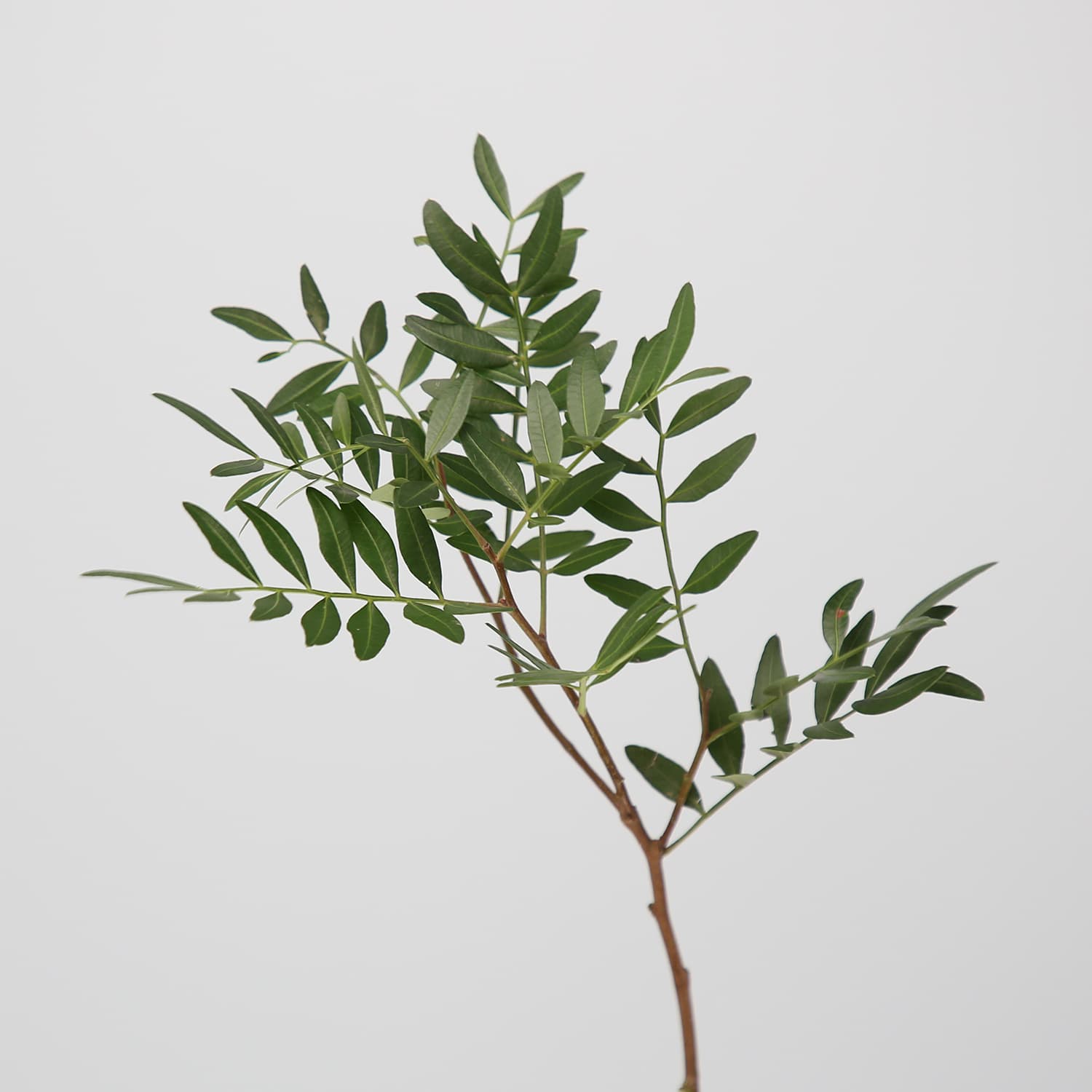
Pistacia (pistachio)
Architectural mid-scale foliage. Muted grey-green.
- Wholesale: $0.50-1/stem
- Vase life: 10-14 days
- Uses: hidden structure OR visible as sculptural element
Modern florists' favorite for both roles.
Italian ruscus
Sturdy cascading foliage. Dark green.
- Wholesale: $1-2/stem
- Vase life: 14-21 days
- Uses: primarily hidden structure; occasionally visible
Longest-lasting technical greenery.
Salal (Pacific salal)
Dense oval leaves. Dark green.
- Wholesale: $0.50-1.50/stem
- Vase life: 10-14 days
- Uses: hidden structural filler
Cheap and reliable.
Boxwood
Formal small leaves. Consistent green.
- Wholesale: $0.50-1.50/stem
- Vase life: 7-14 days
- Uses: hidden structure in classical arrangements
Traditional wedding standard.
Blueberry branch
Sculptural woody stems with small leaves and blueberries.
- Wholesale: $1-2/stem
- Vase life: 7-10 days
- Uses: hidden structure with occasional visible sculpture
Modern editorial designers use it visibly for its unique quality.
Structure of a professional bouquet
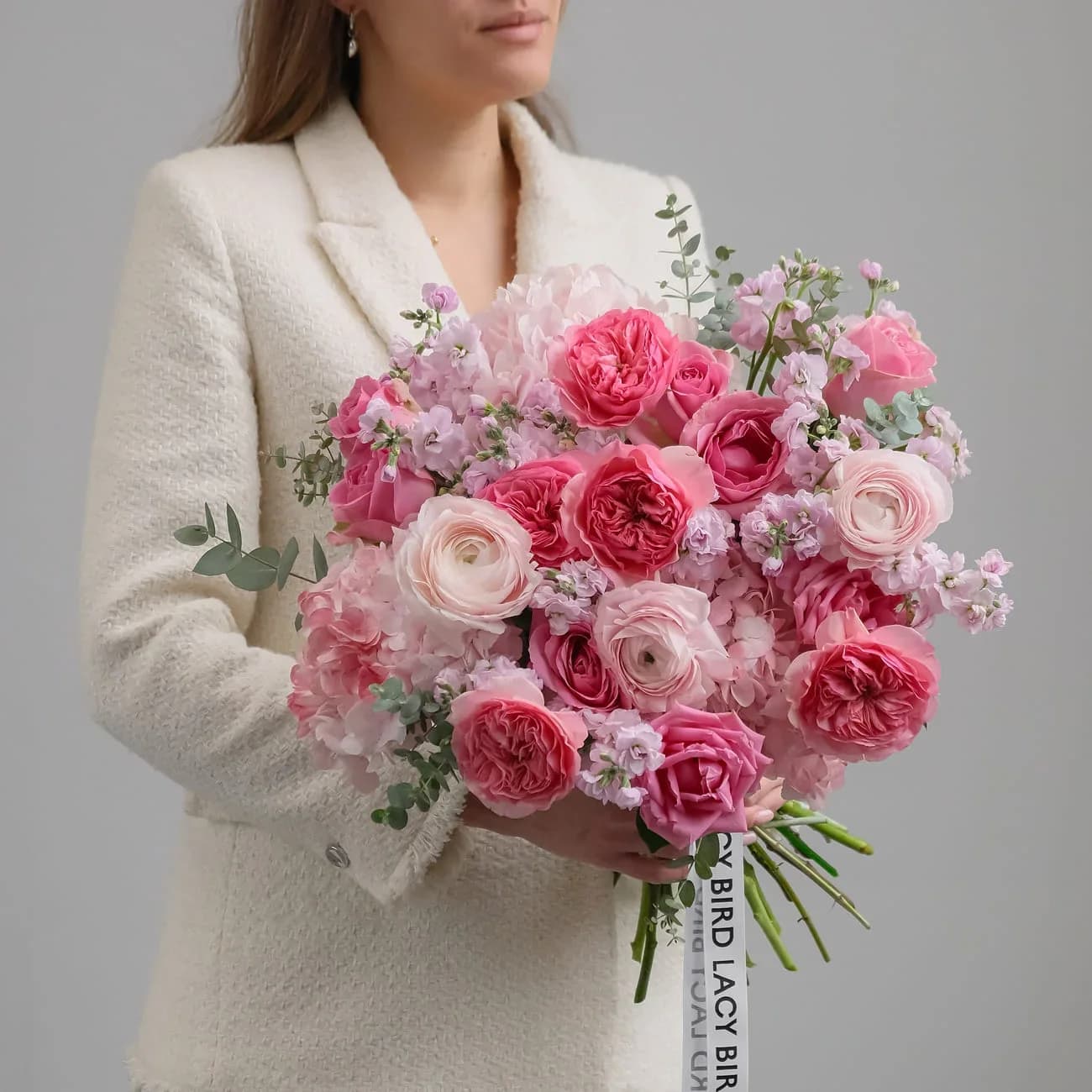
For a 30-stem hand-tied bridal bouquet:
- 8-12 focal flowers (garden roses, ranunculus, peonies)
- 8-12 secondary flowers (spray roses, lisianthus)
- 8-12 filler flowers (waxflower, ammi, astrantia)
- 4-6 technical greenery stems (hidden structure)
- 4-6 decorative greenery stems (visible aesthetic)
Total: 32-48 stems.
The 4-6 hidden technical greenery stems are the "invisible skeleton" — $2-12 in material cost.
How technical greenery is used
In hand-tied bouquets
- 4-6 technical greenery stems placed first
- Form the spine of the bouquet
- Focal flowers spiral around this structure
- Decorative greenery added last as visible aesthetic
In vase arrangements
- Technical greenery fills the base of the vessel
- Provides stem-holding structure
- Decorative greenery adds visible outline
- Focal flowers in prime positions
In centerpieces
- Chicken wire mechanic first
- Technical greenery through wire
- Focal flowers among technical structure
- Decorative greenery visible edges
In installations
- Technical greenery in the moss/wire foundation
- Provides bulk affordably
- Decorative greenery and focals visible
Cost efficiency
Comparison for a 12-stem greenery need:
All decorative greenery approach:
- 12 stems silver dollar eucalyptus × $2 = $24
Mixed approach:
- 6 technical greenery (pistacia) × $0.75 = $4.50
- 6 decorative greenery (silver dollar eucalyptus) × $2 = $12
- Total: $16.50
Savings: 30-40% on greenery budget with equivalent visual result.
For a wedding needing 100 greenery stems: $150-300 saved.
Sourcing technical greenery
Wholesale distributors
Standard availability. Order weekly with flowers.
Local farms
Some greenery grown locally at lower cost. Ask suppliers about regional producers.
Foraging (with permission)
For sculptural technical greenery like blueberry branch, some regions allow foraging on private or public land.
Legal note: always verify permits and land rights before foraging.
Regional variation
US Northwest: salal and boxwood available cheaply from local farms.
Mediterranean Europe: pistacia and italian ruscus abundant and cheap.
UK: ivy and native greens accessible.
UAE: most greenery imported; cost premium 20-30% above Europe.
Vase life priorities
Technical greenery needs long vase life since it's hidden and you don't refresh it during the arrangement window.
- Italian ruscus: 14-21 days (best)
- Pistacia: 10-14 days
- Salal: 10-14 days
- Boxwood: 7-14 days
- Blueberry branch: 7-10 days
Choose based on event duration.
Common technical greenery mistakes
Skipping technical greenery. Bouquet lacks structural support. Focal flowers slip.
Using expensive decorative for structural role. Wasteful. Use pistacia or ruscus instead.
Not enough greenery total. Under 25% greenery in stem count makes arrangements look sparse.
Wrong greenery for style. Boxwood in modern editorial reads traditional. Match greenery to aesthetic.
Skimping to save money. Greenery is the cheapest way to add volume. Buy enough.
The 8-second greenery test
Before adding focal flowers:
- Look at just the greenery arrangement
- Does it look like a lush plant or a sparse skeleton?
- If sparse, add more greenery before flowers
Greenery underscore should feel abundant on its own before focals go in.
FAQ
What is technical greenery?
The structural greenery hidden inside a bouquet that supports focal flowers mechanically. Chosen for stem strength and cheap price. Includes pistacia, italian ruscus, salal, boxwood, and blueberry branch.
Which greenery is cheapest?
Wholesale cheapest: italian ruscus ($1-2/stem), salal ($0.50-1.50), pistacia ($0.50-1/stem), boxwood ($0.50-1.50), leatherleaf fern ($0.30-0.80). Decorative greenery costs more.
How much greenery per bouquet?
30-40% of stems by count. For a 30-stem bridal bouquet: 8-12 greenery stems. Divide roughly 60% technical (hidden support) and 40% decorative (visible design).
Need to see technical greenery?
No — that's the point. Technical greenery supports focal flowers mechanically and gets covered by decorative greenery and flowers. Cost efficiency: buy $0.50/stem technical instead of $2/stem eucalyptus for the invisible role.
Related reading: