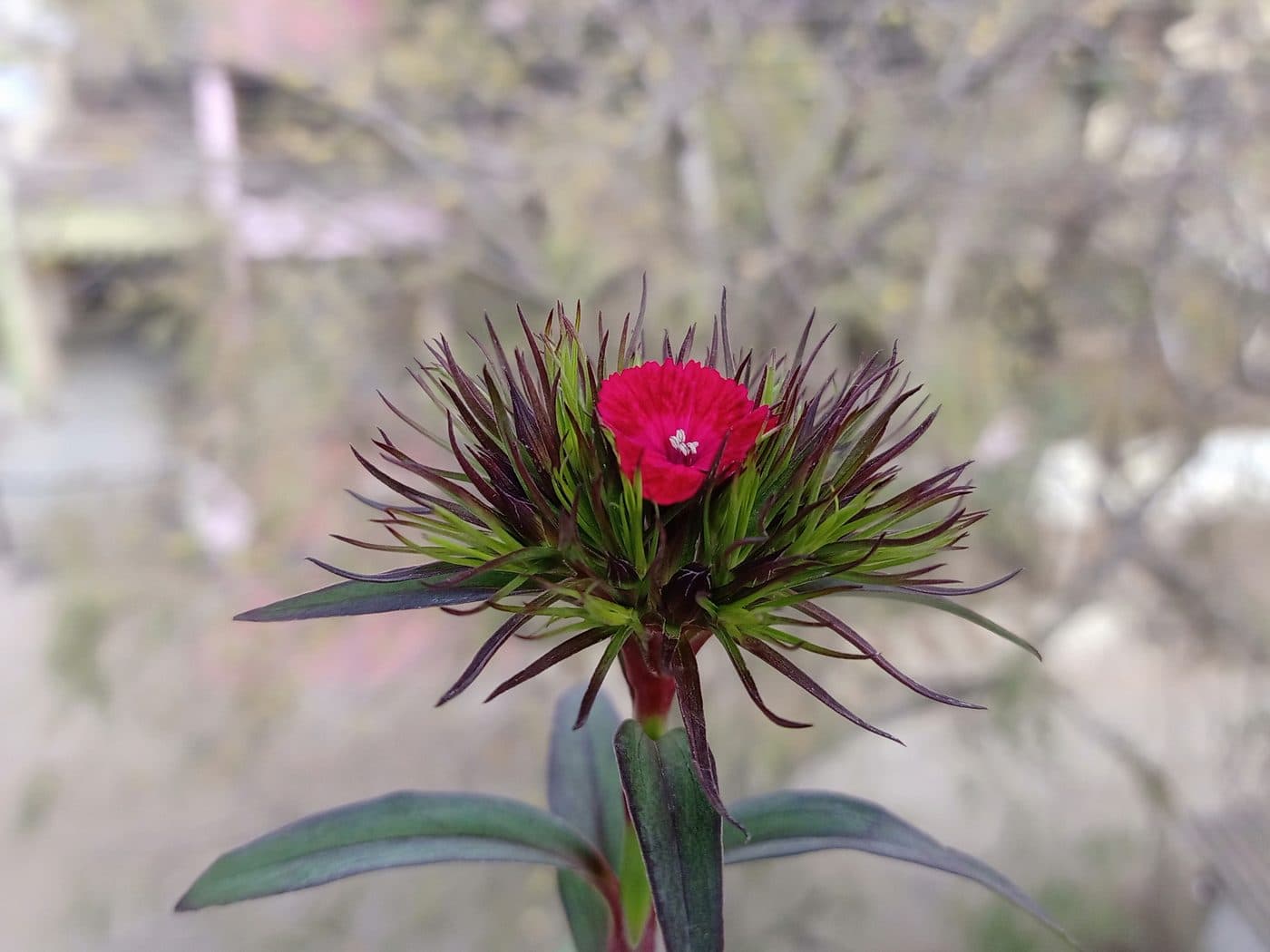
Photo: Suyash.dwivedi · CC BY-SA 4.0 · Wikimedia Commons
Sweet William
Sweet William carries a cluster of small dianthus florets in each head — filler weight with focal-flower texture. A cottage-garden staple raised in commercial profile by the royal wedding association (named for William, though probably not for the modern one). Splits beautifully for boutonniere work.
| Family | Caryophyllaceae |
|---|---|
| Origin | Europe; commercially grown Netherlands, Italy, Colombia |
| Peak season | May, June, July |
| Availability | April to August |
| Stem length | 40–60 cm |
| Vase life | 7–14 days |
| Colors | white, pink, coral, red, burgundy, bicolor |
| Price tier | mid |
Cut on a diagonal above a node. Fresh water — no special treatment.
- •Cluster of small florets in each head — high value per stem
- •Related to carnation — same easy conditioning
- •Wedding-favourite of the William & Kate era (nominal namesake)
- •Splits nicely into small clusters for boutonnieres
 Bouquet Builder — by Lacy Bird
Design the bouquet. See it as a photo.
Botanical reference
- Common name
- Sweet William [Dianthus]
- Also known as
- bearded pink, Caryophyllus barbatus, Cylichnanthus barbatus, Dianthus aggregatus, Dianthus barbatus angustifolius, Dianthus barbatus brachypetalus, Dianthus barbatus girardinii, Dianthus barbatus latifolius, Dianthus barbatus paniculatus, Dianthus barbatus pedunculosus, Dianthus barbatus volhyniensis, Dianthus corymbosus
- Distribution
- Austria, Bulgaria, Czechia-Slovakia, France, Hungary, Italy, Korea, Manchuria, Manizales, NW. Balkan Pen.
- Cold storage
- 2–3 °C
- Uses
- medicinal plant
Open-data sources: GBIF, Wikidata (CC0/CC BY), USDA Agriculture Handbook 66 (public domain)
Frequently asked questions
When is Sweet William in season?
Sweet William peaks in May, June, July, and florists can usually source it April to August. Availability shifts by region and greenhouse supply.
How long does Sweet William last in a vase?
Expect 7–14 days with proper conditioning — a clean vase, fresh water every couple of days, flower food, and a cool spot away from ripening fruit and direct heat.
What can I use instead of Sweet William?
Good substitutes for Sweet William include Carnation. Match on look, colour and season — our substitute finder ranks the closest alternatives.
What does Sweet William symbolise?
Sweet William is associated with gallantry, grant one a smile, old-fashioned romance.
How do you care for cut Sweet William?
Cluster of small florets in each head — high value per stem
Related flowers

Free to quote and cite with attribution and a link back, for non-commercial and editorial use (blogs, journalism, classrooms, research).
Lacy Bird Flower Encyclopedia — “Sweet William”. https://lacybird.com/flowers/sweet-william/<a href="https://lacybird.com/flowers/sweet-william/">Lacy Bird Flower Encyclopedia — Sweet William</a>