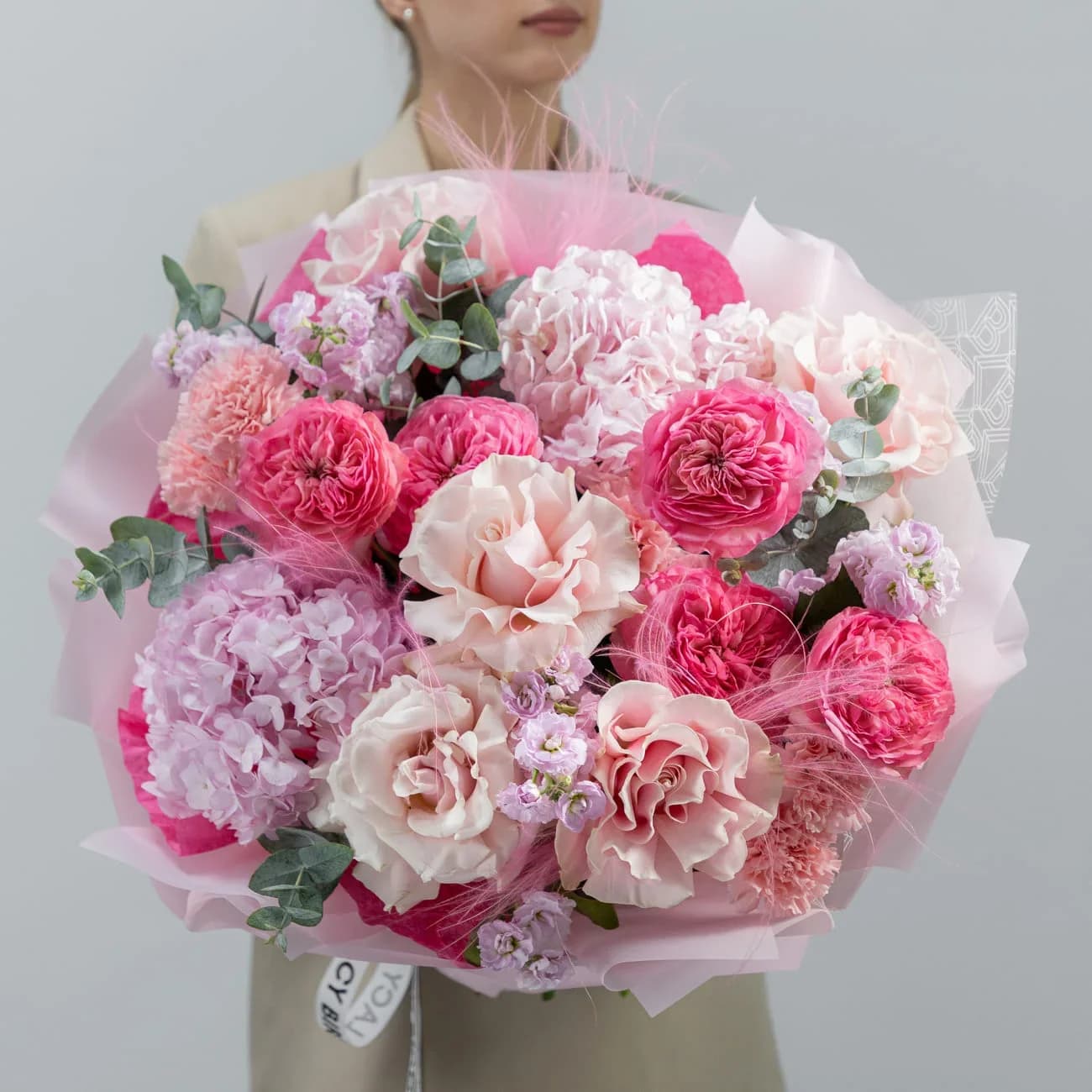
Modern Wedding Bouquet — design principles
The modern wedding bouquet — soft palettes, generous shapes, restraint, movement. What actually makes a bouquet 'modern' vs traditional, with examples and studio principles.
"Modern wedding bouquet" is one of the most-searched phrases in wedding floristry, but it's rarely defined precisely. Different Pinterest boards call very different things "modern": editorial cascading arrangements, tight minimalist single-stems, garden-style unstructured pieces.
This guide lays out the seven design principles that separate a modern bouquet from a traditional one — the language we teach at our academy and build with every day in the studio.
What "modern" actually means
A modern wedding bouquet, in our working definition, follows these seven principles:
1. Palette before flower. The colour story is chosen first from the wedding's overall aesthetic. Flowers are selected to serve the palette, not the other way around. Traditional bouquets do the opposite — pick a premium flower (roses, peonies), then find colours to match.
2. Movement over symmetry. Stems arch, cascade, or extend beyond the container edge. Nothing is centred; nothing is forced into a perfect sphere. Traditional bouquets aim for a symmetric round silhouette.
3. Negative space is a material. Empty space around a well-placed peony reads as designed. Traditional bouquets fill every gap; modern bouquets treat empty space as part of the composition.
4. Texture layering, not just flowers. A modern bouquet includes 2-3 textural elements (scented geranium, clematis vine, hellebore, wax flower, astilbe) alongside the focal flowers. Traditional bouquets use flowers + one filler (baby's breath, wax flower).
5. Muted or considered palettes. Soft cream, dusty blush, sage, bruised burgundy. Traditional wedding palettes lean brighter and more saturated.
6. Commercial discipline visible in the finish. Modern bouquets photograph well because they're built to specific proportions — 20% flowers, 20% textural, 60% foliage and negative space is a working formula. Traditional bouquets are often over-stuffed with focal flowers.
7. Restrained ribbon and wrap. Silk ribbon in a natural fibre tone matched to the palette, or no ribbon at all. Traditional bouquets often have wide, contrasting bows.
Examples
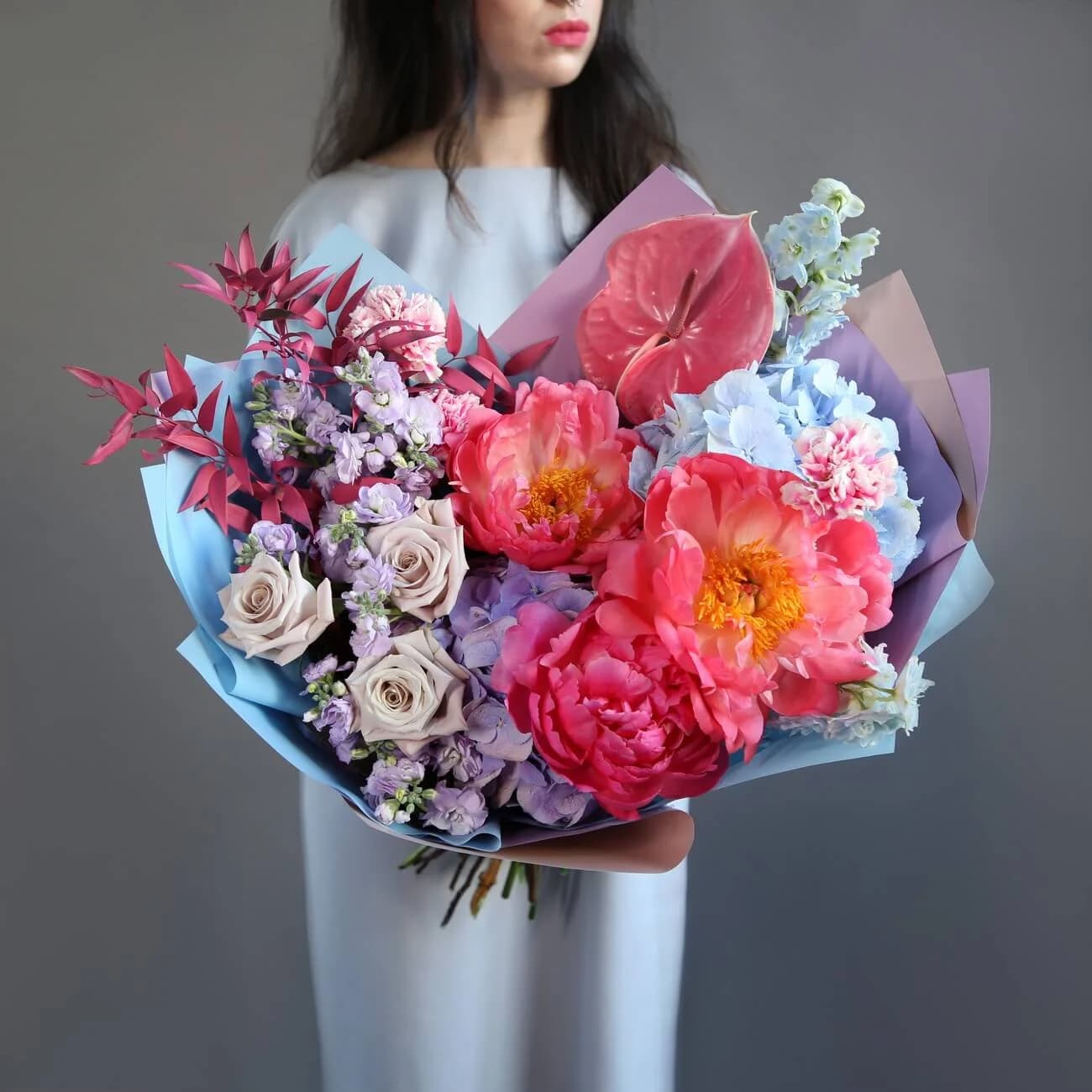
Compote-style modern bouquet. 30 stems including 3 focal peonies, 5 garden roses, 3 hellebore, clematis vine, ruscus foliage. Soft blush and cream palette with green foliage. Silk chiffon ribbon in ivory.
Cascading modern bouquet. 45 stems, cascade extending 30 cm down the front. Focal cream garden roses and peach ranunculus, trailing amaranthus, clematis vine, seeded eucalyptus. No ribbon; stems bound with copper wire that shows.
Structured modern bouquet. 25 stems, symmetric and precisely proportioned. Single-variety focal (all Café au Lait dahlias or all Coral Charm peonies) with restrained foliage. Reads architectural, minimalist.
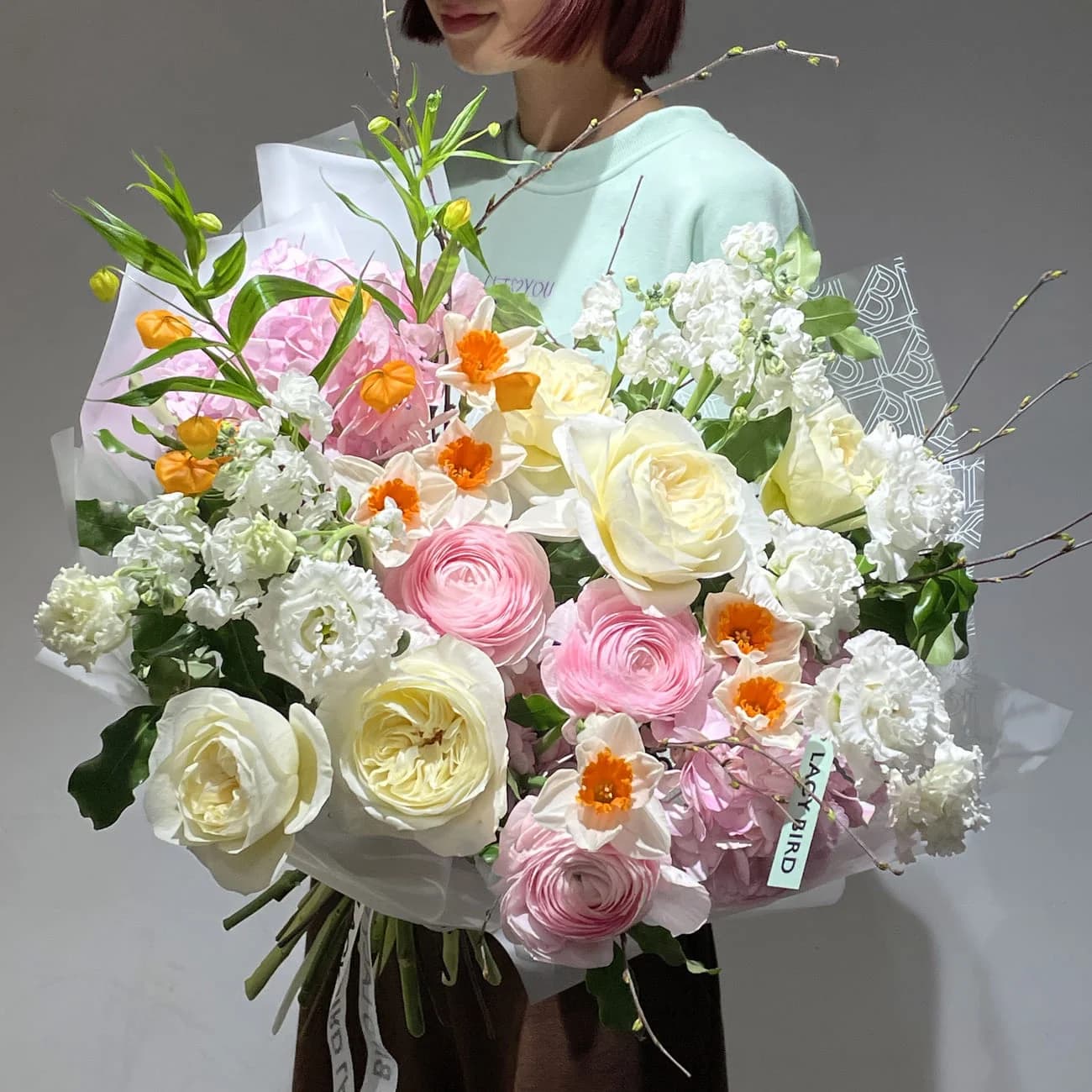
Wild modern bouquet. 35 stems of mixed textures, deliberately unstructured. Foraged elements alongside cultivated flowers. Reads garden, farm, boho.
Palette guidance
The four palettes that read most-clearly "modern" in current wedding photography:
- Soft neutrals — cream, ivory, dusty peach, pale blush, sage
- Muted moody — burgundy, plum, dusty pink, cream, olive
- Editorial pastel — lavender, dove blue, soft sage, pale coral
- Statement single-tone — all-cream, all-white, all-blush, all-burgundy
Palettes that read more traditional and less modern: bright red-and-white, purple-and-pink, saturated primary tones.
Flower choices for modern bouquets
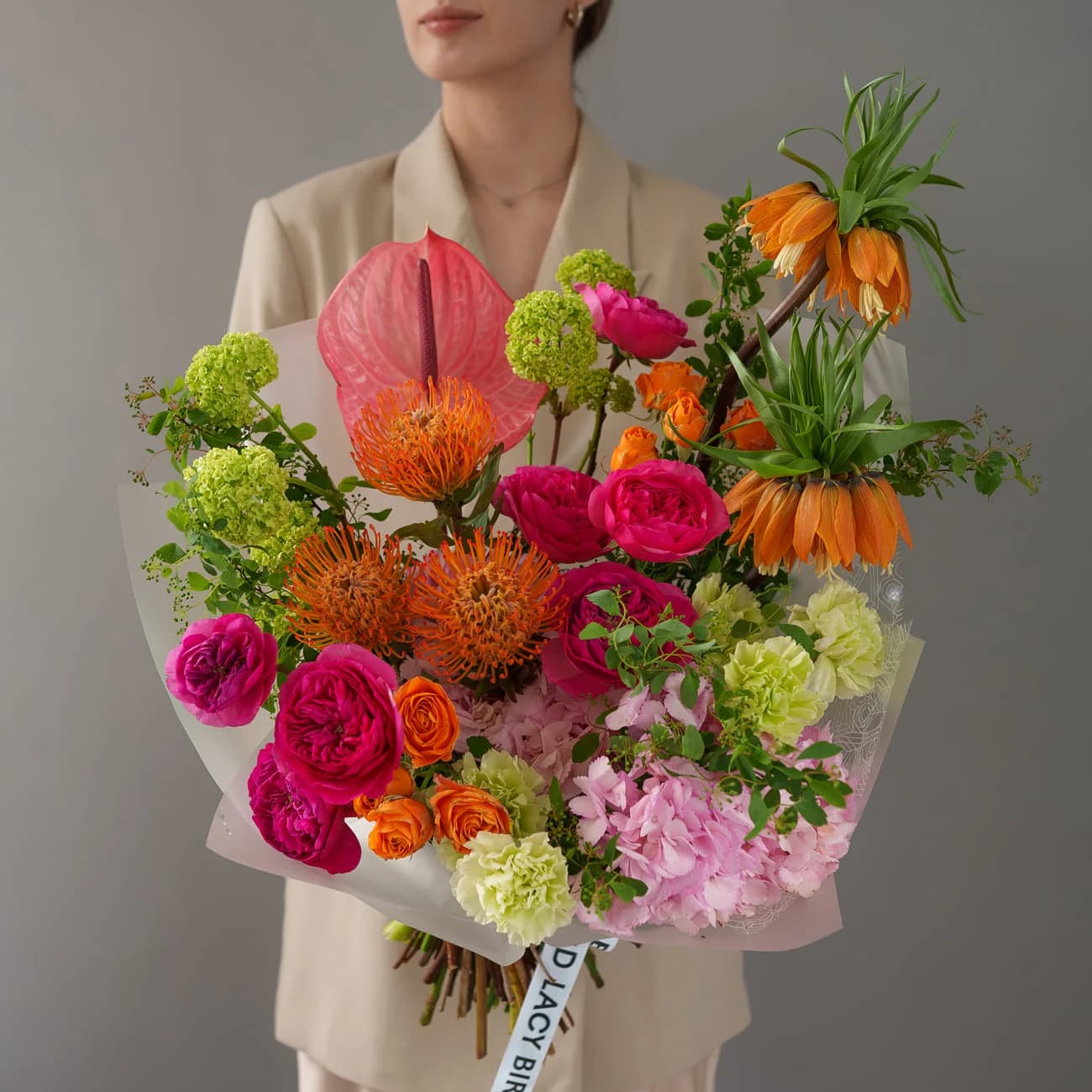
Focal flowers — garden roses (David Austin, Juliet, Patience, Keira, Constance), peonies (Coral Charm, Sarah Bernhardt, Duchesse de Nemours), ranunculus (Cloud, Butterfly), dahlias (Café au Lait, Sylvia).
Textural elements — astilbe, wax flower, hypericum berries, pepperberry, clematis vine, scented geranium, mint stems, chocolate cosmos.
Foliage — olive, ruscus, eucalyptus (silver dollar and seeded), scented geranium leaves, dusty miller, ferns.
What modern doesn't mean
- Modern ≠ minimalist. A modern bouquet can be large and full. It just isn't crammed with focal flowers to the point of visual noise.
- Modern ≠ colourless. Deep burgundy, mustard yellow, coral — saturated palettes work in modern bouquets. What matters is that the palette is intentional and restrained, not that colours are muted.
- Modern ≠ foam-free ONLY. Foam-free construction is standard now for all serious wedding floristry. It's necessary for modern; it's not sufficient. A traditional round bouquet can also be built foam-free.
Common mistakes when going modern
Underdoing it. Removing all traditional elements and ending up with a sparse bouquet that reads as under-budgeted rather than restrained.
Overdoing the movement. Every stem trailing, every element cascading. Modern bouquets need a stable centre of gravity even when the outer edge is loose.
Wrong palette for the venue. Muted modern palettes require sophisticated lighting to photograph well. Fluorescent-lit halls flatten them into dishwater. Warm ambient lighting or natural daylight is essential.
Skipping textural elements. A bouquet of just focal flowers, no matter how expensive the flowers, doesn't read as modern. Texture is what distinguishes a designer bouquet from a florist bouquet.
Frequently asked questions
Can a modern bouquet include red roses?
Yes, but not as a dozen-red-roses bouquet. Deep red garden roses (David Austin Munstead Wood, Darcey Bussell) mixed with textural burgundy elements — hellebore, astilbe, ninebark — read modern. A dozen commercial red roses in a bunch reads Valentine's Day.
Are modern bouquets more expensive?
Slightly, on average. The textural elements and specialty flowers cost more per stem than commercial-grade focal flowers. Expect 20-40% higher per bouquet than a traditional equivalent of the same stem count.
How do I ask my florist for a modern bouquet?
Bring visual references (Instagram saves, Pinterest boards) plus a description in the language above — "muted palette", "asymmetric", "garden style with movement". If the florist can't discuss those concepts back to you, they're not a modern-style florist.
Will a modern bouquet feel dated in 20 years?
Aesthetics shift. The modern-floral-design language is 10+ years old and still evolving; the specific look right now (Coral Charm peonies, garden roses, hellebore, clematis) is a snapshot. In 20 years it will read as "2020s wedding aesthetic" the way rose-and-baby's-breath reads "1990s wedding aesthetic" today. That's fine — wedding photos are meant to time- stamp the wedding.
Order
Enquire about your wedding bouquetRelated
- Wedding bouquets hub — all shapes and types
- Hand-tied bouquet technique
- Wedding boutonnieres — matching the modern palette
- Modern floral design course — learn the full aesthetic system
- Wedding color palettes — palette breakdown