How to Keep Solidago Fresh — Care & Vase Life
Solidago care from a florist: how to choose fresh stems, condition them step by step, and get 7-10 days of vase life from every stem.
Solidago, or goldenrod, is a plumed North American perennial whose feathery sprays of tiny golden flowers add warmth and movement to an arrangement. Florists prize it as an airy, inexpensive filler that softens gaps and echoes the yellow of sunflowers and rudbeckia. Its fine, branching form reads as a golden haze, making it a staple of rustic, autumnal and cottage-garden work. Long-lasting and forgiving, it also dries well for everlasting designs.
TL;DR. Solidago: 7-10 days of vase life. Strip submerged leaves to keep water clean. Cut stems on a sharp angle and strip all lower foliage that would sit below the waterline, as goldenrod leaves foul water quickly.
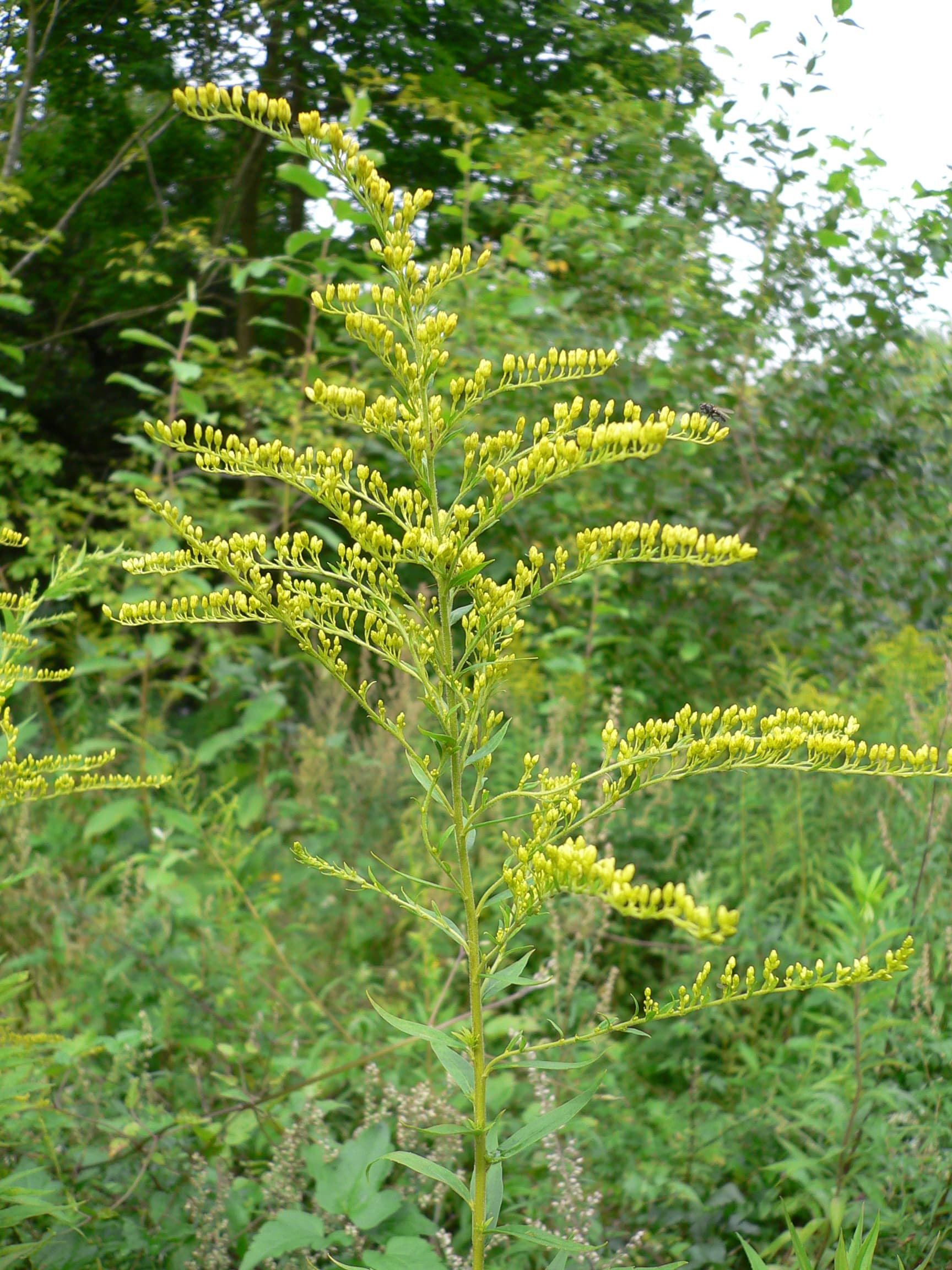
How to choose fresh Solidago
In care terms this is a low-maintenance flower in the budget price bracket, with a seasonal peak in August, September. Vase life is set before the flowers reach the water, so at the shop choose firm stems with no limp patches, fresh green foliage without yellowing, and a clean cut end with no slime or sour smell at the water line.
For varieties, palette and season, see the Solidago encyclopedia entry.
Conditioning, step by step
Cut stems on a sharp angle and strip all lower foliage that would sit below the waterline, as goldenrod leaves foul water quickly. Give it a deep drink of cool water with flower food and let it hydrate for a few hours before use. Keep it out of hot, stuffy rooms, which cause the fine flowers to shatter. Refresh the water every couple of days to extend its life.
The base protocol, on top of the species specifics:
- Work with a clean tool in a clean vase — bacteria are the number-one enemy of vase life.
- Recut the stem on a sharp diagonal, taking off 2-3 cm.
- Strip every leaf below the waterline — submerged foliage rots and fouls the water.
- Let the flowers drink somewhere cool, out of direct sun and away from heat sources.
Why a diagonal cut and clean water do most of the work — in the general flower conditioning guide.
What matters most in Solidago care
- Strip submerged leaves to keep water clean.
- Use flower food to slow bacterial growth.
- Recut stems every few days.
- Keep cool and out of direct sun.
- Change water frequently.
How long Solidago last in a vase
Expect 7-10 days with proper conditioning. To reach the top of that range: change the water every 2-3 days, recut a centimetre at each change, keep the flowers cool and away from direct sun and fruit, and remove spent blooms so they don't foul the water for the rest.
How this compares with other flowers — in the vase life by species guide.
What to use instead of Solidago
If solidago are out of season or over budget, florists reach for flowers with a similar shape and role:
What Solidago mean in a bouquet
In the language of flowers they're associated with meanings such as encouragement, good fortune, growth, warmth. That makes the bouquet not just beautiful but meaningful — when you want the flowers to carry a specific message.
From the Lacy Bird studio. We teach floristry hands-on — from a first bouquet to running your own shop — at the Lacy Bird Academy, and we build tools for florists: Bouquet Builder for designing arrangements and Acanta for selling them. In the UAE, we also deliver flowers.
Related reading:
Frequently asked questions
How long do solidago last in a vase?
On average 7-10 days with proper conditioning: a diagonal cut, clean water, no submerged foliage, and a cool spot away from sun and fruit.
How do you care for cut solidago?
Cut stems on a sharp angle and strip all lower foliage that would sit below the waterline, as goldenrod leaves foul water quickly. Give it a deep drink of cool water with flower food and let it hydrate for a few hours before use.
What do solidago symbolise?
In the language of flowers they're associated with meanings such as encouragement, good fortune, growth, warmth.
 Bouquet Builder — by Lacy Bird
Design the bouquet. See it as a photo.
Arrange real flowers on a canvas, then turn the layout into a photorealistic photo in one tap — with live pricing and a shopping list. 570+ varieties, free to start.
Free plan · no card needed