How to Price Flowers & Arrangements — the Markup Formula
The florist pricing formula explained: cost of goods times markup, plus labour, hard goods and delivery. Worked examples for a bouquet and a wedding.
Pricing is where most new florists quietly lose money. The flowers look beautiful, the customer is happy, and yet at the end of the month the bank balance says the shop is running to stand still. The fix is almost never charging more per stem — it's using a real formula that captures every cost, not just the flowers you can see.
TL;DR. Price flowers by marking up your wholesale cost of goods 3–4×, then adding hard goods (vase, foam, ribbon), labour and delivery on top. A stem that costs you $2 wholesale becomes $6–8 of flower value; a bouquet that costs $18 in stems retails around $65–75 once hard goods, labour and margin are included.
At our academy the first business lesson we teach isn't design — it's that a bouquet has four separate cost buckets, and every one of them has to be paid for by the customer. Miss one and you're subsidising your own work.
The four cost buckets
Every arrangement, from a $30 posy to a $6,000 wedding, is built from the same four costs:
- Cost of goods (fresh flowers and foliage) — what you paid wholesale for the stems that go into the design.
- Hard goods — the vase, floral foam, ribbon, wire, cellophane, card, box, mechanics. Everything non-living.
- Labour — your time (or your staff's) to condition, design, wrap and clean up.
- Delivery and overhead — fuel and vehicle, plus a share of rent, utilities, waste and card fees.
The classic florist mistake is to price only the first bucket, add a vague "bit extra", and call it done. That's why the markup formula exists: it forces all four buckets onto the invoice.
The markup formula
The industry-standard approach across the US, UK and Gulf markets is a cost-of-goods multiplier for flowers, a lower multiplier for hard goods, and separate line items for labour and delivery.
| Cost bucket | Typical multiplier / rate | Why |
|---|---|---|
| Fresh flowers (cost of goods) | ×3 to ×4 | Covers 5–15% shrinkage plus margin |
| Hard goods (vase, foam, ribbon) | ×2 to ×2.5 | Lower waste than fresh product |
| Labour | $15–35 per hour of design time | Skilled work, charged directly |
| Delivery | $10–25 local, more for distance | Real fuel and vehicle time |
| Overhead / margin | Baked into the multipliers | Rent, utilities, card fees, waste |
The reason flowers carry a higher markup than hard goods is shrinkage. A ribbon spool doesn't wilt. Roses do — and the 5–15% of stems that go in the bin unsold have to be paid for by the ones that sell. A ×3.5 markup on flowers isn't greed; it's the number that keeps the fridge stocked next week.
Ranges vary by country and by how premium your positioning is. A by-appointment luxury studio in London or Dubai will sit at the top of every range; a suburban grocery-adjacent shop sits near the bottom. Give yourself permission to use the full range that matches your market.

Worked example 1 — a hand-tied bouquet
Let's price a mid-size hand-tied bouquet honestly, stem by stem.
Cost of goods (wholesale):
- 7 standard roses @ $1.50 = $10.50
- 5 stems lisianthus @ $2.20 = $11.00 (split for 8 blooms)
- 3 stems eucalyptus @ $1.20 = $3.60
- 1 bunch filler (wax/limonium) @ $2.50 = $2.50
That's about $27.60 in stems. (New florists routinely under-count — every stem, including the greenery, goes on the sheet.)
Now the formula:
- Flowers at ×3.25: $27.60 × 3.25 = $89.70
- Hard goods — kraft wrap, ribbon, water pillow, card ($3 cost) at ×2: $6.00
- Labour — 25 minutes design and wrap at $24/hr: $10.00
- Subtotal: $105.70
Round to a clean $105, or trim the stem count if your market tops out lower. Notice that the stems were only $27.60 but the final price is $105 — the difference isn't markup on flowers alone, it's labour and hard goods that would otherwise vanish into thin air.
If a customer wants it delivered, delivery is a separate $15 line — never folded invisibly into the bouquet price.
To keep the cost-of-goods bucket under control, we lean hard on two tools: the substitute finder for swapping an expensive focal for a cheaper look-alike when prices spike, and the seasonality calendar so we're buying flowers when they're abundant and cheap rather than flown in off-season at triple the price. The whole tools hub exists to protect that first bucket.
Worked example 2 — a wedding
Weddings use the same formula but the labour bucket balloons, and you add a design/setup fee. Here's a modest full-service wedding.
Cost of goods (wholesale flowers across all pieces): $850
Bridal bouquet, 4 bridesmaids, 12 buttonholes, 10 centrepieces, a ceremony arrangement — call it $850 of stems and foliage bought in.
The build:
- Flowers at ×3.75 (higher shrinkage risk on an event): $850 × 3.75 = $3,187
- Hard goods — foam, mechanics, vases (some rented back), arch frame hire, ribbon: cost $180 at ×2 = $360
- Labour — conditioning, building, 2 people for setup and same-day breakdown, roughly 30 hours at $28/hr = $840
- Delivery, setup and breakdown fee: $300
- Consultation and design time (mood board, proposal, trial): often folded into a $250–450 design fee
Wedding total: roughly $4,900. That lands squarely in the commonly quoted "full-service weddings start around $3,000–5,000" band — and it's not arbitrary, it's every bucket paid for.
The single biggest wedding-pricing error is quoting the flower markup and forgetting that a wedding is 25–40% labour on top. You are not selling stems; you're selling a team on their feet at 6am on a Saturday.

Wholesale vs retail — know which price you're using
A recurring confusion for beginners: the price you pay and the price you charge are different worlds.
- Wholesale is what you pay buying by the box or bunch from a flower market or grower, usually with a trade account, minimum orders and early-morning collection. This is your cost of goods.
- Retail is what the public pays for a single stem or finished design — already marked up 3–4× by the time it reaches them.
If you're pricing off retail stem prices you saw in another shop, you'll never make margin, because you're starting from a number that's already been marked up once. Always build from your wholesale invoice.
A note on grocery and supermarket bouquets: they look cheap because they use high-volume, low-cost stems, near-zero labour (machine or minimal hand assembly), and razor-thin margins made up on footfall. Don't benchmark your studio work against them — you're selling a different product.
Common pricing mistakes
- Pricing only the flowers. The most common and most expensive error. Hard goods and labour disappear and you work for free.
- Under-counting stems. Greenery, filler and the extra rose you tucked in all cost money. Count every stem.
- Ignoring shrinkage. If 10% of your fresh order dies unsold, a ×3 markup can leave you barely above cost. This is why ×3.5 is safer than ×3 for most shops.
- Free delivery. Fuel, vehicle wear and 30–60 minutes of driving are real. Charge them.
- Not charging for your time. "I enjoy it" is not a wage. Labour is a line item, always.
- Rounding down to be nice. Round to a clean number, but round in a direction that keeps your margin — $105, not $95.
- Never revisiting prices. Wholesale costs move with the seasons and with fuel. Re-price at least twice a year.
Building your own price list
The practical way to run this day to day is a simple spreadsheet: every stem you regularly buy with its current wholesale cost, an automatic ×3.5 column, and a labour rate you add by design type. When your wholesaler's invoice changes, you update one column and every price flows through. It takes an afternoon to build and it ends the "am I making money on this?" anxiety for good.
We teach this full costing workflow — spreadsheet, labour rates, event proposals and all — in the business module of our floristry academy, because beautiful work that loses money isn't a business, it's an expensive hobby. If you want to see what a healthy florist actually earns once the pricing is right, read our companion guide on the florist salary.
Get the formula right once, apply it every time, and the flowers stop being the thing that empties the till.
Related reading:
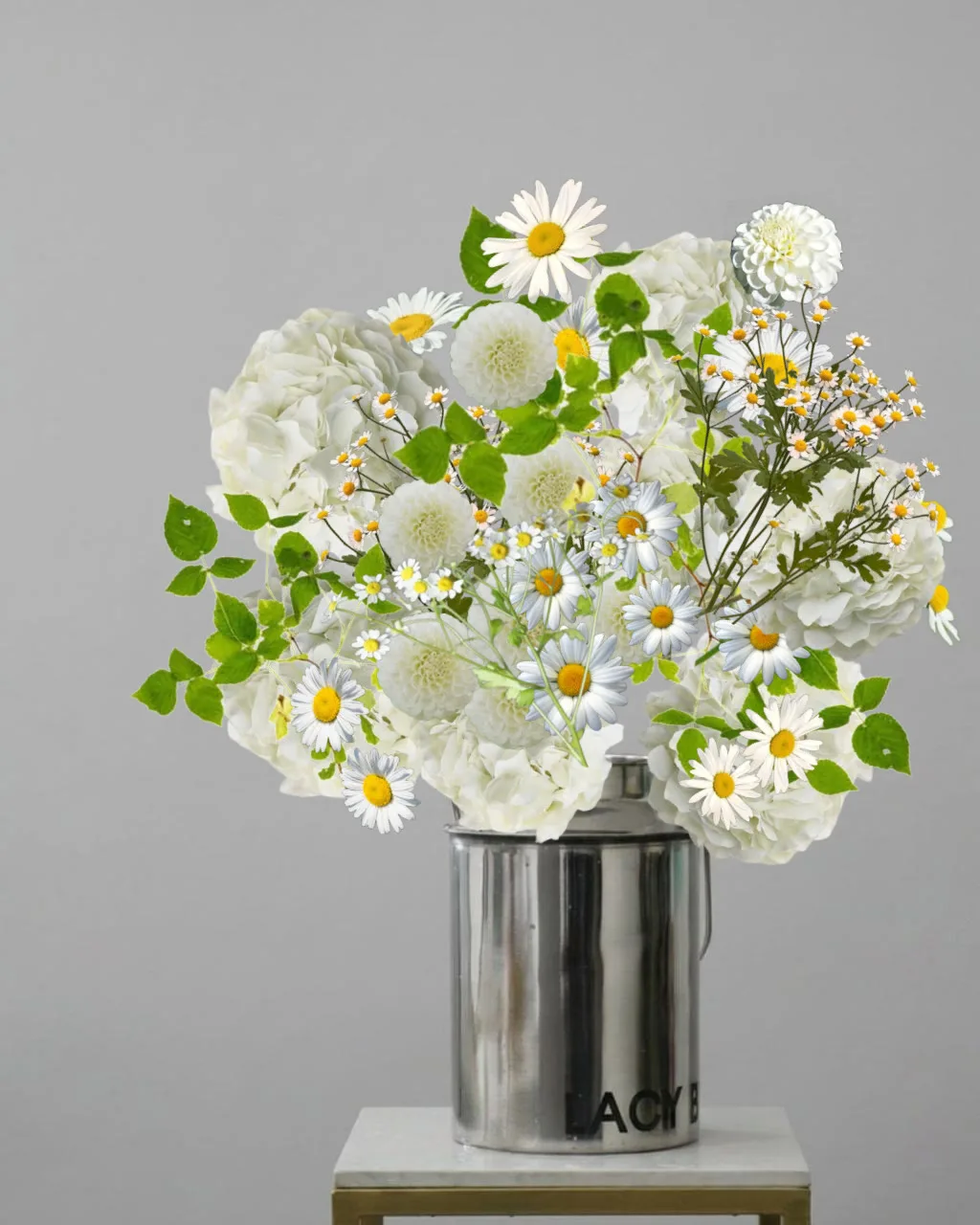
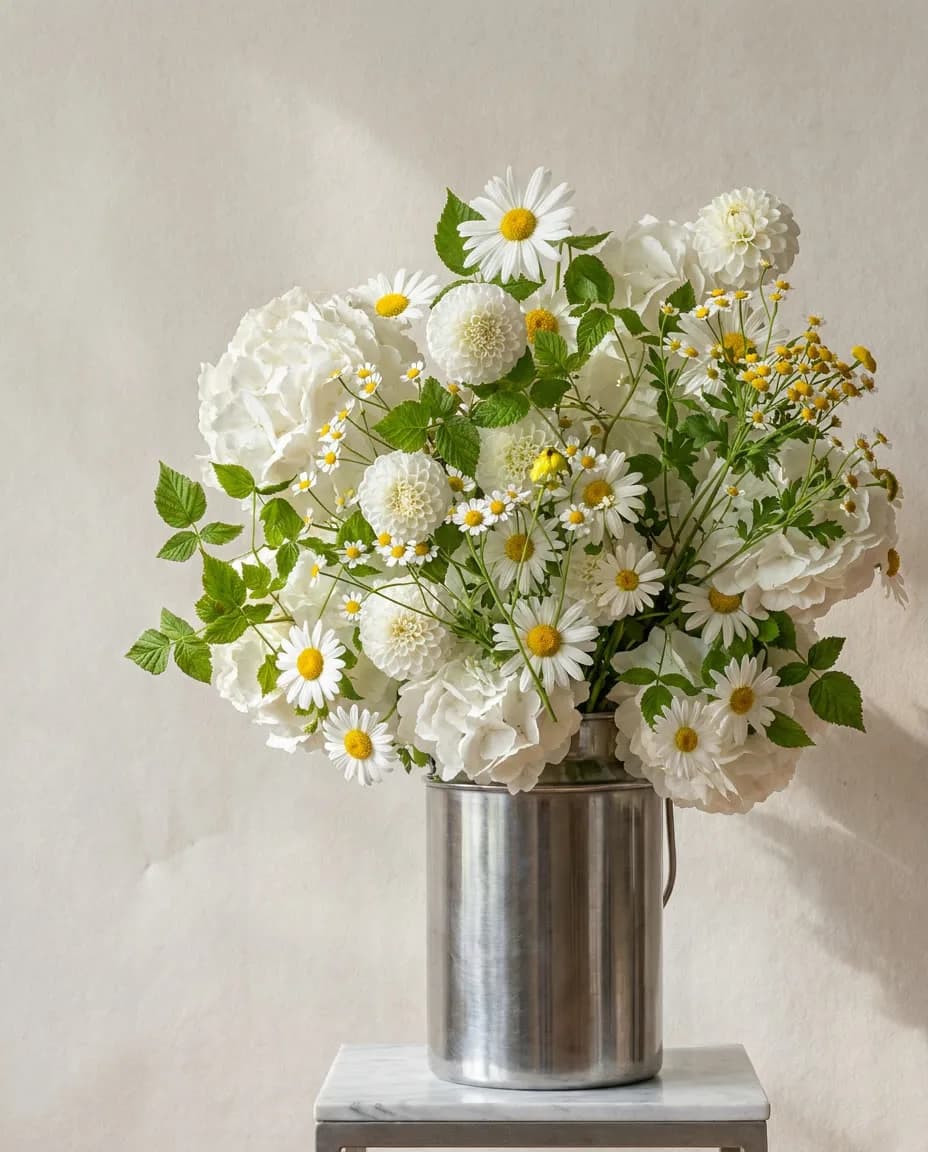
 Bouquet Builder — by Lacy Bird
Design the bouquet. See it as a photo.
Arrange real flowers on a canvas, then turn the layout into a photorealistic photo in one tap — with live pricing and a shopping list. 570+ varieties, free to start.
Free plan · no card needed