How to Keep Dahlias Fresh — cut dahlia care guide
Dahlias — short-lived, thirsty cut flowers. The hot-water dip that extends their 4-7 day vase life, why to buy fully open, and how to keep them fresh.
Dahlias are the fireworks of the late-summer garden — dinner-plate blooms, impossible geometry, colours from bruised claret to sherbet. The catch every florist learns is that they are short-lived and thirsty in the vase, and unlike most flowers they will not open further once cut. Handle them for what they are — a spectacular four-to-seven-day flower — and condition them properly, and dahlias earn their place in any late-season arrangement.
TL;DR. Cut dahlias are short-lived (4-7 days) and very thirsty, and they don't open further once cut — so pick or buy them fully open. The florist's trick is a hot-water dip: stem ends in near-boiling water for 7-10 seconds, then straight into cold. Keep them cool and change the water daily to reach the top of that range.
Why dahlias are short-lived
Dahlias were bred as garden tubers, prized for the show they put on in the border — not selected over generations for shipping and shelf life the way commercial roses or chrysanthemums were. It shows in the vase.
Their stems are soft and full of water, which means they draw in air easily at the cut and can go soft or hollow low down. Their heads are large and densely petalled, so they transpire fast and demand a lot of water. Put those together and you get a flower whose supply struggles to keep up with its own thirst — hence the quick fade and the reputation for wilting. None of it is a failure of care; it is the nature of the flower. What good care does is reliably win you the extra days between "barely made it home" and a full week.
Buying and cutting: open means open
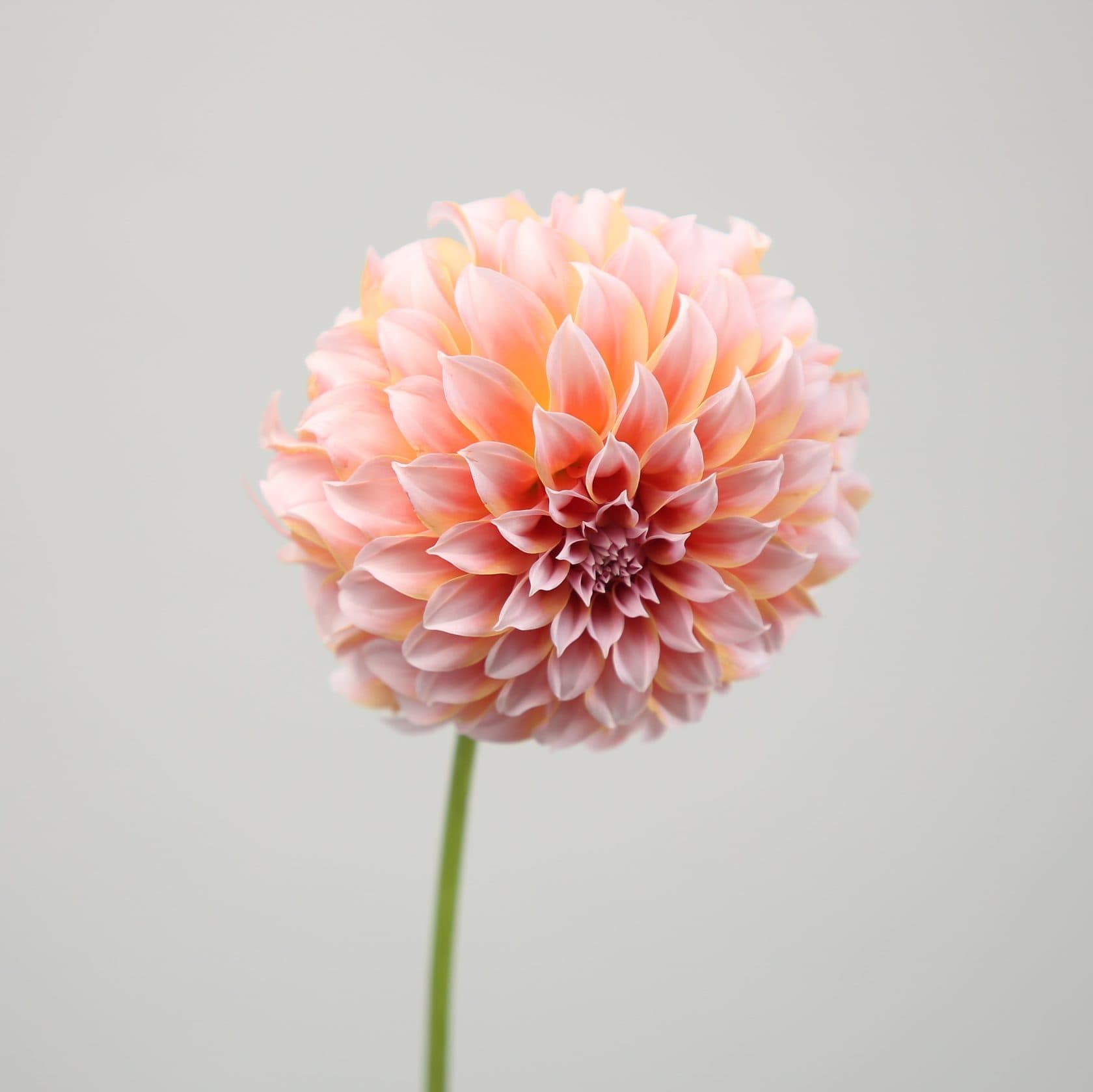
The most important rule sits up front: dahlias barely open after cutting. A tight bud stays a tight bud. So:
- Buy or cut fully open, showing final colour and form.
- Cut in the cool of the morning if they are your own, when the stems are fullest of water, and get them into a bucket immediately.
- Look for firm heads and turgid stems. A soft stem or a bloom already dropping outer petals is past its best.
- Check the back of the flower — browning or mushy outer petals behind the bloom are the first sign of age.
Because there is no "forcing open" phase, dahlias are all about holding the open flower, not developing it.
Conditioning: the hot-water dip
Dahlias respond dramatically to a hot-water conditioning dip, a classic florist technique for soft, air-prone stems. We do it like this:
- Recut 2-3 cm off each stem at a 45° angle with a sharp clean blade.
- Bring a jug of water to near-boiling, then stand only the bottom 3-5 cm of the stems in it for 7-10 seconds — keeping the flower heads well clear of the rising steam, which can scald the petals.
- Immediately transfer to deep cold water and leave them to condition for at least an hour, ideally several, in a cool spot.
The brief heat drives out the air and clears the sap that blocks the soft stem, so the flower can finally drink freely — the difference in how long the bloom stays firm is genuinely noticeable. Add flower food to the cold conditioning water; the sugar-and-biocide mix helps as it does for any flower (see flower food), though with dahlias temperature and clean water do the heavy lifting.
If you would rather not boil water, a plain deep cold-water conditioning for a few hours still helps — you just lose the extra edge the dip gives. The underlying logic is the same as in our general conditioning guide.

Troubleshooting matrix
| Problem | Likely cause | Fix |
|---|---|---|
| Wilts within a day | Air-locked soft stem | Recut; hot-water dip; long cold drink |
| Bud never opens | Cut too tight — dahlias don't open cut | Buy fully open next time; no fix now |
| Petals dropping from the back | Natural age / warm room | Keep cool; expect a 4-7 day flower |
| Water fouls quickly | Thirsty stems shedding into water | Change water daily; recut each time |
| Head flops in warm room | Heat + high transpiration | Move somewhere cool; refresh water |
| Stem gone soft/hollow low down | Over-mature or standing too long | Trim up to firm tissue; recut |
How long they last — and how to extend it
Realistic vase life is 4-7 days. To reach the seven:
- Change the water every day. Dahlias are among the thirstiest, messiest drinkers and reward daily fresh water more than almost any other flower.
- Recut at each change to keep the soft stem drawing.
- Keep them cool — below 22°C, out of direct sun, away from heat vents and ripening fruit (ethylene ages them fast). Cool overnight storage meaningfully extends them; see vase life by species.
- Strip lower leaves so nothing rots in the water and the head gets all the drink.
- Enjoy them as a short-window flower. For an event, condition dahlias the day before and keep them cold until the last moment rather than expecting a week from them.
Where dahlias fit your arrangement
Few flowers deliver the sheer sculptural drama of a dahlia, from tight pompons to dinner-plate giants, in a colour range nothing else touches. Learn the forms, classes, and season on the dahlia encyclopedia card. When dahlias are out of season — they are a late-summer-to-first-frost flower — the dahlia substitute finder suggests blooms with similar mass and form, and the seasonality calendar shows exactly when they peak.
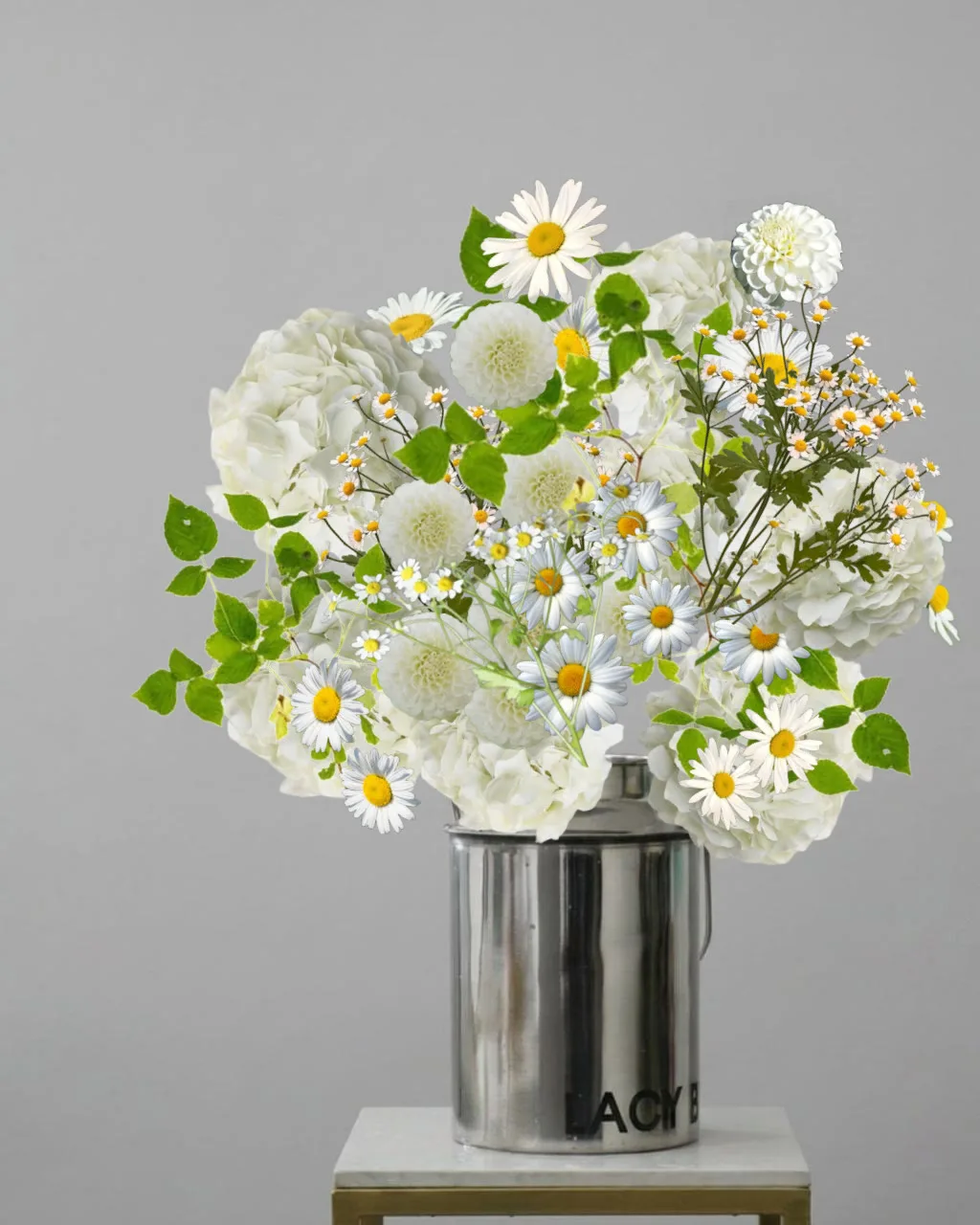
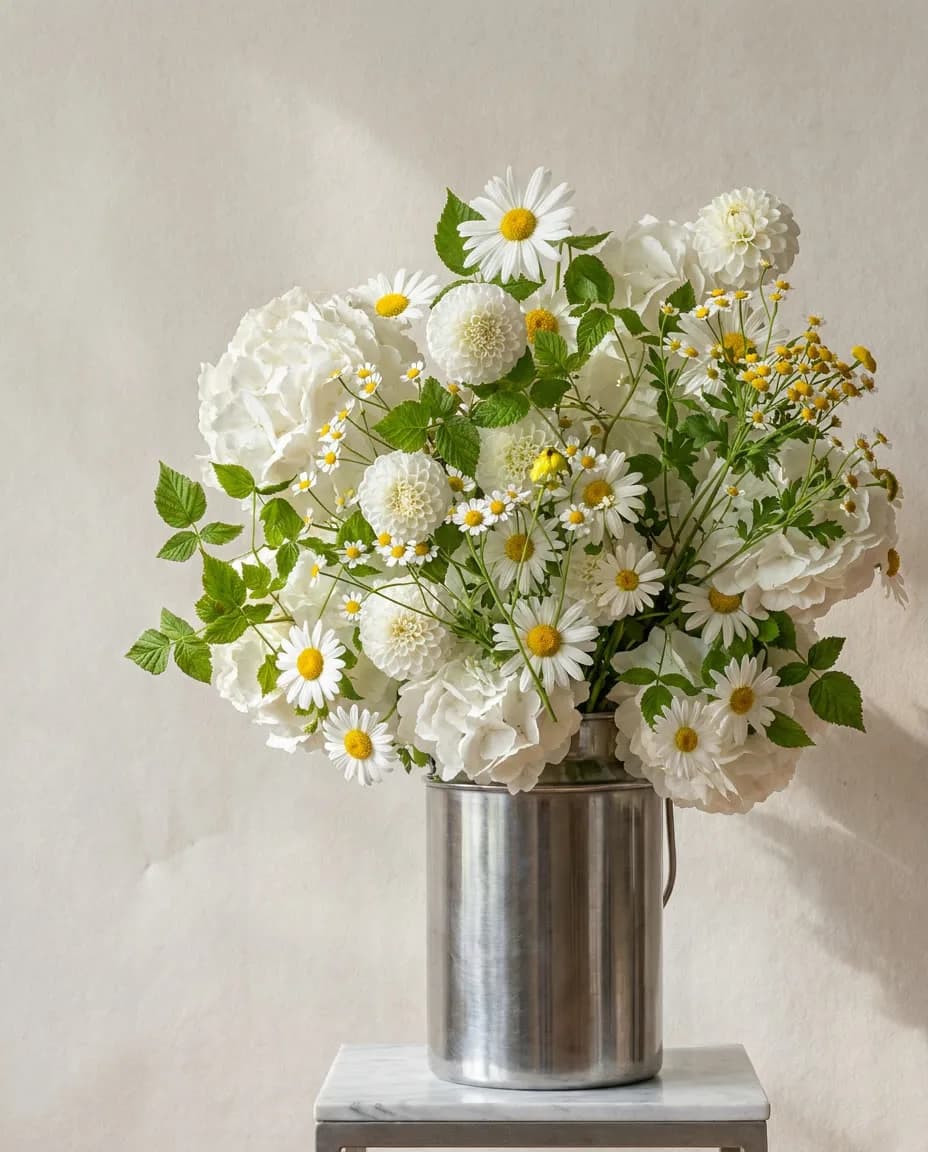
Because dahlias are short-lived, they pair naturally with longer- lasting partners; our hydrangea care guide covers a mass flower that carries an arrangement while the dahlias have their brief, brilliant moment, and the keep-flowers-fresh guide covers the daily habits that get every stem to the end of its range.
From the Lacy Bird studio. We teach floristry hands-on — from a first bouquet to running your own shop — at the Lacy Bird Academy, and we build tools for florists: Bouquet Builder for designing arrangements and Acanta for selling them. In the UAE, we also deliver flowers.
Related reading:
 Bouquet Builder — by Lacy Bird
Design the bouquet. See it as a photo.
Arrange real flowers on a canvas, then turn the layout into a photorealistic photo in one tap — with live pricing and a shopping list. 570+ varieties, free to start.
Free plan · no card needed