How to Keep Cut Orchids Fresh — orchid stem care guide
Florist care for cut orchids (phalaenopsis, dendrobium, cymbidium): why they last 2-3 weeks, misting, cool clean water, and what ethylene from fruit does.
Cut orchids are the quiet overachievers of the flower room. Where a rose gives you a week and a poppy gives you three days, a cut orchid stem will happily display for two to three weeks — and each individual floret can hold for that long on its own. They are not fussy, but they are specific: they want cool, clean, humid conditions, and they reward a couple of small habits with a remarkably long run.
TL;DR. Cut orchids are among the longest-lasting cut flowers — 14-21+ days, with individual florets holding for weeks. Recut stems underwater on a diagonal, use clean water in a cool room at 15-18°C, mist the florets, and keep them away from ripening fruit. This is care for cut orchid STEMS, not potted orchid plants, which are watered and grown differently.
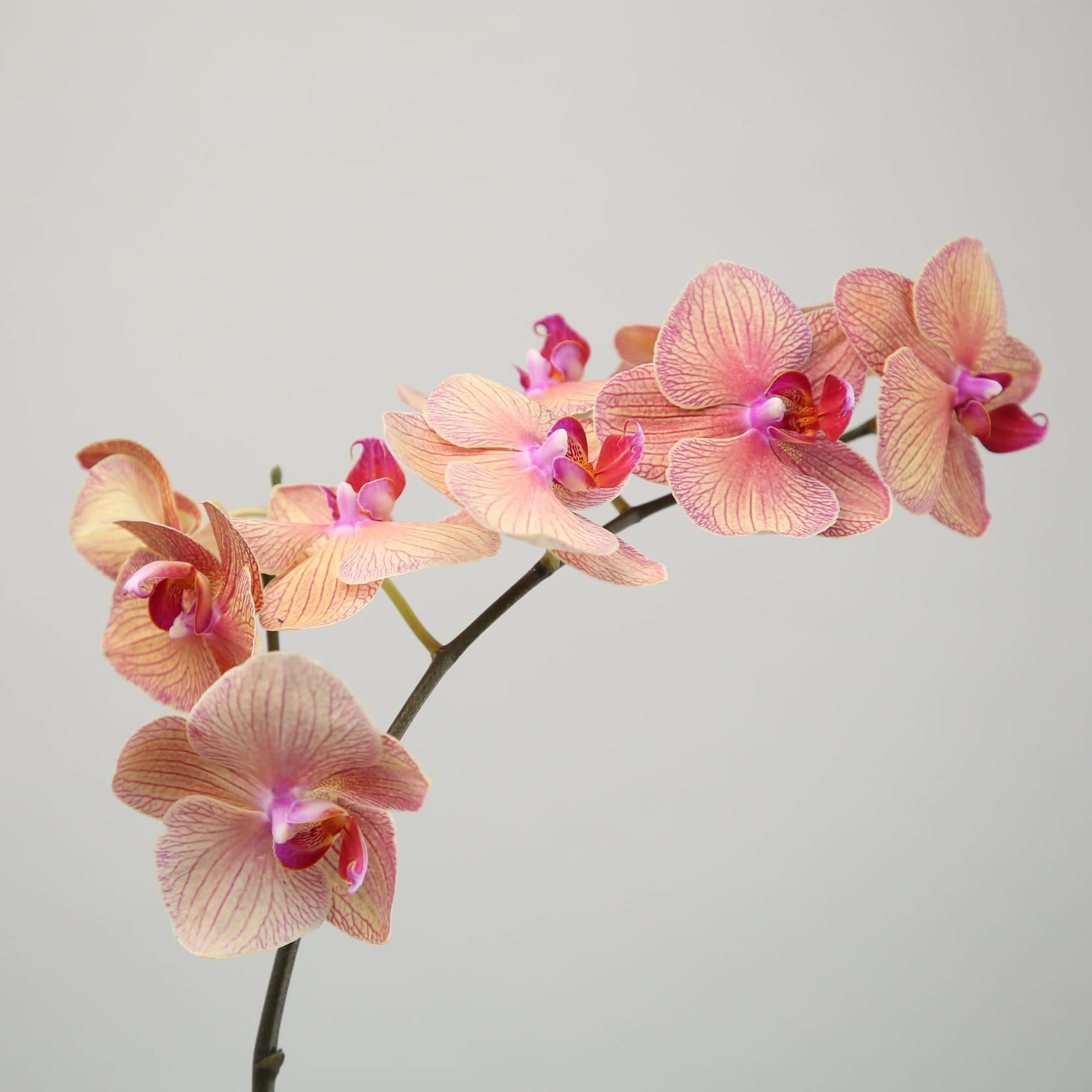
Cut orchid vs potted orchid — a quick word
First, a distinction that trips a lot of people up. A potted orchid is a living houseplant grown in bark chips, watered at the roots, and kept in bright indirect light — it flowers for months because it's alive. A cut orchid is a flowering stem harvested and sold like any other cut flower, to go in a vase.
This guide is about the cut stems. If you have a plant in a pot, its needs are different (root watering, no vase, bright indirect light) and it isn't covered here. Everything below assumes a cut phalaenopsis, dendrobium, or cymbidium stem destined for water.
What fresh cut orchids look like
Orchids ship well but are delicate to bruising, so choose carefully:
- Firm, glossy florets with no translucency, spotting, or bruised edges. Translucent or spotted petals are aging or ethylene-damaged.
- A mix of open florets and a few tip buds on the stem — the buds may open in the vase and extend the display.
- A green, plump stem with no shrivelling or browning at the cut end.
- Turgid, not limp — orchid petals should feel substantial, a little waxy.
The three types you'll meet as cut stems:
- Phalaenopsis ("moth orchid") — broad, rounded florets, elegant and often used singly or in bridal work.
- Dendrobium — many smaller florets up a slender stem; the everyday workhorse cut orchid.
- Cymbidium — large, waxy florets and the longest vase life of the group, often three weeks or more.
For the botany, colour range, and variety detail, see the orchid encyclopedia entry, and the seasonality calendar for availability.
Conditioning cut orchids, step by step
- Recut on a diagonal — under water if you can. Take 2 cm off the stem at 45° with a clean, sharp blade. Cutting under running or standing water prevents an air bubble being drawn up the stem, which is a common cause of early wilting in orchids.
- Clean water, moderate depth. Use spotlessly clean water. Orchids drink less than most flowers, so you don't need a deep vase, but you do need clean water — bacteria are the main threat.
- Add flower food at label rate. A light feed helps, but cleanliness matters more; refresh often. See the flower food guide.
- Keep them cool — 15-18°C is ideal. Cool rooms are where orchids stretch to their full three-week potential. Keep them off warm windowsills and away from heating vents.
- Mist the florets. Orchids take up moisture through their petals and evolved in humid air. A light daily mist with clean water keeps florets plump — especially valuable in dry, heated rooms.

Keep them away from fruit
Like most flowers, orchids are sensitive to ethylene, the ripening gas fruit gives off. Ethylene makes orchid florets wilt and drop prematurely and can cause bud blast (buds shrivelling before they open). Keep orchid stems well away from the fruit bowl, and out of the kitchen if it's where fruit and cooking heat collect. This one habit protects the very long vase life that makes orchids worth buying.
Common problems and fixes
| Problem | Likely cause | Fix |
|---|---|---|
| Florets wilt within days | Air lock in stem; warm dry room | Recut under water; move to 15-18°C; mist daily |
| Petals translucent or spotted | Aging or ethylene damage | Remove affected florets; keep away from fruit; keep cool |
| Buds shrivel before opening (bud blast) | Ethylene, heat, or stress | Move away from fruit and heat; keep cool and misted |
| Stem slimy, water cloudy | Bacteria | Wash vase, refresh clean water, recut stem |
| Florets look dry / papery-edged | Low humidity in heated room | Mist florets lightly every day or two |
| Whole stem fades fast (should last weeks) | Warm room; near fruit; dirty water | Correct all three — orchids are only short-lived when mistreated |
How long cut orchids last — and how to extend it
Cut orchids are near the top of any vase-life chart. Expect 14-21+ days, and often more for cymbidium. Individual florets frequently hold for two to three weeks each, and because the stem carries several florets and sometimes opening buds, the overall display is exceptionally long.
To reach the very top of that range:
- Keep them at 15-18°C — cool is the single biggest lever.
- Mist the florets every day or two.
- Refresh clean water and recut every 3-4 days.
- Keep them away from fruit and out of direct sun and heat.
- Remove any spent floret individually as it fades.
For context against the rest of the flower room, our vase life by species guide ranks orchids among the longest-lasting cut flowers, alongside the cymbidium's famous three-to-six-week run. If you need the orchid look but the type you want isn't available, the orchid substitute finder suggests alternatives — and lisianthus is a common stand-in for the phalaenopsis silhouette.
Making them last for an event
Because they hold so long, orchids are a favourite for installations and long-run displays. To time them:
- Buy a few days ahead and store cool at 15-18°C — they'll hold.
- Condition and mist as above, and keep them away from any fruit or heat sources in the workroom.
- For out-of-water work (buttonholes, arch details), orchids tolerate short spells out of water better than most, but still do best in tubes or wet media for anything over a few hours. Our keep flowers fresh guide covers the general out-of-water rules.
From the Lacy Bird studio. We teach floristry hands-on — from a first bouquet to running your own shop — at the Lacy Bird Academy, and we build tools for florists: Bouquet Builder for designing arrangements and Acanta for selling them. In the UAE, we also deliver flowers.
Related reading:
 Bouquet Builder — by Lacy Bird
Design the bouquet. See it as a photo.
Arrange real flowers on a canvas, then turn the layout into a photorealistic photo in one tap — with live pricing and a shopping list. 570+ varieties, free to start.
Free plan · no card needed