How to Keep Ranunculus Fresh — complete care guide
Ranunculus care from a florist: cool shallow water, diagonal cuts, why the hollow stems droop, and how to get 7-10 days of vase life from every bud.
Ranunculus look impossibly delicate — those tissue-paper petals wrapped in dozens of layers — and their care reflects it. They are cool-loving spring flowers on hollow, thirsty stems, and the two things they hate most are heat and dirty water. Get those right and you are rewarded with 7-10 days of buds slowly turning into some of the most romantic blooms in the flower room.
TL;DR. Ranunculus are cool-lovers with delicate hollow stems. Cut on a sharp diagonal, stand them in cold, clean, shallow water, change the water every day or two, and keep them cool and away from fruit. Expect 7-10 days, with tight buds continuing to open into their signature tissue-paper layers.
Buying — what a fresh ranunculus looks like
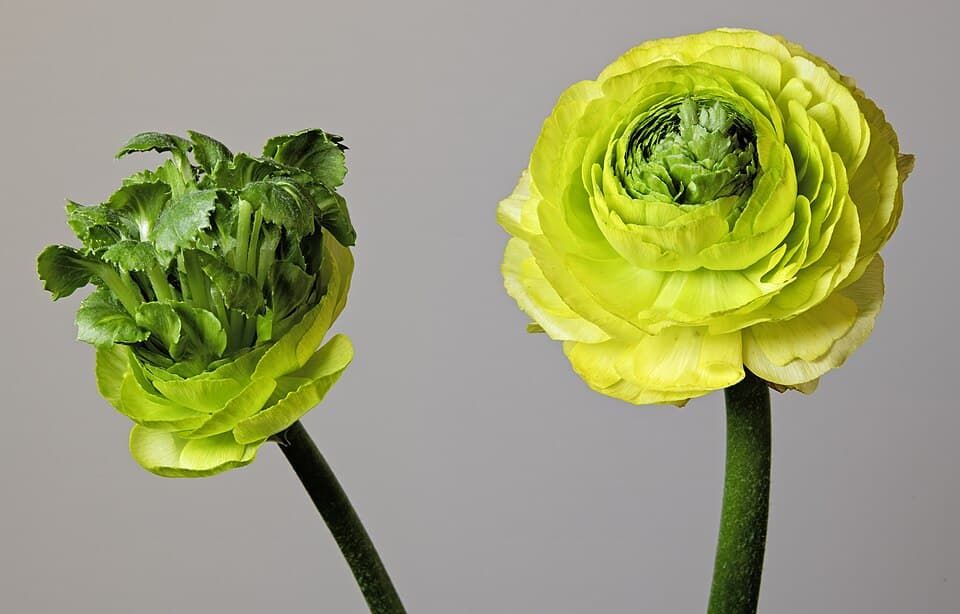
The single best thing you can do for ranunculus vase life happens before you get them home: buy them at the right stage. Ranunculus are sold and shipped in bud, and they continue opening in the vase, so you are choosing where on that curve to start.
Look for:
- Coloured, softening buds — the petal colour should be showing and the bud should give slightly, not rock-hard and green. Hard green buds often stall and never fully open.
- Firm, upright necks. The join between stem and flower head is the weak point. If heads are already lolling in the bucket, they have been out of water or too warm and will struggle.
- Clean, pale-green stems with no sliminess, browning, or sour smell at the water line — ranunculus stems foul water fast.
- Crisp, healthy foliage. Yellowing lower leaves are a sign of age or a warm supply chain.
Because they are cool-season flowers, ranunculus are at their best and best-priced in late winter through spring. Check the seasonality calendar before you plan a whole design around them — out of season they are pricier, weaker, and shorter-lived.
Conditioning ranunculus, step by step
Ranunculus reward gentle, clean, cool conditioning. Their hollow stems mean water uptake and rot are both faster than average, so the emphasis is on cleanliness and cool over anything fancy.
- Work cool and clean. Use a scrupulously clean vase or bucket. Bacteria are ranunculus's biggest enemy, and a dirty container undoes everything else.
- Recut on a sharp diagonal. Take 2-3 cm off each stem at a long angle with a clean, sharp blade or snips — never crushing scissors. The diagonal keeps the hollow stem from sealing flat against the vase base. Recut under running water if you can, to stop an air bubble entering the hollow stem.
- Strip low leaves. Remove every leaf that would sit below the waterline. Submerged foliage rots within a day and poisons the water.
- Use cold, shallow water. Ranunculus prefer cold water and shallow depth — 5-8 cm is enough. Too much stem underwater and the thin stems soften and rot from the bottom.
- Add flower food at half strength. A light dose helps buds open, but full-strength food in the small water volume they like can foul quickly. If in doubt, favour clean water changes over more food. See our flower food guide.
- Let them drink cool for a couple of hours before arranging, somewhere out of direct sun. A long, cold first drink is how you revive stems that travelled a little limp.

Keep them cool and away from fruit
Two environmental rules matter more for ranunculus than for hardy flowers like chrysanthemums:
- Cool is everything. Ranunculus are physiologically spring flowers. Below 20°C they hold beautifully; above 22-23°C they race through their life and the necks soften. Keep them out of direct sun, off warm windowsills, and away from radiators and heating vents. A cool room overnight noticeably extends them.
- Keep them away from ripening fruit. Ranunculus are sensitive to ethylene, the ripening gas that fruit (especially apples, bananas, and tomatoes) gives off. Ethylene ages flowers early, causing premature wilting and petal drop. Never leave a spring bouquet on a kitchen counter next to the fruit bowl.
Common problems and fixes
| Problem | Likely cause | Fix |
|---|---|---|
| Necks droop / heads flop within hours | Dehydrated in transit; air lock in hollow stem | Recut on a long diagonal under water, then a long cold drink 15-18°C for 2-3 hours |
| Stems go soft and slimy at the base | Too much stem underwater; dirty water | Shorten stems, use shallow (5-8 cm) clean water, change every 1-2 days |
| Water turns cloudy and sour fast | Bacteria from foliage and hollow stems | Strip all submerged leaves, wash the vase, refresh water more often |
| Buds never open | Bought too tight/green; too cold | Choose coloured buds; keep at gentle room temp with a little flower food |
| Whole bunch ages in 3-4 days | Warm room or ethylene from nearby fruit | Move somewhere cool, away from the fruit bowl and heat sources |
| Petals bruise or shatter | Over-handling delicate open blooms | Handle by the stem, arrange while still in bud where possible |
The classic ranunculus complaint — "why are my ranunculus drooping?" — is almost always a drinking problem, not a dying flower. The hollow stem simply can't move water fast enough, so the flower bends at the neck. A fresh diagonal cut and a cool, clean, long drink revives the great majority of droopers. For the underlying mechanics, our conditioning guide explains why the recut matters so much.
How long ranunculus last — and how to stretch it
Expect 7-10 days from well-conditioned ranunculus bought in good bud, leaning to the longer end in a cool room. The joy of the flower is that it earns its keep in stages: you buy tight buds, watch them unfurl their layered petals over the first few days, and enjoy the fully open blooms toward the middle and end of the run.
To reach the top of that range:
- Change the water every day or two. This is the highest-value habit for ranunculus specifically, because their hollow stems foul water quickly.
- Recut a centimetre at each water change to reopen the stem.
- Move them somewhere cool overnight if the room runs warm — even a cool hallway helps.
- Remove any bloom that has fully blown or shattered so it doesn't sour the water for the rest.

Making them open (or holding them back)
Because ranunculus open in the vase, you have some control over timing — useful if you are building toward an event.
- To open them faster: slightly warmer room (but still under 22°C), fresh water with a little flower food, and good light (not direct sun). Coloured buds respond within a day or two.
- To hold them back: keep them cool and in bud. Cold slows everything, which is exactly why florists store spring flowers cold until the last moment. Buds held cool will open on schedule once you bring them into a warmer room.
Designing with ranunculus
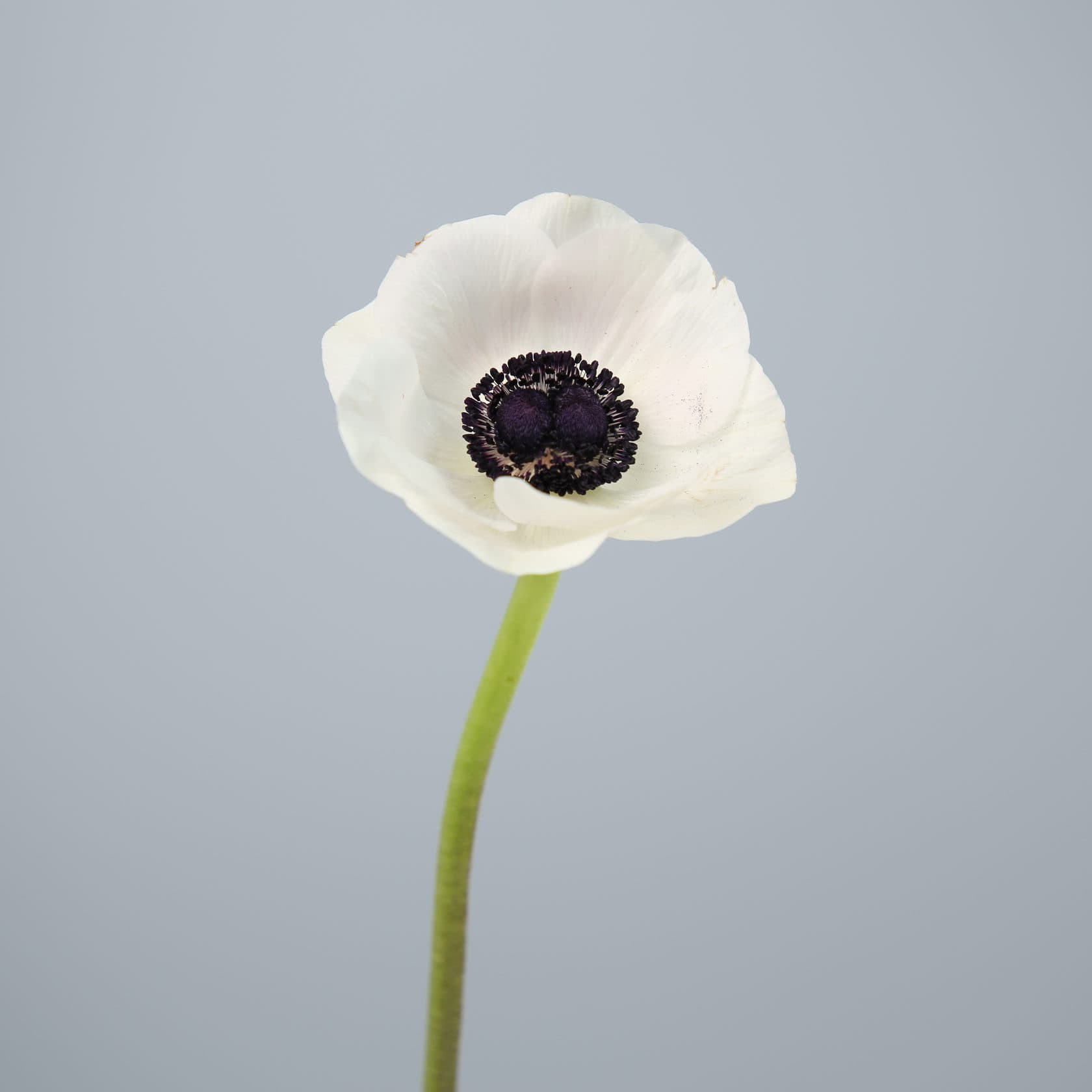
Ranunculus pair naturally with other cool-season, ethylene-shy spring flowers — anemones, tulips, and fragrant garden material. If your ranunculus won't arrive in time or in season, the ranunculus substitute finder suggests blooms with a similar layered, romantic shape and comparable care. Anemones in particular share both the look and the cool, shallow-water regime.
For the botanical background, varieties, colour range, and season, see the ranunculus encyclopedia entry. And if you are choosing spring flowers by how long they'll last, our vase life by species guide puts ranunculus in context against the whole spring palette.
From the Lacy Bird studio. We teach floristry hands-on — from a first bouquet to running your own shop — at the Lacy Bird Academy, and we build tools for florists: Bouquet Builder for designing arrangements and Acanta for selling them. In the UAE, we also deliver flowers.
Related reading:
 Bouquet Builder — by Lacy Bird
Design the bouquet. See it as a photo.
Arrange real flowers on a canvas, then turn the layout into a photorealistic photo in one tap — with live pricing and a shopping list. 570+ varieties, free to start.
Free plan · no card needed