How to Keep Sunflowers Fresh: Complete Sunflower Care
Sunflowers last 6-12 days if you strip the lower leaves, use deep clean water, change it every day or two, and support those heavy heads.
Sunflowers are pure summer optimism — big, sun-faced, and generous — but they're also one of the more demanding cut flowers to keep looking good, and for a very specific reason: their stems. A sunflower stem is thick, soft, and covered in fine hairs, and it drinks like it's still trying to feed a flower head the size of a dinner plate. All that water movement, plus soft foliage, means the vase water turns murky faster than with almost any other flower. Master the water and you've mastered sunflowers.
TL;DR. Cut sunflowers last 6-12 days. Their thick, hairy stems are heavy drinkers that foul the water quickly, so the whole job is water hygiene: strip every leaf below the waterline, use deep clean water, and change it every one to two days. Support those heavy heads and keep the vase out of direct heat and sun.
Buying sunflowers & what fresh looks like
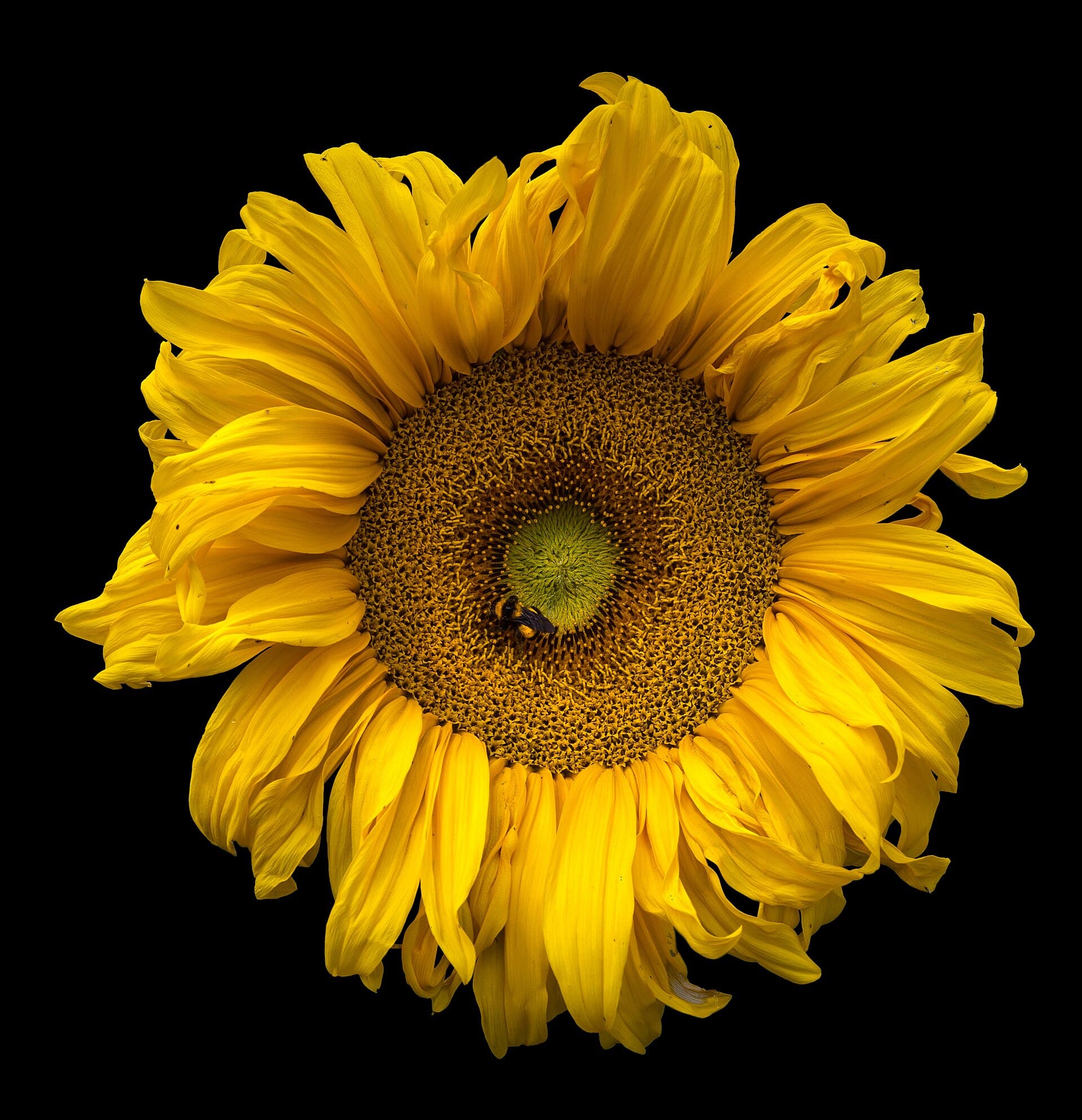
Choose sunflowers with firm, upright petals and a tight, domed centre. A centre that's already fluffy, powdery with loose pollen, or beginning to bulge means the flower is more mature and won't last as long. The petals (technically ray florets) should be crisp and fully coloured, not floppy or bruised at the tips.
Check the stem too: it should be firm all the way up to just below the head. A soft, bendy neck right under the flower is the weak point that leads to drooping later, so pick stems that feel sturdy. Pollen-free and "pollenless" varieties are popular because they don't drop yellow dust on tables — worth knowing if you're arranging for a dinner.
Conditioning sunflowers step by step
Everything about conditioning a sunflower is aimed at keeping the water clean and the stem drinking. Here's our bench routine:
- Use a deep, clean vase. Sunflowers are thirsty and top-heavy, so depth gives both hydration and stability. Wash the vessel properly first — see flower conditioning for why a clean start matters so much.
- Recut the stem — take 2-3 cm off on a slant with a sharp knife or clean secateurs. A slanted cut on fresh tissue maximises the drinking surface. Doing this under running water helps prevent air locks in these fast-drinking stems.
- Strip every lower leaf. This is the big one. Sunflower foliage is soft and rots quickly; any leaf below the waterline will foul the water within a day. Leave a little foliage near the top for looks, nothing below the surface.
- Fill with cool, fresh water and add flower food at the right dose — the flower food guide explains how the acidifier keeps the water clear and the sugar keeps the head fed.
- Let them drink in deep water for an hour before arranging.

Supporting those heavy heads
A big sunflower head sits on a stem that softens as it ages, and gravity does the rest — the classic sunflower droop is often just mechanical. Give the heads something to lean on: cluster several stems so they support each other, use a grid of tape across the vase mouth, or arrange them among sturdier stems. A slightly narrower vase neck relative to the number of stems also holds heads more upright. This is separate from a hydration droop (below), which needs a recut rather than a prop.
Common problems & fixes
| Symptom | Likely cause | Fix |
|---|---|---|
| Neck bends, head hangs within days | Air lock or dehydration | Recut on a slant (under water if possible), deep cool drink |
| Water murky and smelly by day 2 | Soft foliage below waterline, thirsty stems | Strip all lower leaves, change water every 1-2 days |
| Head simply too heavy to stand | Mechanical, weak neck | Support with a grid or cluster stems together |
| Petals curling and drying at tips | Direct sun or heat, low water | Move out of heat, top up and refresh water |
| Petals dropping, centre gone fluffy | Natural over-maturity | End of life; enjoy the seed head or compost |
| Flowers leaning to one side | Phototropism — turning to light | Turn the vase daily, or let them face the window |
How long sunflowers last & how to extend it
Cut sunflowers run 6-12 days, with single-headed types at the top of the range and branching, pollen-heavy varieties lower — see where they sit against everything else in our vase life by species guide. To reach the upper end:
- Change the water every one to two days. This matters more for sunflowers than for almost anything else because their stems foul the water so quickly. Recut a fresh slant and re-dose food each time.
- Keep them out of direct heat and sun. A sunny windowsill feels right for a sunflower but it isn't — heat and light speed ageing and dry the petals. A cool, bright spot out of the direct beam is best.
- Top up water daily. These are heavy drinkers; the level can drop fast, and a stem left standing above the waterline will air-lock and droop.
- Remove spent stems from a mixed arrangement so they don't foul the water for the rest.
Making them open (or slowing them down)
Sunflowers bought in tighter form will open and flatten their petals over the first couple of days in a warm room with good flower food. To hold them at their peak for an event, keep them cool — even an overnight spell somewhere cold at 4-8°C slows their development and firms up the necks. Because they naturally turn toward light and may lengthen slightly after cutting, expect a little movement in the arrangement; turn the vase if you want them facing a particular way.
Sunflowers, done properly
There's nothing quite like a jar of sunflowers on a summer table, and they're far more rewarding when you treat the water as the main job rather than an afterthought. Strip the leaves, keep it deep and clean, change it often, support the heads, and keep them out of the direct heat their name promises they'd love. Do that and a sunday-market bunch easily gives you a week and a half of that unbeatable golden face.
Read the full profile in the sunflower encyclopedia entry, find similar big, cheerful blooms with the sunflower substitute finder, and see their peak months on the seasonality calendar.
From the Lacy Bird studio. We teach floristry hands-on — from a first bouquet to running your own shop — at the Lacy Bird Academy, and we build tools for florists: Bouquet Builder for designing arrangements and Acanta for selling them. In the UAE, we also deliver flowers.
Related reading:
 Bouquet Builder — by Lacy Bird
Design the bouquet. See it as a photo.
Arrange real flowers on a canvas, then turn the layout into a photorealistic photo in one tap — with live pricing and a shopping list. 570+ varieties, free to start.
Free plan · no card needed